Loading Admission Guardian content
Loading Admission Guardian content

Provisional score based on available data. It may change as more information is verified.
Selected ranking categories, with the recorded year beside each result. Open all records for the complete history.
3 published records · Lower numeric ranks are stronger
IIRF
Physiotherapy
#1042023
Find a program, read its fee details and explore the admission requirements.
Summary of the programs shown below. First-year fee. Check the note beside each amount for inclusions and exclusions.
| Course | Stream | Fees |
|---|---|---|
| Bachelor of Physiotherapy [BPT] | Medical | 93100 |
| Master of Physiotherapy [MPT] | Medical | 150000 |
All accepted exams
Eligibility: 10+2
Specializations
Eligibility: BPT
1 exam with cutoff data available
If you're looking for a physiotherapy college in Delhi that prioritizes hands-on clinical training from day one, the Banarsidas Chandiwala Institute of Physiotherapy (BCIP) is a name that comes up consistently. Established in 2003 under a long-standing trust, it’s a private institute that has built a reputation not on sprawling lawns, but on the strength of its specialized labs and direct access to patients through its on-campus OPD and hospital. Affiliated with Guru Gobind Singh Indraprastha University (GGSIPU), it offers a focused path into the healthcare sector, with a teaching style that students describe as supportive and practical. But it’s a specific kind of place—compact, professionally strict, and centered entirely on the craft of physiotherapy.
BCIP keeps its academic portfolio tight and deep. The undergraduate Bachelor of Physiotherapy (BPT) is the main draw, a 4.5-year program where the final six months are a mandatory internship. At the postgraduate level, they offer a 2-year Master of Physiotherapy (MPT), with a specialization in Musculoskeletal currently noted.
The academic culture here is described as rigorous. Exams are yearly, with two internal assessments leading to a final university exam. “The exams are tough, so you have to study hard,” one student notes plainly. The schedule can feel fluid at times—a minor gripe from some is that the “course syllabus is never ready on time” and the “schedule keeps changing.”
Where BCIP truly differentiates itself is in practical training. This isn't a theory-heavy setup. The institute has invested in specialized, dedicated labs for Neuro-Physiotherapy, Cardio-Pulmonary, Sports, Musculoskeletal, and Electro Therapy. Students consistently praise these facilities. “I really like all the labs they have here... It's great for learning and doing hands-on stuff,” a review states. The crown jewel for clinical exposure is the on-campus hospital and OPD (Outpatient Department). From early in the program, students get to observe and assist with real patients, a advantage many colleges can't offer. Just be aware that this setup is highly functional; one student pointed out that while the “OPD is clean,” patient privacy can be limited.
Faculty strength is around 10-12 senior members, supported by other academic staff. The consensus is that the teachers are a strong point. Descriptions like “really cool and super smart,” “helpful,” and “supportive” are common. Dr. C S Ram, the Director, is singled out as kind, unbiased, and personally involved in teaching final-year students. You can review the full faculty list on the BCIP official website.
This is where student narratives present a spectrum. The official stance is that BCIP has a “strong placement support system” with good industry tie-ups. Many students back this up, reporting solid outcomes. “Most students, like 70-75%, land internships and jobs in big hospitals,” one says. Another claims, “Almost everyone who applies for jobs here ends up getting placed in good companies.”
The recruiter list is impressive and healthcare-focused, featuring major hospital chains like AIIMS, Safdarjung, Apollo, Max, Fortis, and LNJP, as well as corporate players like Optum UnitedHealth Group. There are also mentions of alumni landing roles abroad in Australia, the US, and Germany.
But you need to look at the numbers and the dissenting voices. The median package for BPT graduates is pegged at ₹3.6 LPA, and for MPT at ₹5 LPA. The range is typically ₹3 to ₹7 LPA. That’s a decent, if not spectacular, starting point for a clinical field in India.
Now, the reality check. A distinct minority of reviews contradict the positive placement narrative. One student states bluntly, “Placement opportunities aren’t great because it's a medical college. You have to find hospitals for your internship by yourself.” This highlights a potential gap: while the college may facilitate opportunities, proactive effort from the student is likely still paramount. The internship, a core part of the BPT program, is assigned by the college from the third year with a small stipend, but students are also encouraged to seek external work from the second year.
The takeaway? BCIP provides a credible platform and reputable recruiter access. But don’t assume a guaranteed ticket. Your academic performance, practical skills, and own networking will heavily influence your outcome.
As a private institution, BCIP’s fees are substantial but within the expected range for specialized healthcare education in Delhi. The BPT fee structure isn't uniform year-to-year; it generally decreases slightly after the first year.
For the BPT program, first-year costs (tuition + university fees) are around ₹1.25 lakhs. It trends down to about ₹1.1 lakhs by the fourth year. The total program cost is estimated to be between ₹4.2 lakhs to ₹5.8 lakhs for tuition. The MPT program is more expensive, with first-year fees around ₹1.9 lakhs.
Hostel fees are a significant additional cost, ranging from ₹80,000 to ₹2.5 lakhs per year depending on room type and facilities. Mess fees are separate. So, a student opting for hostel must budget for a total annual cost that could approach or exceed ₹4 lakhs in the first year.
Financial aid is available. BCIP offers merit-based scholarships and actively facilitates government scholarships for SC, ST, OBC, and EWS categories. Guru Gobind Singh Indraprastha University (GGSIPU) also releases specific guidelines for financial assistance, which the institute follows.
The gateway to BCIP is straightforward and transparent: the Common Entrance Test (CET) conducted by GGSIPU, also known as the IPU CET. For the MPT program, CUET PG is also mentioned as an accepted exam. A critical point stressed in the brief: “No Management Quota Seats. No Direct Admissions.” Your rank in the entrance exam is everything.
The process is centralized through the university. After the IPU CET results are declared, candidates must participate in the GGSIPU counseling rounds. Admission is strictly merit-based on the CET rank. Specific cutoff ranks for BCIP aren't published in the brief, but they will vary each year based on applicant pool and seat matrix.
The application window for the IPU CET typically opens in March-April. For the 2026 cycle, for example, registration was noted to extend till April 11, with exams from April 25 to May 17. You must fill the form and pay the fee on the official GGSIPU website.
Don’t come expecting a traditional university campus. BCIP is a compact, vertical institute in South Delhi. The infrastructure is a mix of highly praised specialized assets and some noted constraints.
On the plus side: Classrooms are air-conditioned and equipped with projectors. The library has over 1,685 books and is considered well-stocked. The labs, as mentioned, are a major strength. The on-site hospital and OPD are unique advantages. For sports, students have access to the trust’s modern Sports Centre and Gymnasium at the Chandiwala Estate.
Hostels get strong reviews, rated 5/5 by one student. They are separate for boys and girls, with rooms described as spacious and clean, furnished with a bed, study table, and almirah. High-speed Wi-Fi is available. The mess serves “healthy and diverse” food, with hygiene prioritized.
The negatives? Some students feel the physical space is limited. “The college doesn't have great infrastructure or a proper campus,” one review says, wishing for more spacious classrooms. Another notes a lack of desks in senior-year rooms.
Social life revolves around academic and professional events. The annual intercollege fest ‘Phuljadi’ happens in December. Students are encouraged to participate in debates, quizzes, and cultural programs. The college also supports participation in external events like the Airtel Delhi Half Marathon (ADHM). It’s a professional environment—the dress code is strict, and a 75% minimum attendance is enforced, with parental contact for defaulters.
Synthesizing the student sentiment from various platforms paints a clear, nuanced picture.
The Good:
The Not-So-Good:
One verbatim review sums up the trade-off: “Infrastructure is fine. But the institute can expand the department even more with classes being more spacious. OPD is clean but patients have no privacy.”
BCIP is a solid, no-nonsense choice for a student dead-set on becoming a physiotherapist. Its strengths are perfectly aligned with the needs of the profession: exceptional practical labs, real clinical exposure from an on-campus OPD, a supportive and experienced faculty, and a location that plugs you into Delhi's healthcare network. If your priority is hands-on skill development over campus aesthetics, it delivers.
But it has a specific profile. It’s not a sprawling university with a vibrant social scene; it’s a professional training institute. The environment is strict, the space is compact, and your success in placements will depend heavily on your own initiative alongside the college's support.
Who should choose BCIP? A student who values clinical practice over theory, prefers a disciplined learning environment, and is proactive about building their career network. The total cost, including hostel, is significant, so the return on investment hinges on leveraging those practical skills.
Who might look elsewhere? Someone seeking a classic college “campus life,” more autonomy, or a institution with a blanket guarantee of placements. Also, if your entrance rank opens doors to other top-ranked physiotherapy colleges, it’s worth comparing their infrastructure and placement records directly. For many, however, BCIP represents a focused and effective path into the field.
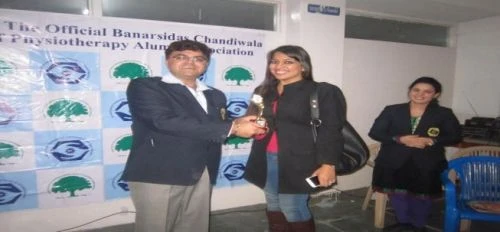
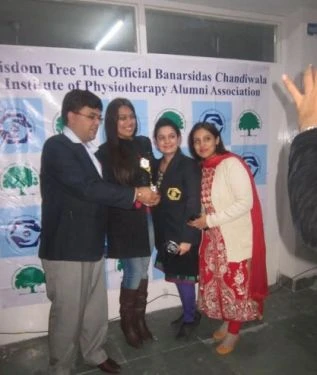
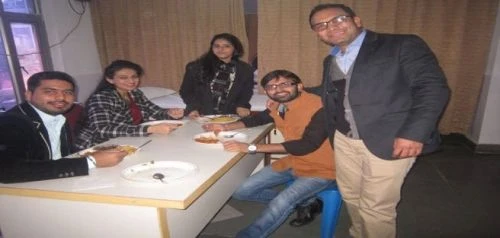
In this preview: 5 photos · 0 videos
Prospective students often consider BCIP for its dedicated focus on physiotherapy education. The college's reputation is typically evaluated based on factors like its admission process, course fees, placement opportunities, and campus facilities such as hostels.
The admission process for the Bachelor of Physiotherapy (BPT) and Master of Physiotherapy (MPT) programs at Banarsidas Chandiwala Institute of Physiotherapy is a key consideration for applicants. Interested candidates should seek out the official admission guidelines for specific eligibility criteria and selection procedures.
A common query involves the fee structure for the upcoming academic cycle. For the 2025-2026 academic year, the tuition and other charges for the BPT and MPT programs at BCIP are important details for financial planning, and students should refer to the institute's official notifications for accurate figures.
Placement records and career outcomes are significant factors for students. Information regarding the placement opportunities and the average salary packages for BPT and MPT graduates from Banarsidas Chandiwala Institute of Physiotherapy is sought by those assessing the institute's return on investment.
Many students inquire about on-campus living options. Banarsidas Chandiwala Institute of Physiotherapy does provide hostel facilities, and prospective residents are often interested in understanding the quality of the accommodation and the food services available.
Share what future students should know about BCIP.
Student voices are not rewritten by colleges. We remove spam and abuse.
Wider admission question? Community PulseWhat should future students know?
Tell us which course you're considering. We'll help you work out the next step.
Get instant Partner access after mobile verification. Your public edits are reviewed before they go live.
Claim this college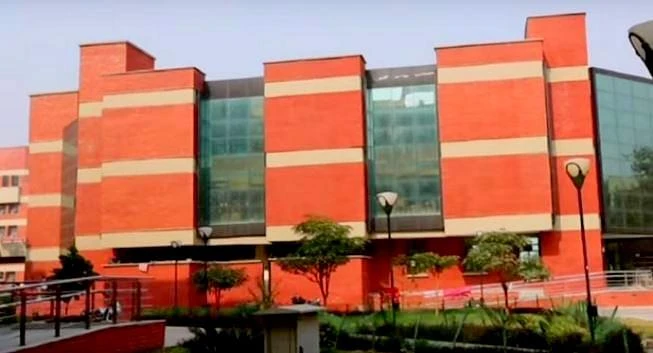
 Auditorium
 Bank & ATM
 Cafeteria
 Computer Labs
 Medical
 Science Labs
 Sports Complex
 Study Library