Loading Admission Guardian content
Loading Admission Guardian content

Selected ranking categories, with the recorded year beside each result. Open all records for the complete history.
4 published records · Lower numeric ranks are stronger
NIRF
Medical
#222020
IIRF
Physiotherapy
#1022023
Find a program, read its fee details and explore the admission requirements.
Summary of the programs shown below. Fee periods can differ by program. Check the note beside each amount before comparing costs.
| Course | Stream | Fees |
|---|---|---|
| Master of Science [M.Sc] | Medical | 134500 |
| Bachelor of Science [B.Sc] | Medical | 211500 |
| Master of Physiotherapy [MPT] | Medical | 261000 |
| Bachelor of Physiotherapy [BPT] | Medical | 264500 |
| M.B.B.S. | Medical | 2077500 |
Specializations
Eligibility: Graduation
Specializations
Eligibility: 10+2
Specializations
Eligibility: B.P.T.
Eligibility: 10+2
All accepted exams
Eligibility: 10+2 with 50% + NEET
2 exams with cutoff data available - showing recent entries
Hamdard Institute of Medical Sciences and Research (HIMSR) in New Delhi occupies a unique and somewhat complicated space in India's medical education landscape. It's a private institution with a strong academic reputation, anchored by its 740-bedded teaching hospital and a faculty roster that includes veterans from AIIMS and Delhi University. The NIRF ranking—40th in 2025, but as high as 15th nationally in 2019—tells a story of a college that has been a serious contender. But that story has a recent, troubling footnote: a 2026 news report cited by Careers360 mentioned administrative turmoil, with faculty resignations and seat withdrawals. That's a stark contrast to the polished infrastructure and high placement claims. So, which HIMSR is real? The one with the 'A' grade NAAC accreditation and impressive clinical exposure, or the one facing potential instability? The answer, as with most private medical colleges, lies in a careful look behind the brochures.
HIMSR offers a full spectrum of medical and paramedical programs. The MBBS is the flagship, with a 150-seat intake. Postgraduate offerings are extensive, with MD/MS seats across nearly 20 specializations—from General Medicine and Pediatrics to Radio Diagnosis and Psychiatry. They also run B.Sc., BPT, and BOT programs at the undergraduate level, along with diploma courses in areas like dialysis and operation theatre techniques.
The academic strength, historically, has been a major selling point. The faculty of 98 includes professors who've taught at top government institutions. The curriculum is designed for clinical immersion from the start, heavily leveraging the attached HAH Centenary Hospital. That's a significant advantage. You're not just learning theory; you're in a busy, 740-bed tertiary care facility. The library is noted as a quiet, serious study space with a 300-seat capacity.
But there's a caveat from recent news, not student reviews. A 2026 report suggested administrative issues leading to faculty attrition. If true, that could impact the very faculty quality the college promotes. It's a point any prospective student must verify directly with current students or the administration.
This is where you need to read between the lines. The official numbers are bold: placement percentages quoted as high as 99%, with average MBBS packages of INR 8-12 LPA and highest packages for MS grads hitting INR 30-40 LPA. Top recruiters listed include corporate hospital chains like Apollo and Fortis, plus pharma giants like Sun Pharma and Cipla.
Here's the reality check, straight from student sentiment. For MBBS graduates, the concept of "campus placement" is different. A very high percentage—over 70%—choose to pursue postgraduate studies (MD/MS) immediately. They're not sitting for campus interviews in the same way engineering students do. The "placement" often refers to the compulsory one-year internship at HAHCH (with stipend) or securing a junior resident position post-internship, frequently in Delhi government hospitals which pay well.
The high packages (INR 20-22 LPA and up) are typically for those who have completed their postgraduate specialization (MD/MS). An MD in Radio Diagnosis or an MS in Orthopaedics from a reputed college can command those figures. So, the placement data often blends post-PG outcomes with direct MBBS outcomes, which can be misleading.
The corporate hospital tie-ups are real and provide a pathway. But the most common and sought-after trajectory for an HIMSR MBBS grad is clear: use the decent clinical training to crack NEET PG, specialize, and then command a high salary. The college's NIRF rankings often highlight this PG progression as a key outcome.
Let's be direct: HIMSR is expensive. For the MBBS program (2025-26), the annual tuition fee is INR 16 lakhs. That's just tuition. When you add the one-time admission and security deposits (the refundable security deposit alone is INR 2.5 lakhs), annual examination fees, and then account for hostel and mess, the total cost for the 4.5-year course spirals. Estimates for the 2026 batch put the total cost between INR 85 lakhs and 1 crore.
Hostel fees add another significant layer. An AC double-occupancy room costs INR 1.2 lakhs per year, while a single will set you back INR 2.4 lakhs. Mess charges are extra, around INR 24,000 annually, though food quality gets mixed reviews.
Financial aid is a sore point for MBBS students. The brief is explicit: no fee concession or scholarship is available for MBBS. Scholarships like the Merit-cum-Means or Hakeem Abdul Hameed schemes exist for some UG/PG programs, but not for the flagship course. The one financial relief for postgraduate (MD/MS) students is a mandatory monthly stipend of Rs. 80,000 for the three-year duration, as per NMC guidelines.
For NRI/Sponsored candidates, the fees are in USD: 200,000.
Admission is strictly through national entrance exams. For MBBS and other UG medical/paramedical courses, you need a qualifying NEET UG score. For MD/MS, it's NEET PG.
The cutoffs are competitive but not in the stratosphere of top government colleges. For NEET UG 2024, the closing rank for the general category was around 68,155. In terms of marks, general category candidates often need 500+ in NEET to be in contention. That's a score within reach for a dedicated student, but it still represents a high level of competence.
For NEET PG 2024, closing ranks for popular specializations were in the five-digit range (e.g., MD General Medicine closed at rank 13,153). This suggests that for PG admissions, HIMSR is a realistic target for many serious candidates.
The selection process follows the centralised Medical Counselling Committee (MCC) counselling for most seats. HIMSR also has a 43% Muslim minority quota, with half of those seats for Indian Muslims and the rest in open merit. There's a separate NRI/Sponsored quota of 23 seats as well.
The campus, part of the larger 100-acre Jamia Hamdard university, is described as a "green belt" in Delhi—a plus in a crowded city. Infrastructure is consistently praised. The hospital is modern, labs are well-equipped with simulation tech, and the sports complex is big, with courts for basketball, badminton, and cricket.
Hostels are available for 400 undergraduates, separate for genders. Rooms are clean and come with basic amenities and 24/7 power. The option for a single AC room (at a premium) is there. The campus is Wi-Fi enabled and has essential shops inside. Ragging is strictly prohibited, and the environment is generally considered safe.
The downsides? Some students feel the specific college campus area is compact. And the hostel mess food—a perennial grievance in most colleges—gets its share of complaints here too. A few older reviews mentioned occasional issues with outsiders, but that doesn't appear to be a dominant theme.
Sifting through student feedback paints a picture of a college with strong fundamentals but real-world frustrations.
Students consistently applaud the clinical exposure. Rotating through a 740-bed hospital with diverse cases is the college's biggest practical advantage. The faculty, particularly senior professors, are respected for their knowledge and teaching. The infrastructure—from the library to the hospital wards—gets high marks for being modern and functional.
But the fees are a constant pain point. Paying over INR 16 lakhs a year in tuition alone leads to high expectations, and any administrative hiccup feels magnified. The 2026 news report of faculty resignations, if accurate, would directly undermine a core strength and validate the worst fears of high-paying families.
There's also a note that extracurricular life, while present with cultural and sports events, isn't as vibrant or development-focused as some would like. It's a med school, so the grind is real, but some students wish for more.
The placement narrative from students is pragmatic. They see HIMSR as a solid launchpad for a PG seat, not necessarily a direct ticket to a high-paying corporate job after MBBS. That's a crucial perspective that balances the official placement brochures.
HIMSR presents a classic high-cost, high-stakes private medical education scenario. Its strengths are undeniable: strong historical NIRF rankings, an excellent attached hospital for clinical training, and a faculty pedigree that includes AIIMS and DU alumni. For a student who can secure a decent NEET UG rank (around 50,000-70,000) but not high enough for a top government college, and whose family can shoulder the ~INR 1 crore cost, HIMSR has been a credible option to become a competent doctor.
However, the major caveat is the reported administrative instability. The 2026 news of faculty resignations and seat withdrawals is a serious red flag that prospective students must investigate thoroughly. Contact current students directly. Ask the administration hard questions. A medical college's value is deeply tied to its stability and faculty continuity.
Who is it for? A student with a clear goal of using good clinical exposure to crack NEET PG, with the financial means to pay the premium, and after verifying the current operational health of the institute. Who should look elsewhere? Anyone for whom the fee is a severe burden, or anyone who finds the administrative concerns are verified and ongoing. In the crowded Delhi medical scene, due diligence has never been more critical.
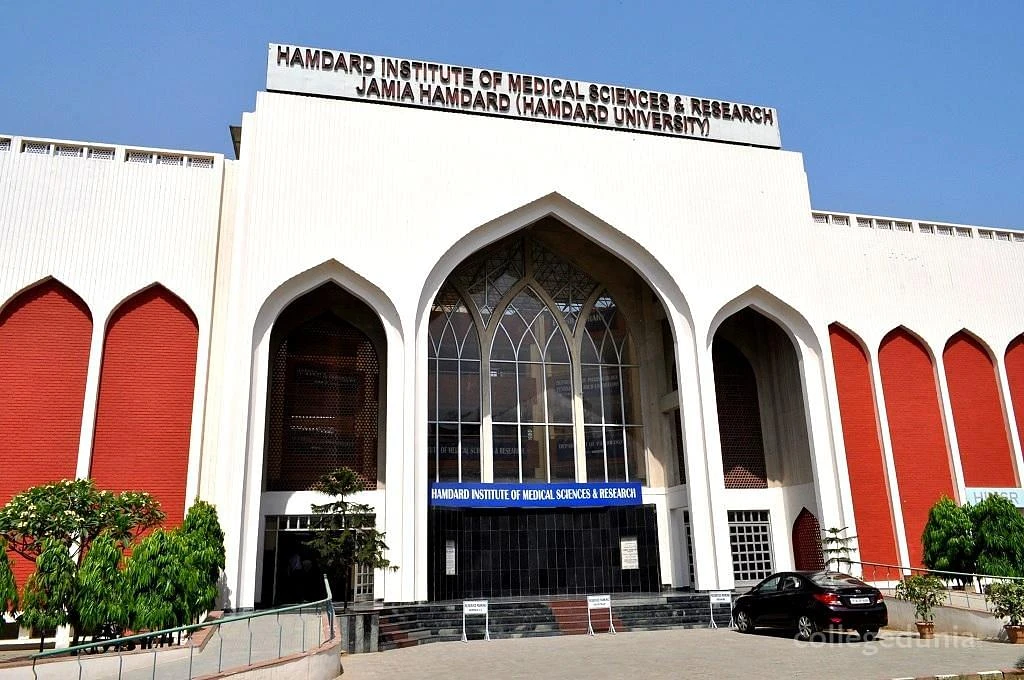
In this preview: 1 photo · 0 videos
The total fees for the MBBS program at HIMSR are a primary consideration for prospective students. The institute's fee structure is determined annually and includes tuition and other academic charges. For the most accurate and current fee details, applicants should refer to the official admission brochure or contact the institute's administration directly.
Admission to the MBBS program at HIMSR is based on NEET UG scores. The cutoff rank varies each year based on factors like the number of applicants, seat matrix, and overall exam difficulty. Candidates should check the official counseling authority's website or HIMSR's admission portal for the specific cutoff ranks from the most recent admission cycle.
HIMSR is evaluated by students for its faculty expertise and infrastructure. The institute is part of the Hamdard University campus and is equipped with teaching hospitals and modern facilities. Prospective students are advised to review the official website, consult current student feedback, and if possible, visit the campus to assess the academic environment and resources firsthand.
HIMSR provides hostel facilities for its students. The quality of accommodation, amenities, and the associated costs are detailed in the institute's official hostel rules and fee structure. For specific information on room types, charges, and facilities, students should contact the hostel administration or refer to the official HIMSR website.
Medical graduates from HIMSR pursue various career paths, including postgraduate studies and clinical placements. Opportunities largely depend on individual merit and specialization choices. For detailed information on residency placements, further education support, and alumni networks, students should consult the institute's academic and placement cell or official alumni records.
Share what future students should know about HIMSR.
Student voices are not rewritten by colleges. We remove spam and abuse.
Wider admission question? Community PulseWhat should future students know?
Tell us which course you're considering. We'll help you work out the next step.
Get instant Partner access after mobile verification. Your public edits are reviewed before they go live.
Claim this college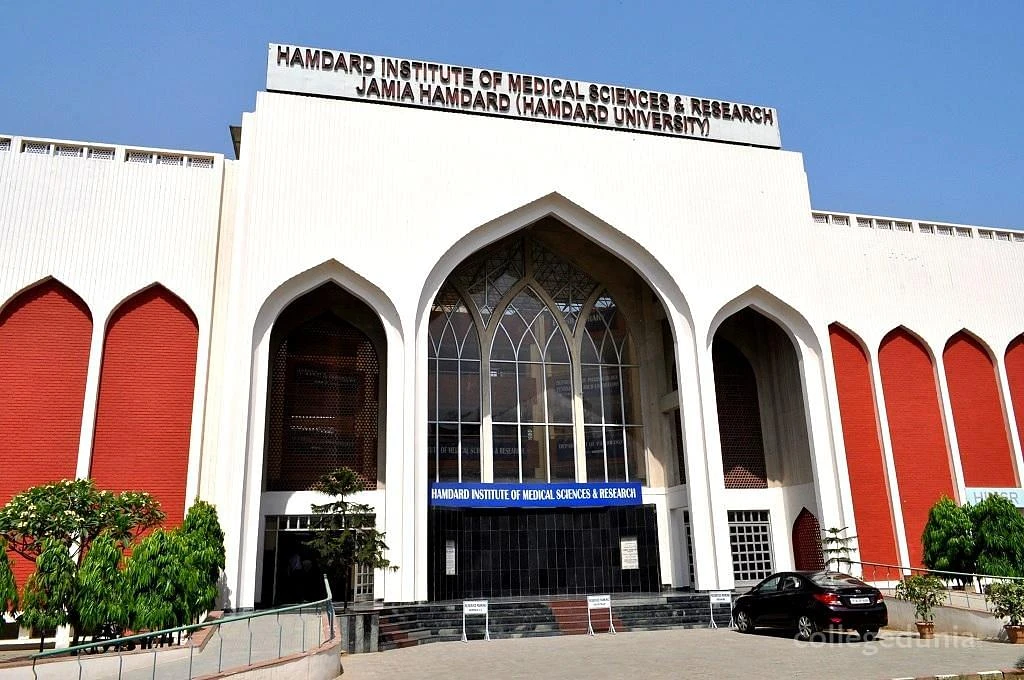
 Auditorium
 Cafeteria
 Campus Shuttle
 Communication Centre
 Computer Labs
 Medical
 Science Labs
 Sports Complex