Loading Admission Guardian content
Loading Admission Guardian content
Provisional score based on available data. It may change as more information is verified.
Find a program, read its fee details and explore the admission requirements.
Summary of the programs shown below. First-year fee. Check the note beside each amount for inclusions and exclusions.
| Course | Stream | Fees |
|---|---|---|
| Bachelor of Computer Applications [BCA] | Computer Applications | 69050 |
| Bachelor of Business Administration [BBA] | Management | 69050 |
| Bachelor of Technology [B.Tech] {Lateral} | Engineering | 86900 |
| Bachelor of Technology [B.Tech] | Engineering | 103600 |
| Master of Business Administration [MBA] | Management | 136500 |
Specializations
Eligibility: 10+2 with 30%
Specializations
Eligibility: 10+2 with 30%
Specializations
All accepted exams
Eligibility: Diploma/ B.Sc with 50%
Specializations
All accepted exams
Eligibility: 10+2 with 45%
Specializations
All accepted exams
Eligibility: Graduation with 45%
3 exams with cutoff data available - showing recent entries
 Ablion IT Solutions
 Air Control & Chemical Engineering Company Ltd
 Airtel
 AIS
AIS Amazon
 Amdocs
 Aponiar Solution
 Asahi India Glass Ltd.
 Berger
 Byju’s
 Capgemini
 Cipla Limited
 Cognizant
 Copro Solutions
 Doubtnut
 Dr. Catalyst
 Eduvirtuoso
 Eleation Academy
 Essar Oil
 Extra Marks
 Flipkart
 General Electric
 Genpact
 Go Speedy Go
 GRIFEO Technology
 GulfTalent
 Hitachi consulting
 HSBC Bank
 HSBC Global Technology
 IBM
IBM IBM GBS
 ICICI Bank
 Iconma
 Industry ARC
 Infosys
 Irvine Infocom
 Jaro Education
 JBS Enterprises
 Just Dial
 Kovair
 Lido Learning
 Mphasis
 Nestle India
 Patanjali
 Pinnacle Infotech Solutions
 Promact Infotech
 Sap labs
 Scope Services
 Swadesh Softwares
 TalentHire Consulting
 Tata Consulting Engineers Ltd.
 TCS
TCS Tech Mahindra
 ThoughtWorks Technologies
 Toppr
Toppr Universal Hunt
 Value Prospect Consulting
 VAP Technology
 Wipro
Wipro Wipro Technologies
 Zensar
61 named recruiters in the recorded data. Company names are deduplicated.
If you're looking at private engineering colleges in West Bengal, Bengal College of Engineering and Technology (BCET) in Durgapur is a name that comes up a lot. Established in 2001, it's a self-financing institution that recently gained autonomous status in January 2025. That's a big deal—it means the college can now design its own curriculum and potentially be more responsive to industry trends. It's affiliated with Maulana Abul Kalam Azad University of Technology (MAKAUT), Kolkata, and sits on a 25-acre campus in Bidhan Nagar. The big academic draw is its NBA accreditation for the B.Tech in Computer Science and Engineering program, with some sources claiming accreditation for all eligible courses. It's not ranked in the NIRF framework, which is common for many private colleges, but the NBA stamp adds a layer of credibility. For students in the region, it often presents itself as a solid, if not top-tier, option with a focus on placements and practical learning.
BCET's academic portfolio is centered around engineering, with a strong emphasis on its B.Tech programs. The seat intake tells you where the college's priorities lie. Computer Science & Engineering (CSE) is the undisputed flagship with 180 seats. Information Technology (IT) and Electronics & Communication Engineering (ECE) follow with 120 and 60 seats respectively. The core branches—Mechanical, Civil, Electrical, and Electrical & Electronics—each have 60 seats. Beyond engineering, the college also offers BBA, BCA, B.Pharm, M.Tech, and MBA programs.
Academically, the recent autonomy is its most significant feature. It allows BCET to potentially move faster than the university-mandated syllabus, a plus for tech-focused branches. The college promotes hands-on learning through AI labs, coding zones, and innovation hubs. There's a focus on extracurricular technical development via clubs, hackathons, and workshops. Faculty are generally described by students as helpful and supportive, with many holding PhDs and Master's degrees. For instance, the CSE department alone had 26 faculty members as of a 2021 count. The academic calendar is maintained properly, and semester results are typically declared within one to two months after exams. While not a formal collaboration, the college's location in Durgapur provides a certain intellectual ecosystem, being in proximity to institutions like NIT Durgapur, CMERI, and IIT Kharagpur.
This is where the conversation gets interesting, and where you need to separate the brochure numbers from the on-ground reality. The placement data from BCET is a mix of impressive headlines and more modest, consistent figures.
Let's start with the highs. You'll see a figure of INR 42 LPA floated for a B.Tech IT student (unverified year, possibly 2026). That's an outlier. More verifiable highs include INR 12.47 LPA from Publicis Sapient in 2023 and INR 12 LPA in 2024. For the 2025 batch, the highest packages reported were INR 8 LPA for B.Tech and BBA, and INR 6.6 LPA for MBA.
The average package is a more useful metric for most students. For 2025, the college cites an average of INR 5.5 LPA. This aligns with a general range of INR 3-6 LPA for CSE and INR 5-6 LPA overall. For BCA, the 2025 average was INR 4 LPA.
Placement percentages require a branch-wise lens, and here the picture varies dramatically. For the 2023-2024 period, core branches like Mechanical and Civil Engineering reportedly saw 100% placement. Electrical Engineering was at 80%. However, for the high-intake IT branches, the numbers were lower: CSE at 58.82% and IT at 46.15%. The college claims an overall placement rate of 70-90% for IT and 75-85% for CSE in other years, but the 2023-24 data suggests those figures can fluctuate. In raw numbers, around 460 students were placed from the 2023 batch, and 300+ in 2025.
The recruiter list is extensive and leans heavily towards IT services and consulting. Top names include TCS, Infosys, Wipro, Tech Mahindra, Capgemini, Cognizant, and Accenture. You also see firms like Publicis Sapient, Amazon, Deloitte, Siemens, and Alstom. But you'll also notice a significant number of ed-tech and smaller IT firms like Corizo, Edu Tantr, Extramarks, Jaro Education, and Unschool on the list. For internships, about 60-75% of CSE students reportedly get them in IT firms or startups.
The reality check? BCET's placement cell is active and brings in a large volume of companies. The average package of ~INR 5.5 LPA is decent for a private college in this region at this fee level. But the placement percentage for computer science streams isn't guaranteed to be as high as advertised for every batch. Students in core branches might have a more consistent, if not higher-paying, placement record. The gap between the 100% placement in Civil/Mechanical and the sub-60% in CSE/IT for 2023-24 is notable and worth asking the placement office about directly.
BCET's fee structure is one of its competitive points, especially when compared to private engineering colleges in metropolitan areas. The total tuition fee for a 4-year B.Tech program ranges between INR 3 lakh and INR 4.8 lakh. Breaking it down, the semester tuition fee is approximately INR 45,000, which translates to about INR 90,000 per year. There are mentions of annual fee hikes of around INR 1,000.
Branch-wise, the total course fee for B.Tech in CSE is INR 4.8 lakh. For B.Tech in IT (2026-27 batch), it's INR 4 lakh for the full four years.
Hostel fees are a separate and significant cost. They vary by room type:
The hostel mess serves fully vegetarian meals. If you want non-vegetarian food, you'll need to look outside the hostel premises.
Adding it up, a rough total 4-year cost for a B.Tech student living in a standard two-seater hostel would be: Tuition (~INR 3.6 lakh) + Hostel/Mess (~INR 2.16 lakh to 3.6 lakh) = INR 5.76 lakh to 7.2 lakh. That's a full estimate, and it's relatively affordable in the private engineering landscape.
For financial aid, BCET offers merit-based scholarships for students with high ranks in WBJEE or JEE Main, as well as for top board exam performers. They also facilitate access to various external scholarship schemes. It's a point to discuss during admission counseling.
Admission to the B.Tech programs is primarily through entrance exam scores. The main channel is the West Bengal Joint Entrance Examination (WBJEE). Seats are filled through the state counseling process based on WBJEE rank. JEE Main scores are also accepted for admission.
The college hasn't published official, detailed cutoff ranks for recent years. Cutoffs vary each year based on the number of applicants, seat availability, and branch popularity. As a rule of thumb, CSE will have the highest cutoff rank (i.e., a better, lower rank number is required), followed by IT and ECE. The core engineering branches typically have more accessible cutoffs. Given the seat intake and the college's positioning, the cutoffs for BCET are generally not as fiercely competitive as those for the top-tier government colleges like Jadavpur University or IIEST Shibpur, but they are respectable for a private institution.
The application process is integrated with the state counseling. You need to appear for WBJEE or JEE Main, register for the West Bengal counseling, and choose BCET as a preference when filling your choices. The college's own website, bcetdgp.ac.in, will have notifications and links to the official counseling portals when the process begins.
The 25-acre campus in Bidhan Nagar is described as spacious and green. Infrastructure includes the standard academic blocks, libraries, and labs. The college highlights its AI labs and coding zones as modern facilities for its tech students. Hostels are on-campus, which is a major convenience. The quality, as indicated by the fee range, varies. The higher-priced rooms with attached bathrooms are naturally in better condition. The mandatory vegetarian mess is a point of contention for some, while others appreciate the simplicity. Non-veg food is available in the city, which is a short ride away.
Location-wise, BCET is about 13 km from Durgapur Railway Station and 15 km from Kazi Nazrul Islam Airport. The college provides a bus facility from various points in the city, which is essential given the distance.
Student life revolves around academics and technical activities. There are technical clubs and societies that organize events, hackathons, and workshops. The social scene is what you'd expect from a campus-focused college in a smaller city—it's there, but it's not a metropolitan experience. The proximity to NIT Durgapur can sometimes lead to shared events or a slightly larger peer network. Sports facilities are present but aren't highlighted as a premier feature.
Sifting through student feedback on platforms like CollegeDunia and Shiksha gives you a balanced, human perspective.
The positives are consistent. Students praise the helpful and qualified faculty, especially in the CSE and core engineering departments. The low tuition fee is repeatedly mentioned as a major advantage, offering decent value for money. The placement cell's effort is acknowledged; they bring in a lot of companies, even if the packages aren't always astronomical. The campus environment is considered good for studying, and the hostels, while basic, are functional. The recent autonomy is seen as a positive step for curriculum relevance.
But the criticisms are just as consistent. The strict attendance policy (often 75% mandatory) is a common gripe. The fully vegetarian hostel mess is a significant downside for many students. Some feel the infrastructure, while adequate, is aging and could use more investment, particularly in non-CSE departments. There's a sentiment that placements are good but not great, with a lot of mass recruiters and fewer product-based companies. The location is seen as somewhat isolated, making students dependent on college buses or personal transport for city access.
The overall vibe from alumni is pragmatic. BCET is seen as a good choice if you have a moderate rank and want an affordable engineering degree with a reasonable shot at a campus placement. It's not a college known for a vibrant, cosmopolitan campus life or groundbreaking research. It's a workmanlike institution that does its job.
BCET is a clear, value-for-money proposition for a specific set of students. If you have a WBJEE rank that doesn't get you into a top government college but is decent, and your priority is to secure an accredited B.Tech degree with a strong chance of a campus placement without paying metro-city private college fees, then BCET makes a lot of sense. Its autonomy, NBA accreditation for CSE, and active placement cell are genuine strengths. The average package of INR 5-5.5 LPA against an annual fee of ~INR 90,000 represents a solid return on investment.
However, you should look elsewhere if you're seeking a vibrant campus life with premium amenities, if you're strictly non-vegetarian and reliant on hostel food, or if your goal is to get into top-tier product companies or pursue higher research immediately after your B.Tech. The placement percentages for IT branches can be inconsistent, and the highest packages are outliers.
In short, BCET is a reliable, affordable workhorse of an engineering college. It won't dazzle you, but for many students in West Bengal, it provides a straightforward and financially sensible path to an engineering career. It's best for pragmatic students who view college as a launchpad to the workforce and are willing to put in the extra effort to stand out to recruiters.

In this preview: 1 photo · 0 videos
For the 2025 batch, the reported average placement package at BCET Durgapur was INR 5.5 Lakhs Per Annum (LPA). This figure generally falls within a range of INR 3 to 6 LPA for B.Tech programs, with Computer Science and Engineering (CSE) averaging around INR 3-6 LPA. The highest package for 2025 was INR 8 LPA for B.Tech graduates.
The fees for the B.Tech program at BCET are relatively affordable. The approximate semester tuition fee is INR 45,000, translating to about INR 90,000 per year. The total tuition fee for the entire 4-year B.Tech course ranges between INR 3 lakh and INR 4.8 lakh, depending on the specialization. For example, the total fee for B.Tech in Computer Science and Engineering (CSE) is INR 4.8 lakh, while for Information Technology (IT) for the 2026-27 batch it is INR 4 lakh.
BCET Durgapur is considered a good option for CSE, particularly due to its NBA accreditation for the B.Tech CSE program. It has the highest intake (180 seats) and focuses on practical learning through AI labs and coding zones. Placement-wise, CSE sees active recruitment from companies like TCS, Infosys, Wipro, and Cognizant. However, placement percentages can vary; for the 2023-24 period, it was reported at 58.82%. It offers solid value for its fee, making it a pragmatic choice for students with moderate entrance exam ranks.
The placement percentage at BCET varies significantly by branch. For the 2023-2024 period, core branches like Mechanical and Civil Engineering reported 100% placement, while Electrical Engineering was at 80%. For the high-demand IT streams, placement was lower: Computer Science and Engineering (CSE) at 58.82% and Information Technology (IT) at 46.15%. The college often cites overall placement rates between 70-90% for IT and 75-85% for CSE, but prospective students should note that these figures are branch-dependent and can fluctuate year-to-year.
BCET provides on-campus hostel facilities with options ranging from two-seaters with common bathrooms to single-seaters with attached bathrooms. Semester fees for hostels range from approximately INR 27,000 to INR 50,000. A key point to note is that the hostel mess serves only vegetarian meals. Non-vegetarian food is not available within the mess, but students can find it outside the hostel premises in the city. The quality of accommodation correlates with the fee paid, with higher-cost rooms generally offering better amenities.
Share what future students should know about BCET.
Student voices are not rewritten by colleges. We remove spam and abuse.
Wider admission question? Community PulseWhat should future students know?
Tell us which course you're considering. We'll help you work out the next step.
Get instant Partner access after mobile verification. Your public edits are reviewed before they go live.
Claim this college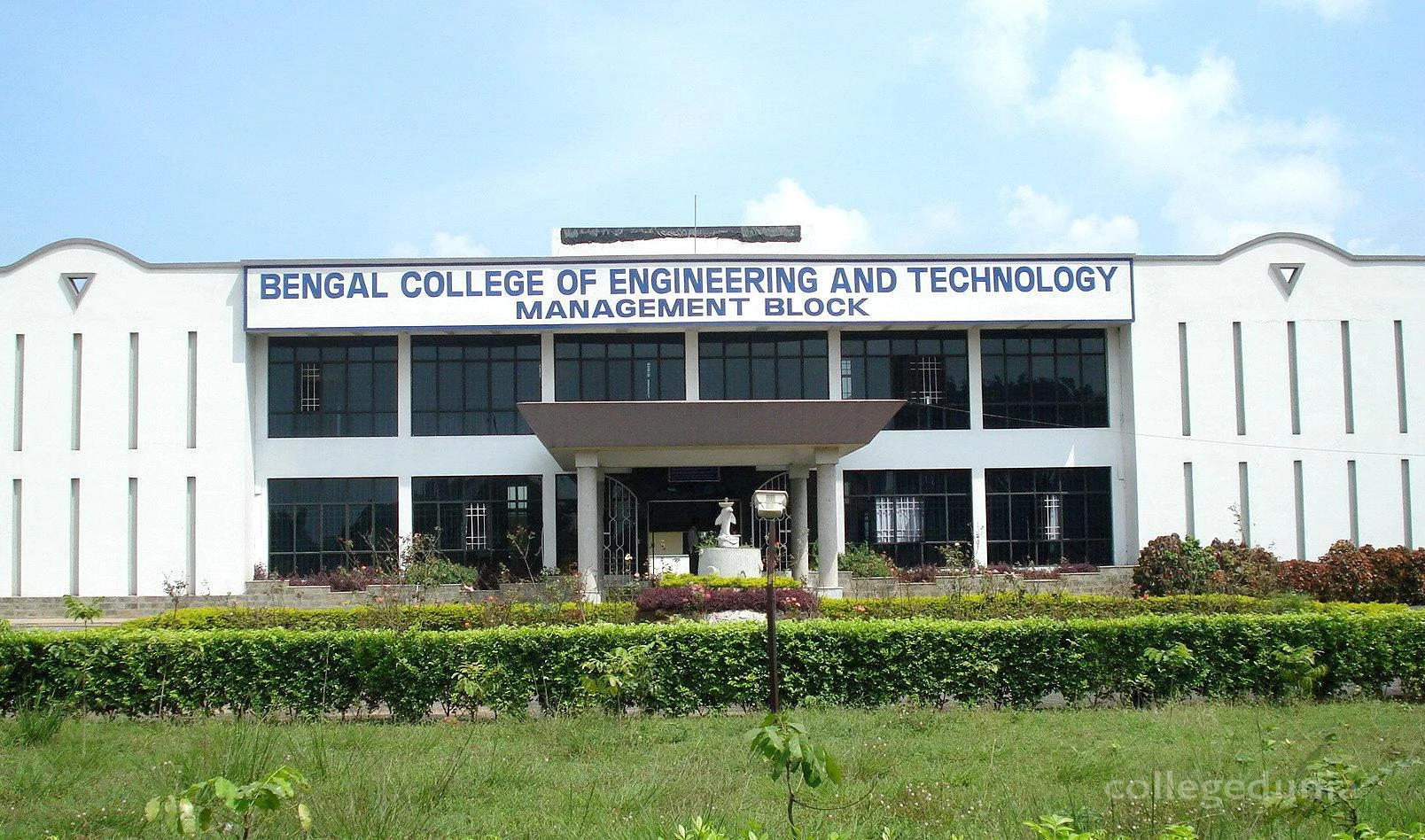
 Auditorium
 Cafeteria
 Computer Labs
 Gym
Gym Hostel
 Medical
 Science Labs
 Sports Complex
 Study Library