Loading Admission Guardian content
Loading Admission Guardian content
Provisional score based on available data. It may change as more information is verified.
Selected ranking categories, with the recorded year beside each result. Open all records for the complete history.
7 published records · Lower numeric ranks are stronger
India Today
Engineering · private
#2042021
Indiatoday
B.Tech · private
#2032021
Find a program, read its fee details and explore the admission requirements.
Summary of the programs shown below. First-year fee. Check the note beside each amount for inclusions and exclusions.
| Course | Stream | Fees |
|---|---|---|
| Bachelor of Technology [B.Tech] | Engineering | 52700 |
| Master of Computer Applications [M.C.A] | Computer Applications | |
| Diploma in Engineering (Polytechnic) | Engineering | |
| Master of Technology [M.Tech] | Engineering | |
| Master of Business Administration [MBA] | Management |
Specializations
All accepted exams
Eligibility: 10+2 with 45% + AP EAMCET
All accepted exams
Eligibility: Graduation
Specializations
All accepted exams
Eligibility: 10th
Specializations
All accepted exams
Eligibility: Graduation
Specializations
All accepted exams
Eligibility: Graduation
3 exams with cutoff data available - showing recent entries
 ATOS SYNTEL
 Capgemini
 DBS Bank
 DXC Technology
 efftronics
 HCL
HCL Hexaware Technologies
 IBM
IBM Infosys
 Legato
 MindTree
 Mphasis
 TCS
TCS Tech Mahindra
 Virtusa
 Wipro
WiproBVC Institute of Technology and Science (BVCITS) in Amalapuram has built a reputation over two decades as a solid, disciplined choice for engineering in Andhra Pradesh's Konaseema region. Its recent transition to autonomous status is a significant shift, giving it control over a more modern curriculum just as the job market gets tougher. You'll hear students call it a 'safe bet'—a place where the campus is green, the mess food is surprisingly decent, and the faculty keep a close eye on you. But that safety comes with strict rules and a placement scene where your branch—CSE or ECE versus Civil or Mechanical—makes all the difference. It's a college that serves its local community well, offering strong value, especially with state fee reimbursement, but it doesn't pretend to be a national powerhouse.
BVCITS runs the standard slate of engineering programs, but the new autonomous status under the BR23 Regulations is the real story here. It means the college can now design its own curriculum, focusing more on skill-oriented courses and mandatory internships. That's a potential advantage if executed well, making the coursework more responsive than the old, rigid university system.
The B.Tech intake is heavily skewed towards CSE and ECE, with 180 seats each. The newer specializations in AI & ML and AI & Data Science have 60 seats apiece. Core branches like Civil, Mechanical, and EEE also have 60 seats each. For postgrads, there's a sizable intake for MBA and MCA (120 seats each), and M.Tech programs in VLSI Design and Structural Engineering.
Faculty strength is around 150, with about 15-20% holding PhDs. The general student feedback is that teachers are accessible and maintain a 'school-like' care, which can be a pro or a con depending on your desire for independence. On the industry link front, MoUs with Microsoft, Oracle Academy, and ServiceNow exist for student certifications, which is a decent touch for a college in this tier.
This is where you need to read between the lines. The official placement story has some bright spots: a highest package of 18 LPA (from BigWorks) for the 2023-24 batch, and an average package band of 3.5 to 4.5 LPA. The median, as per the official NIRF 2023 report, was ₹3.0 LPA. Top recruiters are the familiar IT services names: TCS, Infosys, Wipro, Accenture, DXC, HCL, and Cognizant.
But the gap between the brochure and ground reality is notable. While the college claims a 75-80% placement rate, student reviews for the 2024 batch suggest the working number was closer to 50-60%, thanks to the IT sector slowdown. And that's almost entirely for CSE and ECE students. If you're in Civil or Mechanical Engineering, you should realistically plan for off-campus drives or higher studies. The much-touted claim of a 38 LPA package that sometimes surfaces is, by most accounts, an off-campus achievement or from the group's sister campus.
So, the verdict? For a CSE student from the region getting a seat through the convener quota, the return on investment can be good. For core branch students, the campus placement support is minimal.
The fee structure is a major draw, tightly regulated by the Andhra Pradesh state government. For B.Tech, the Convener Quota (Category A) fee is remarkably low, around ₹43,000 to ₹52,000 per year. The Management Quota (Category B) fee is higher, ranging from ₹1 lakh to ₹1.5 lakhs annually, depending on the branch.
Add to that hostel and mess charges, which run about ₹65,000 to ₹75,000 per year. Over four years, the total cost for a convener quota student, including hostel, lands in the ₹4.5 to ₹7 lakhs range. That's very affordable for a private engineering degree.
The big financial aid is the state's Jagananna Vidya Deevena (JVD) scheme, which provides full fee reimbursement for eligible Andhra Pradesh students. It effectively makes the convener quota seat almost free for a large portion of the student body, which is a massive factor in the college's local popularity.
Admissions are routed through the state counseling process run by APSCHE. For 85% of B.Tech seats, you need a valid rank in the AP EAPCET. The remaining 15% of seats (often under management quota) can be filled via JEE Main scores.
The 2024 cutoff ranks (General Category, Round 1) tell the story of demand: CSE closed between 18,000 and 22,000, the new AI & ML specialization between 25,000 and 30,000, and ECE between 38,000 and 45,000. For Civil or EEE, the cutoffs were much more relaxed, above 1,00,000 rank. For MBA and MCA, the gateway is the AP ICET, and for M.Tech, it's GATE or AP PGECET.
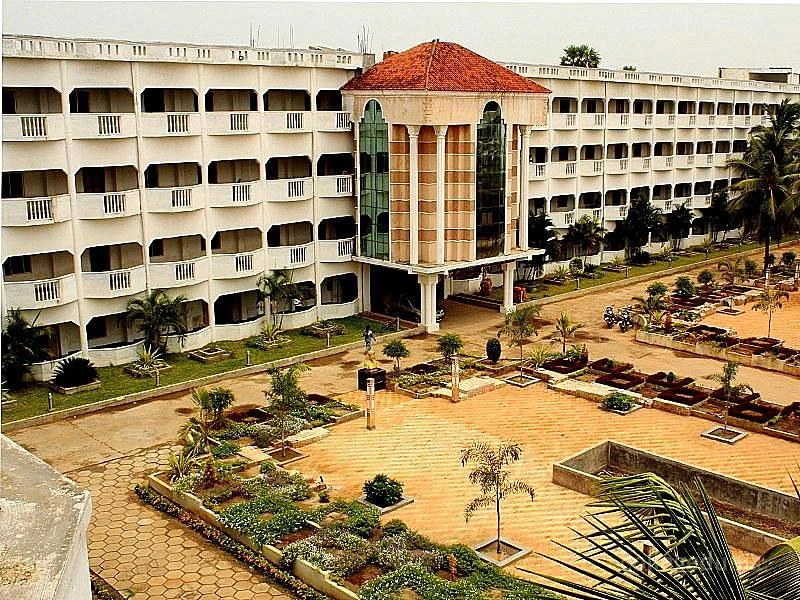
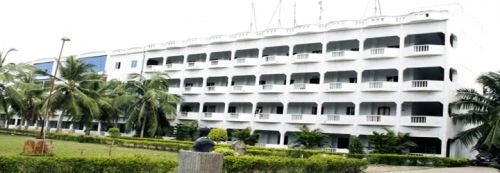
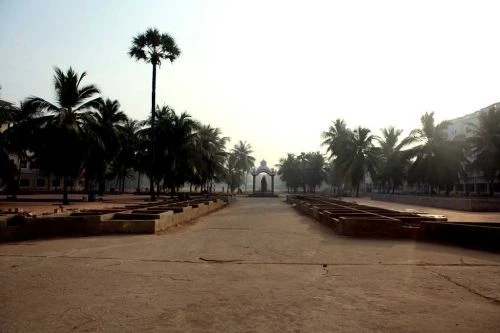
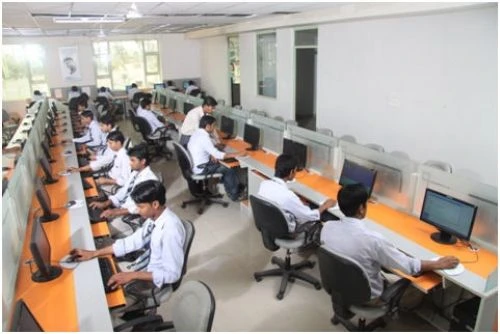
The 26-acre campus is consistently praised for being green and peaceful—'Konaseema's pride,' as some put it. Infrastructure is adequate: a central library with over 50,000 volumes, well-maintained labs including an IBM Software Lab and a Texas Instruments Lab, and a fleet of buses for commuting students.
Hostels are separate for boys and girls, with rooms typically shared by 3-4 students. Reviews rate them around 3.5 out of 5—not luxurious, but generally okay. A common gripe is inconsistent Wi-Fi speed in the hostel blocks. The mess food, however, gets a rare positive nod, often called better than average for private college hostels in the region.
Life is disciplined. Strictly enforced. The 75% attendance rule is no joke, and there's limited freedom to leave campus during college hours. The annual fest, Evince, happens but doesn't have the scale or buzz of fests in bigger cities like Vizag. It's a quiet, focused environment.
Scouring platforms like CollegeDunia and Shiksha reveals a clear consensus. BVCITS is seen as a 'safe and disciplined' choice, ideal for students from East Godavari and nearby districts who want a reputable, affordable engineering college close to home.
The positives are repeated: a clean, green campus; faculty who are helpful and accessible; exceptionally strong anti-ragging policies making it safe for women; and that above-par mess food. The discipline provides a structured environment that many parents appreciate.
But the negatives are just as consistent. The strictness feels oppressive to some, limiting the typical 'college experience.' The placement gap between CS/IT and core branches is a major point of concern. Students from outside Andhra sometimes note a language barrier, with explanations occasionally slipping into Telugu. And everyone agrees the social life is quiet—this isn't a 'happening' campus.
It depends entirely on your profile and expectations. For a local student from Andhra Pradesh with a good AP EAPCET rank (say, under 30,000) aiming for CSE or ECE, BVCITS is a strong, value-for-money option. The low convener quota fee, combined with the potential for JVD reimbursement, makes the financial risk minimal. You'll get a decent education, a disciplined environment, and a shot at IT placements, though you'll have to work hard to stand out.
However, if you're from outside the state, aiming for Mechanical or Civil Engineering, or seeking a vibrant, autonomous campus life with high-flying placements, you should probably look elsewhere. The college's strengths are its locality, discipline, and affordability—not national-level recognition or cutting-edge research. It's a workmanlike institution that does its job well for its primary audience, without any flashy pretensions. For the right student, that's exactly what's needed.

In this preview: 5 photos · 0 videos
Yes, BVCITS Amalapuram has recently received autonomous status. This allows the institute to design its own curriculum and conduct its own examinations.
For the 2024 batch, the highest placement package at BVCITS was reported between 12 to 18 LPA. However, the number of students placed saw a slight dip compared to 2022, attributed to the global IT hiring freeze.
The hostel fee at BVCITS ranges from ₹65,000 to ₹75,000 per year. This cost typically includes mess charges for food.
Yes, the college facilitates fee reimbursement. Eligible students with a valid EAPCET rank can avail of the Andhra Pradesh Government's JVD (Jagananna Vidya Deevena) scheme.
Both institutions belong to the same group. BVCITS is often preferred for its proximity to Amalapuram town and slightly better infrastructure, while BVCEC (BVC Engineering College) in Odalarevu is known for its long-standing history.
Share what future students should know about BVCITS.
Student voices are not rewritten by colleges. We remove spam and abuse.
Wider admission question? Community PulseWhat should future students know?
Tell us which course you're considering. We'll help you work out the next step.
Get instant Partner access after mobile verification. Your public edits are reviewed before they go live.
Claim this college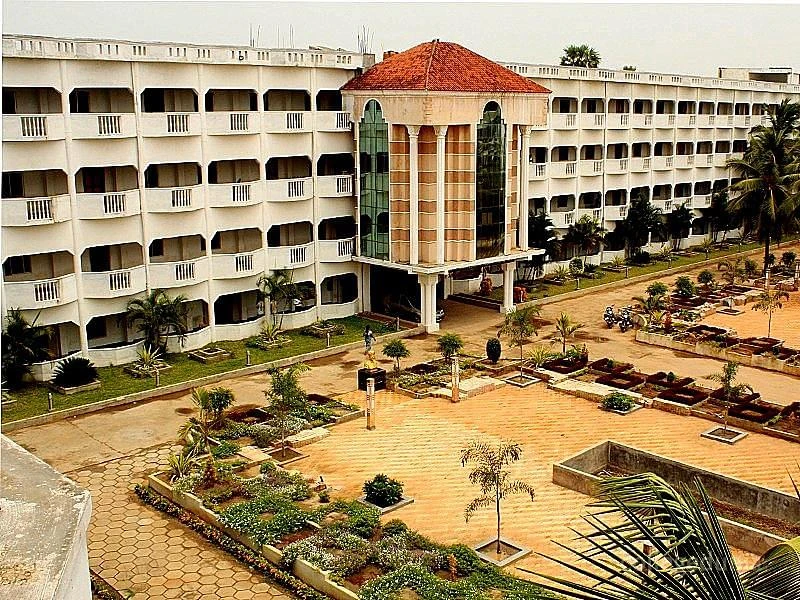
 Auditorium
 Cafeteria
 Computer Labs
 Gym
Gym Hostel
 Medical
 Science Labs
 Sports Complex
 Study Library