Loading Admission Guardian content
Loading Admission Guardian content

Find a program, read its fee details and explore the admission requirements.
Summary of the programs shown below. Fee periods can differ by program. Check the note beside each amount before comparing costs.
| Course | Stream | Fees |
|---|---|---|
| Doctorate of Medicine [MD] (Psychiatry) | Medical | 450000 |
| Ph.D. (Clinical Psychology) | Medical | |
| Diploma | Paramedical | |
| Master of Philosophy [M.Phil] | Science |
Specializations
All accepted exams
Eligibility: Graduation
Specializations
Eligibility: Post Graduation
Specializations
Eligibility: 10+2
Specializations
Eligibility: Post Graduation
1 exam with cutoff data available
If you're looking for a place where the history of Indian psychiatry is literally embedded in the walls, you've found it. The Central Institute of Psychiatry (CIP) in Ranchi isn't just a college; it's a living archive. Established in 1918, it's one of the oldest and most significant mental health institutions in Asia. This isn't about flashy new buildings or corporate tie-ups. It's about walking the same halls where the first draft of India's Mental Health Act was written in 1949, where the Indian Psychiatric Society was born. For students of psychiatry, clinical psychology, and psychiatric social work, CIP offers a kind of gravitas and clinical immersion that's hard to replicate elsewhere. The campus is a sprawling, 211-acre therapeutic landscape where patients and students coexist, a model that shapes a uniquely humane training experience. You come here for legacy, for depth, and for a government-subsidized education that makes specialized training astonishingly accessible.
CIP’s academic portfolio is tightly focused and deeply clinical. There are no undergraduate BA programs here. This is a specialist's training ground from day one.
The MD in Psychiatry is the crown jewel, with 34 seats. It's a three-year residency where theory is constantly tested against the high-volume clinical work of a major mental health hospital. The M.Phil. in Clinical Psychology (21 seats) and M.Phil. in Psychiatric Social Work are two-year, RCI-recognized programs that are fiercely competitive. They follow a scientist-practitioner model, blending rigorous research methodology with hands-on therapeutic training. For those aiming for academia and advanced research, the Ph.D. in Clinical Psychology offers a direct path. There's also a one-year Diploma in Psychiatric Nursing (23 seats), which fills a critical niche in mental healthcare teams.
The academic culture is old-school in the best sense. It's supervised, intensive, and patient-centric. You're not just learning from textbooks; you're learning from a patient population with diverse and complex presentations, supported by a faculty that has grown up within this system. The institute's own historical milestones—like establishing India's first occupational therapy department in 1922 or its pioneering neurosurgery unit—aren't just trivia; they inform a culture of innovation that's still present.
Let's be clear: CIP is not an engineering college where you sit for campus placements. Career progression here is different, more akin to how top medical institutes function. For MD Psychiatry graduates, the outcome is exceptionally strong. They are highly sought after. The typical pathway involves securing senior residency positions or consultant roles in government medical colleges, central institutes like AIIMS, NIMHANS, or IHBAS, or entering well-regarded private practice or hospital chains. Feedback from the alumni network suggests an average starting package in the range of ₹10-15 lakhs per annum (LPA), with a working average around ₹12 LPA. That's a solid, respectable start in this field, with significant growth potential.
For M.Phil. in Clinical Psychology and Psychiatric Social Work graduates, the landscape is expanding rapidly. Opportunities exist in government healthcare setups, corporate wellness sectors, NGOs, private clinics, and as independent practitioners. The RCI recognition is crucial for licensing. Ph.D. holders naturally gravitate towards academic and senior research positions. The institute's formidable reputation opens doors; your degree carries weight on a national CV.
Top recruiters aren't companies in the traditional sense but premier institutions: AIIMS, NIMHANS, IHBAS, and various national and international mental health organizations. The placement isn't a single-day event but a culmination of your training, network, and the institute's standing.
This is where CIP becomes a phenomenal value proposition, especially for the M.Phil. and Ph.D. programs. The fee structure is heavily subsidized by the Government of India, making world-class training accessible.
Now, the game-changer: the scholarships/stipends. M.Phil. and Ph.D. scholars receive ₹25,000 per month. Diploma students get ₹2,500 per month. This isn't just financial aid; it's a salary that allows you to focus entirely on your demanding training. The hostel fee is a mere ₹470 per month, often deducted directly from this stipend. Mess charges are extra but reasonable. The institute also actively helps students avail other central and state government scholarships based on merit, category, or need.
Admission is the gate, and it's a competitive one. The process differs sharply by program.
For MD (Psychiatry): It's all about NEET PG. You need an MBBS degree from an NMC-recognized college and a completed one-year internship. Your NEET PG rank then determines everything through the Medical Counselling Committee (MCC) centralised counselling. The cutoffs fluctuate yearly. For the 2025 intake, the last round closing rank for the General-All India category was 7876. For OBC, it was 17076. In 2024, the General category closed at rank 6818. These ranks give you a sense of the benchmark—it's competitive, but within reach for serious NEET PG aspirants targeting psychiatry. Application windows are announced on the official CIP website and MCC portal.
For M.Phil./Ph.D. Programs: This is a separate, institute-specific process. You must take CIP's own Computer-Based Test (CBT) Entrance Examination, followed by an interview and practical assessment. The competition is intense for the handful of seats (21 for M.Phil. Clinical Psychology, 4 for Ph.D.). Applications usually open in early spring.
For the Diploma in Psychiatric Nursing: Selection is primarily based on an interview.
The application fee is standardized: ₹1000 for General & EWS categories; ₹500 for OBC, SC, ST, and PwD candidates.
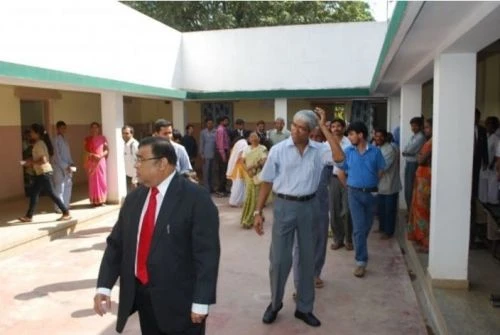
The 211-acre campus is an experience in itself. It's less a typical college campus and more a self-contained, therapeutic township. Over 90% of the land is lush green, with ancient trees and open spaces. It's an eco-friendly 'Green' campus using solar power extensively. The 'open hospital' concept means patients are free to move around, creating an environment of normalisation that's central to your training.
Hostel facilities receive consistently positive marks from students. You'll likely get a single-seater room—a huge plus for postgrads—with an attached balcony. Hostels are separate for men and women, with 24-hour security and good upkeep. The mess food is frequently described as "too good" and "nutritious," though as with any institutional mess, there can be occasional off days. At ₹470 per month, it's arguably the best value hostel in Indian postgraduate education.
Infrastructure is a mix of historic pavilion-style wards and cutting-edge labs. The academic highlights are serious: a state-of-the-art neuroimaging centre with a 3 Tesla fMRI, India's first Precision Neurosciences Lab, and advanced brain stimulation labs. The library is legendary—the largest of its kind in the country with nearly 72,000 books and access to over 800 e-journals. It even houses rare pre-independence volumes and is accessible to patients.
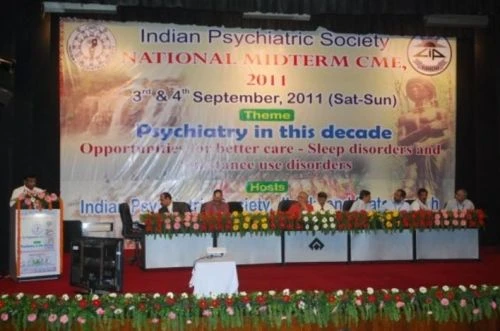
Student life is focused and peaceful. There's a fully-equipped gym, indoor and outdoor sports facilities, and yoga. A vibrant canteen serves as a social hub. While CIP may not have the typical university 'fest' culture, its affiliation with Ranchi University and its own auditorium host seminars, workshops, and cultural performances. Your social life will revolve around your close-knit cohort and the unique environment of the institute.
Sifting through student sentiment, a very clear picture emerges. The overwhelming feeling is one of privilege and value.
The Positives are loud and consistent:
The Negatives are minor and logistical: There's little direct criticism of academics or faculty. The only whispers relate to the occasional inconsistency of mess food timing—a universal hostel grievance. The institute's prospectus mentions strict anti-ragging measures, suggesting a proactive stance. The main 'challenge' students mention isn't a negative but a reality: the workload is heavy, and the training is demanding. You're expected to work hard.
For the right student, CIP isn't just worth it; it's a destination. If you are a medical graduate with a NEET PG rank that can get you into MD Psychiatry here, it's an outstanding choice. You get subsidized, top-tier psychiatric training with excellent career prospects. If you are a psychology or social work graduate aiming for a clinical career, the M.Phil. programs are among the best in India. The full government scholarship and stipend make it a financially intelligent decision with zero debt.
Who should look elsewhere? If you're seeking a typical, vibrant undergraduate college life with dozens of fests and clubs, this isn't it. The atmosphere is professional, scholarly, and clinically intense. If you need the glitz of a metropolitan city, Ranchi's pace might feel slow. CIP is for the serious, purpose-driven student who views mental healthcare as a vocation, not just a degree. It's for those who value legacy, depth of training, and financial sense over flashy brochures. In the niche world of mental health education, CIP remains a quiet giant.

In this preview: 5 photos · 0 videos
CIP Ranchi specializes in advanced mental health training. Its flagship programs are the MD in Psychiatry (34 seats), the M.Phil. in Clinical Psychology (21 seats), and the M.Phil. in Psychiatric Social Work. It also offers a Ph.D. in Clinical Psychology and a one-year Diploma in Psychiatric Nursing. All courses are approved by the National Medical Commission (NMC) or the Rehabilitation Council of India (RCI), ensuring national recognition and licensure eligibility.
Admission to the MD Psychiatry program is strictly through the NEET PG entrance exam. Candidates must have completed their MBBS from an NMC-recognized institution and a one-year compulsory rotatory internship. Selection is based on the candidate's NEET PG All India Rank, followed by centralized counseling conducted by the Medical Counselling Committee (MCC). The closing rank for the General category in recent years has ranged between approximately 6,800 and 11,500.
Yes, CIP provides substantial financial support. Most remarkably, M.Phil. and Ph.D. scholars receive a stipend of ₹25,000 per month, and Diploma students receive ₹2,500 per month. These are government-funded scholarships, not loans. For the MD program, while there is no monthly stipend of that kind, the annual tuition is heavily subsidized at just ₹15,000-30,000. The institute also facilitates access to other central and state merit or category-based scholarships.
Hostel facilities at CIP are highly rated by students. Accommodation typically consists of single-seater rooms with attached balconies, offered in separate buildings for male and female students. The hostels are well-maintained with 24-hour security and regular cleaning. The cost is exceptionally low at approximately ₹470 per month, which is often deducted directly from the student's stipend. Mess food is provided separately and is generally reported to be of good quality.
The CIP campus is a 211-acre, eco-friendly 'Green' campus. Key academic infrastructure includes a state-of-the-art neuroimaging center with a 3 Tesla functional MRI system, India's first Precision Neurosciences Lab, and advanced brain stimulation facilities. It houses a monumental library with nearly 72,000 books and access to over 800 e-journals. The campus also features a fully-equipped gym, sports facilities, Wi-Fi, and operates on a unique 'open hospital' model that integrates patient care with the learning environment.
Share what future students should know about CIP Ranchi.
Student voices are not rewritten by colleges. We remove spam and abuse.
Wider admission question? Community PulseWhat should future students know?
Tell us which course you're considering. We'll help you work out the next step.
Get instant Partner access after mobile verification. Your public edits are reviewed before they go live.
Claim this college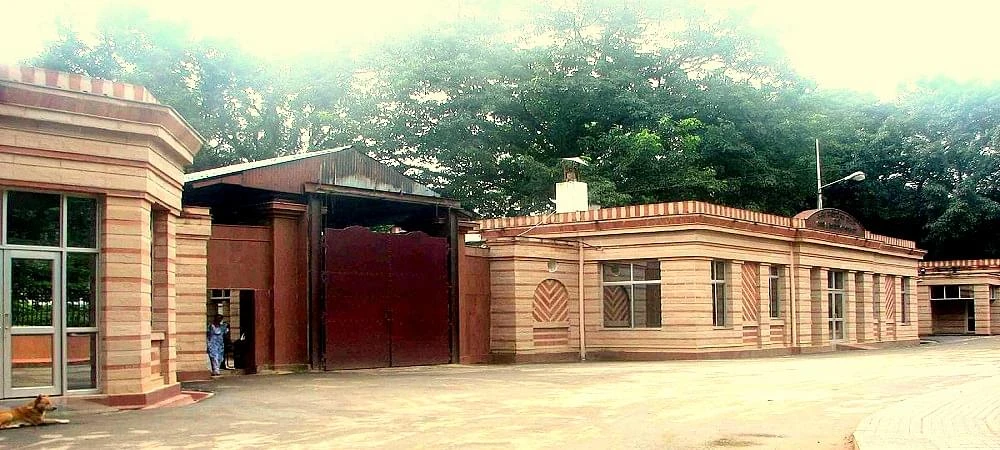
 Auditorium
 Cafeteria
 Computer Labs
 Medical
 Science Labs
 Study Library