Loading Admission Guardian content
Loading Admission Guardian content

Provisional score based on available data. It may change as more information is verified.
Selected ranking categories, with the recorded year beside each result. Open all records for the complete history.
1 published record · Lower numeric ranks are stronger
Find a program, read its fee details and explore the admission requirements.
Summary of the programs shown below. First-year fee. Check the note beside each amount for inclusions and exclusions.
| Course | Stream | Fees |
|---|---|---|
| Bachelor of Engineering [BE] | Engineering | 40000 |
| Master of Engineering [ME] | Engineering | 50000 |
| Bachelor of Technology [B.Tech] (Artificial Intelligence & Data Science) | Engineering |
Specializations
All accepted exams
Eligibility: 10+2
Specializations
Eligibility: Graduation with 50% + TANCET
Specializations
All accepted exams
Eligibility: 10+2
1 exam with cutoff data available - showing recent entries
Chendhuran College of Engineering and Technology (CCET) is a name that comes up for students in the Pudukkottai belt with TNEA ranks beyond the first lakh. Established in 2006, this private institution offers a low-cost Anna University degree on a sprawling, green campus. That's the primary draw. The reality is a mixed bag of strict discipline, basic amenities, and placement outcomes that lean heavily towards the service sector rather than core engineering. It's a college defined by its affordability and rural location, serving a specific student demographic that prioritizes a budget-friendly B.E. over urban opportunities.
CCET runs a standard set of programs under the Anna University curriculum. At the undergraduate level, you have the usual suspects: B.E. in Computer Science, Electronics, Electrical, Mechanical, and Civil, each with an intake of 60. They've added a B.Tech in Artificial Intelligence and Data Science, reflecting the trend. For postgraduates, there are M.E. programs in CSE, Communication Systems, and a couple of core branches, plus an MBA.
The academic rhythm is dictated entirely by Anna University's semester schedule. Teaching is exam-focused, aimed at clearing the university papers. Faculty strength is reported between 68 and 119, which suggests variability. The principal, Dr. K. Ganesh Babu, holds a Ph.D. in Mechanical. They offer value-added certifications in tools like Python and AutoCAD, which is a positive, though the depth can be basic. It's a syllabus-completion environment. You won't find cutting-edge research here, but for students who need structured guidance to get through an Anna University degree, the faculty are generally described as approachable.
This is where you need to separate official claims from ground reports. The college states a placement percentage of 60-80%. Student reviews, however, paint a more nuanced picture. For CSE and IT, that range might be achievable, but for core branches like Mechanical and Civil, placement rates are suggested to be much lower, sometimes under 30%.
The package figures tell the story. The highest package touted is between 4.5 to 6 LPA, but the working average that alumni consistently cite is in the ₹2.2 to ₹3 lakhs per annum range. The minimum offers start around ₹1.8 LPA. Recruiters are a mix. You'll see names like Infosys, Wipro, and HCL on the list, but placements often happen through pooled campus drives or students securing jobs off-campus. The more consistent on-campus recruiters are service and BPO firms like Hinduja Global Solutions (HGS), Allsec Technologies, and Aegis.
Core placements do happen with companies like Ford, TVS, or Renault Nissan, but they are fewer. The takeaway? If you're in CSE or ECE, you have a decent shot at an IT or ITES job. If you're in Mechanical or Civil, you'll likely need to hustle off-campus or through higher studies. The internship is mandatory, usually fulfilled at local industries in Trichy or Pudukkottai.
Affordability is CCET's strongest card. For a student coming through the Tamil Nadu Engineering Admissions (TNEA) government quota, the annual tuition is remarkably low, hovering between ₹50,000 to ₹55,000. The management quota fee is higher, ranging from ₹85,000 to ₹1.15 lakhs.
Hostel and mess costs are extra. The mess bill is around ₹21,000 a year, with room rent and other charges adding another ₹14,000 or so. All in, hostel residents can expect to pay about ₹35,000 to ₹50,000 annually depending on room sharing. Add in exam fees (≈₹5,000) and optional transport (₹4,000-₹10,000), and the total annual cost for a government quota student in the hostel sits around ₹1-1.2 lakhs.
Over four years, you're looking at a total expenditure of roughly ₹3.5 to ₹6 lakhs. That's a fraction of the cost of a private college in Chennai or Coimbatore. The college does not heavily advertise specific scholarship schemes, but students can avail of state and central government scholarships based on merit and category.
Admission for the B.E./B.Tech programs is straightforward and based entirely on your Class 12 marks. There's no separate entrance exam for UG courses; everything goes through the TNEA counseling process. You need to have passed your 12th with Physics, Chemistry, and Mathematics.
The cutoffs, reflected as TNEA ranks, are where CCET's position becomes clear. In the 2024 counseling rounds, for the General category, the closing ranks for popular branches were: CSE (up to ~1.44 lakh), ECE (up to ~1.5 lakh), and the new AI & DS (up to ~1.15 lakh). Branches like Mechanical and Civil often have seats left vacant, with cutoffs extending beyond 1.8 lakh rank.
This means CCET is a realistic option for students with ranks in the 80,000 to 1,80,000 bracket. The selection process is purely merit-based through the TNEA portal. If you miss the counseling or seek management quota, you must apply directly to the college. For M.E. programs, a valid TANCET or GATE score is required.
The campus is officially 54 acres, though some sources note 23. It's green and spread out, which is a plus. The infrastructure is functional. Labs for each department exist—VLSI, Thermal, AI & Robotics—and are deemed adequate for covering the university syllabus, but don't expect the latest equipment. The library is connected to DELNET for e-journals.
Hostels are separate for genders, offering non-AC rooms in various sharing configurations. The facilities are basic. A recurring theme in reviews is the strictness of the hostel wardens, with limited freedom for outings. The canteen food receives frequent complaints about quality and hygiene.
Social life is minimal. The Lena Vilakku location is isolated. The college compensates with internal activities—sports like Kho-Kho and Ball Badminton are promoted actively, and there are cultural events in the auditorium. The campus is Wi-Fi enabled, but speeds are average and access can be restricted in hostels. Transport buses cover routes to Pudukkottai, Karaikudi, and Tanjore. It's a disciplined, somewhat insular environment best suited for students who don't mind a quiet, regimented campus life.
Scouring platforms like CollegeDunia and Shiksha reveals a clear consensus. The biggest pro is always the low cost. For students from surrounding rural areas, it makes an engineering degree accessible. The environment is considered safe, especially for women, and the discipline ensures a focus on academics.
But the negatives are consistent and significant. The 2018 exam fraud scandal, where Anna University investigated mass impersonation, is a lingering black mark that reviewers still mention. The isolation of the campus leads to complaints of "zero social life." Placement outcomes, as discussed, are seen as mediocre, with a heavy reliance on BPO companies.
Management is often described as "money-minded" regarding various fines and fees. The teaching, while supportive, is rigidly focused on passing exams rather than fostering deeper understanding or innovation. It's a pragmatic trade-off: you get a cheap, recognized degree in a controlled setting, but you sacrifice urban exposure, campus luxury, and high-flying placement opportunities.
Chendhuran College of Engineering and Technology serves a specific niche. It's worth serious consideration if you are a cost-conscious student with a TNEA rank between 1 lakh and 1.8 lakh, primarily seeking an affordable Anna University degree from a disciplined campus. It's a viable, no-frills path to a B.E. credential, particularly for branches like CSE or ECE where IT service sector placements are possible.
However, you should probably look elsewhere if you have a rank under 80,000, can afford higher fees, or have strong aspirations for core engineering roles, vibrant campus life, or top-tier recruiters. The college's history with exam malpractice is a concern, and the remote location is a real drawback for many. Ultimately, CCET is a budget-tier institution. It delivers on its core promise of a low-cost degree, but expectations need to be calibrated accordingly. Manage your expectations on placements and lifestyle, and it can be a practical stepping stone.
For official information, visit the Chendhuran College website. You can verify its NAAC B++ accreditation status on the NAAC portal.
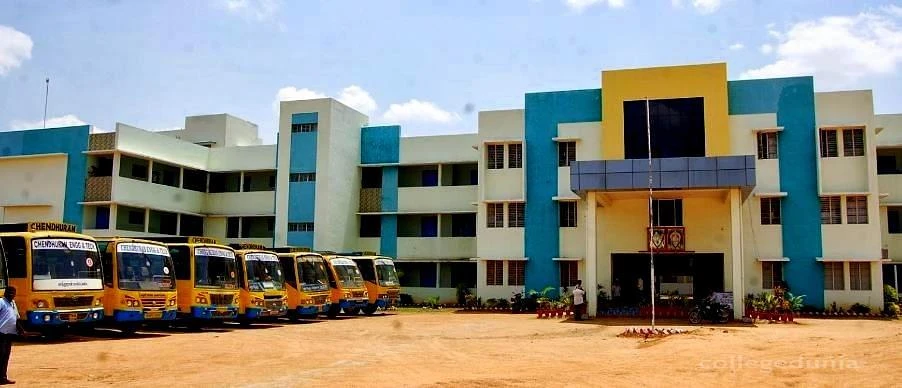
In this preview: 1 photo · 0 videos
Chendhuran College is considered a decent choice for students with lower TNEA ranks seeking an affordable engineering degree. For CSE, placements are primarily in service-sector IT firms.
The total annual cost for hostel accommodation, including mess charges, is approximately ₹40,000 to ₹50,000.
Yes, the college maintains strict discipline, which is common among many rural Tamil Nadu colleges. This includes enforced dress codes, regulated mobile phone usage, and rules governing gender interaction.
Yes, the college operates dedicated bus services for students commuting from Karaikudi and nearby areas like Tanjore.
The TNEA counseling code for admission to Chendhuran College of Engineering and Technology is 3926.
Share what future students should know about Chendhuran College of Engineering and Technology.
Student voices are not rewritten by colleges. We remove spam and abuse.
Wider admission question? Community PulseWhat should future students know?
Tell us which course you're considering. We'll help you work out the next step.
Get instant Partner access after mobile verification. Your public edits are reviewed before they go live.
Claim this college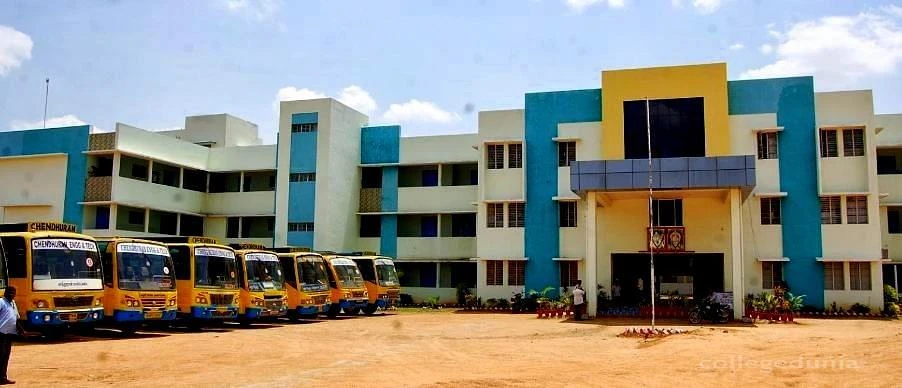
 Auditorium
 Cafeteria
 Computer Labs
 Gym
Gym Hostel
 Medical
 Science Labs
 Sports Complex
 Study Library