Loading Admission Guardian content
Loading Admission Guardian content

Provisional score based on available data. It may change as more information is verified.
Selected ranking categories, with the recorded year beside each result. Open all records for the complete history.
6 published records · Lower numeric ranks are stronger
Find a program, read its fee details and explore the admission requirements.
Summary of the programs shown below. First-year fee. Check the note beside each amount for inclusions and exclusions.
| Course | Stream | Fees |
|---|---|---|
| Bachelor of Technology [B.Tech] | Engineering | 50000 |
| Master of Engineering [ME] | Engineering | 50000 |
| Bachelor of Engineering [BE] | Engineering | 55000 |
| Bachelor of Engineering [BE] {Lateral} | Engineering | 55000 |
| Ph.D | Science |
Specializations
All accepted exams
Eligibility: 10+2 with 50%
Specializations
All accepted exams
Eligibility: Graduation with 50%
Specializations
All accepted exams
Eligibility: 10+2 with 45%
Specializations
All accepted exams
Eligibility: Diploma with 50%
Eligibility: Post Graduation
1 exam with cutoff data available - showing recent entries
 ACC Limited
 Accenture
 American Express
 Aon Hewitt
 Atos Origin
 ATOS SYNTEL
 Bank of America
 Bonfiglioli Transmission Pvt Ltd
 Brakes India Limited
 Caliber Interconnect
 CGI
CGI Chennai Metco Pvt. Ltd
 Cognizant
 CSC
CSC DXC Technology
 Earth Infrastructures Limited
 EASi
EASi ELGI Equipments Ltd
 Emerald
 Emerson Virgo
 FANUC India Pvt Ltd
 FLSmidth
 FSS
FSS GAMESA
 Gofrugal
 Harita Techserv Ltd
 HCL Technologies
 Hexaware Technologies
 Hindustan Copper Limited (HCL)
 HSBC Global Technology
 IBM
IBM Infosys
 Infosys Technologies
 JK Tyre
 Kaar Technologies
 Kawasaki
 L&T Infotech
 Maestro Steel Detailing
 Mahindra Rise
 MindTree
 Mitsubishi Motors
 Mobius
 Morgan Stanley
 Mphasis
 NTT DATA
 OFSS
OFSS Pega Systems
 Quest
Quest Quest Global
 Rane Group
 Renault Nissan
 Renen Power
 Rivigo Logistics
 Saipen
 Sandvik Asia
 Sanmar Group
 Sanmina
 Schenider Electric
 Schindler Ltd.
 Skavasystems Pvt. Ltd.
 SLK
SLK Tata Consultancy Services
 Tata Consulting Engineers Ltd.
 TCS
TCS Tech Mahindra
Chennai Institute of Technology has a reputation that precedes it. If you're looking for a college that operates like a corporate training ground with a singular focus on landing you a job, CIT is probably already on your list. Established in 2010 and now autonomous, this private engineering college in Kundrathur has rocketed up the ranks, securing an NAAC 'A+' grade and an NIRF Engineering rank of 101. But the real story isn't in the accreditation—it's in the relentless, almost industrial, focus on placements that defines the student experience. You'll hear alumni describe it with a mix of exhaustion and gratitude. It’s a trade-off, and understanding that bargain is key to deciding if this is your place.
With an annual UG intake of about 1,500 students, CIT offers a wide array of B.E. and B.Tech programs. The big draws are, unsurprisingly, CSE (240 seats) and the newer, in-demand specializations like AI & Data Science (180 seats) and AI & Machine Learning (60 seats). But they also have solid, NBA-accredited programs in core engineering like Mechanical, ECE, and Civil. The college’s autonomous status is a significant advantage—it means they design their own curriculum, which they’ve packed with about 20% industry-oriented projects. That’s not just brochure talk. You’ll find over 60 Centers of Excellence (CoE) on campus, from AI and Robotics to a high-profile Sino-India Luban Workshop for advanced manufacturing. Faculty-wise, with around 280 members and about 45% holding PhDs, the academic foundation is credible. The system is a 10-point CGPA, and the academic culture is intensely practical. Don’t expect a theory-heavy, lecture-only environment. The MoUs with 75+ global universities and companies like Zoho and Dassault Systèmes feed directly into these CoEs and project work.
This is where CIT builds its entire brand. The official numbers are strong: a 95.7% placement rate for 2025, an average package of ₹7 LPA (with CSE/IT/AI streams averaging ₹8.2 LPA), and a highest package of ₹60 LPA from Zoho. The recruiter list is impressive—Amazon, Microsoft, JP Morgan, Cisco, TCS, Infosys, Accenture, and Bosch regularly visit. For core branches like Mechatronics, companies like Bosch and Tessolve are consistent recruiters. The college claims a median package in the ₹5.5–6 LPA range, which feels plausible given the average.
But here’s the reality check that student reviews consistently highlight. Achieving these numbers requires complete buy-in from day one. The placement training is exhaustive, starting in the first year with a heavy focus on competitive coding platforms like LeetCode and SkillRack. Many of those "Super Dream" offers (over ₹10 LPA) come from Pre-Placement Offers (PPOs) earned through rigorous internships. The gap between the official narrative and student sentiment isn't about falsified data—it's about the intense, pressure-cooker environment required to hit those stats. The placement cell is powerful and effective, but it drives a culture where academic life is subordinate to corporate preparation. It’s a high-stakes, high-reward model.
The cost at CIT is a classic tale of two quotas, common in Tamil Nadu engineering admissions. If you secure a seat through the state's TNEA counseling based on your 12th-grade marks, you're in the government quota. That’s a steal, with annual tuition between ₹50,000 and ₹65,000. The management quota, which accounts for 35% of seats, is a different story—fees range from ₹2 to ₹2.5 lakhs per year, with CSE and AI&DS at the top end.
Add hostel costs, and the four-year picture comes into focus. A triple-sharing non-AC room runs about ₹58,000 per year, with mess charges adding roughly ₹45,000–50,000 annually. AC rooms come with a ₹24,000 surcharge. So, a merit student looking at a complete four-year cost (tuition + hostel) is likely investing ₹6 to ₹7.5 lakhs. A management quota student is looking at ₹12 to ₹15 lakhs. That’s a significant difference, making a good TNEA rank incredibly valuable here.
Scholarships exist to soften the blow. The CIT Merit Scholarship offers a 100% tuition waiver for TNEA rank holders under 5,000. There’s also financial aid from the Parthasarathy Seeniammal Trust for economically weaker students. You can find details on the official CIT website.
Admission to CIT’s UG programs is straightforward on paper: there’s no separate entrance exam. It’s all based on your 12th-standard PCM marks and your rank in the single-window TNEA (Tamil Nadu Engineering Admissions) counseling process. This system governs 65% of the seats. The remaining 35% are filled via the management quota, which also typically requires a minimum eligibility score but involves direct application to the college.
The competition is fierce for the top branches. For the 2024/2025 cycle, the closing TNEA ranks (Open Category) tell the story:
Core branches like Mechanical Engineering are more accessible, with cutoffs in the 15,000 – 17,000 range. If your goal is CSE or a related field at CIT, you need a rank comfortably under 10,000. You can track official cutoff trends on the TNEA portal and the Anna University website.
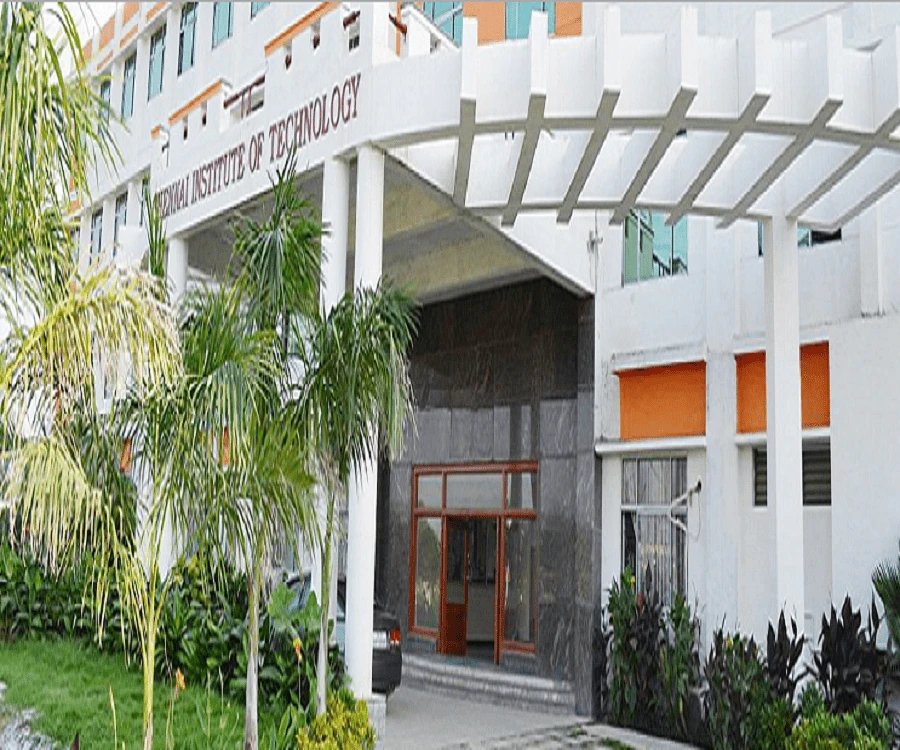
The campus is spacious, spread over 25-40 acres in suburban Kundrathur. But "suburban" might be generous—students often describe the location as remote, surrounded by scrubland. There’s essentially nothing to do outside the gates. This isolation reinforces the campus-centric, work-focused culture.
Infrastructure is a genuine strength. The labs, particularly the Luban Workshop and the various CoEs, are equipped with industry-grade hardware and software. The library is digitalized with access to major journals. Campus-wide Wi-Fi is present, though speeds are reportedly much better in labs than in hostels.
The hostel capacity is about 1,200, with separate blocks. Reviews suggest rooms are compact but maintained. The food? The consensus is a middling 3 out of 5—hygienic with options, but monotonous. With limited public transport, the college’s fleet of 40+ buses becomes semi-mandatory for commuters. Social life is largely confined to campus events and tech festivals. Sports facilities exist but aren’t the central draw. The overall vibe is functional, not vibrant.
Synthesizing feedback from platforms like CollegeDunia, Shiksha, Reddit, and Quora reveals a remarkably consistent narrative. The positives are laser-focused on outcomes. Students overwhelmingly praise the placement training, the access to high-end labs, and the college’s track record in competitions like the Smart India Hackathon. There’s a palpable pride in seeing seniors land top offers.
The negatives are about the journey. The most common complaint is a "school-like" discipline: strict 90% attendance policies, dress codes on specific days, and restricted movement. The phrase you’ll see repeatedly on Reddit is that CIT "feels more like a corporate office than a college." The pressure is constant, with coding pushed from day one. Some find the administration overly rigid or "money-minded" regarding miscellaneous fees.
A few paraphrased quotes capture the essence:
It’s a classic trade-off, and students are acutely aware of it.
Chennai Institute of Technology is a highly specific product for a specific buyer. It is unequivocally worth it if your sole, overriding priority is to secure a strong engineering job, preferably in the IT/software sector, and you are willing to exchange a traditional, relaxed college experience for a disciplined, goal-oriented grind. For a TNEA rank holder getting in at the government quota fee, it represents outstanding value—a relatively low investment for a high probability of a solid return in the form of a placement.
However, you should probably look elsewhere if you value campus life, exploration, flexibility, or a more balanced university experience. The strict rules and remote location can be stifling. The management quota fee, while competitive with other private colleges, demands more scrutiny—at that price point, you might compare the overall package (brand, infrastructure, lifestyle) with other options. Ultimately, CIT is a bootcamp disguised as a college. It’s exceptionally good at what it’s designed to do, but it makes no apologies for what it isn’t.

In this preview: 1 photo · 0 videos
While VIT Chennai generally has better infrastructure and brand recognition, Chennai Institute of Technology (CIT) is often preferred by local students for its lower fee structure through the TNEA counseling process and offers comparable placement outcomes in the IT sector.
The hostel food at CIT receives a median rating of 3 out of 5. It is considered hygienic and offers non-vegetarian options, though students frequently note that the menu can be repetitive.
Yes, Mechatronics is a strong choice at CIT. The institute is one of the few in Tamil Nadu with a dedicated Mechatronics lab (Luban Workshop) and has reported 100% placement for eligible students in core companies like Bosch and Tessolve.
Mobile phones are allowed in hostel areas but their use is restricted in classrooms. A formal dress code is strictly enforced during placement drives and official college events.
For the 2025 admissions, a cutoff of 180 for the Open Category (OC) makes you competitive for branches like ECE or IT, but the CSE branch typically closes at a higher cutoff, usually 185 or above. Core branches like Mechanical Engineering are more accessible, with cutoffs around 170+.
Share what future students should know about Chennai Institute of Technology.
Student voices are not rewritten by colleges. We remove spam and abuse.
Wider admission question? Community PulseWhat should future students know?
Tell us which course you're considering. We'll help you work out the next step.
Get instant Partner access after mobile verification. Your public edits are reviewed before they go live.
Claim this college
 Test and Verification Solutions
 Think and Learn
 ThoughtWorks Technologies
 Valeo
Valeo ValueLabs
 Verizon
 Vernalis
 Virtusa
 Vodafone
 Wabco India Ltd
 Wipro
Wipro Zilogic Systems Pvt Ltd
 Zoho
Zoho79 named recruiters in the recorded data. Company names are deduplicated.
 Auditorium
 Cafeteria
 Campus Shuttle
 Campus Wi-Fi
 Computer Labs
 Hostel
 Medical
 Science Labs
 Sports Complex
 Study Library