Loading Admission Guardian content
Loading Admission Guardian content
Selected ranking categories, with the recorded year beside each result. Open all records for the complete history.
2 published records · Lower numeric ranks are stronger
IIRF
Medical
#562022
Find a program, read its fee details and explore the admission requirements.
Summary of the programs shown below. Fee periods can differ by program. Check the note beside each amount before comparing costs.
| Course | Stream | Fees |
|---|---|---|
| M.B.B.S. | Medical | 67600 |
| DM | Medical | 90000 |
| Master of Chirurgiae [M.Ch] | Medical | 90000 |
| Doctorate of Medicine [MD] | Medical | 142000 |
| Post Graduate Diploma | Medical |
All accepted exams
Eligibility: 10+2 with 50% + NEET
Specializations
All accepted exams
Eligibility: Graduation
Specializations
All accepted exams
Eligibility: Graduation
Specializations
All accepted exams
Eligibility: Graduation
Specializations
Eligibility: Graduation
2 exams with cutoff data available - showing recent entries
If you want to understand what real medicine looks like outside a textbook, you go to Coimbatore Medical College. This isn't the private CMC in Vellore—it's the state-run powerhouse on Avinashi Road, where the sheer volume of patients is the primary teacher. Established in 1966 on land donated by industrialist G.D. Naidu, the college is built around a massive 1,200+ bed hospital that serves as the referral hub for Western Tamil Nadu. The vibe is old-school, rigorous, and decidedly no-frills. You come here for clinical immersion, not for a luxury campus experience. And for the subsidized government fee, that's a trade-off thousands of students make every year.
CMC offers a full ladder of medical education, from undergraduate to super-specialty levels. The MBBS program, with an intake of 200 students, is the cornerstone. It follows the NMC's Competency-Based Medical Education (CBME) curriculum over 4.5 years, plus a mandatory one-year Compulsory Rotatory Residential Internship (CRRI) at the attached hospital.
Postgraduate studies are a major focus. The college offers about 121 MD/MS seats across 18 specialities. The big draws are General Medicine (19 seats), General Surgery (18), and Obstetrics & Gynaecology (11). For super-specialization, there are 24 DM/MCh seats in fields like Cardiology, Neurology, and Neurosurgery. Allied health programs like B.Sc. Nursing (50 seats) and various diploma courses round out the academic portfolio.
The teaching faculty are government-appointed doctors, many with decades of hands-on experience. Don't expect spoon-feeding. The pedagogy is traditional, driven by the relentless clinical workload. Internal exams are held at the campus's "NRS" (New Reading Room/Exam Hall), and the academic calendar strictly follows the university schedule. It's a system that rewards self-starters.
In a government medical college, "placements" mean internships and subsequent government service. Here, the path is clearly defined. 100% of MBBS graduates complete their CRRI at CMCH, earning a stipend of ₹25,000 to ₹28,000 per month as of 2024-25. Postgraduate residents earn between ₹48,000 and ₹52,000.
The critical detail is the service bond. Every MBBS graduate must serve the Government of Tamil Nadu for five years. Break that bond, and the penalty is a stiff ₹5,00,000. After internship, most graduates either prepare for NEET-PG or take the Tamil Nadu Medical Services Recruitment Board (MRB) exam to become Medical Officers. A starting MRB salary is around ₹80,000 per month. It's a secure, if mandated, career launchpad. The college doesn't have corporate recruiters visiting campus—your "placement" is into the state's public health machinery.
This is where government colleges shine. The fees are a fraction of those at private institutions. For MBBS, the annual tuition is just ₹13,610 to ₹15,000. Over the entire 5.5-year course, the total tuition cost is an astonishingly low ₹65,000 to ₹81,000.
But you have to factor in living costs. Hostel fees are about ₹20,000 annually. The mess, run by a student committee, costs ₹5,000 to ₹6,000 per month—that's roughly ₹70,000 a year for food. Add in university and other miscellaneous fees, and the annual outlay for a hostelite is around ₹1 lakh, most of which is for room and board.
Scholarships are available through state schemes. BC/MBC students can get ₹10,000-12,000 per year, while SC/ST students receive about ₹20,000 annually. Students admitted under the 7.5% government school quota get full scholarships. It makes medical education accessible, which is the whole point.
Admission is purely merit-based through national entrance exams. For MBBS, you need NEET-UG. For MD/MS, it's NEET-PG. For super-specialties, it's NEET-SS. There is no management or NRI quota.
The seat matrix is split: 15% of seats are filled through the Medical Counseling Committee (MCC) for the All India Quota (AIQ). The remaining 85% are filled through the Tamil Nadu Directorate of Medical Education (DME) for the State Quota.
The 2024 cutoffs show how competitive it is. For the State Quota (General/Open Category), ranks were incredibly tight, between 480 and 650, which typically translates to NEET-UG scores of 670+. For the All India Quota (General), ranks were broader, ranging from around 3,500 to 9,700. BC category state ranks were around 770-1,200, and SC category ranks were between 4,600 and 5,500. You need a top-tier NEET score to have a shot.
Spread over 153 acres, the campus is functional. The crown jewel is the Coimbatore Medical College Hospital (CMCH), a behemoth that's a 5-7 km commute from the main academic block—a daily reality for interns. The library is a standard central resource, and labs are adequate for the curriculum.
Hostels are separate for boys and girls. Rooms are typically shared between two or three students. New blocks have been added for first-years, but the overall quality is what you'd expect from an older government setup: basic but livable. A consistent pain point, echoed in countless student reviews, is the lack of campus Wi-Fi. You'll be relying on your own mobile data.
The social life revolves around the hostels and the strong "Coian Spirit." There's a large ground for cricket and football, plus courts for basketball and badminton. The mess food gets mixed reviews—"good for 3 days a week, and just eatable for the rest," as one Reddit user put it. A notable positive is the reported near-absence of ragging, thanks to active anti-ragging committees and a generally supportive senior culture. Rules, especially curfews for girls' hostels (around 9 PM), are strict.
The consensus from forums like Quora, Reddit, and Shiksha is remarkably consistent. The overwhelming positive is the clinical exposure. Students call it "insane" and "unmatched." You see a volume and variety of cases that smaller private colleges can't provide. It builds diagnostic confidence fast.
Faculty are respected as experienced clinicians, though their teaching style is hands-off. You have to be proactive. The administrative machinery is slow, a classic government institution trait. The hostel infrastructure and lack of Wi-Fi are the most common complaints.
One recurring piece of advice from alumni sums it up: "If you want to be a clinician who can handle anything, come here. If you want a luxury resort-style campus, go elsewhere." The distance between the hospital and college is also frequently cited as a logistical hassle during the busy internship year.
Coimbatore Medical College is a specific kind of bargain. You trade modern infrastructure and campus comforts for two irreplaceable assets: vast, hands-on clinical experience and an ultra-low cost of education. It's best for the student who is fiercely dedicated to becoming a skilled clinician, doesn't mind a spartan lifestyle, and plans to serve in the public health system (or is okay with the bond penalty). If your priority is a cushy, tech-enabled campus with a more relaxed pace, a private college might suit you better. But for raw, practical medical training at a price almost anyone can afford, CMC Coimbatore remains a formidable and respected choice in South India. Just bring your own internet connection.
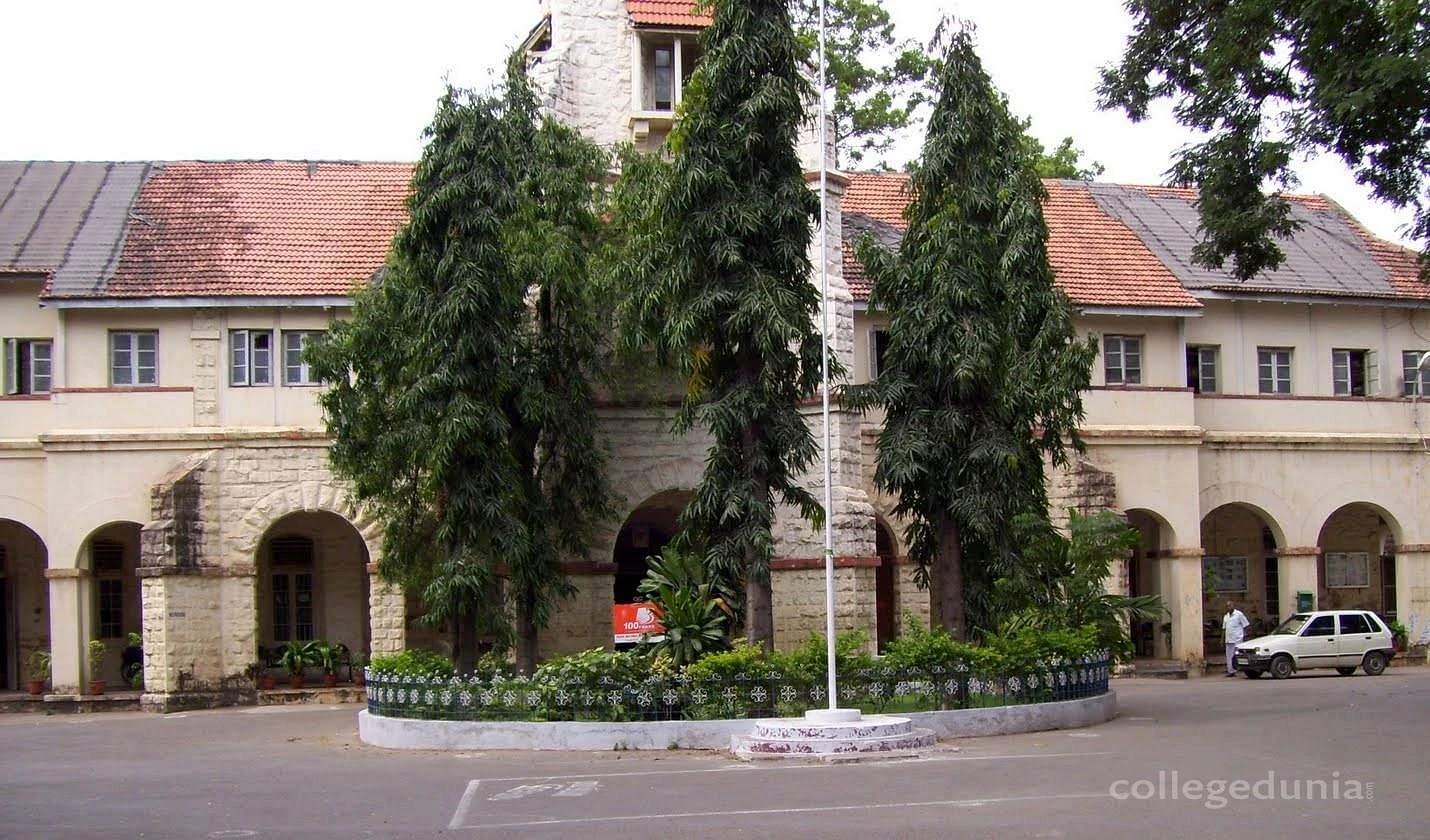
In this preview: 1 photo · 0 videos
Coimbatore Medical College (CMC) is considered better for extensive clinical exposure and is significantly more affordable as a government institution. PSG Medical College is noted for having superior infrastructure and a more modern campus life.
MBBS graduates from Coimbatore Medical College are required to complete a 5-year state service bond. The alternative to this service is a financial penalty of ₹5 lakh.
Yes, Coimbatore Medical College has separate hostel accommodations for female students. The hostels typically enforce a curfew around 9:00 PM.
As of 2024, the approximate monthly stipend for interns at Coimbatore Medical College ranges from ₹25,000 to ₹27,000.
No, Coimbatore Medical College does not provide campus-wide Wi-Fi. Students must use their own mobile data or personal internet routers for connectivity.
Share what future students should know about Coimbatore Medical College.
Student voices are not rewritten by colleges. We remove spam and abuse.
Wider admission question? Community PulseWhat should future students know?
Tell us which course you're considering. We'll help you work out the next step.
Get instant Partner access after mobile verification. Your public edits are reviewed before they go live.
Claim this college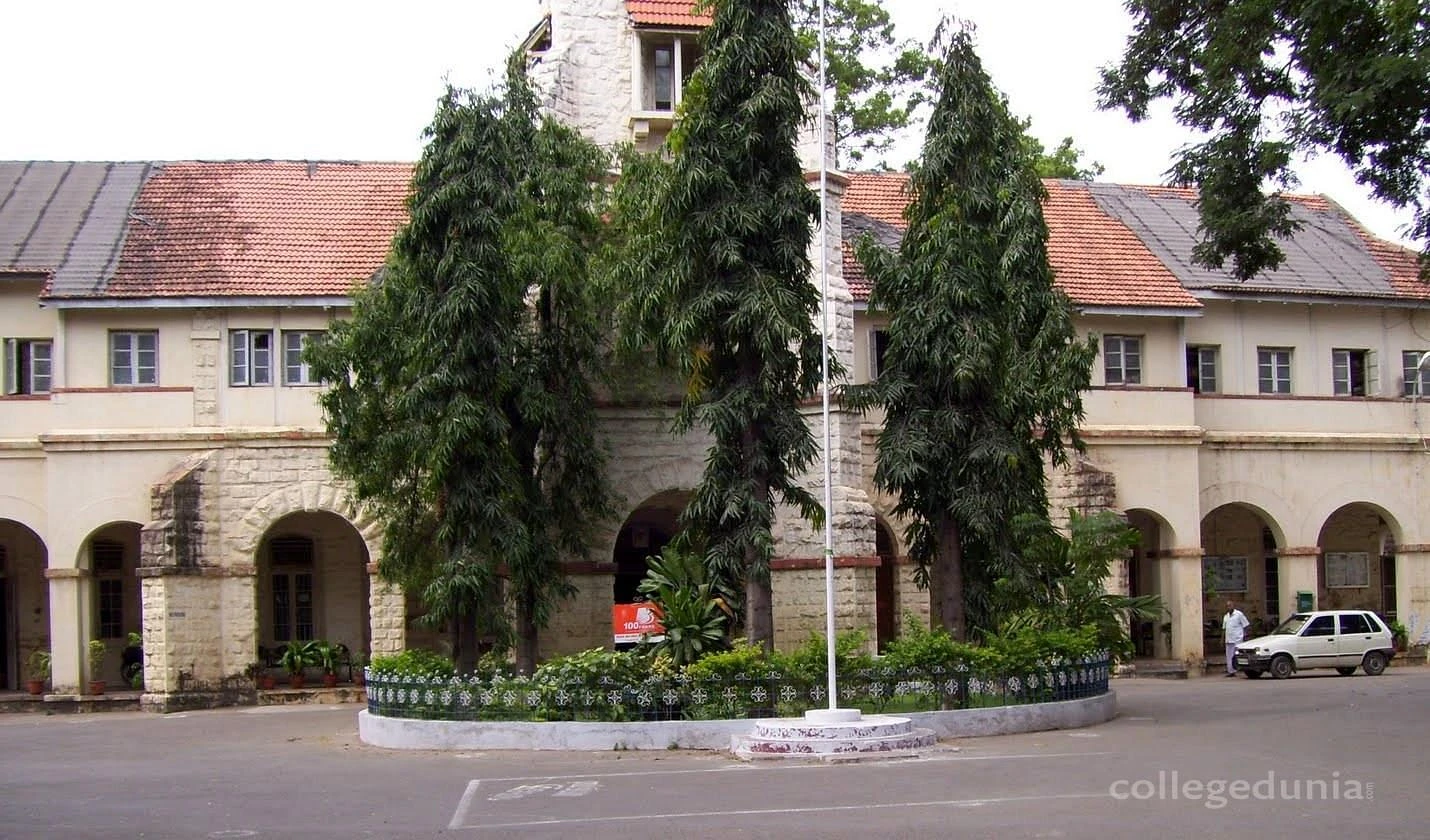
 Auditorium
 Bank & ATM
 Cafeteria
 Computer Labs
 Medical
 Science Labs
 Sports Complex
 Study Library