Loading Admission Guardian content
Loading Admission Guardian content

Provisional score based on available data. It may change as more information is verified.
Find a program, read its fee details and explore the admission requirements.
Summary of the programs shown below. First-year fee. Check the note beside each amount for inclusions and exclusions.
| Course | Stream | Fees |
|---|---|---|
| Bachelor of Engineering [BE] | Engineering | 40000 |
| Bachelor of Engineering [BE] {Lateral} | Engineering | 40000 |
| Master of Business Administration [MBA] | Management | 40000 |
| Master of Engineering [ME] | Engineering | 65000 |
Specializations
Eligibility: 10+2
Specializations
Eligibility: 10+3
Specializations
All accepted exams
Eligibility: Graduation with 50% + TANCET
Specializations
Eligibility: Graduation with 50% + TANCET
Dr. Pauls Engineering College (DPEC) sits on the Tindivanam-Pondicherry highway, a 64-acre campus that's become a default choice for engineering aspirants from Villupuram, Cuddalore, and Puducherry districts. Established in 1998 and affiliated with Anna University, it's a private, Christian minority institution that offers exactly what you'd expect: a basic, affordable B.E. degree. The reality here is one of modest expectations. You won't find cutting-edge labs or a parade of top-tier recruiters. What you will find is a functional campus, approachable faculty, and a path to an Anna University degree at a cost that doesn't break the bank. For many local students, that's the entire calculation.
DPEC runs a standard set of programs under the Anna University curriculum. The intake is heavily skewed towards undergraduate engineering, with 120 seats each for the core branches: Computer Science and Engineering (CSE), Electronics and Communication Engineering (ECE), Mechanical Engineering, and Civil Engineering. Electrical and Electronics Engineering has 60 seats, and Information Technology is also offered. That's a decent spread for a regional college.
Postgraduate options include M.E. programs in CSE, Structural Engineering, Manufacturing Engineering, Communication Systems, and Power Electronics, plus a general MBA. The academic rhythm is dictated entirely by Anna University's semester schedule. Faculty strength is around 66 members, and the consensus from students is that professors are accessible and generally helpful, though teaching quality can be department-dependent. You're getting a no-frills, syllabus-focused education here. The grading is Anna University's 10-point CGPA system. Don't expect innovative pedagogy or a flood of industry electives—this is about covering the prescribed material and clearing the university exams.
This is where the gap between brochure language and ground truth is widest. The college's official communication speaks of "comprehensive placement support," but student reviews across platforms like Shiksha and CollegeDunia tell a different story. Ratings for placements consistently hover between a low 1.8/5 to a middling 3/5.
The highest packages students talk about are in the ₹3.5 to ₹4.5 LPA range, with an average estimated between ₹2.2 and ₹2.8 LPA. The recruitment landscape is dominated by ITES and BPO companies like Sutherland Global Services and Integra Software Services, along with local manufacturing and core engineering firms from the Pondicherry-Chennai belt. A critical point noted by alumni is that major IT recruiters like TCS, Infosys, or Cognizant rarely conduct exclusive on-campus drives. Students often have to travel to nearby colleges like Mailam Engineering College or IFET for pooled drives.
The placement percentage isn't officially verified, but the sentiment suggests it's not the 90%+ some institutes claim. For many, the degree serves as a ticket to attempt off-campus opportunities or government exams. The college's training and placement cell is frequently described as reactive, not proactive. If you're coming here, plan to build your own skills and job profile from day one.
Affordability is DPEC's strongest card. Fees are regulated by the state's Fee Fixation Committee, keeping costs relatively low. For the B.E./B.Tech programs, government quota students pay around ₹50,000 per year in tuition. The management quota fee is higher, ranging from ₹85,000 to ₹1,00,000 annually. Over four years, the total cost for a government quota student, including miscellaneous fees, is roughly ₹3.48 lakhs.
The MBA program is surprisingly affordable, with annual fees between ₹17,500 and ₹20,500. Living expenses add up: hostel and mess charges run about ₹30,000-₹35,000 per year, and transport (if needed) can cost an additional ₹7,500 to ₹15,000. There's no detailed information on substantial merit-based scholarships from the college trust, which is a common gap in many private institutions. The financial model is simple: low fees attract a large local student body.
Admission for the flagship B.E. programs is primarily through the Tamil Nadu Engineering Admissions (TNEA) counseling process, based on your Class 12 marks. There's no separate entrance exam for the state quota. The college's TNEA code is 1406. Cutoffs aren't fiercely competitive, which aligns with its positioning. For the 2023-24 cycle, closing marks for the general category across branches typically ranged from 80 to 130 out of 200. Predictably, CSE and IT command the highest cutoffs within that range.
If you miss the cutoff or are from outside the state, direct admission under the management quota is available. For postgraduate courses, you'll need TANCET scores for the MBA and GATE/CEETA-PG scores for the M.E. programs. The process is straightforward and typical of any Anna University-affiliated college. You can find the official admission portal and details on the college website.
The campus itself is frequently praised. Even with conflicting reports on its exact acreage (official claims say 64, some portals say 11.62), students call it green, spacious, and well-maintained. Infrastructure includes separate blocks for first-years and departments, a library with 25,000-36,000 volumes and digital journal access, and six computer labs housing over 400 systems. Sports facilities are adequate, with a 400m track, cricket and football grounds.
Hostels are basic but functional. There's capacity for 440 boys and 150 girls. Reviews rate them around 3/5. The girls' hostel has strict curfew rules. The dining hall can seat 1,000. Wi-Fi is available but typically restricted to labs and the library.
Social life? Don't expect much. This isn't a campus buzzing with fests and cultural events. The atmosphere is often described as strict—enforced dress codes, 75%+ attendance mandates, and limited mobile phone use during academic hours. It's a disciplined, almost monastic environment focused on academics, which suits some but feels restrictive to others.
Synthesizing years of feedback online paints a consistent picture. The positives are clear: good infrastructure, affordable fees, and approachable faculty. As one alumnus put it, "It's actually good for whoever is staying locally and has financial constraints." For students from surrounding rural districts, it's a viable option that doesn't require migrating to expensive Chennai.
The negatives are equally consistent and center on placements and opportunity. A recurring theme is a lack of proactive career support. "No management will help students in terms of placement or extra efforts to make students sharper," reads one review from 2015, a sentiment echoed in recent comments. Students also note aging lab equipment and the limited social scene. The college serves its primary purpose—conferring a degree—but doesn't go the extra mile in career readiness or holistic development.
It depends entirely on your context and expectations. Dr. Pauls Engineering College is a classic Tier-3, regional engineering college. It's worth considering if: you are a student from Villupuram, Cuddalore, or Puducherry with a budget constraint; your primary goal is to secure an Anna University B.E. degree with minimal debt; and you are prepared to be entirely self-driven in terms of skill development and job hunting. The campus and faculty provide a stable environment for study.
You should probably look elsewhere if: your goal is a vibrant campus life with high-profile placements; you are aiming for product-based tech roles or core research; or you have the scores and budget to target an NBA-accredited or autonomous institution with a stronger industry interface. DPEC is a practical choice for a specific demographic, not a destination for high-flying engineering ambitions. Manage your expectations accordingly, and it can serve its purpose.
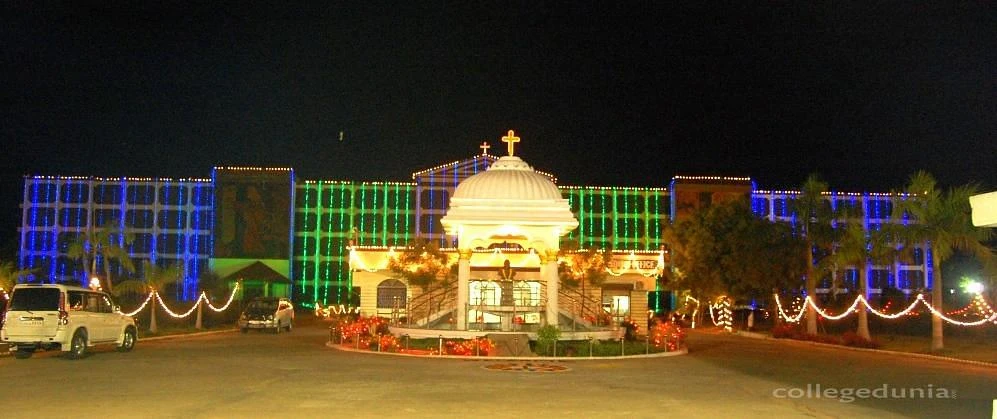
In this preview: 1 photo · 0 videos
The college is considered adequate for completing a basic CSE degree. However, students aiming for high-paying roles in product-based companies should note they will primarily need to rely on off-campus placement drives.
The official TNEA (Tamil Nadu Engineering Admissions) code for Dr. Pauls Engineering College is 1406. This code is used during the centralized counseling process for admission.
Yes, the college provides hostel accommodation for female students. The girls' hostel has a capacity for 150 students and operates with strict security protocols.
The approximate annual fee for seats under the Management Quota ranges from ₹80,000 to ₹1,00,000. This fee is for tuition and does not include additional costs for hostel accommodation or transportation.
The college is located approximately 12 kilometers from Pondicherry. This proximity makes it a popular choice for students who reside in or around the Pondicherry area.
Share what future students should know about Dr Pauls Engineering College.
Student voices are not rewritten by colleges. We remove spam and abuse.
Wider admission question? Community PulseWhat should future students know?
Tell us which course you're considering. We'll help you work out the next step.
Get instant Partner access after mobile verification. Your public edits are reviewed before they go live.
Claim this college
 Auditorium
 Cafeteria
 Computer Labs
 Gym
Gym Hostel
 Medical
 Science Labs
 Sports Complex
 Study Library