Loading Admission Guardian content
Loading Admission Guardian content
Based on incomplete college records.
Find a program, read its fee details and explore the admission requirements.
Summary of the programs shown below. First-year fee
| Course | Stream | Fees |
|---|---|---|
| M.B.B.S. | Medical | 83900 |
| Doctorate of Medicine [MD] | Medical | 90800 |
| Master of Surgery [MS] | Medical | 121300 |
| Master of Surgery [MS] (Ophthalmology) | Medical | 121300 |
| Diploma | Medical |
All accepted exams
Eligibility: 10+2 with 50% + NEET
Specializations
All accepted exams
Eligibility: MBBS + PGNEET
Specializations
All accepted exams
Eligibility: MBBS + PGNEET
Specializations
All accepted exams
Eligibility: MBBS + PGNEET
Specializations
3 exams with cutoff data available - showing recent entries
If you're looking at a NEET rank between 10,000 and 22,000 and want a medical education that won't bankrupt your family, Dr. Vaishampayan Memorial Government Medical College (VMGMC) in Solapur is a name that comes up. It's a classic, no-frills state government college where the real draw is the work. The attached Shri Chhatrapati Shivaji Maharaj Sarvopchar Rugnalaya sees over 1,200 outpatients daily, a patient load that provides a depth of clinical exposure private colleges can't easily match. You trade modern infrastructure for that experience, and for many students, it's a trade worth making.
The academic structure here is straightforward and follows the MUHS curriculum. The MBBS program, with an intake of 200 students, is the core. It's a 4.5-year course followed by the mandatory one-year rotating internship. The college also runs a decent number of postgraduate seats—about 87 across 19 MD and MS specialties. The big departments are General Medicine (11 seats), Pediatrics (8), OBGY (9), and General Surgery (8).
Faculty strength is around 144. The consensus from student reviews is that the professors, especially in clinical departments like Medicine and OBGY, are knowledgeable and take teaching seriously. They're generally approachable. The system is traditional: annual MUHS exams, with internal assessments throughout the year. Attendance rules are strict—75% for theory and 80% for practicals. They enforce it. This isn't a place for a laid-back academic approach; the high patient volume means you're expected to be involved from early on.
In government medical colleges, 'placement' means the mandatory internship and the path you carve afterwards. Let's talk money first. The internship stipend was recently hiked by the state government to ₹18,000 per month, a significant jump from the old ₹11,000. For postgraduates, as Junior Residents, the stipend starts around ₹75,000 - ₹80,000 per month and can go up to roughly ₹92,000 in later years.
Now, the bonds. They're a reality of state medical education. For MBBS, it's a 1-year mandatory rural service bond or a penalty of ₹10 Lakh. For PG graduates, that bond penalty jumps to a hefty ₹50 Lakh. You need to factor this into your long-term planning.
Career-wise, most graduates aim for NEET PG for specialization. The college's reputation for solid clinical training helps here. Alumni have secured seats at top institutes like AIIMS, PGI Chandigarh, and KEM Mumbai for further super-specialization. The track record is there for those who put in the work.
This is where government colleges like VMGMC shine. The affordability is unmatched. For the 2024-2024 academic year, the annual tuition fee for MBBS students in the Open category is approximately ₹1,38,700. For students from reserved categories (SC/ST/OBC/VJNT), tuition fees are often fully subsidized through government scholarship schemes like those on the Mahadbt portal.
Hostel fees are a mere ₹4,000 per year. Mess charges, run privately, range from ₹2,500 to ₹3,000 per month. Add in one-time admission fees (₹1,500) and annual miscellaneous charges (library, gymkhana, etc., totaling ~₹10,000-15,000), and the total estimated cost for the entire 5.5-year MBBS journey comes to ₹7.5 to ₹8.5 lakhs for an open category student, including basic living expenses. Compare that to a private college where a single year can cost that much, and the value proposition is clear.
Admission is 100% merit-based through NEET. There are no management or NRI quotas. For the 200 MBBS seats, 15% (30 seats) are filled through the Medical Counseling Committee (MCC) for the All India Quota (AIQ). The remaining 85% (170 seats) are filled by the State CET Cell, Maharashtra, for the state quota.
Cutoffs vary yearly but give a solid benchmark. For the General category in recent years:
For MD/MS programs, selection is via NEET PG scores and state-level counseling. The process is centralized and transparent, if sometimes slow-moving.
Let's be honest about infrastructure. The college was built in the 1960s, and it shows. The main buildings are old. The hostels, located about 2 km from the college/hospital campus, are described by students as "basic" and "in need of repair." Rooms, originally meant for fewer students, are often shared by 3-4 due to the increased intake. Washroom conditions are a common complaint. A bus is provided for first-year students to commute to college.
The girls' hostel is considered secure with a 9 PM in-time for juniors, but the physical issues persist. Wi-Fi is reportedly poor or non-existent in hostels, though available in the library and some departments. The saving grace is the 750-bed teaching hospital—it's busy, often chaotic, and provides phenomenal hands-on experience. That's the trade-off.
Social life revolves around the annual cultural fest 'Sparsh' and the sports meet 'Agnitay.' There's a large ground for cricket and football, plus courts for basketball and badminton. A basic gym exists on the hostel campus. The biggest external challenge is Solapur's climate—summers are brutally hot, regularly hitting 43°C (109°F). An air cooler becomes a essential personal investment.
Scouring forums and review sites paints a consistent, two-sided picture.
The Good: The overwhelming positive is clinical exposure. Students constantly mention the "massive patient flow" and the variety of cases, which builds confidence and practical skill faster than in many newer institutions. The low cost is the other huge plus, freeing graduates from the crushing debt that burdens peers from private colleges. Most find the teaching faculty, particularly seniors in clinical postings, to be supportive and dedicated.
The Not-So-Good: Infrastructure and amenities top the complaint list. Old buildings, cramped hostels, and bureaucratic administrative delays are frequent grievances. The location's extreme heat is a significant lifestyle adjustment. Some also note that while the college is good for MBBS, the research opportunities and facilities for super-specialization pursuits may be limited compared to central institutes.
The median sentiment? It's a workhorse institution. You come for a reputable, affordable medical degree and exceptional hands-on training, not for comfort or glamour.
VMGMC Solapur is an excellent choice for a specific type of student. If you have a NEET rank between 10k and 22k, prioritize becoming a competent clinician over campus luxury, and need the most financially viable path to an MBBS degree, this college is a strong contender. The clinical training at its busy hospital is arguably its greatest asset. However, if you require modern facilities, a comfortable hostel life, or a campus buzzing with extracurriculars and research projects, you'll likely feel frustrated here. It's a classic government medical college—demanding, sometimes dilapidated, but rich in real-world experience. For the right student, that's exactly what makes it worth it.
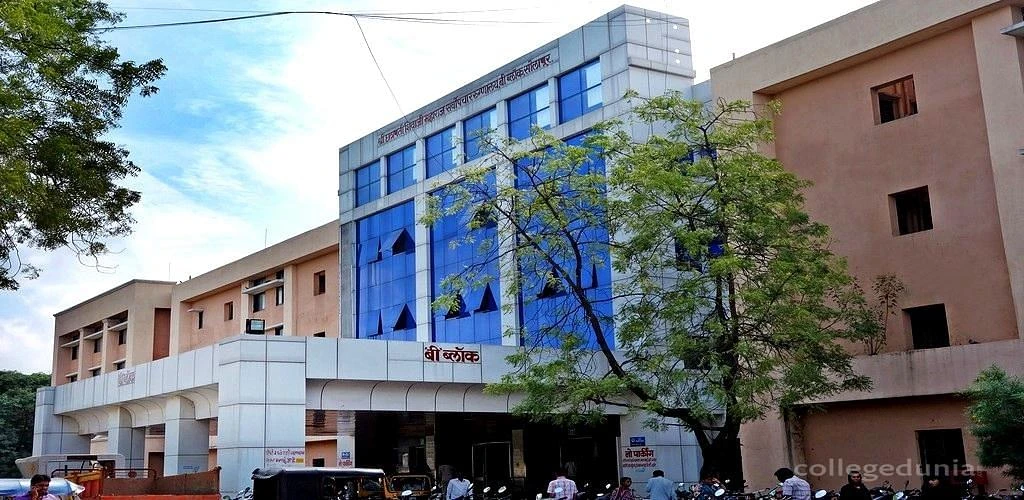
In this preview: 1 photo · 0 videos
Yes, VMGMC Solapur is considered a good choice for MBBS, primarily for its strong clinical exposure and low tuition fees. It is regarded as a top-tier option for students who secure a NEET rank within the 10,000 to 20,000 range.
The MBBS bond at Dr Vaishampayan Memorial Government Medical College requires one year of mandatory rural service after graduation. The alternative to this service is a financial penalty of ₹10 Lakh.
The girls' hostel at VMGMC Solapur is generally described as decent and secure. However, the infrastructure is noted to be old. There is a set in-time of 9:00 PM for junior female students residing in the hostel.
The main college building and the attached hospital at Dr Vaishampayan Memorial Government Medical College are located in the same vicinity. However, the undergraduate hostels are situated approximately 2 kilometers away from this academic and hospital complex.
Yes, Dr Vaishampayan Memorial Government Medical College provides a basic gym facility for its students. This gym is located within the hostel campus.
Share what future students should know about Dr Vaishampayan Memorial Government Medical College.
Student voices are not rewritten by colleges. We remove spam and abuse.
Wider admission question? Community PulseWhat should future students know?
Tell us which course you're considering. We'll help you work out the next step.
Get instant Partner access after mobile verification. Your public edits are reviewed before they go live.
Claim this college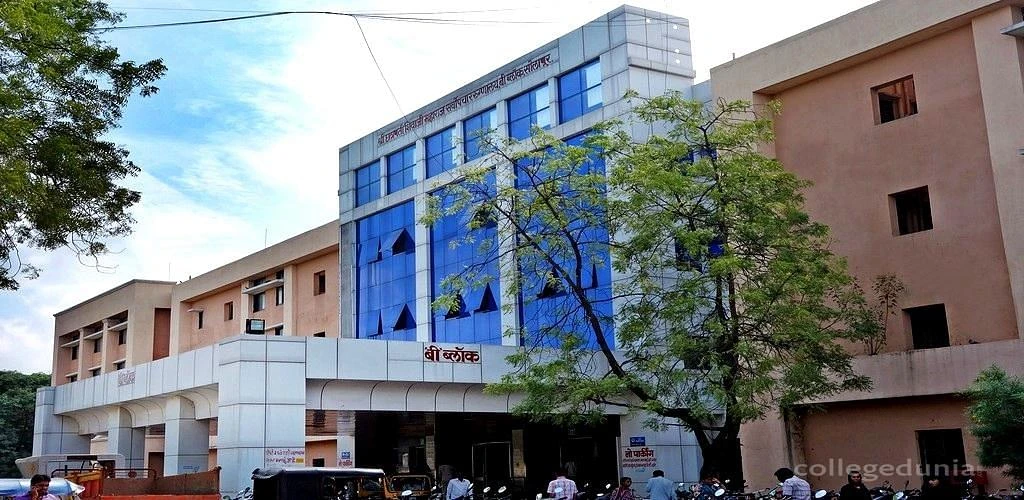
 Auditorium
 Cafeteria
 Gym
Gym Hostel
 Medical
 Science Labs
 Study Library