Loading Admission Guardian content
Loading Admission Guardian content
Provisional score based on available data. It may change as more information is verified.
Find a program, read its fee details and explore the admission requirements.
Summary of the programs shown below. First-year fee. Check the note beside each amount for inclusions and exclusions.
| Course | Stream | Fees |
|---|---|---|
| Master of Technology [M.Tech] | Engineering | 147300 |
Specializations
All accepted exams
Eligibility: Pass in Graduation
ER & DCI Institute of Technology in Thiruvananthapuram isn't your typical engineering college. It's a specialized, government-funded postgraduate hub that operates as the training arm of the Centre for Development of Advanced Computing (C-DAC). That's a significant detail. It means the institute's identity is intrinsically linked to applied research and industry-ready skill development, particularly in niche tech areas like VLSI, embedded systems, and cyber forensics. With a total intake of just 54 students across its M.Tech programs, it's a small, focused institution where the connection to a premier R&D organization like C-DAC isn't just a line on a brochure—it's the core of the experience. You're not just studying theory; you're on a campus where that theory is being put into practice next door.
This is a postgraduate-only institute. There are no undergraduate B.Tech programs here, which shapes the entire academic culture. The focus is entirely on advanced, specialized engineering. The total student body is tiny—just 54 seats across all M.Tech specializations. That creates an environment more akin to a research lab than a large university department.
The key programs are M.Tech in VLSI & Embedded Systems and M.Tech in Cyber Forensics & Information Security, each with an intake of 18 students. They also offer M.Tech in Computer Science Engineering, Electronics & Communication Engineering, and Information Technology. The curriculum is built around the institute's stated expertise areas: VLSI-ASIC, Embedded Systems, Networking, and Cyber-Forensics. You'll find a heavy emphasis on practical labs and project work. The faculty count is 21, which, for 54 students, suggests a potentially favorable student-teacher ratio. They're described as highly qualified, and the institute brings in distinguished guest lecturers from the industry—a natural advantage of its C-DAC lineage.
The academic model integrates theoretical learning with hands-on exposure, often through projects that might have a direct line to C-DAC's ongoing work. It's a specific kind of education: intense, niche, and geared towards creating specialists, not generalists.
The placement data tells a coherent story for a specialized tech institute. For the 2023 batch, the highest package stood at ₹12.5 LPA, with an average of ₹6 LPA and a median of ₹5.5 LPA. The institute claims an 85% placement rate, noting that 100% has been achieved in past years. That's a decent outcome, especially when you consider the average cost of the program.
The recruiter list is impressive and validates the institute's industry connections. It's a mix of IT service giants and core tech firms: TATA Consultancy Services, Infosys, Wipro, HCL, Amazon, Google, Microsoft, Deloitte, KPMG, PwC, Accenture, and Tata Elxsi. The presence of companies like Tata Elxsi is particularly relevant for the VLSI and embedded systems students. The gap between the highest and average package is notable—it suggests that while top performers can land very good roles, the typical graduate is looking at a solid, mid-range tech salary to start.
A key advantage here is the internship pipeline. Students can start interning from their 3rd semester, often within C-DAC itself or with partner industries. These aren't just summer projects; they're integrated into the program and come with attractive stipends. That early professional exposure is a huge plus and often leads to pre-placement offers.
For a government-funded institution with its industry links, the fee structure is reasonable. Annual tuition fees for the M.Tech programs range between ₹65,000 and ₹79,550. The total program cost for two years has been cited around ₹2.84 lakhs in past data. Compared to many private engineering colleges offering M.Tech degrees, this is a relatively low financial barrier to entry for a specialized postgraduate education.
Hostel and mess fees aren't detailed in the available data, but they would be an additional, moderate cost. The institute does offer scholarships to eligible students based on academic merit, reserved category quotas, or financial need. It's always worth checking the official website for the latest fee circular and scholarship application forms when you're applying.
The gateway here is unequivocally the GATE exam. A valid GATE score is a mandatory requirement for admission. The basic academic eligibility is a B.E./B.Tech degree from an AICTE-approved institute with a minimum of 60% aggregate marks (54% for SEBC/OBC, and a pass mark for SC/ST candidates).
The selection is purely merit-based on the GATE score. If there's a tie in GATE scores, they break it using the marks from your qualifying undergraduate degree. The process is straightforward: eligibility check, application submission, document verification, and then counseling based on the merit list. Selected candidates must attend counseling in person with all original documents. The institute also mentions NRI seats for M.Tech programs, though the specific intake numbers aren't public. There's no mention of a management quota, which aligns with its government self-financed status.
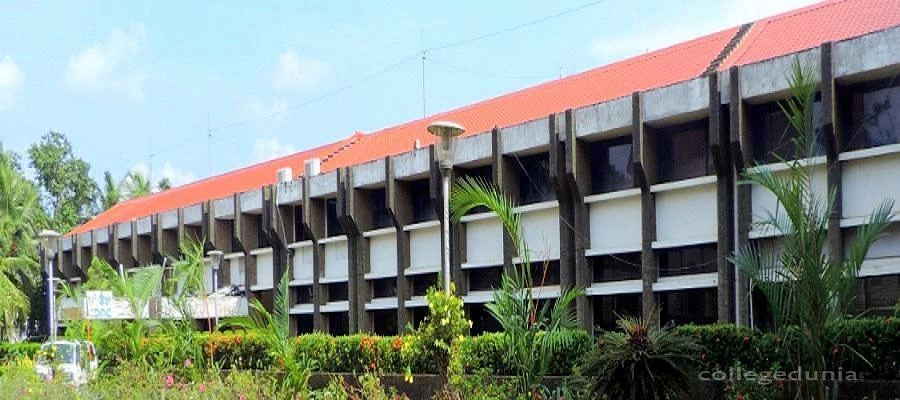
The campus is located within the C-DAC facility in Vellayambalam, a central, well-connected part of Thiruvananthapuram. The infrastructure reflects its practical, professional ethos. Classrooms are air-conditioned and well-equipped. The labs are the highlight—departmental laboratories with modern equipment and full-time, high-speed internet connectivity for hands-on work.
The library is a strong resource, with a collection of over 18,000 volumes and digital access to major portals like IEEE and ACM. For daily needs, there's a Syndicate Bank branch and an ATM on campus, a health center with first-aid, and a tie-up with a nearby hospital for emergencies.
Hostel facilities are available separately for boys and girls with basic amenities, including A/C room options. The canteen, located on the C-DAC campus, gets positive mentions for providing tasty food at highly subsidized rates—a small but appreciated perk. For recreation, there are facilities for cricket, volleyball, badminton, football, and a gym.
What's the social life like? The data is thin here. With a small, focused postgraduate batch, the atmosphere is likely more academically and professionally oriented than one filled with large fests. The "social life" is probably heavily influenced by project work, lab sessions, and the professional network you build through C-DAC.
Sifting through student sentiment, a clear, positive consensus emerges on a few key points. The faculty is repeatedly praised as being well-organized, highly qualified, and supportive. The C-DAC connection isn't just for show; students value the guidance from industry professionals and the chance to participate in real IT projects. The infrastructure—from the labs and library to the Wi-Fi and classrooms—is consistently rated as very good.
Complaints or recurring negatives aren't prominently highlighted in the available feedback, which is unusual. This often means the institute delivers solidly on its core promises: quality education in a specific field with good placement support. The potential downsides might be inferred: a highly focused, possibly intense academic environment with less of the typical "campus life" found in larger universities. It's a trade-off. You're here for a targeted, two-year career launchpad in a specific tech domain, not a sprawling college experience.
ER & DCI Institute of Technology is a highly specific proposition. It's not for everyone. If you're a B.Tech graduate looking for a broad-based M.Tech experience at a large university with diverse campus life, you might find it too niche. But if you're targeting a specialized career in VLSI, embedded systems, or cyber forensics and want an education steeped in practical, industry-relevant exposure, it's a compelling option.
The value proposition is strong: reasonable fees, a direct pipeline to C-DAC's ecosystem, a solid placement record with reputable companies, and a focused, no-frills academic environment. The small batch size can be a major advantage for access to resources and faculty attention. It's best for the self-driven student who sees the M.Tech as a precise stepping stone into the tech industry. You're trading some aspects of traditional campus life for a professional head start. For the right candidate, that's a very good deal.
In this preview: 1 photo · 0 videos
ER & DCI Institute of Technology exclusively offers postgraduate M.Tech programs. The key specializations are M.Tech in VLSI & Embedded Systems and M.Tech in Cyber Forensics & Information Security, each with an intake of 18 students. They also offer M.Tech in Computer Science Engineering, Electronics & Communication Engineering, and Information Technology. The total intake across all M.Tech courses is capped at 54 students, making it a small, focused institution.
Admission is strictly based on GATE score. Candidates must have a B.E./B.Tech degree from an AICTE-approved institution with a minimum of 60% aggregate marks (54% for SEBC/OBC, pass for SC/ST). A valid GATE score is mandatory, and the final selection is done through counseling based on the GATE rank. In case of a tie, undergraduate marks are used as a tie-breaker.
For the 2023 batch, the highest package was ₹12.5 LPA, with an average package of ₹6 LPA and a median of ₹5.5 LPA. The institute reports an 85% placement rate, with top recruiters including TCS, Infosys, Wipro, Amazon, Deloitte, and Tata Elxsi. Internships with stipends are available from the 3rd semester, often within C-DAC or partner companies.
The annual tuition fees for M.Tech programs are relatively affordable, ranging from approximately ₹65,000 to ₹79,550. For example, M.Tech in VLSI & Embedded Systems costs about ₹65,000 per year, while M.Tech in Cyber Forensics & Information Security is around ₹79,550 per year. The total program cost for two years is roughly ₹2.8 lakhs.
The institute, located on the C-DAC campus, offers well-equipped labs with high-speed internet, a library with over 18,000 volumes and digital access (IEEE, ACM), and AC classrooms. It provides separate hostel facilities for boys and girls, a canteen with subsidized food, a Syndicate Bank branch with ATM, a health center, and sports facilities for cricket, football, badminton, and a gym.
Share what future students should know about ER & DCI Institute of Technology.
Student voices are not rewritten by colleges. We remove spam and abuse.
Wider admission question? Community PulseWhat should future students know?
Tell us which course you're considering. We'll help you work out the next step.
Get instant Partner access after mobile verification. Your public edits are reviewed before they go live.
Claim this college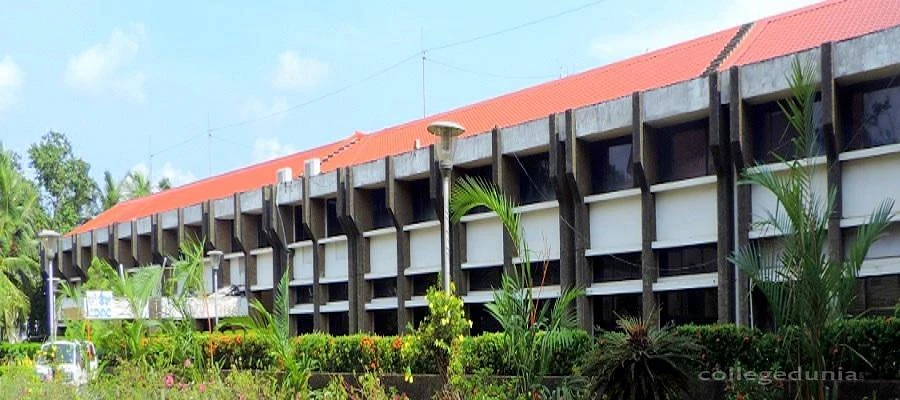
 Auditorium
 Cafeteria
 Computer Labs
 Science Labs
 Sports Complex
 Study Library