Loading Admission Guardian content
Loading Admission Guardian content

Provisional score based on available data. It may change as more information is verified.
Selected ranking categories, with the recorded year beside each result. Open all records for the complete history.
13 published records · Lower numeric ranks are stronger
The Times Of India
Engineering · private
#402022
TOI
B.Tech
#442023
TOI
B.Tech · private
#402022
Find a program, read its fee details and explore the admission requirements.
Summary of the programs shown below. First-year fee. Check the note beside each amount for inclusions and exclusions.
| Course | Stream | Fees |
|---|---|---|
| Master of Engineering [ME] | Engineering | 145000 |
| Bachelor of Engineering [BE] | Engineering | 162000 |
| Bachelor of Engineering [BE] {Lateral} | Engineering | 162000 |
| Ph.D | Engineering |
Specializations
All accepted exams
Eligibility: Graduation
Specializations
All accepted exams
Eligibility: 10+2
Specializations
All accepted exams
Eligibility: 10+3
Specializations
Eligibility: Post Graduation
3 exams with cutoff data available
 Accenture
 Atos Origin
 BNP Paribas
 BristleCone
 Cafe Coffee Day
 CEAT
CEAT Directi
 Federal bank
 General Mills
 General Motors
 HNG
HNG HP India Pvt. Ltd.
 HSBC Bank
 IBM
IBM Infosys
 Ingram
 Jacobs Engg
 Johnson Controls
 JP Morgan
 Kansai Nerolac Paints Ltd
 L&T Infotech
 Larsen & Toubro Ltd.
 Mahindra & Mahindra
 MAQ Software
 Mirraw
 Morgan Stanley
 Nomura Services India (P) Ltd.
 NSE
NSE Oracle
 Parker Hannifin
 Patni Computers
 Pentair
 Persistent Ltd
 Progressive Media
 Quinnox
 Reliance
 Reliance Jio
 Reliance Retail
 Sanmar Group
 SAP
SAP Seclore
 Selec
Selec Siemens
 Tata Consulting Engineers Ltd.
 Tata Power
 TCS
TCS Teach for india
 Tech Mahindra
 Technip India
 The Progress Group
 Thomas Cook
 TIAA
TIAA TIBCO Software
 Videocon d2h
 Weatherford
 Wipro
Wipro ZS Associates
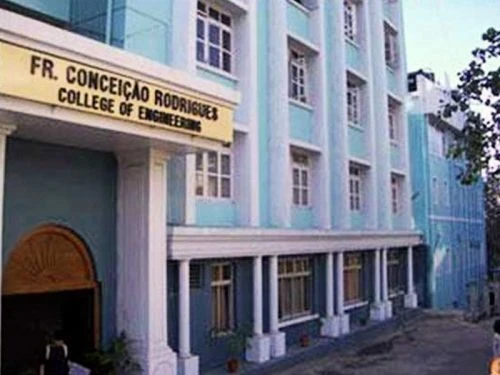
Fr. Conceicao Rodrigues College of Engineering (CRCE) in Mumbai’s Bandra is a study in contrasts. You get a compact, single-building campus with sea-facing classrooms and a disciplined, almost school-like atmosphere. But you also get a placement record for its computer science branches that punches well above its modest NIRF ranking, with recruiters like JP Morgan and Amazon regularly showing up. Since gaining full academic autonomy in 2024, it’s overhauled its curriculum to match the NEP 2020, but that’s come with a heavier workload and a stricter regime. For a student focused squarely on a tech job in Mumbai, the location and outcomes are compelling. For someone dreaming of a sprawling campus with a vibrant social scene, it’s a non-starter. That’s the CRCE reality.
CRCE offers four B.E. programs with an annual intake of about 120 students each: Computer Engineering, Computer Science & Engineering (AI & Data Science), Electronics & Computer Science (ECS), and Mechanical Engineering. The total undergraduate intake sits around 480. The big academic shift happened in 2024-25 when the college was granted UGC autonomy for a decade. This meant ditching the standard University of Mumbai syllabus for a self-designed curriculum aligned with the NEP 2020.
The new structure includes options for minors and honors specializations, particularly in tech domains like Full-Stack Web Development, Cloud & DevOps, Cybersecurity, and Blockchain. They call their teaching philosophy the ‘H-Tree Learning Model,’ which is essentially a mix of traditional lectures, peer learning, and hands-on projects. Faculty strength is around 70, with about a third holding PhDs. The teaching style is consistently described as disciplined and structured—some call it effective, others call it rigid. With autonomy, internal assessments and mid-terms now carry significant weight, making the academic calendar dense and, according to current students, “brutal.”
This is where the college’s reputation is made, but with major caveats depending on your branch. The official numbers for the 2025 cycle show a highest package of 22 LPA and an average of 6.46 LPA. The NIRF 2025 report lists a median package of 4.5 LPA, which is a more telling figure for the typical graduate.
Now, the reality check. The college’s overall placement percentage claim is 70-80%. Dig into student reviews on platforms like CollegeDunia and Shiksha, and a clear split emerges. For Computer Engineering, CSE (AI & DS), and ECS, placement rates are robust, often cited at 90% or above for students with a CGPA over 7. The top recruiters are a who’s who of finance and tech: JP Morgan Chase, Morgan Stanley, Barclays, Amazon, and TCS for its digital roles, followed by Infosys, Accenture, and Capgemini.
For Mechanical Engineering, the story is different. Core placement rates drop to an estimated 40-50%. While companies like Godrej & Boyce and L&T do recruit, many mechanical students end up in IT roles or pursue higher studies abroad. The 7th semester is dedicated to internships, with stipends ranging from ₹10,000 to a notable ₹65,000 per month for the top software roles.
The sanctioned annual tuition fee for the first year of B.Tech (2024-25) is ₹1,81,000. Add another ₹15,000–₹20,000 for university processing, exam fees, and insurance. Over four years, the tuition cost alone approaches ₹8 lakhs.
Hostel accommodation is a significant challenge and expense. The college-owned off-campus flats in Kalina have a very limited capacity (20-30 seats) and cost between ₹80,000 and ₹1,23,000 per year. The vast majority of outstation students rent private paying guest accommodations in Bandra or Khar, which can be equally or more expensive. A realistic total 4-year cost, excluding personal expenses, is in the ₹8.5 to ₹9.5 lakh range.
Financial aid is available primarily through state schemes. These include EBC (Economically Backward Class) concessions for Maharashtra students, minority scholarships for Christian candidates, and the Tuition Fee Waiver Scheme (TFWS) for top merit holders.
Admission is primarily through the Maharashtra state entrance exam, MHT-CET, though JEE Main scores are also accepted for the All India Quota seats. The process is centralized, run by the DTE Maharashtra through its CAP rounds.
Cutoffs are competitive, especially for the computer-related branches. For the 2024-25 cycle, the opening ranks for Computer Engineering hovered around the 4,800 – 6,000 mark in MHT-CET (roughly 98.5+ percentile). For the newer CSE (AI & DS) program, ranks were between 6,000 and 7,500. Mechanical Engineering is less competitive, with cutoffs in the 15,000 – 22,000 rank range.
A key factor is the quota system. As a Christian minority institution, 51% of seats are reserved for candidates from that community. Additionally, 20% of seats are filled under the Institute/Management quota based on merit.
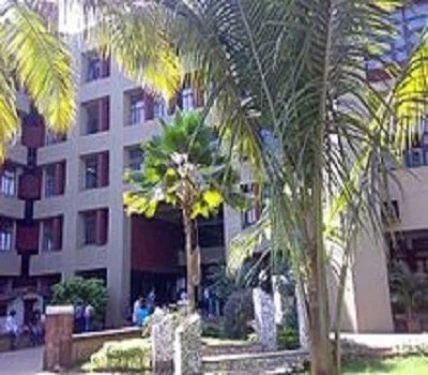
Let’s be direct: if you envision a large, residential campus with lawns and a buzzing student hub, CRCE isn’t it. The campus is a compact 3-5 acre urban plot shared with a school and an ITI. The building is modern, and the labs—especially for computing and machine learning—are well-equipped and air-conditioned. The library has a decent collection and digital access. The most famous feature is the sea-facing classrooms with views of the Arabian Sea.
But campus life is minimal. Sports facilities are basic and shared. The canteen is average, with reviews noting limited vegetarian options. The biggest issue is housing. The official hostel is off-campus in Kalina, 6-7 km away, with very few seats. Most students live in private PGs, which fractures the student community after hours.
The social atmosphere is heavily influenced by the college’s disciplined ethos. This isn’t a place for a laid-back college experience.
The student sentiment is remarkably consistent, earning the college the local nickname “The Bandra Jail.” The positives are clear: an unbeatable Bandra location, a strong peer-driven coding culture with active clubs like GDSC and IEEE, and excellent placement outcomes for IT students. The disciplined environment is also seen as a positive by many, preparing them for corporate rigour.
The negatives are just as sharply defined. The strictness is a major point of contention. The 75% attendance rule is enforced without exception, backed by a system of fines (reportedly up to ₹4,000 per subject) for shortfalls. The morning assembly, a 15-minute session with prayers and announcements, is still mandatory—a rarity in engineering colleges. Students frequently describe a “school-like” atmosphere with a heavy workload, a sentiment that has intensified since autonomy brought a more demanding exam schedule.
The consensus, as one Reddit user put it, is: “CRCE is for you if you want a job and don’t mind a school-like environment. If you want 'college life' like in the movies, go to Mithibai or HR.”
CRCE is a highly specific bet. It’s worth it if you are a student dead-set on a software engineering career in Mumbai, can secure a seat in its Computer Engineering, CSE (AI & DS), or ECS programs, and are comfortable with a no-nonsense, academically intense environment. The location in Bandra provides unmatched access to the city’s tech and finance hubs, and the placement pipeline for these branches is genuinely strong. The autonomy and updated curriculum are also positives for the academically inclined.
You should probably look elsewhere if you value a traditional campus life, want a more relaxed or socially vibrant college experience, or are enrolling in Mechanical Engineering with the primary goal of core campus placements. The strict discipline and lack of hostel infrastructure are real trade-offs. For the right candidate—career-focused, self-driven, and unfazed by structure—CRCE delivers solid value. For others, it can feel overly restrictive. Check the official details at www.frcrce.ac.in to see if its model aligns with your goals.
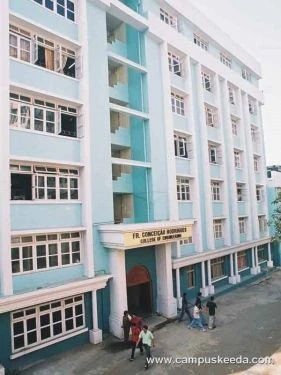
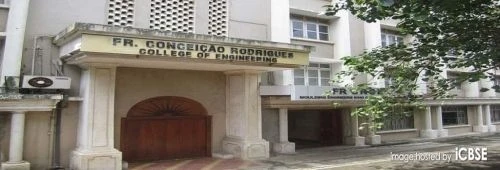
In this preview: 5 photos · 0 videos
Yes, Fr. Conceicao Rodrigues College of Engineering (CRCE) became an autonomous institution in 2024. As an autonomous college, it now designs and follows its own curriculum and examination pattern.
The attendance policy at CRCE is extremely strict. The college enforces a hard limit of 75% attendance. Falling below this threshold can result in serious consequences, including parent meetings, monetary fines, or being barred from appearing for examinations.
No, Fr. Conceicao Rodrigues College of Engineering does not have a hostel on its campus. The college provides an off-campus hostel in Kalina, which has very limited seats. Consequently, most students opt for private apartments or paying guest accommodations near the college.
CRCE offers a strong academic program for Mechanical Engineering. However, on-campus placement opportunities for core mechanical roles are fewer compared to software positions. Many Mechanical Engineering graduates from CRCE eventually pursue jobs in the IT sector or go abroad for higher studies like a Master's degree.
CRCE is known for being more disciplined and for having better infrastructure and location. In contrast, TSEC is often considered more relaxed with a better social life. For key branches like Computer Science and Information Technology, placement records at both colleges are generally comparable.
Share what future students should know about CRCE.
Student voices are not rewritten by colleges. We remove spam and abuse.
Wider admission question? Community PulseWhat should future students know?
Tell us which course you're considering. We'll help you work out the next step.
Get instant Partner access after mobile verification. Your public edits are reviewed before they go live.
Claim this college
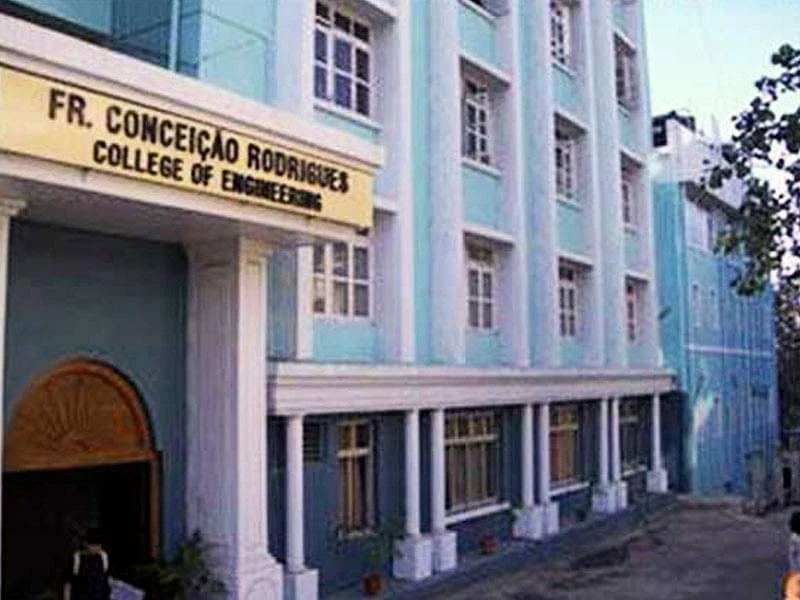
 Auditorium
 Cafeteria
 Computer Labs
 Gym
Gym Hostel
 Medical
 Science Labs
 Sports Complex
 Study Library