Loading Admission Guardian content
Loading Admission Guardian content
Provisional score based on available data. It may change as more information is verified.
Selected ranking categories, with the recorded year beside each result. Open all records for the complete history.
27 published records · Lower numeric ranks are stronger
IIRF
Engineering · private
#842023
India Today
Engineering · private
#1872021
IIRF
B.Tech · private
#872023
Find a program, read its fee details and explore the admission requirements.
Summary of the programs shown below. Programs record different fee periods. Compare the individual amounts and their notes below.
| Course | Stream | Fees |
|---|---|---|
| Bachelor of Technology [B.Tech] | Engineering | 48000 |
| Master of Technology [M.Tech] | Engineering | 57000 |
| Master of Business Administration [MBA] | Management | 60000 |
Specializations
Eligibility: 10+2
Specializations
Eligibility: Graduation
Specializations
Eligibility: Graduation
1 exam with cutoff data available
 Accenture
 ADP Private Limited
 Amazon
 Audio Technology & Codecs (I) Pvt Ltd (ATC Labs)
 Broadcom India research Pvt Ltd
 CADDYCODE
 Capgemini
 CISCO
CISCO Cognizant
 Crisil
 Cypress
 Deloitte
 DXC Technology
 efftronics
 Epam
Epam GEP
GEP HCL
HCL Hexaware Technologies
 IBM
IBM Infor
Infor Peepal Technology & management
 Persistent Systems Limited
 Syntel
 TCS
TCS TCS Digital
 Tech Mahindra
 Technovert
 Value Labs
 Vodafone
 Wipro
WiproIf you're looking at engineering colleges in Andhra Pradesh and want a solid, accredited option that won't break the bank, G. Pullaiah College of Engineering and Technology (GPCET) in Kurnool is a name that comes up. Established in 2007, it's a private, autonomous institution that's carved out a decent reputation. It's got the official stamps of approval—an NAAC 'A' grade and NBA accreditation for key programs—which is more than many newer colleges can claim. But the real story, as always, isn't just in the brochures. It's in the mix of decent infrastructure, supportive faculty, and the very real, very current anxieties students have about placements in a tough market. This isn't a top-tier NIT, but for a regional player, it presents a specific value proposition that makes sense for a certain kind of student.
GPCET offers a standard set of engineering programs under the JNTUA umbrella, but its autonomous status since 2018 gives it some wiggle room to update its curriculum. That's a plus. The B.Tech lineup includes the usual suspects—Civil, Mechanical, EEE, ECE, and CSE. They've also added the now-expected specializations in Computer Science Engineering - Artificial Intelligence (CSE-AI) and Internet of Things (CSE-IOT), which shows they're trying to keep pace with trends.
At the postgraduate level, you've got M.Tech in CSE, Digital Electronics, and Electrical Power Systems, plus an MBA program. Doctoral programs aren't offered here. The total student intake figures from the brief are a bit messy—they list 816, then 918, then 1080 for B.Tech alone. The safest bet is that it's a mid-sized institution with a few hundred students per batch. Faculty strength is listed as 78, which, if accurate, suggests a decent student-teacher ratio for a private college. The consensus from student reviews is that the teaching faculty is actually a strong point: experienced, supportive, and good at teaching. That's not something to dismiss lightly. The semester results, thanks to autonomy, are declared relatively quickly—within 3-4 weeks of exams.
This is where you need to read between the lines. The official numbers tell one story. Student reviews tell another. The college's official website and reports claim a placement percentage hovering between 73% (2023) and 80% (2025). The highest package for 2025 is cited as ₹25 LPA, even ₹27 LPA in some reports. The average package is listed around ₹4.25 LPA, with a median of ₹4.5 LPA for UG engineering in 2024.
The recruiter list is respectable on paper: Accenture, IBM, Wipro, TCS, Amazon, Cognizant, Infosys, Tech Mahindra, and some core companies like Tata Motors. That's the brochure version.
Now, the student sentiment. Across various review platforms, a different, more cautious picture emerges. Multiple reviews from 2024-2025 cite a much lower placement rate, attributing it to the "recession" and global IT slowdown. Numbers like "30 to 40%" and even "10 to 20% from last year" are mentioned. That gap between the official 80% and the student-reported 30% is notable. It likely comes down to definitions—"eligible students" versus "total students," or perhaps the inclusion of a wide pool of recruiters that only hire a handful. The average package of ₹4-4.5 LPA, however, feels more consistent and is a believable figure for a college in this tier and location.
Internship opportunities are described as limited. The college has a tie-up with Rooman Technologies to provide summer internships, but student feedback suggests very few land stipend-based roles, especially recently.
The reality check: If you're a top performer in CSE or ECE, you have a shot at the brand-name recruiters and the higher packages. For the average student, you should realistically budget for a moderate placement rate and an average starting salary in the ₹3.5-4.5 LPA range. Don't bank on the highest advertised figures.
Here's one of GPCET's compelling arguments: it's affordable. The annual tuition for B.Tech programs ranges from about ₹35,000 to around ₹60,900 for the first year, depending on the specialization (CSE is typically at the higher end) and whether you're in the government quota or management quota. MBA fees are around ₹27,000 per year, and M.Tech around ₹35,000-57,000.
The hostel and mess fee is a significant add-on: ₹66,000 for one year. And remember, that's primarily for the girls' hostel on campus. Boys have to find accommodation outside, which adds another variable cost.
Where GPCET shines is in scholarship access. Thanks to government schemes in Andhra Pradesh, a large number of students get fee relief. The NIRF 2024 data submitted by the college states that 1,913 out of 2,902 UG students received full tuition fee reimbursement. That's a substantial majority. If you qualify, the cost of education becomes very manageable.
Admissions run through the state's centralized systems. For B.Tech, it's all about your AP EAMCET rank. About 70% of seats are filled through the APSCHE counseling based on this rank. The remaining 30% are management quota seats.
The cutoffs aren't fiercely high, which aligns with the college's positioning. For AP EAMCET 2024, the closing ranks give you a sense:
If you have a rank between 20,000 and 90,000, you've got a shot at something here, with CSE being the most competitive. For M.Tech, you need a GATE score or an AP PGECET rank. For MBA, it's the APICET score. The final selection for MBA might include a group discussion and personal interview.
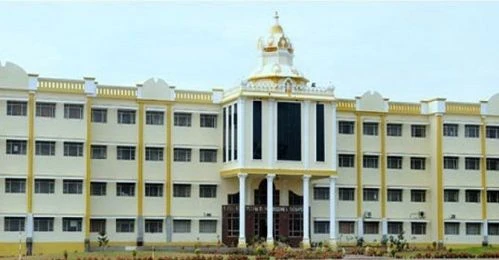
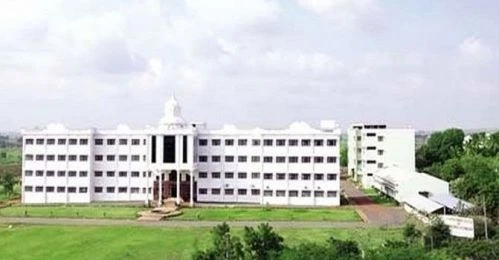
The campus spans 10 acres on the outskirts of Kurnool. It's not in the city center—you're looking at a 15-20 km commute from the railway station or bus stand. The college runs a fleet of buses, which is pretty much essential.
Infrastructure gets good marks. There are well-equipped labs (though some reviews mention older systems), smart classrooms, and a two-floor automated library with over 40,000 books. Sports facilities are above average with a big playground, an indoor stadium, and a gym.
The hostel situation is a major split. The girls' hostel is on-campus, described as safe, secure, and of good quality. For boys? There is no on-campus hostel. You'll need to find private accommodation outside. This is a consistent point of complaint and a significant logistical and financial consideration for male students.
Food in the mess and canteen is termed average to good. Other points of contention among students include a reported ban on mobile phones in academic areas and spotty Wi-Fi access for students, despite the campus being Wi-Fi enabled. On the positive side, the college is reported to be ragging-free, which is a big relief for parents and new students.
Social life revolves around college-organized cultural events. It's not a "university town" vibe given the location, so campus activities are the main focus.
Synthesizing the chatter from review sites and forums, the consensus is mixed but leans towards cautiously positive for the right candidate.
The Good:
The Not-So-Good:
GPCET is a classic case of "you get what you pay for," but in a mostly good way. It's not going to compete with the national-level giants, and it has clear drawbacks like the lack of a boys' hostel and a remote location.
This college is best for: Students from Andhra Pradesh with a moderate AP EAMCET rank (say, 25k to 90k) who are eligible for state scholarships. If you're looking for a peaceful study environment with decent infrastructure, good teachers, and a low financial burden, GPCET makes a lot of sense. It's a practical choice for students who are self-motivated and aren't expecting a guaranteed, high-flying campus placement.
Look elsewhere if: Your primary goal is a vibrant campus life in a city, or if you're banking entirely on the college's placement cell to land you a top-tier job. Male students who require on-campus housing should also consider this a significant mark against it.
Think of GPCET as a reliable workhorse. It provides a solid engineering education at a low cost, with faculty that cares. Manage your expectations on placements, plan for the hostel situation, and it can be a perfectly sensible launchpad for your career.
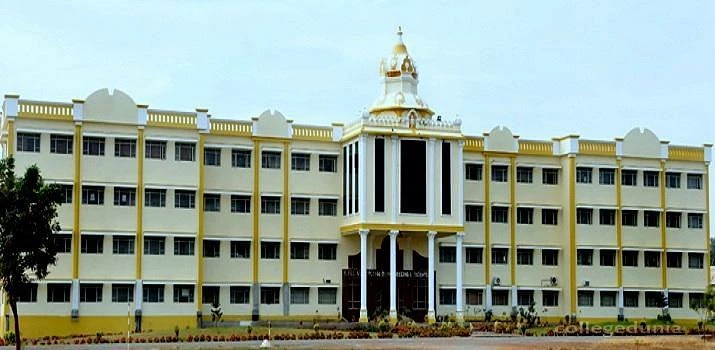
In this preview: 5 photos · 0 videos
GPCET Kurnool is officially affiliated with Jawaharlal Nehru Technological University, Anantapur (JNTUA) and has been autonomous since 2018. Its key quality stamps include an 'A' Grade from the NAAC and NBA accreditation for four of its B.Tech programs. It is also approved by the AICTE, recognized by the UGC under Sections 2(f) & 12(B), and is ISO 9001-2015 certified.
For the 2025 placement cycle, GPCET has reported an average package of approximately ₹4.25 LPA and a highest package of up to ₹25 LPA, with a placement rate of 80%. Major recruiters include Accenture, IBM, Wipro, TCS, Amazon, Cognizant, and Tata Motors. It's important to note that student reviews from the same period often cite a more challenging market, with many reporting effective placement rates lower than the official figure.
Admission to the B.Tech programs at GPCET is primarily based on the Andhra Pradesh EAMCET (AP EAMCET) entrance exam rank. Approximately 70% of seats are filled through the state's APSCHE counseling process using this rank. The remaining 30% of seats are filled under the management quota. Candidates must also have passed their 10+2 with Physics, Chemistry, and Mathematics.
The annual tuition fee for B.Tech programs at GPCET varies. For government quota seats, it typically ranges from ₹35,000 to around ₹48,000 per year. For management quota or specific branches like CSE, fees can be higher, up to approximately ₹60,900 for the first year. A significant number of students receive full tuition reimbursement through state government scholarships.
GPCET provides on-campus hostel accommodation only for female students, which is generally reviewed as safe and of good quality. There is no on-campus hostel facility for male students; they are required to arrange for private accommodation outside the college premises. The annual hostel and mess fee for the girls' hostel is around ₹66,000.
Share what future students should know about GPCET.
Student voices are not rewritten by colleges. We remove spam and abuse.
Wider admission question? Community PulseWhat should future students know?
Tell us which course you're considering. We'll help you work out the next step.
Get instant Partner access after mobile verification. Your public edits are reviewed before they go live.
Claim this college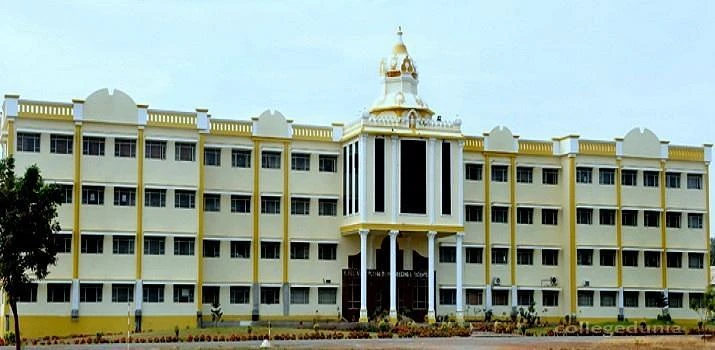
 Auditorium
 Cafeteria
 Computer Labs
 Medical
 Science Labs
 Smart Classrooms
 Study Library