Loading Admission Guardian content
Loading Admission Guardian content

Provisional score based on available data. It may change as more information is verified.
Selected ranking categories, with the recorded year beside each result. Open all records for the complete history.
29 published records · Lower numeric ranks are stronger
NIRF
B.Tech
#1772019
India Today
Engineering · private
#1412021
Indiatoday
B.Tech · private
#1432021
Find a program, read its fee details and explore the admission requirements.
Summary of the programs shown below. First-year fee. Check the note beside each amount for inclusions and exclusions.
| Course | Stream | Fees |
|---|---|---|
| Bachelor of Technology [B.Tech] | Engineering | 70000 |
| Master of Technology [M.Tech] | Engineering | 80000 |
| Ph.D | Engineering |
Specializations
All accepted exams
Eligibility: 10+2 with 45% + AP EAMCET
Specializations
All accepted exams
Eligibility: Pass in Graduation + GATE
Specializations
Eligibility: Post Graduation
1 exam with cutoff data available - showing recent entries
 Bosch Limited
 Cadsys
 Capgemini
 Cognizant
 Cyient
 DXC Technology
 Epam
Epam HCL
HCL Hyundai Motors
 Kia Motors
 Larsen & Toubro Limited
 LUMAX
LUMAX MindTree
 Mphasis
 NTT DATA
 Sonata Software
 Syntel
 TCS
TCS Thomson Reuters
 Virtusa
 Wipro
WiproIf you're looking for a disciplined, no-nonsense engineering education in Andhra Pradesh's Rayalaseema region, G. Pulla Reddy Engineering College (GPREC) is the name that comes up first. It's not a party school. It's not a sprawling metro campus. But for students who want a focused academic environment with a solid track record of getting CSE and ECE graduates into IT jobs, GPREC has built a formidable reputation over four decades. Think of it as the "school of engineering"—a label students themselves use, hinting at its structured, almost regimented approach that prioritizes attendance, uniforms, and exam readiness. That focus pays off in placement stats for tech branches, even if life outside the classroom is quieter than you'd find in Hyderabad or Chennai.
GPREC's academic portfolio is heavily tilted towards computing and electronics, reflecting market demand. The B.Tech intake numbers tell the story: CSE and its specializations (AI/ML, Data Science, Business Systems) account for 900 of the roughly 1,240 total seats. That's a massive focus. ECE adds another 180. Core branches like Civil and Mechanical have 120 seats each. The college became autonomous in 2006, which means it designs its own curriculum and conducts its own exams, though the degree is awarded by JNTUA. This allows for quicker updates to syllabi, especially in fast-moving fields like AI and Data Science.
The faculty strength is around 165-199, with a student-faculty ratio of 1:20. While the number of PhD holders among faculty is officially 38, with over 44 pursuing doctorates, the teaching quality receives consistent praise in student reviews. The style is traditional—lecture-heavy and geared towards clearing university exams—but it's described as effective. The 10-point CGPA system is standard, and the academic calendar is strict. The college has industry MoUs and is accredited by TCS for recruitment, which helps streamline the hiring process for that major recruiter. For postgraduates, M.Tech programs are available in areas like Structural Engineering, CSE, and VLSI, with a total intake of 54-72. The college is also a recognized research center under JNTUA for Ph.D. candidates across engineering disciplines.
This is where the GPREC story splits sharply by branch. For CSE, ECE, and their variants, the placement narrative is positive. For core branches, it's a struggle, and that's the critical context often missing from the brochure.
Let's start with the official 2024 data: 505 students placed out of 889 graduates, a 57% placement rate. The highest package was ₹23 LPA from Wayfair Global Technology, a dip from the ₹32.5 LPA high in 2023. The officially stated average package is ₹4.74 LPA, closely matching student consensus of around ₹4.5 LPA. Interestingly, the NIRF 2025 report for GPREC lists a median package of ₹5.50 LPA, which is higher than the average—a statistical quirk that can happen when a cluster of salaries sits above a long tail.
Now, the reality check from student forums. In CSE and ECE, if you maintain a CGPA above 7.0, your chances of an on-campus IT offer are very high, with placement rates estimated at 75-80%. The top recruiters are the familiar IT services giants: Infosys, TCS, Wipro, Cognizant, Accenture, and IBM. Tech product companies like Amazon and Mindtree also visit. For core engineering (Civil, Mechanical), the on-campus placement rate plummets to an estimated 10-20%. Students from these branches either pivot to IT roles through additional training or prepare for GATE, government exams, or off-campus opportunities. Core recruiters like Hyundai, Kia, L&T, and UltraTech Cement do visit, but they hire in very small numbers.
Internships are mandatory in the final semester, and about 85-90% of students secure them, predominantly in IT roles. The takeaway? Choose your branch wisely. GPREC is a reliable launchpad for an IT career from the region. If your heart is in core mechanical or civil engineering, be prepared for a largely self-driven job search.
The fee structure is a classic two-tier system based on how you secure your seat. For the 70% of seats filled through the state convener quota (AP EAPCET counseling), the annual tuition is a very affordable ₹84,000, fixed by the Andhra Pradesh Higher Education Regulatory and Monitoring Commission. For the 30% management quota seats, fees are significantly higher and vary by branch: ₹2.52 lakhs per year for CSE/CSM/CSD, ₹1.5 lakhs for ECE, and ₹84,000 for EEE, ME, and CE.
Hostel fees are extra and range from ₹70,000 to ₹85,000 per year, depending on gender and room type (ordinary, attached bath, AC). Mess charges are typically included. So, a rough total 4-year cost for a convener-quota student, including hostel, lands around ₹6.5 lakhs. For a management-quota CSE student, it balloons to approximately ₹13.5 lakhs.
Financial aid is available. The college offers a full tuition fee waiver for students with an AP EAPCET rank below 2000. More broadly, eligible students from BC, SC, ST, and EBC categories can avail of the Andhra Pradesh government's Jagananna Vidya Deevena (JVD) scheme for full fee reimbursement. It's essential to check the latest eligibility criteria on the official college website or government portals.
Admission to the B.Tech program is primarily through the Andhra Pradesh Engineering, Agriculture and Pharmacy Common Entrance Test (AP EAPCET). The college code is GPRE. For postgraduate M.Tech, admissions are via GATE or the state-level AP PGECET (code: GPRE1). Lateral entry into the second year is possible through AP ECET.
The competition is fiercest for computer science streams. The 2024 opening round cutoff ranks for the general category give a clear picture:
As you can see, ranks below 11,000 are competitive for CSE and ECE. For ranks around 20,000-22,000, seats in Electrical, Civil, or Mechanical Engineering are possible. The selection process allocates 70% of seats through the convener quota based on EAPCET rank, and the remaining 30% are filled under the management quota, which also considers EAPCET scores but at the higher fee structure.
The 30-acre campus is functional and self-contained. Academics happen in department-specific blocks—the newer ones for computing are well-equipped, while older blocks for core engineering are described as dated but functional. The central library has a solid collection of over 50,000 volumes and digital access. Wi-Fi is available in labs and hostels, though students often call the speed "average."
Hostels are separate for boys and girls and are consistently rated as clean and well-maintained (4/5 in many reviews). However, there is one non-negotiable rule that defines campus life: it is a strictly vegetarian campus. Non-vegetarian food is prohibited within hostel messes and the campus premises. This is a major consideration for many students.
Life at GPREC is disciplined. A strict 75% attendance rule is enforced. A dress code or uniform is required for certain occasions or years, reinforcing its "school" reputation. This creates a safe, focused environment, particularly noted as reassuring for parents of female students. The flip side is a limited social scene. Fests and cultural events happen but are less frequent and grand compared to colleges in major cities. Sports facilities for basketball, volleyball, badminton, and cricket exist on a "decent but not massive" playground.
Sifting through forums like CollegeDunia, Shiksha, Reddit, and Quora reveals a consistent, almost unanimous consensus. The positives are clear: GPREC is considered the best college in Kurnool and the wider Rayalaseema region for placements, especially in IT. The teaching is strong, the alumni network (particularly in the US and at companies like Google and Microsoft) is supportive, and the anti-ragging policies make for a secure environment.
But the negatives are just as clearly defined. The discipline—mandatory attendance, uniforms—feels excessive to many, akin to a school rather than a college. The social life is quiet. And the strictly vegetarian rule is a dealbreaker for some. The feedback is rarely middling; students seem to either thrive in the structured system or chafe against it. The advice from alumni is pragmatic: if you want to study in Andhra, get a good IT job, and don't mind a regimented campus life, GPREC is a top-tier choice. If campus culture, freedom, and a vibrant social life are priorities, you might feel constrained here.
GPREC is a college with a specific, proven value proposition. It's an excellent, arguably the best, choice for students from Andhra Pradesh seeking a cost-effective, disciplined engineering education with a high probability of landing an IT job. If your AP EAPCET rank gets you a convener seat in CSE or ECE, the return on investment is very strong. The NAAC 'A+' grade and consistent NIRF ranking bands (it was ranked 192nd by India Today in 2024) underscore its academic standing.
However, it comes with caveats. The campus culture is strict and vegetarian-only, which isn't for everyone. Placements for core branches like Civil and Mechanical are weak, making those programs a riskier bet unless you have a clear plan for GATE or government services. Ultimately, GPREC is worth it for the career-focused, academically oriented student who views college primarily as a launchpad. It's less ideal for those prioritizing a holistic, exploratory campus experience. Your branch choice and personal tolerance for its disciplined environment are the deciding factors.

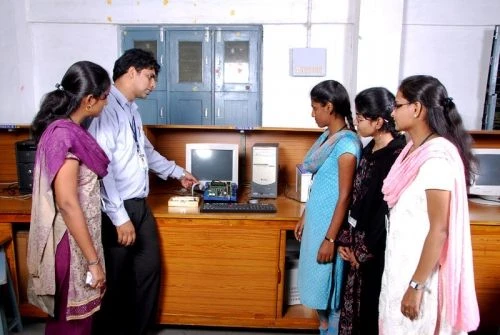
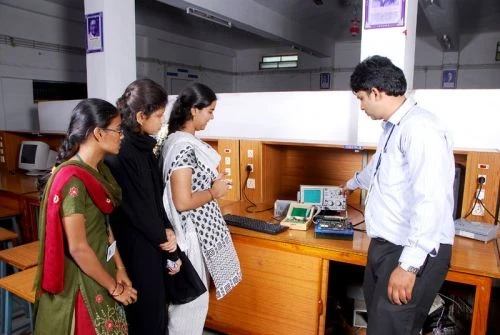
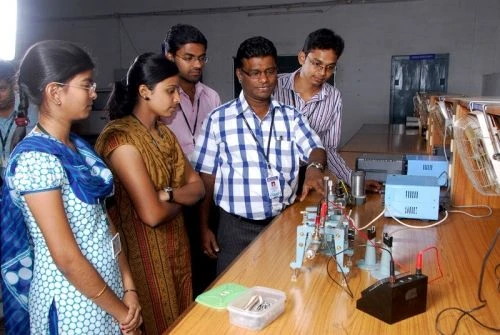

In this preview: 5 photos · 0 videos
Yes, GPREC is considered a top choice in the Kurnool region for CSE. It offers the highest placement rates among local colleges and has an updated curriculum that includes specializations in emerging fields like Artificial Intelligence, Machine Learning, and Data Science.
The hostel fee at GPREC ranges from approximately ₹70,000 to ₹85,000 per year. The exact cost depends on the type of room selected, with options for both AC and non-AC accommodation.
Yes, G. Pulla Reddy Engineering College maintains a dress code and uniform policy for its students. This policy is in place to ensure discipline across the campus.
For the general category, securing a seat in CSE or ECE at GPREC with a 20,000 EAPCET rank is difficult, as the typical cutoffs for these branches are under 11,000. However, this rank may make you eligible for other branches such as Electrical and Electronics Engineering (EEE), Civil Engineering, or Mechanical Engineering.
No, non-vegetarian food is not allowed. The GPREC campus and its hostels maintain a strictly vegetarian food policy.
Share what future students should know about GPREC.
Student voices are not rewritten by colleges. We remove spam and abuse.
Wider admission question? Community PulseWhat should future students know?
Tell us which course you're considering. We'll help you work out the next step.
Get instant Partner access after mobile verification. Your public edits are reviewed before they go live.
Claim this college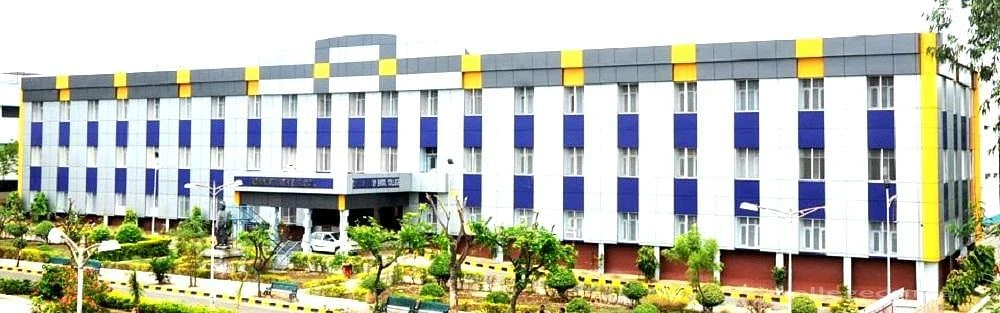

 Auditorium
 Cafeteria
 Computer Labs
 Gym
Gym Hostel
 Medical
 Science Labs
 Sports Complex
 Study Library