Loading Admission Guardian content
Loading Admission Guardian content
Provisional score based on available data. It may change as more information is verified.
Find a program, read its fee details and explore the admission requirements.
Summary of the programs shown below. First-year fee. Check the note beside each amount for inclusions and exclusions.
| Course | Stream | Fees |
|---|---|---|
| Diploma in Engineering (Polytechnic) | Engineering | 34000 |
| Diploma in Engineering (Polytechnic) {Lateral} | Engineering | 34000 |
| Master of Technology [M.Tech] | Engineering | 60000 |
| Bachelor of Technology [B.Tech] | Engineering | 70000 |
| Bachelor of Technology [B.Tech] {Lateral} | Engineering | 70000 |
Specializations
Eligibility: 10th
Specializations
Eligibility: 10+2
Specializations
All accepted exams
Eligibility: Graduation
Specializations
All accepted exams
Eligibility: 10+2
Specializations
All accepted exams
Eligibility: 10+3
3 exams with cutoff data available
 Aarti Industries limited
 Accenture
 Atos Origin
 Bitwise
 Byju's
 Capgemini
 Clover Infotech
 Cognizant
 Dhoot Transmission Pvt Ltd
 eClerx Services
 Endurance
 Epam
Epam FUJITSU
 Genius Consultants Ltd
 HCL
HCL Home First
 Infosys
 Jain Irrigations Pvt Ltd
 KPIT
KPIT L&T Infotech
 Legrand
 Marico Industries Ltd.
 Mphasis
 OS3 Pvt Ltd
 Profound
 Rivigo Logistics
 Sankey Business Solutions
 Spectrum Electrical Industries Ltd
 Supreme
 Syntel
 Tata
Tata Tata Elxsi
 TCS
TCS Tech Mahindra
 Vodafone
 Wipro
WiproGodavari College of Engineering (GCOE) in Jalgaon is a private institution that’s been around since 1999, and it’s built a reputation on a few solid pillars. Its NAAC ‘B’ grade accreditation (scale 2.4) signals a baseline of institutional quality, and the sprawling 10-acre campus offers a decent environment for learning. But the real story here, as with many private colleges in Maharashtra, is the gap between the official narrative and the student experience—particularly when it comes to placements. While the college lists an impressive roster of top-tier IT recruiters, the actual placement percentage and packages tell a more grounded, and sometimes concerning, tale. It’s a college that seems to work well for students who are self-starters, but might disappoint those expecting a guaranteed corporate launchpad.
GCOE offers a standard spread of engineering programs. At the undergraduate level, you’ve got the core branches—Computer, Electronics & Telecommunication, Mechanical, and Electrical—each with an intake of 60 students. They’ve also added Artificial Intelligence and Data Science to the mix, which is a smart move given the market. For postgraduates, M.Tech programs in Computer, Thermal Engineering, VLSI, and E&TC take in 18 students per specialization. There are also Diploma and B.Sc. Engineering routes, bringing the total student body to over 1,100.
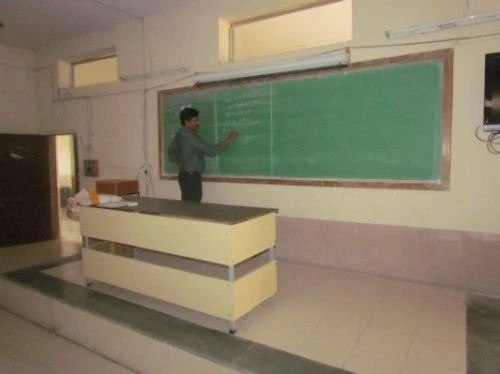
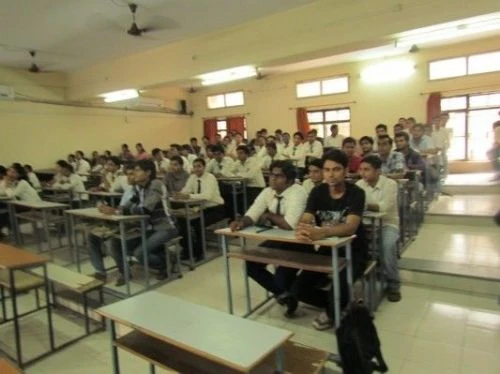
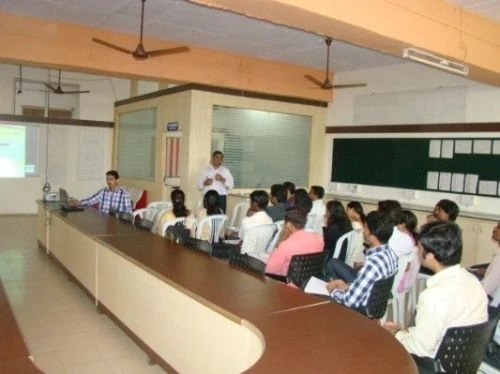
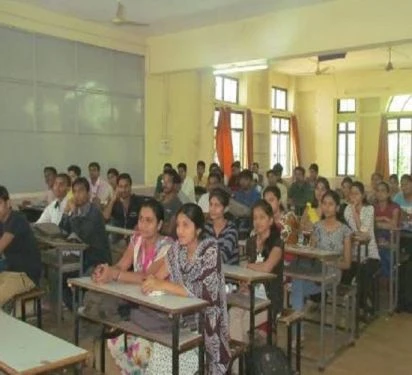
The academic approach tries to be modern. They talk about digital classrooms, project-based learning, and curriculum workshops aligned with NEP 2020. Having active IEEE and Material Advantage chapters is a plus for students keen on technical societies. The faculty list of about 50 includes several PhD holders, like Principal Dr. B.K. Mukherjee and HODs like Dr. N. Nitin Bhole. Student reviews consistently highlight the faculty as a major strength, calling them helpful and skilled at simplifying complex topics. That’s a significant advantage in a private college setting.
This is where you need to read between the lines. The official placement report for 2024 cites a highest package of INR 12 LPA and an average of INR 4.5 LPA for B.E. graduates. The median package for the 2022-23 batch was ₹3.60 LPA, but that’s based on just 5 placed students out of 166 graduates—a tiny sample that makes the number hard to generalize.
The claimed placement percentage floats between 60-70%. Branch-wise data for 2023-24 shows a stark contrast: E&TC, Mechanical, and Electrical reported 100% placement, while Computer Engineering sat at 54.29%. That computer engineering figure is the one to watch, as it’s typically the most sought-after branch.
The recruiter list is undeniably impressive on paper: Cognizant, Capgemini, TCS, Infosys, Accenture, Wipro, and even names like Deloitte and American Express. But student reviews inject a dose of reality. Many say the "placement ratio... is very low" and that success "only depend[s] on the students." There’s mention of "few local recruiters" filling the gaps. The takeaway? Top companies do visit, but they hire in very limited numbers. A lot of the placement burden falls on the student’s own skills and hustle. The college’s Training & Placement officer, Dr. Vijaykumar Wankhede, has his work cut out for him. Internships are compulsory from the third year, with Infosys and TCS being common destinations, which is a decent pipeline.
The fee structure is relatively clear and affordable for a private engineering college. For the 2025-26 academic year, the annual tuition for the B.E./B.Tech program is ₹78,500. Over four years, that totals ₹2,51,000 in tuition fees.
On-campus living adds to the cost. The girls' hostel fee is ₹22,000 per year, and the mess charges another ₹35,000, totaling ₹57,000 annually. There’s no boys' hostel on campus currently, though one is planned. Add in other mandatory fees like application (₹1,000), exam (₹2,000), and library charges (₹3,000), and you get a fuller picture of the annual outlay.
Financial aid is primarily through government schemes. The college assists with educational loans and notes that the government provides 50% scholarships on fees. The fee structure itself has categories for OBC/EBC, VJ/NT/SBC, and SC/ST scholarships, as well as the Tuition Fee Waiver Scheme (TFWS). If you qualify, it can significantly reduce the burden.
Admission to the B.E./B.Tech programs is primarily through the state entrance exam, MHT CET. JEE Main scores are also accepted. For M.Tech, it’s GATE. Diploma admissions are merit-based on the CBSE 10th standard results.
The specific cutoff ranks or percentiles for the latest cycles aren’t publicly detailed in the brief. However, one student review mentioned needing 60% or greater in MHT CET for admission to Computer Engineering through the Centralized Admission Process (CAP) round. That gives you a ballpark figure—it’s not intensely competitive, but you need a decent score for the popular branches.
The application window for B.Tech typically opens in late June. For the 2026 cycle, it’s noted as June 27 to July 13. The application fee is ₹1,000. There is a Management Quota available, which is standard for private institutions like this one.
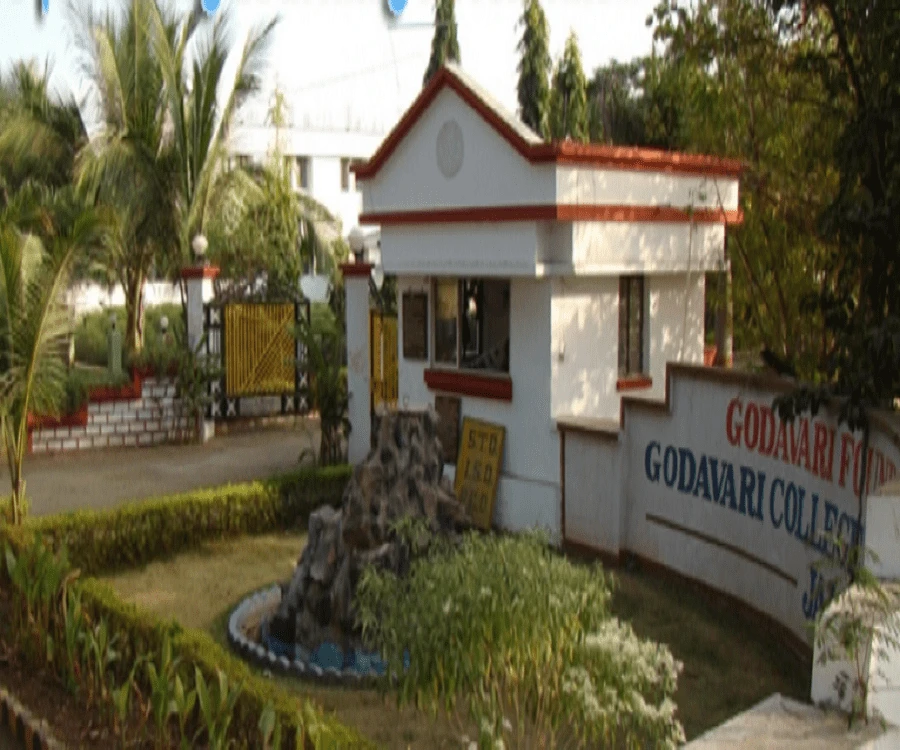
The 10.03-acre campus in Jalgaon’s Ayodhya Nagar area gets good marks from students. They describe it as "big," "nature friendly," with a large ground. Infrastructure is a highlight: well-maintained labs, a state-of-the-art library with 24/7 access during term, and campus-wide Wi-Fi that’s free to use.
The girls' hostel, with a capacity for 200, is rated highly. Students call it "very good and clean," with 24x7 internet, solar power, and a dedicated hostel library. The mess food gets a "very good" rating as well. The lack of a current boys' hostel is a definite drawback for male students, who must arrange private accommodation.
Life beyond academics seems active. There’s a vibrant canteen, a gym, and facilities for cricket, football, basketball, and volleyball. The college organizes a lot of extracurricular activities—dance, singing, dramas, and cultural events. "Campus life is good as many events conducted by college," as one student put it. Practical amenities are covered too: an on-campus bank branch (Godavari Laxmi Co-op Bank), a medical clinic, and the college’s own fleet of buses for transportation and industrial visits.
Synthesizing student sentiment from various platforms paints a consistent picture. The faculty is the undisputed star. Review after review praises teachers for being helpful, dedicated, and effective at teaching. In a field where poor instruction can sink you, this is GCOE’s biggest asset.
The campus and infrastructure also receive strong praise. The labs, library, and green spaces create a positive learning environment. Hostel residents, particularly girls, are satisfied with their living conditions.
But the placements are the recurring sore point. While the college advertises a 60-70% rate and big-name recruiters, students frequently report that actual on-campus hiring is limited. The sense is that you cannot rely on the college’s placement cell alone; you must build your own profile through internships and skills. Some administrative processes also get minor complaints, but these are less frequent than the placement concerns.
The overall vibe is that GCOE is a good academic institute with caring staff, but it’s not a placement powerhouse. It’s a platform, not a passport.
Godavari College of Engineering is a solid, if unspectacular, choice for engineering education in North Maharashtra. Its strengths are clear: a respectable NAAC accreditation, a spacious and well-equipped campus, and—most importantly—a faculty that students genuinely appreciate. If your primary goal is to get a decent engineering education in a supportive environment without exorbitant fees, GCOE makes sense. The fee structure is transparent and aided by government scholarships.
However, you should temper your expectations regarding placements. The college does attract notable companies, but the volume of offers, especially for the flagship Computer Engineering program, appears inconsistent. Success here heavily depends on your own initiative. This college is best for students who are self-motivated learners, who will leverage the good faculty and facilities to build their own skills and seek out internships. If you’re looking for a college with a fiercely competitive placement cell that guarantees high-paying jobs, you might need to set your sights higher. For a student from the region seeking a affordable, accredited engineering degree with good teaching, GCOE is a reasonable bet. Just know you’ll likely be driving your own career bus.
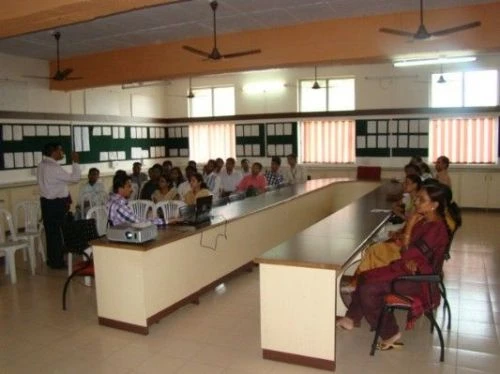
In this preview: 5 photos · 0 videos
For the 2024 batch, the average package for B.E. graduates at Godavari College of Engineering was ₹4.5 LPA (Lakhs Per Annum). The highest package offered was ₹12 LPA. It's important to note that student reviews suggest placement success varies significantly by branch and individual student effort.
Yes, Godavari College of Engineering is accredited by the National Assessment and Accreditation Council (NAAC) with a 'B' grade. The accreditation score is 2.4 on a 4-point scale. The college is also approved by the All India Council for Technical Education (AICTE).
For the 2025-26 academic year, the annual tuition fee for the B.E./B.Tech program at GCOE is ₹78,500. The total tuition fee for the 4-year program is ₹2,51,000. Additional costs include a hostel and mess fee of approximately ₹57,000 per year (for girls), plus other mandatory charges like application and library fees.
Placements at GCOE present a mixed picture. Officially, the college reports a 60-70% placement rate with top recruiters like TCS, Infosys, Cognizant, and Capgemini visiting. The 2024 average package was ₹4.5 LPA. However, student reviews frequently indicate that on-campus hiring numbers can be low, and success heavily depends on a student's own skills and proactivity. Branch-wise data shows variation, with Computer Engineering at 54.29% placement for 2023-24.
Admission to the B.Tech program is primarily based on the MHT CET entrance exam score. JEE Main scores are also accepted. The selection happens through the state's Centralized Admission Process (CAP). The application window typically opens in late June. While specific cutoffs aren't published, a student review suggests a score of 60% or greater in MHT CET is needed for Computer Engineering. A management quota is also available.
Share what future students should know about GCOE.
Student voices are not rewritten by colleges. We remove spam and abuse.
Wider admission question? Community PulseWhat should future students know?
Tell us which course you're considering. We'll help you work out the next step.
Get instant Partner access after mobile verification. Your public edits are reviewed before they go live.
Claim this college
 Auditorium
 Cafeteria
 Campus Shuttle
 Campus Wi-Fi
 Computer Labs
 Gym
Gym Hostel
 Medical
 Science Labs
 Smart Classrooms
 Sports Complex
 Study Library