Loading Admission Guardian content
Loading Admission Guardian content
Find a program, read its fee details and explore the admission requirements.
Summary of the programs shown below. Fee periods can differ by program. Check the note beside each amount before comparing costs.
| Course | Stream | Fees |
|---|---|---|
| Bachelor of Science [B.Sc] | Science | 3000 |
| M.B.B.S. | Medical | 16623 |
| Doctorate of Medicine [MD] | Medical | 51100 |
| Master of Surgery [MS] | Medical | 51100 |
| Master of Chirurgiae [M.Ch] | Medical | 63546 |
Specializations
Eligibility: 10+2
All accepted exams
Eligibility: 10+2 with 50% + NEET
Specializations
All accepted exams
Eligibility: Graduation
Specializations
All accepted exams
Eligibility: Graduation
Specializations
All accepted exams
Eligibility: Post Graduation
2 exams with cutoff data available - showing recent entries
If you're looking for a government medical college where the clinical training punches far above its fee structure, Government Chengalpattu Medical College (GCMC) demands attention. Established in 1965, it’s a workhorse institution, not a showpiece. Forget gleaming corporate campuses; here, the value is in the sheer volume of patients flowing through its 1,100-bedded hospital. Students call it a "clinical goldmine," and for a self-motivated learner, that’s often worth more than fancy buildings. The trade-off is clear: you get extraordinary hands-on experience and significant freedom on a sprawling, green campus, but you’ll be navigating infrastructure that’s seen better days. It’s a classic Tamil Nadu government college—subsidized, no-nonsense, and fiercely practical.
GCMC offers the standard ladder of medical education, heavily focused on clinical practice. The MBBS program, with its 100 seats, is the core. But the college has expanded into allied health sciences in a big way, with about 180 seats for B.Sc. programs in areas like Cardiac Technology and Radiology. That’s a smart move, feeding the growing paramedic ecosystem. At the postgraduate level, they offer roughly 94 MD/MS seats across broad specialties like General Medicine, Obstetrics, and Anaesthesia. They’ve also stepped into super-specialties with 24 DM/MCh seats in fields like Cardiology and Neurology.
The academic culture is traditional. Faculty are experienced clinicians—most hold MD/MS degrees—but the teaching style isn’t hand-holding. A common thread in student reviews is that you have to be proactive. "Self-study is the only way to survive university exams," as one Reddit user put it. The college does have an active Multi-Disciplinary Research Unit with projects funded by bodies like the ICMR, but this isn’t a research-heavy institution. Its strength is turning out clinicians, not lab scientists. The academic calendar follows the state university, with the 2024-25 MBBS session slated to start on September 22, 2024.
Let’s be clear: medical colleges don’t have campus placements like engineering schools. Career progression is a structured path of government service and further exams. After 4.5 years of MBBS, every student completes a mandatory one-year Compulsory Rotatory Residential Internship (CRRI) at the attached hospital. The stipend for this in 2024-25 is the standard Tamil Nadu government rate of about ₹25,000 to ₹27,000 per month. It’s a decent living wage for an intern.
After that, graduates typically either clear NEET-PG to specialize or take up Junior Resident posts in government or private hospitals. For those who secure an MD/MS seat at GCMC or elsewhere, the resident stipend ranges from ₹52,447 in the first year to ₹54,636 in the third. There’s a significant catch, though. Postgraduate candidates in Tamil Nadu sign a ₹40 lakh service bond and must complete a 2-year mandatory rural posting. That’s a serious commitment, but it’s the standard trade-off for a highly subsidized PG seat. The real "placement" here is the iron-clad clinical skill set you build, which makes you competitive for jobs and further training anywhere.
This is where government colleges like GCMC are almost unbeatable. The fees are heavily subsidized by the state, making medical education accessible. For the 2024-25 academic year, the annual tuition for MBBS is just ₹13,610. The total first-year cost, including various fees, is approximately ₹19,673 to ₹25,000. Postgraduate MD/MS tuition is ₹40,000 annually, with a total first-year cost around ₹71,100.
Hostel fees are nominal, ranging from ₹500 to ₹1,200 for the room itself. Mess fees are extra, running about ₹3,000 to ₹5,000 per month for food. Financial aid is robust for eligible students. Scholarships are available for SC/ST/OBC and economically weaker sections. Notably, students admitted under the 7.5% Government School Quota receive a full fee waiver. The financial burden here is minimal, which is a massive relief in a field where private college fees can run into crores.
Admission is strictly through national entrance exams. For MBBS, it’s NEET-UG. For MD/MS, it’s NEET-PG. For super-specialties (DM/MCh), it’s NEET-SS. The selection is then handled via centralized counseling.
Of the 100 MBBS seats, 85% are filled through the Tamil Nadu state quota counseling (managed by the Directorate of Medical Education - TN DME), and 15% go through the All India Quota (AIQ) counseling run by the Medical Counseling Committee (MCC). The cutoffs show a clear tier. For the 2024/2024 cycle, the Round 1 closing rank for the state quota (General category) was extremely competitive, around 800-821. For the AIQ, the Round 1 closing rank was about 7,698, with the last round extending to around 23,328. So, if you’re a Tamil Nadu student, you need a very high rank. If you’re competing nationally, the rank is more forgiving in later rounds. For NEET-PG in a sought-after specialty like General Medicine, the closing rank was around 2,973.
The campus is huge and green, spread over 240-250 acres. Students consistently describe the atmosphere as "serene" and "peaceful," a world away from the chaos of central Chennai. And there’s a notable sense of freedom—unlike many private colleges, there aren’t rigid gate timings for boys, which is a big plus for many.
But you have to manage expectations on infrastructure. The hostels are described as "vintage" and "basic." The rooms are functional, but the bathrooms are a frequent point of criticism for their poor maintenance. It’s a common gripe in older government colleges. The mess is student-run, offering both vegetarian and non-vegetarian options. Beyond academics, facilities are decent: there’s a central library with over 29,000 titles and 24/7 AC reading room, a 750-seater modern auditorium, and sports grounds for cricket, football, basketball, and volleyball. There’s also a gymnasium. It’s not luxurious, but it covers the essentials.
The heartbeat of the campus is the attached Government Chengalpattu Medical College Hospital. With 1,100 beds, it’s a tertiary care referral center for Chengalpattu, Kanchipuram, and Tiruvannamalai districts. That translates to an immense and varied patient load, which is the college’s biggest selling point.
Synthesizing feedback from platforms like Quora, Reddit, and CollegeDunia paints a consistent picture. The overwhelming positive is the clinical exposure. One Reddit user noted the "caseload is good too considering its in a watershed area surrounded by shitty district hospitals," meaning they get the complex cases others refer. Another on Quora said, "The hospital provides a large number of cases to increase your experience." It’s a hands-on learning environment where you see and do a lot.
The freedom and campus environment are also big hits. The flip side is the dated infrastructure, particularly the hostel bathrooms. As one review on CollegeDunia put it, "Hostel life holds so many memories... but don't expect luxury. Bathrooms are a little bad and you have to adjust." Academically, professors are respected but the onus is on the student. You’re expected to be a self-starter. There’s no spoon-feeding. The college isn’t highly ranked in national lists like NIRF (it didn’t place in the top 50 in 2024), but that’s typical for state GMCs focused on service over research publication. At the state level, it’s consistently regarded as the 5th or 6th best government medical college in Tamil Nadu.
Absolutely—but for a specific type of student. If your priority is to become a competent, confident clinician without drowning in debt, GCMC is an excellent choice. The clinical training here, fueled by its massive hospital, is arguably better than what you’d get at many more expensive private colleges. The fees are negligible, and the campus life offers a lot of autonomy. However, if you require pristine facilities, a highly structured academic schedule with constant faculty interaction, or a brand-name college for research, you might be frustrated. You have to be okay with rough-around-the-edges hostels and taking charge of your own studies. For the pragmatic, self-driven student aiming for a clinical career, Government Chengalpattu Medical College represents incredible value for money and a solid launchpad into the medical profession. It’s a workhorse, not a showhorse, and in medicine, that’s often exactly what you need.
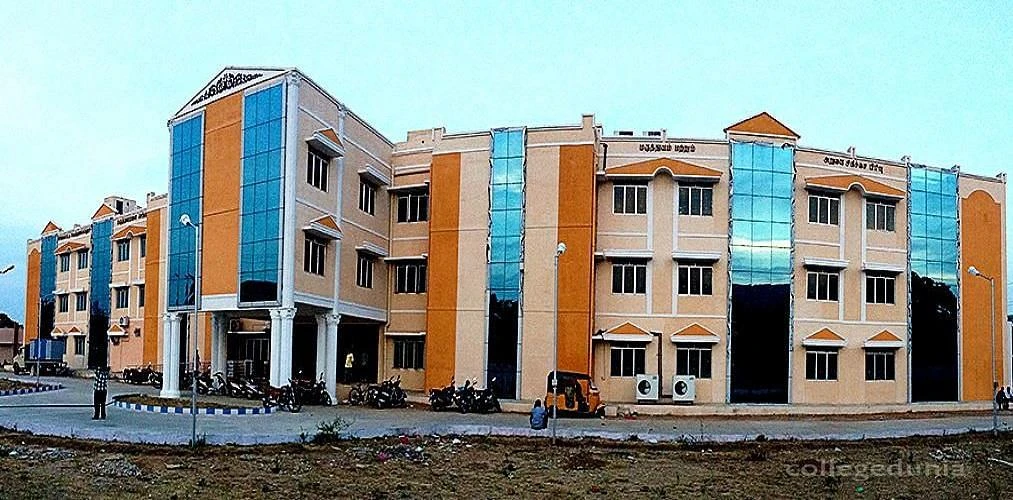
In this preview: 1 photo · 0 videos
Yes, Government Chengalpattu Medical College is highly regarded for MBBS, particularly for its strong clinical exposure and low fees. Prospective students should note that some of the college's infrastructure is dated.
The MBBS seat intake for the 2025 academic year is 100 seats, as per the latest National Medical Commission (NMC) seat matrix.
The college is located approximately 54 km from the Chennai city center. The travel time by road is typically between 1.5 to 2 hours, depending on traffic conditions.
Yes, the college provides separate and secure hostel facilities for its female students. These hostels have a dedicated warden for supervision and support.
For the General category under the State Quota, a NEET rank under 850 is typically required. For the All India Quota (AIQ), the cutoff usually closes in the range of 12,000 to 15,000 rank in the early counseling rounds.
Share what future students should know about Government Chengalpattu Medical College.
Student voices are not rewritten by colleges. We remove spam and abuse.
Wider admission question? Community PulseWhat should future students know?
Tell us which course you're considering. We'll help you work out the next step.
Get instant Partner access after mobile verification. Your public edits are reviewed before they go live.
Claim this college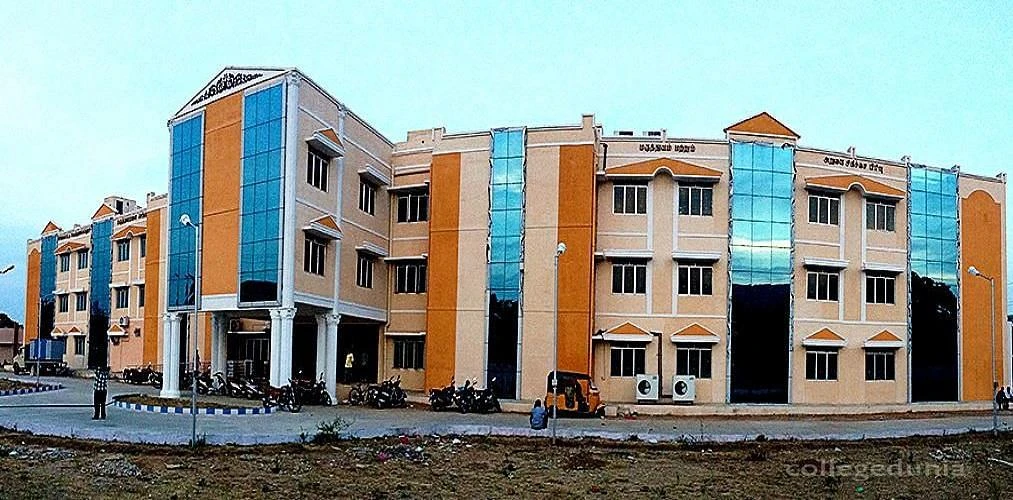
 Auditorium
 Cafeteria
 Campus Shuttle
 Computer Labs
 Hostel
 Medical
 Science Labs
 Study Library