Loading Admission Guardian content
Loading Admission Guardian content
Provisional score based on available data. It may change as more information is verified.
Selected ranking categories, with the recorded year beside each result. Open all records for the complete history.
2 published records · Lower numeric ranks are stronger
IIRF
B.Tech · public
#1392023
Find a program, read its fee details and explore the admission requirements.
Summary of the programs shown below. Total course fee. Check the note beside each amount for inclusions and exclusions.
| Course | Stream | Fees |
|---|---|---|
| Master of Engineering [M.Tech] | Engineering | 36000 |
| Bachelor of Technology [B.Tech] | Engineering | 53400 |
| Bachelor of Technology [B.Tech] {Lateral} | Engineering |
Specializations
Eligibility: Graduation
Specializations
All accepted exams
Eligibility: 10+2 with 45% + WBJEE
Specializations
All accepted exams
Eligibility: Diploma in Engg. + JELET
3 exams with cutoff data available
 CTS SMC
 Hitachi Metglas
 Oracle
 TCS
TCS Tech Mahindra
 Wipro
WiproIf you're looking for a government engineering college in West Bengal where the fees are low and the placement rates for certain branches are remarkably high, the Government College of Engineering & Textile Technology (GCETT) in Serampore demands a closer look. Established in 1908, it’s one of the oldest institutions of its kind in the region, and its identity is deeply rooted in the textile industry. That’s the core of its reputation. For students targeting a career in textiles or apparel, GCETT offers a compelling, cost-effective path with near-guaranteed employment. But for those dreaming of a high-flying IT career, the picture is more complicated. The data shows a stark, almost binary, split in outcomes depending on which department you join. This isn't a one-size-fits-all institution, and understanding that divide is key to deciding if it's the right fit.
GCETT offers a focused set of programs, a legacy of its long history in textile education. The undergraduate intake is modest, with 60 seats each for its four B.Tech streams. The postgraduate programs are even smaller, with just 10 seats each.
The Textile Technology department is the heart of the college. It’s the oldest, offering both B.Tech and M.Tech degrees, and its curriculum is explicitly designed for industry readiness. The Computer Science and Engineering and Information Technology departments are much younger, formed in 2001 and 2000 respectively. That age gap often translates to a difference in industry networks and placement traction.
Faculty quality gets consistently positive marks in student reviews. Many teachers are alumni of reputed institutions like Jadavpur University and IIT Kharagpur, and the feedback highlights them as cooperative and knowledgeable. The academic system follows the standard MAKAUT semester pattern, with a passing mark of 40 out of 100 and an average pass percentage of 90%. It’s a decent, no-frills academic environment where your engagement with the faculty will likely shape your experience.
This is where the story splits in two. The placement data isn't just different by branch—it's a tale of two colleges.
For Textile Technology (TT) and Apparel Production Management (APM), GCETT delivers on its core promise. Placement rates are consistently high, with some years hitting nearly 100%. For the 2024-25 batch, official data shows a 65.12% placement rate for TT and 52.5% for APM, though student reviews frequently claim "100% placement every year" for these streams. The highest package for TT was a notable ₹14 LPA, with an average around ₹4.70 LPA. Recruiters are the who's who of the Indian textile and apparel sector: Raymond, Trident, Welspun, Vardhaman Textiles, Aditya Birla Fashion and Retail, and Arvind.
For Computer Science & Engineering (CSE) and Information Technology (IT), the scenario is markedly weaker. Placement rates for 2024-25 were 32.65% for CSE and 33.33% for IT. The highest package for CSE was ₹7.50 LPA, but the average slumped to ₹3 LPA. IT saw a highest of ₹4.20 LPA and an average of ₹3.50 LPA. While big IT service names like TCS, Infosys, Wipro, and Capgemini do visit, the number of offers is limited. The gap between the official placement claim and what alumni say on forums is notable—many describe CSE/IT placements as "not good enough" or "average."
Internship opportunities, however, seem robust across the board, with a reported 95% of students securing them. The Training and Placement Cell is active, but its efficacy is clearly stronger in the college's traditional domains.
The affordability of GCETT is one of its strongest selling points, especially for a government institution. The fee structure is not uniform; it varies significantly by program, reflecting perhaps different cost structures or subsidies.
For the 2026-27 intake, estimated total fees for the entire 4-year B.Tech program are:
M.Tech programs are estimated at ₹40,000 - ₹50,000 for the full two years. These numbers are shockingly low compared to private engineering colleges. Hostel fees are included in some of these overall estimates, but a specific breakdown isn't publicly detailed. The college also mentions provisions for scholarships for minority students. When you weigh the ultra-low cost against the placement outcomes, especially for TT and APM, the return on investment can be very attractive.
Admission to the B.Tech programs is strictly through the West Bengal Joint Entrance Examination (WBJEE). For M.Tech, candidates need a valid GATE score or must appear for PGET.
The WBJEE closing ranks for the 2025 session give a clear picture of demand and selectivity:
These cutoffs are for the General AI category. The process is centralized and merit-based, managed by the WBJEE Board's e-counselling. The application window for WBJEE 2026 is tentatively set to open in December 2025, with the exam in April 2026. There's also a lateral entry pathway via JELET. A limited number of self-sponsored seats may be available, subject to government approval.
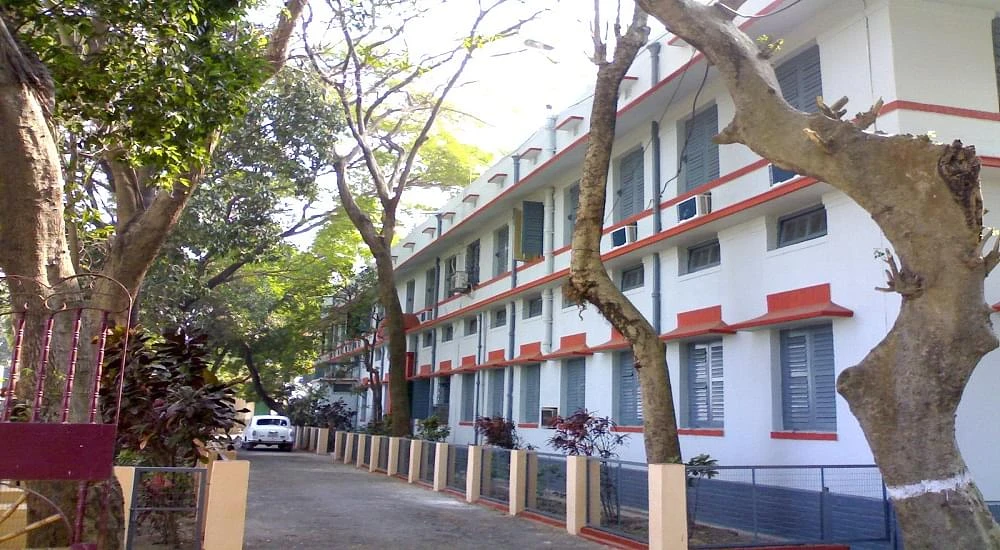
The campus itself is a mix of old and functional. Some buildings date back to the British period, which adds character but also means the infrastructure can feel dated. Reviews on labs are mixed—some praise them as well-equipped with modern instruments and central AC, while others feel they are "just okay" and could be improved. The shared workshops for physics, chemistry, and engineering basics are standard.
The library, however, is a standout feature. It’s fully automated, houses over 45,000 books and volumes, and provides 24/7 digital access to resources like the IEEE Digital Library and NPTEL courses. Students consistently call it one of the best facilities on campus.
Sports facilities are extensive for a college of this size, with a large playground, an indoor stadium, and courts for almost every major sport. The annual fest, TEXAVISION, held in January, is a major highlight featuring technical events, cultural programs, and music nights. Various clubs for coding, drama, and music add to the extracurricular slate.
Now, the hostel situation is the most contentious issue. There is one boys' hostel with a capacity of 100. Reviews on it are sharply negative, citing poor maintenance, overcrowded rooms, and bad food quality. Most alarmingly, multiple sources describe ragging as a serious, traditional problem in the boys' hostel, though the college officially declares itself an anti-ragging campus. This contradiction is a major red flag for prospective residents. There is no dedicated girls' hostel yet (one is under consideration), so female students typically arrange private mess accommodation nearby. Wi-Fi connectivity across campus is reported to be unreliable.
Synthesizing student sentiment from various forums paints a consistent, dual-natured picture.
The Good: For TT and APM students, satisfaction is high. They praise the near-certain placement, extremely low fees, helpful faculty, and vibrant campus life with TEXAVISION. They feel they get tremendous value. The library receives universal acclaim.
The Not-So-Good: CSE and IT students often express disappointment with placement rates and packages. The hostel conditions and ragging culture are frequent, serious complaints. Many note that while the campus has space and sports facilities, the academic infrastructure (labs, buildings) is old and needs upgrading. The unreliable Wi-Fi is a common gripe.
The teaching faculty emerges as a unifying positive across all branches, described as qualified, supportive, and a key strength of the college.
The answer depends entirely on your branch of choice and personal tolerance.
GCETT is an excellent, high-value option if: You are admitted to the Textile Technology or Apparel Production Management program. The combination of minuscule fees, strong industry-focused curriculum, and excellent placement rates with reputable core companies is hard to beat in the government college sphere. You’re getting a specialized, career-launching education at a fraction of the cost. Just be prepared for basic, possibly subpar hostel living if you choose to stay on campus.
You should look elsewhere if: Your heart is set on Computer Science or Information Technology. The lower placement percentages and average packages, compared to other engineering colleges at similar WBJEE ranks, make it a risky bet. The value proposition here is weak.
Proceed with caution if: You plan to stay in the boys' hostel. The serious allegations of a persistent ragging culture cannot be ignored and warrant thorough investigation and consideration. For all students, manage your expectations regarding flashy infrastructure and seamless digital connectivity. GCETT is a traditional, no-frills workhorse of an institution—outstanding in its niche, average outside of it.
In this preview: 1 photo · 0 videos
Admission to the B.Tech programs at GCETT Serampore is based entirely on your rank in the West Bengal Joint Entrance Examination (WBJEE). You must have passed your 10+2 with Physics and Mathematics as compulsory subjects and a minimum of 45% marks (40% for reserved categories). After the exam, you need to participate in the centralized online counselling conducted by the WBJEE Board. For lateral entry into the second year, you need to appear for JELET.
The fees are remarkably low and vary by program. For the entire 4-year B.Tech degree, estimated total fees range from about ₹28,900 for Textile Technology to ₹1,00,000 - ₹1,10,000 for Information Technology. For the 2-year M.Tech degree, the total cost is estimated between ₹40,000 and ₹50,000. These are total program costs, not annual fees.
Placement prospects are highly branch-dependent. The Textile Technology and Apparel Production Management branches have consistently high placement rates, often nearing 100%, with an average package around ₹4.7 LPA and a highest package of ₹14 LPA (2024-25). In contrast, Computer Science and Information Technology have much lower placement rates (around 30-40% recently), with average packages between ₹3 LPA and ₹3.5 LPA. Top recruiters include Raymond, Vardhaman, Trident for core roles, and TCS, Wipro for IT roles.
GCETT has one boys' hostel with a capacity of 100 seats. Student reviews frequently criticize its condition, citing poor maintenance, overcrowding, and issues with food quality. There are also serious, repeated complaints about ragging being a problem in the hostel. Currently, there is no dedicated girls' hostel on campus, though the college has plans to construct one. Female students typically live in private messes or accommodations near the college.
Key strengths include outstanding placement records and very low fees for Textile and Apparel branches, a helpful and qualified faculty, a well-stocked library, and an active campus life with fests and sports. Major weaknesses are the poor placement rates for CSE/IT branches, outdated infrastructure in some areas, the poorly maintained boys' hostel with ragging concerns, and unreliable Wi-Fi connectivity.
Share what future students should know about GCETT.
Student voices are not rewritten by colleges. We remove spam and abuse.
Wider admission question? Community PulseWhat should future students know?
Tell us which course you're considering. We'll help you work out the next step.
Get instant Partner access after mobile verification. Your public edits are reviewed before they go live.
Claim this college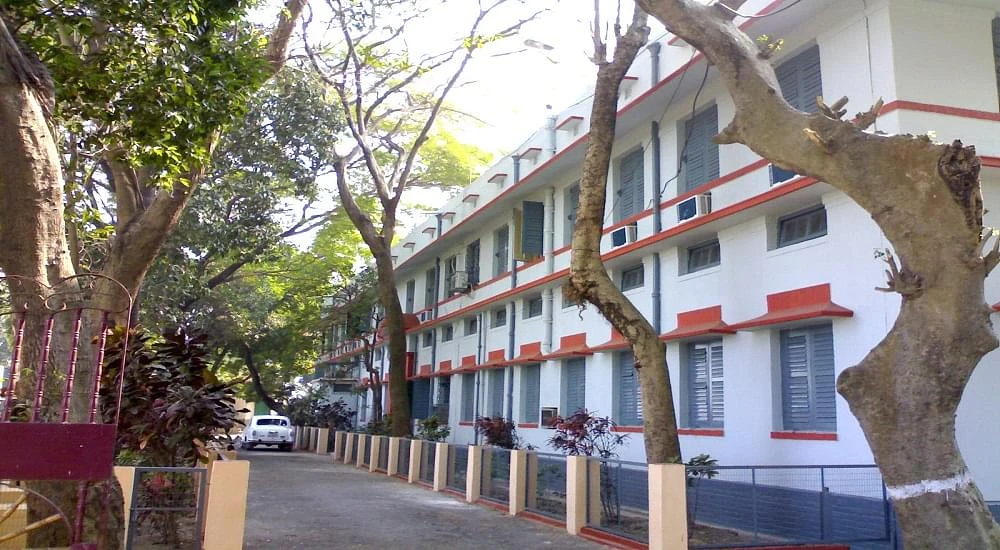
 Auditorium
 Cafeteria
 Computer Labs
 Hostel
 Medical
 Science Labs
 Study Library