Loading Admission Guardian content
Loading Admission Guardian content
Selected ranking categories, with the recorded year beside each result. Open all records for the complete history.
1 published record · Lower numeric ranks are stronger
Find a program, read its fee details and explore the admission requirements.
Summary of the programs shown below. Fee periods can differ by program. Check the note beside each amount before comparing costs.
| Course | Stream | Fees |
|---|---|---|
| Bachelor of Technology [B.Tech] | Engineering | 60000 |
| Master of Business Administration [MBA] | Management | 128000 |
| Bachelor of Computer Applications [BCA] | Computer Applications | |
| Master of Computer Applications [M.C.A] | Computer Applications | |
| Master of Science [M.Sc] | Science |
Specializations
All accepted exams
Eligibility: 10+2 with 45% + JEE Main
Specializations
All accepted exams
Eligibility: Graduation with 50% + CMAT
Specializations
Eligibility: 10+2
All accepted exams
Eligibility: Graduation with 50% + RMCAAT
Specializations
Eligibility: Graduation
 Kirloskar Group of Companies
Government Engineering College (ECB) in Bikaner is a bit of a paradox. It's a sprawling, 200-acre government campus on the outskirts of a desert city, offering a peaceful, almost monastic environment for study. And it holds the #1 ranking among colleges in Rajasthan according to the NIRF. But that ranking, while impressive on paper, sits alongside placement numbers that tell a more grounded story—an average package of ₹4 LPA and about half of its engineering grads landing jobs through campus drives. For students who thrive on self-direction and are looking for an affordable, academically solid government engineering education away from the metro chaos, ECB presents a compelling, if challenging, proposition. You get the foundational theory. The rest is largely up to you.
ECB operates as an autonomous government institution, which gives it some flexibility in how it runs its programs. The academic portfolio is broader than a typical engineering college, blending core tech with management and sciences.
The B.Tech program is the main draw, with an intake of 600 students split across eight branches: Computer Science, Electrical, Civil, Mechanical, Electronics & Communication, Electronics Instrumentation & Control, IT, and the relatively new Artificial Intelligence & Data Science (started in 2020). Beyond engineering, you can pursue a BBA or BCA (120 seats each), or postgraduate degrees like M.Tech, MBA, MCA, and M.Sc. in basic sciences. There's also a sizable diploma program and Ph.D. opportunities.
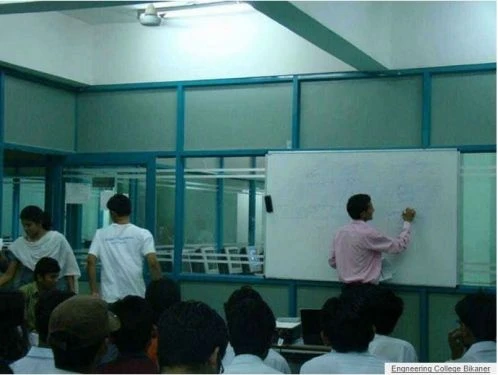
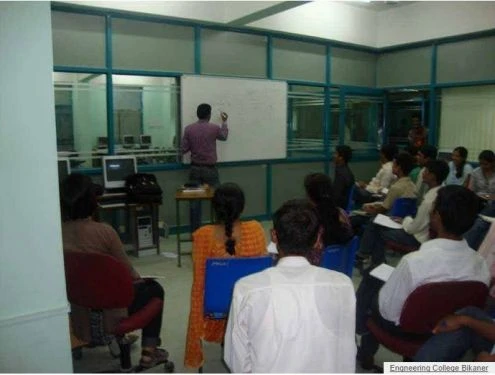
Academically, the college pushes a theory-heavy curriculum. The faculty—over 80 of them holding PhDs or M.Techs from institutes like IITs and NITs—are repeatedly cited in student reviews as cooperative and knowledgeable. They run free coaching for GATE and employability skills, which is a solid perk. The college also has an Institution's Innovation Council and benefits from academic mentorship by NIT Kurukshetra. The labs are a mixed bag; the Computer Science labs are called "a bit old but still useful," but there's ongoing development, with 15 new labs being built through a World Bank project.
It's not a hands-on, industry-integrated curriculum from day one. The vibe is more about building a strong foundational base. That means students who are proactive about supplementing lectures with online courses and personal projects tend to do better.
This is the section where official data and student sentiment require a careful read. The college's placement report for 2023-24 states 47 students were placed. The placement percentage breaks down to 55.28% for UG Engineering and a much stronger 90.91% for PG Management programs. The average package cited is ₹4 LPA, with the highest offer that year coming from Larsen & Toubro at ₹6 LPA. It's worth noting previous years saw higher peaks—₹18 LPA in 2023, ₹12 LPA in 2022—which suggests volatility and that top packages are exceptional, not the norm.
The recruiter list is long and includes credible names: L&T, Wipro, TCS, Infosys, IBM, Mahindra, and a host of other manufacturing and IT firms. But here's the reality check students talk about: the on-campus placement drive doesn't reach everyone. A recurring theme in reviews is that securing a job requires significant self-effort. One review bluntly estimated "about 20% of students get placed in college, and 50% get placed out of campus." The official 55% placement rate for engineering seems to align with that student observation.
So, the placement cell facilitates opportunities, but it's not a high-touch, high-success operation like you'd find at a top-tier NIT. Many students use the college's stable environment to prepare for GATE, government exams, or to skill up for off-campus drives. The silver lining? Around 70% of students reportedly secure internships, with ties to companies like BHEL and platforms like Internshala.
This is where ECB's government status shines. The annual tuition fee for B.Tech is around ₹60,000 across all specializations. Total course fees are said to range between ₹60,000 and ₹1.28 lakhs, which is exceptionally affordable for a professional degree. An MBA costs about ₹1.3 lakhs in total tuition. Hostel and mess fees aren't specified in the brief, but even with them, the total cost will be a fraction of what a private college charges.
Financial aid is a major strength. The college claims almost 80% of undergraduate students avail of some scholarship or reimbursement. These include standard merit and need-based grants, plus government schemes for SC/ST/OBC students. For postgraduates, there are teaching assistantships—₹7,000 per month for GATE qualifiers and ₹6,000 for others. These scholarships are renewable, contingent on maintaining a minimum CGPA (usually 6.0-7.0) and decent attendance. For a student from an economically constrained background, this support system can be the deciding factor.
Admissions are centralized through state processes, which keeps things transparent but also means you need to watch official counseling calendars closely.
For B.Tech, you need a JEE Main score. Admission is conducted through the Rajasthan Engineering Admission Process (REAP) counseling, which also considers Class 12th marks. There's no interview. The college hasn't published specific JEE Main cutoff ranks for 2023, and cutoffs vary annually based on applicant pool and performance. A key point: there are no separate cutoffs for candidates outside Rajasthan under REAP; everyone is part of the same pool.
For M.Tech, a valid GATE score is required, possibly followed by an interview. MBA admissions consider scores from CAT, MAT, XAT, CMAT, GMAT, or ATMA, followed by RMAP counseling. Programs like BBA, BCA, MCA, and M.Sc. admit students strictly based on merit in the qualifying exam.
The reservation policy follows Rajasthan government norms: 16% for SC, 12% for ST, 21% for non-creamy layer OBC, 5% for MBC, 10% for EWS, plus reservations for Persons with Disabilities and female candidates.
Mark your calendar: REAP 2026 registration for B.Tech is slated to run from May 28 to July 2, 2026. The main admission activity typically happens between May and June for a session starting in August or September. Always double-check dates on the college's official website.
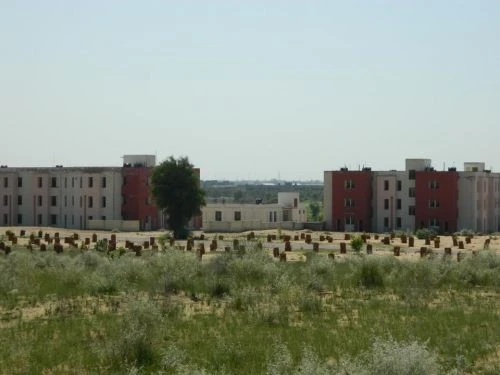
The 200-acre campus is frequently described as "big and green," offering a spacious and peaceful environment. It's isolated—located in the Karni Industrial Area on Pugal Road—which cuts down on distractions but also means you're not in the middle of city life. Connectivity by air, train, and bus is available to Bikaner.
Hostels get good marks. There are separate facilities for boys and girls, with rooms featuring Wi-Fi and LAN internet connections. Mess facilities and common bathrooms are available, and the overall quality is termed "very good" in reviews. The campus has a canteen, bank, dispensary with ambulance, and transport facilities.
Infrastructure is adequate but not flashy. There's a central library with a book bank, smart classrooms, an auditorium, and a Student Activity Centre. Sports facilities include large grounds. It's functional government infrastructure—clean and sufficient, but don't expect glass-and-steel modernity.
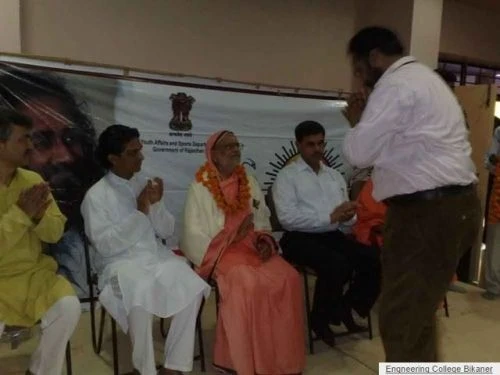
Social life revolves around college-organized events. The annual cultural fest "Abhivyakti" and the technical fest "Technorazz" are the highlights. There's an active club culture with a Personality Development Cell, Management Club, NCC, and NSS wing. It's a self-contained community where you make your own fun.
Sifting through student feedback paints a consistent picture. The overwhelming positive is the faculty. Students call them cooperative, friendly, and remarkably dedicated, even during the online class phase. The academic foundation provided is considered strong. The hostel life is praised, and the peaceful campus is seen as a plus for focused study. The college is said to foster a self-learning attitude—which is both a compliment and a necessity.
The negatives are equally consistent. The primary gripe is placement support. While recruiters visit, the number of on-campus offers is limited, pushing students to seek off-campus opportunities aggressively. Some older reviews mention administrative hassles and a time when resources were lacking, though the faculty is often distinguished from these administrative challenges. The infrastructure, while sufficient, isn't cutting-edge; the "bit old" labs comment comes up.
The takeaway from students is this: ECB gives you a cheap, decent, and supportive academic environment. It won't hand you a job. It will give you the time and basic tools to go get one yourself. For a certain student—disciplined, resourceful, and budget-conscious—that's a fair deal. For someone expecting a high-placement, cradle-to-corporate pipeline, it will feel lacking.
Government Engineering College, Bikaner, is a specific-value proposition. Its strengths are undeniable: extreme affordability, extensive scholarship support, a genuinely good faculty, a peaceful campus, and the credibility of a government degree and a #1 state ranking. If your priority is to get a solid engineering education without burying your family in debt, and you're willing to be the primary driver of your career outcomes, ECB is an excellent choice. It's particularly suited for students aiming for GATE or government services, as the environment and coaching support that goal.
However, temper your expectations on placements. The average package is modest, and the on-campus process is not a sure thing. You must be proactive from day one—building skills, hunting for internships, and preparing for off-campus drives. If you thrive in a structured, high-pressure, placement-focused environment, or if modern campus amenities are a top priority, you might find ECB's remote location and self-directed culture challenging. In short, it's a college that provides a platform, not a passport. Your effort determines the destination.
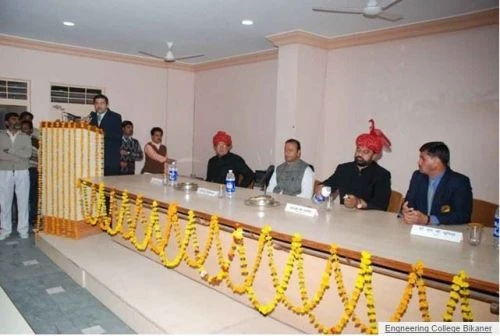
In this preview: 5 photos · 0 videos
For the 2023-24 academic year, the average placement package at Government Engineering College (ECB) Bikaner was ₹4 lakhs per annum (LPA). The highest package offered that year was ₹6 LPA by Larsen & Toubro. It's important to note that placement percentages vary by program, with PG Management seeing around 90% placement, while UG Engineering placement was approximately 55%.
The annual tuition fee for the B.Tech program at Government Engineering College (ECB) Bikaner is approximately ₹60,000 for all specializations. Total course fees are estimated to range between ₹60,000 and ₹1.28 lakhs, making it a highly affordable government institution. Additionally, nearly 80% of undergraduates avail of some form of scholarship or fee reimbursement.
Admissions to the B.Tech program at ECB Bikaner are conducted through the Rajasthan Engineering Admission Process (REAP) state counseling. Eligibility requires a valid JEE Main score, and the final seat allocation is based on this score combined with Class 12th marks. There is no separate interview for B.Tech admissions. The process typically opens in May-June for the academic year starting in August.
In the National Institutional Ranking Framework (NIRF) 2023, Government Engineering College (ECB) Bikaner was ranked 11th overall among all colleges in India and 1st among all colleges in the state of Rajasthan. It also secured the 25th rank in the NIRF Innovation category for engineering colleges.
Yes, Government Engineering College (ECB) Bikaner provides separate hostel facilities for boys and girls on its 200-acre campus. The hostels are generally reviewed positively by students, offering Wi-Fi in rooms, mess facilities, and common bathrooms. The rooms are also equipped with LAN internet connectivity.
Share what future students should know about ECB.
Student voices are not rewritten by colleges. We remove spam and abuse.
Wider admission question? Community PulseWhat should future students know?
Tell us which course you're considering. We'll help you work out the next step.
Get instant Partner access after mobile verification. Your public edits are reviewed before they go live.
Claim this college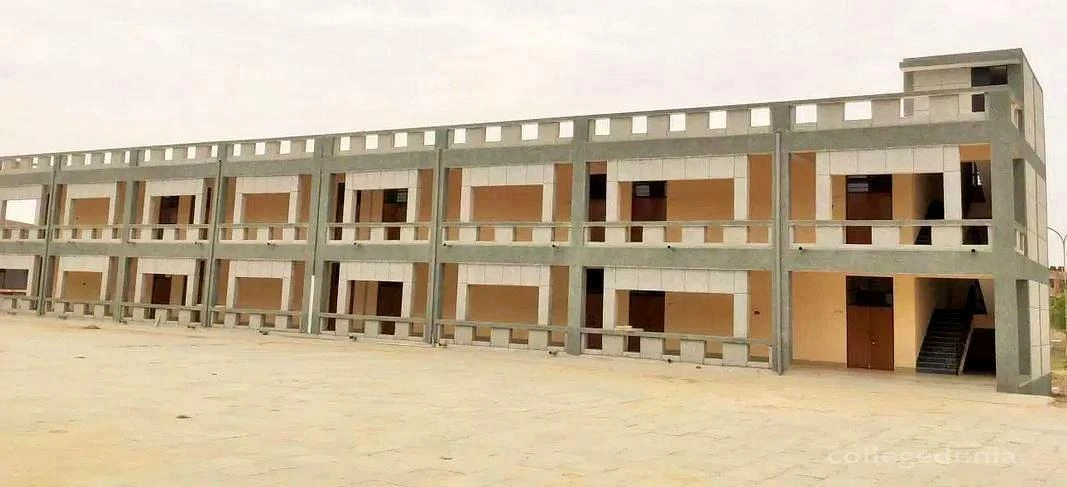
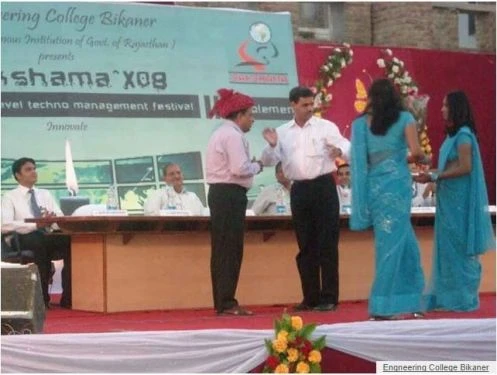
 Auditorium
 Cafeteria
 Computer Labs
 Gym
Gym Hostel
 Medical
 Science Labs
 Sports Complex
 Study Library