Loading Admission Guardian content
Loading Admission Guardian content

Selected ranking categories, with the recorded year beside each result. Open all records for the complete history.
40 published records · Lower numeric ranks are stronger
IIRF
Architecture · public
#152025
IIRF
Engineering · public
#562022
India Today
Engineering · public
#142022
Find a program, read its fee details and explore the admission requirements.
Summary of the programs shown below. Fee periods can differ by program. Check the note beside each amount before comparing costs.
| Course | Stream | Fees |
|---|---|---|
| Ph.D | Engineering | 73265 |
| Master of Technology [M.Tech] | Engineering | 126265 |
| Master of Business Administration [MBA] | Management | 171265 |
| Bachelor of Technology [B.Tech] | Engineering | 181265 |
| Bachelor of Architecture [B.Arch] | Architecture | 186665 |
Specializations
Eligibility: Postgraduation with 60%
Specializations
All accepted exams
Eligibility: Graduation with 60% + GATE
Specializations
All accepted exams
Eligibility: Graduation with 60% + CAT
Specializations
All accepted exams
Eligibility: 10+2 with 75% + JEE Main
All accepted exams
Eligibility: 10+2 with 50% + NATA
4 exams with cutoff data available - showing recent entries
 777 Trade
 AECOM
AECOM Affine analytics private limited
 Amazon
 Analytics Quotient
 Arcesium
 Axis Bank
 Bajaj Auto
 Byju's
 Cairn
Cairn Capgemini
 Coca-Cola
 Codenation
 Cummins India Ltd
 Dassault Systemes
 Deloitte
 Droom
Droom Epcos
Epcos Essar Steels
 EXL Services
 Fidelity
 Goldman Sachs
 Hero Motocorp
 HMEL
HMEL HSBC
HSBC Infosys
 Interra IT
 JSL
JSL KEC
KEC Larsen & Toubro Limited
 Mahindra & Mahindra
 Maruti Suzuki
 Omaxe
Omaxe Oracle
 Oyo Rooms
 Philips
 REIL
REIL Reliance
 Resonance
 Salesforce
 Samsung
 Subros Ltd
 Tata Motors
 Texas
Texas Vedanta
 Walmart
Malaviya National Institute of Technology Jaipur, or MNIT, is an institution defined by a compelling duality. On one hand, it's a classic NIT with a 60-year legacy, a sprawling 317-acre campus, and the familiar government-institute rhythms. On the other, its location in the heart of Rajasthan's capital gives it a social and professional edge many of its peers lack. The numbers tell a story of solid, if not spectacular, performance: a #42 rank in NIRF Engineering 2024, an average B.Tech package of ₹13.21 LPA, and cutoffs for Computer Science that flirt with the 4,700s in the General category. But the real story is in the student sentiment—where world-class infrastructure like the Vivekananda Lecture Theatre Complex (VLTC) clashes with complaints about mess food and an unyielding 75% attendance rule. It's a place where the brand is strong, the location is unbeatable, but the daily grind is very real.
MNIT offers a fairly standard NIT portfolio, but with a couple of notable tweaks. The B.Tech intake is around 888 seats, spread across eight core branches. The addition of Artificial Intelligence & Data Engineering as a separate program is a clear nod to market trends, and its cutoff (5,514 in 2024) already sits just below ECE, signaling high demand. The B.Arch program is a consistent performer, landing MNIT at #12 in the NIRF Architecture rankings for 2024.
Academically, the institute leans traditional and rigorous. The faculty is qualified—over 95% hold PhDs, many from IITs—but the teaching style is often described as theory-heavy. The 10-point CGPA system is standard, but the 75% mandatory attendance rule is not. It's enforced strictly, with an "FA" (Fail due to Attendance) grade for violators. That's a point of major contention among students who want to prioritize coding practice or competitive exam prep. On the research front, tie-ups with ISRO (for a Regional Academic Centre for Space) and companies like BOSCH provide solid ground for M.Tech and PhD scholars. The academic calendar is predictable: odd semester from July to December, even from January to May.
The 2024-25 placement report is a snapshot of the broader tech slowdown. The highest package for a UG student was a stellar ₹64 LPA, likely from a top-tier product company like Atlassian or Amazon. But the more telling figures are the averages and the placement percentage. The average package for B.Tech graduates dipped to ₹13.21 LPA, with a median of ₹9 LPA. The overall placement rate for B.Techs was around 73%, a noticeable drop from the 85%+ figures of pre-slowdown years.
The recruiter list remains impressive: Microsoft, Amazon, Goldman Sachs, Oracle, Adobe, and a healthy mix of core and PSU companies like Tata Motors, Maruti Suzuki, and GAIL. The Training & Placement (T&P) cell gets high marks from students for being proactive and well-connected. But there's a gap between the official narrative and ground reality. While CSE and ECE students still land roles with relative ease, those in branches like Metallurgical or Civil Engineering face a tougher market. The consensus? If you're in a top branch, the MNIT brand and location will likely get you a decent job. If you're not, you'll need to hustle harder. The institute's NIRF report details these outcomes, and the data is transparent.
As a government NIT, MNIT's fee structure is heavily subsidized and follows the standard central institute model. For the 2024-25 academic year, the tuition fee per semester for General and OBC category students with a family income above ₹5 lakhs is ₹62,500. Add in other institute charges (around ₹19,450 annually, mostly one-time), and the academic cost is about ₹1.25 lakhs per year.
Hostel and mess costs are extra and vary. Hostel fees run about ₹12,000 per semester, while a mess advance can be between ₹20,000 and ₹25,000. All in, a General category student can expect to spend ₹9.5 to ₹10.5 lakhs over four years, inclusive of hostel and mess. The big financial relief is for SC/ST/PH students and those with a family income below ₹1 lakh—they pay zero tuition fees. Students from the ₹1-5 lakh income bracket get a significant reduction, paying only ₹20,834 per semester in tuition. It's a system that, while bureaucratic, does make quality technical education accessible.
Admission to the B.Tech and B.Arch programs is exclusively through JEE Main, followed by the central counseling processes JoSAA and CSAB. There is no separate institute-level counseling. The 2024 cutoff ranks (General, Other State, Round 5) show where the demand lies:
A critical local factor is the 50% home-state reservation for Rajasthan domicile students. This means a candidate from Rajasthan can often secure a seat in a top branch with a JEE Main rank several thousand spots higher than an "Other State" candidate. For postgrad, M.Tech admissions are via GATE (CCMT), M.Sc via IIT JAM (CCMN), and MBA via CAT/CMAT/GMAT. One non-negotiable policy to know: MNIT has abolished branch changes from the 2022-23 session onward. You get in where you get in.
MNIT's 317-acre campus is a green oasis in a prime urban location. That location is its biggest lifestyle advantage. The World Trade Park and Gaurav Tower malls are a stone's throw away, and Jaipur's entire social scene is accessible. Infrastructure is a mixed bag, but the highs are very high. The Vivekananda Lecture Theatre Complex (VLTC) is genuinely impressive, with smart classrooms that rival any IIT. The central library is well-stocked and air-conditioned.
Hostels, though, show disparity. The newer ones, like Vinodini and Aravalli, are modern and comfortable. First-year hostels and some of the older blocks (Hostels 1-5) are more basic, often with triple occupancy and in need of upkeep. The most universal complaint across all hostels? The mess food. Students consistently describe it as average to poor, monotonous, and sometimes a hygiene concern. On the brighter side, the campus is fully Wi-Fi enabled in academic blocks with LAN in hostels, sports facilities are good, and the club culture is vibrant with major fests like Zest (cultural) and Blitzschlag (technical) drawing big crowds. There's no draconian curfew for seniors, which adds to a relatively open atmosphere.
Scour platforms like CollegeDunia, Shiksha, and Reddit, and a clear consensus emerges. The positives are strong: "The best location of any NIT," "VLTC infrastructure is world-class," and "The T&P cell is excellent." Alumni repeatedly say that for CSE or ECE, the return on investment is solid. The brand carries weight in corporate corridors, especially in North India.
But the negatives are just as consistent. The 75% attendance rule is a recurring nightmare in reviews, seen as an obstacle to self-driven learning. Administrative red tape is frustrating. And the mess food critique is almost a universal chorus. You'll also find notes about academic pressure and a curriculum that some feel could be more modern. The takeaway from student sentiment isn't that MNIT is bad—it's that it's a typical government institute with specific, well-known pain points. As one review put it: "If you get CSE or ECE here, don't think twice. The location and brand name will get you a job even if you just do the basics." Another countered: "The 75% attendance rule is a nightmare for those wanting to focus purely on coding or competitive exams."
MNIT Jaipur is a very specific bet. It's not the top NIT, but it sits firmly in the strong upper-mid tier. Its greatest asset isn't just its academics or placements—it's its location in a major, connected city. This translates to better internship opportunities, easier access to companies for interviews, and a much more vibrant day-to-day life compared to NITs in more remote towns.
So, who is it for? If you have a JEE Main rank between 5,000 and 15,000 (General Other State) and are looking at branches like CSE, AI, ECE, or Electrical, MNIT Jaipur is an excellent choice. The brand, location, and placement record make it a safe, high-value pick. The same goes for B.Arch aspirants, given its top-15 NIRF ranking.
Who might want to think twice? Students who prioritize absolute academic freedom and dislike rigid attendance policies may chafe here. Those admitted to lower-demand core branches should realistically assess placement data and be prepared to create their own opportunities. And if you're comparing it directly to NIT Allahabad (MNNIT) for CSE, MNNIT might have a slight edge in peak packages, but you're trading that for MNIT's urban advantages. It's a trade-off, not a clear loss.
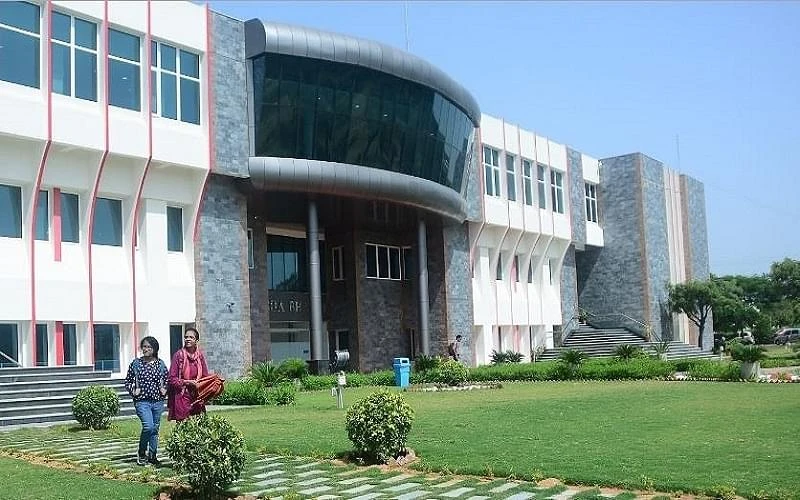
In this preview: 1 photo · 0 videos
MNIT Jaipur is generally considered on par with NIT Kurukshetra but slightly below NIT Allahabad (MNNIT) in terms of placement packages for Computer Science and Engineering. A key advantage for MNIT is its location in Jaipur, which is widely regarded as superior.
The coding culture at MNIT Jaipur is strong and primarily student-driven. While the academic curriculum is traditional, active student clubs like CINE and various coding societies foster a vibrant environment for programming and development outside the classroom.
No. Malaviya National Institute of Technology Jaipur has officially abolished the branch change option for students starting from the 2022-23 academic session onwards.
MNIT Jaipur has a strict anti-ragging policy. The campus is actively monitored by a dedicated proctorial team, and the culture is described as positive, with seniors generally being helpful and respectful towards new students.
Yes. MNIT Jaipur reserves 50% of its seats for candidates from Rajasthan. This home state advantage often allows Rajasthan students to secure admission into top branches with slightly lower ranks compared to 'Other State' candidates.
Share what future students should know about MNIT.
Student voices are not rewritten by colleges. We remove spam and abuse.
Wider admission question? Community PulseWhat should future students know?
Tell us which course you're considering. We'll help you work out the next step.
Get instant Partner access after mobile verification. Your public edits are reviewed before they go live.
Claim this college
 Auditorium
 Bank & ATM
 Cafeteria
 Campus Wi-Fi
 Computer Labs
 Gym
Gym Hostel
 Medical
 Science Labs
 Sports Complex
 Study Library