
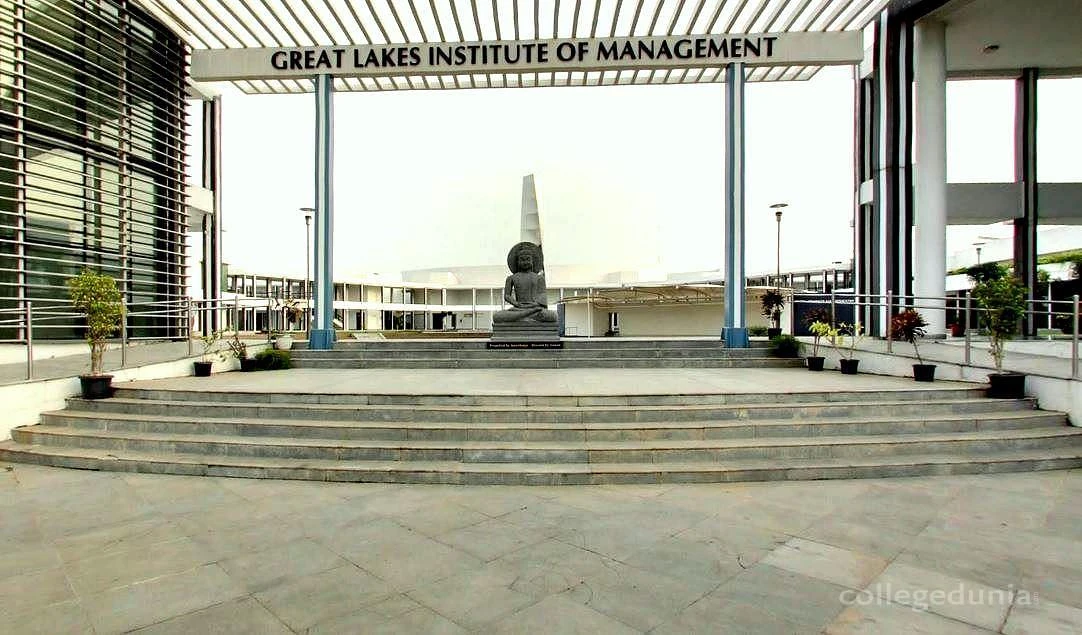



Great Lakes Chennai placements: PGDM outcomes and NIRF data
Great Lakes Institute of Management, Chennai publishes programme-specific placement information. The institute’s PGDM Class of 2026 report describes outcomes for the two-year PGDM cohort, while its NIRF 2025 submission reports a separate two-year postgraduate cohort for academic year 2022–23. These datasets use different periods and measures. Read the salary figures as reported, not as a forecast or a promise for an incoming class.
PGDM Class of 2026
The institute reports an average CTC of ₹15 lakh per annum and a highest CTC of ₹40 lakh per annum for its PGDM Class of 2026. The report identifies the batch as PGDM 2024–26 and says the highest offer came from a multinational BFSI firm. It does not provide a median CTC, a salary distribution, the number of students seeking placements, or the number included in the average in the summary statements cited here. The top offer is one observation; it should not be used to estimate a typical graduate’s compensation. PGDM Placement Report 2026
The institute also reports that BFSI accounted for 37% of offers, business consulting 17%, and technology and product 12%. These are shares of offers, not necessarily shares of students: one student may receive more than one offer, and the report’s quoted percentages do not specify the denominator in the passage. The categories show where offers were concentrated in this placement season, but they do not establish that the same mix will recur in another year. The report names roles across finance, sales and marketing, general management, consulting, analytics, technology, product management, strategy and operations. Treat these as examples of the reported role mix, not a placement guarantee by specialization.
The 2026 report lists participation from more than 55 regular recruiters alongside more than 30 new recruiters. Its named organizations include consulting, financial services, technology and consumer businesses. Recruiter participation is not the same as a guaranteed interview or offer for each student. The report does not publish a complete role-by-role selection probability, and applicants should not infer one from the recruiter list. Review the institute’s full report for its company list, role descriptions and definitions before comparing the result with another school’s placement table.
A separate historical NIRF cohort
Great Lakes’ NIRF 2025 management submission reports outcomes for its two-year postgraduate programme group in 2022–23: 167 students graduated in the minimum stipulated time, all 167 were placed, and the median salary was ₹14.50 lakh per annum. This is the NIRF-reported cohort and median, not the PGDM Class of 2026 average or highest CTC. The submission’s cohort and period are explicitly older, so the figures help describe a documented historical outcome but should not be presented as current intake results. The NIRF form is an institution-submitted disclosure, not an independent salary audit. NIRF 2025 Management submission
The average CTC and median salary answer different questions. The institute’s PGDM report presents an average for a named placement class; the NIRF table presents a median for graduates placed during a specified academic period and programme group. They should not be combined into one trend line or used to claim an increase or fall without aligned programme coverage, cohort definitions and reporting methods. NIRF’s 2022–23 outcome is not a substitute for a current programme-specific placement report, and the 2026 average is not a median.
How to compare the figures
When comparing placement disclosures, first match the programme and graduating cohort. A two-year PGDM report should not be silently compared with a multi-programme postgraduate NIRF group. Next, distinguish average, median and highest CTC. Highest CTC records an upper observation; average can move with a small number of high offers; median locates the middle of the reported placed cohort. None alone tells a reader how many graduates received offers, what share accepted them, or what compensation looks like across the full class.
Also check the denominator and salary definition. “CTC” can include employer contributions and benefits in addition to fixed pay, while a report may not state the exact breakdown beside each headline. The available PGDM summary does not provide a median or a full distribution, so those details remain unavailable here. Do not convert CTC to take-home pay or assume every listed offer is annual fixed salary. Ask the institute for the cohort size, placement-seeking denominator, placement rate, median, fixed-versus-variable compensation and treatment of multiple offers if those measures matter to your decision.
The NIRF submission offers more explicit cohort counts and a median, but it describes 2022–23. Use it with that year attached. For the newer PGDM Class of 2026, use the institute’s published average and highest values with the same care. Neither source supports a guarantee of employment, a personal salary estimate or a promise that a later batch will repeat the reported results. Applicants should compare course fit, total cost, work experience and career goals alongside these bounded outcome disclosures.
What the disclosures do not show
The placement report is an institute-published summary. It provides useful cohort and sector context, but its headline values alone do not establish outcomes for every eligible student or the affordability of the programme. A prospective student should ask whether figures include only accepted offers, how international offers and variable components are treated, whether the report covers all specializations, and how many graduates were still seeking work at the reporting date. Those answers are not supplied in the cited summary, so this page does not estimate a placement rate or convert CTC into net monthly pay. Compare the ₹15 lakh average only with another average for a similarly defined programme and cohort; compare the ₹14.50 lakh NIRF median only with a median for a matching year and programme group.