Loading Admission Guardian content
Loading Admission Guardian content

Provisional score based on available data. It may change as more information is verified.
Selected ranking categories, with the recorded year beside each result. Open all records for the complete history.
20 published records · Lower numeric ranks are stronger
NIRF
MBA
#182019
IIRF
MBA · private
#102022
Outlook
MBA · private
#32023
Indiatoday
MBA
#92021
Find a program, read its fee details and explore the admission requirements.
Summary of the programs shown below. Total course fee. Check the note beside each amount for inclusions and exclusions.
| Course | Stream | Fees |
|---|---|---|
| Professional Certificate Course in Digital Marketing | Management | 200000 |
| Post Graduate Programme in Management Flex | Management | 985300 |
| Post Graduate Global Executive Program in Management [PGXPM] | Management | 1235460 |
| Post Graduate Diploma in Management [PGDM] | Management | 1477000 |
| Post Graduate Program in Management [PGPM] | Management | 1795000 |
Specializations
Eligibility: Graduation
Specializations
All accepted exams
Eligibility: Graduation
All accepted exams
Eligibility: Graduation
Specializations
All accepted exams
Eligibility: Graduation
All accepted exams
Eligibility: Graduation
3 exams with cutoff data available
 Aakash Educational Services Ltd.
 Accenture
 Cartesian Consulting
 Chola MS
 Cognizant
 Darwin Labs
 Data World
 Deloitte
 Euromonitor International
 Helios
 Infosys
 Josh Tech
 KocharTech
 Newgen
 NIIT Ltd
 Sify Technologies
 Virtusa
 Zoom
Zoom ZS Associates
Great Lakes Institute of Management, Chennai, isn't your typical B-school. Founded in 2004 by Dr. Bala V. Balachandran, it carved a niche with its intense, one-year PGPM for experienced professionals—a program often called the closest alternative to ISB. With a 32-acre, eco-friendly campus that feels more like a resort and a curriculum that's aggressively pivoted towards analytics, it promises a high-octane launchpad for mid-career shifts. The numbers back the hype, with average packages for the PGPM class of 2025 hitting ₹17.8 LPA, representing a near 200% salary jump for many. But that intensity comes at a cost, both financially and personally, in a campus that's famously isolated from the city it's named after.
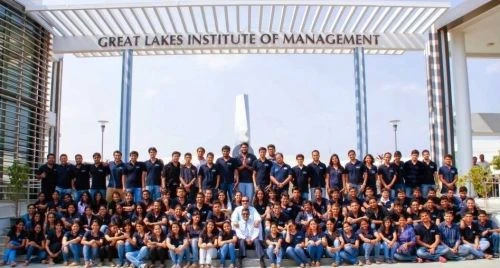
The academic engine here runs on two distinct tracks. The one-year Post Graduate Program in Management (PGPM) is the star, designed for professionals with at least two years of experience—its average intake is 400-440. It's notoriously fast-paced, a pressure cooker of back-to-back trimesters where weekend classes are the norm. The two-year PGDM caters to freshers and those with less than three years of experience, with an intake of around 300. Both programs offer majors in Marketing, Finance, Operations, Analytics, and IT/Strategy, but the analytics focus is pervasive across the board, bolstered by an MoU with Virtusa.
What sets GLIM apart are its experiential mandates. Every student must complete Karma Yoga (LEAP), working with over 20 local villages on social projects—a genuine attempt to embed leadership with social consciousness. There's also a mandatory Empirical Study (a thesis) and a Term Zero online prep module. Faculty strength is a genuine selling point; over 90% of the 50+ full-time members hold PhDs from institutions like IIMs, IITs, Kellogg, and Stanford, supplemented by 25+ international visiting professors.
The placement report is the main attraction, especially for the PGPM. For the class of 2024 (interim data), the PGPM average stood at ₹17.8 LPA, with a highest package of ₹30.8 LPA. The top 10% averaged ₹25.1 LPA. More telling is the average incoming salary of ~₹6 LPA, indicating that near-200% jump. For the two-year PGDM, the 2024 average was ₹15.0 LPA, with a top package of ₹39.3 LPA.
Sector-wise, Consulting (30-35%) is the largest recruiter, followed by IT/ITES (20-25%) and BFSI (20%). The analytics and product management domain takes about 15%. Recruiters are brand-name: Accenture, Deloitte, JP Morgan Chase, Microsoft, Amazon, EY, and Wells Fargo regularly visit. The official placement percentage is high, but student sentiment suggests the process is fiercely competitive. The ROI is undeniable for the one-year program, but you have to network relentlessly and perform.
This is a premium investment. For the 2024-25 period, the one-year PGPM has a tuition fee of ₹16.5 lakhs, with hostel and mess adding around ₹3 lakhs, pushing the total estimated cost to ₹19.5 - ₹22.5 lakhs. The two-year PGDM has a first-year tuition of ₹11.75 lakhs and similar hostel costs, with a total two-year cost estimated between ₹20.6 - ₹23.5 lakhs.
Financial aid exists but is competitive. There are about 40 diversity and merit scholarships worth ₹5 lakhs each. The top-tier Dr. Bala V. Balachandran Merit Scholarship offers full or partial tuition waivers for exceptional profiles. It's worth applying early and highlighting a stellar profile to be in contention.
Admissions are profile-based. GLIM accepts CAT, XAT, GMAT (scores after Jan 1, 2022), and CMAT scores. The cutoffs are indicative and flexible. A CAT/XAT percentile of 85-95+ is considered a safe zone for a call, but candidates with stellar work experience can get calls at around 80 percentile. For GMAT, 600+ is accepted, but the PGPM average is usually around 680. CMAT applicants need a 95+ percentile.
The selection process is a three-stage filter: shortlisting based on academics, work-ex, and test scores, followed by an Analytical Writing Test (AWT) and a Personal Interview (PI). The institute runs in four application cycles; applying in Cycle 1 (Nov/Dec) generally improves your chances for both admission and scholarships.
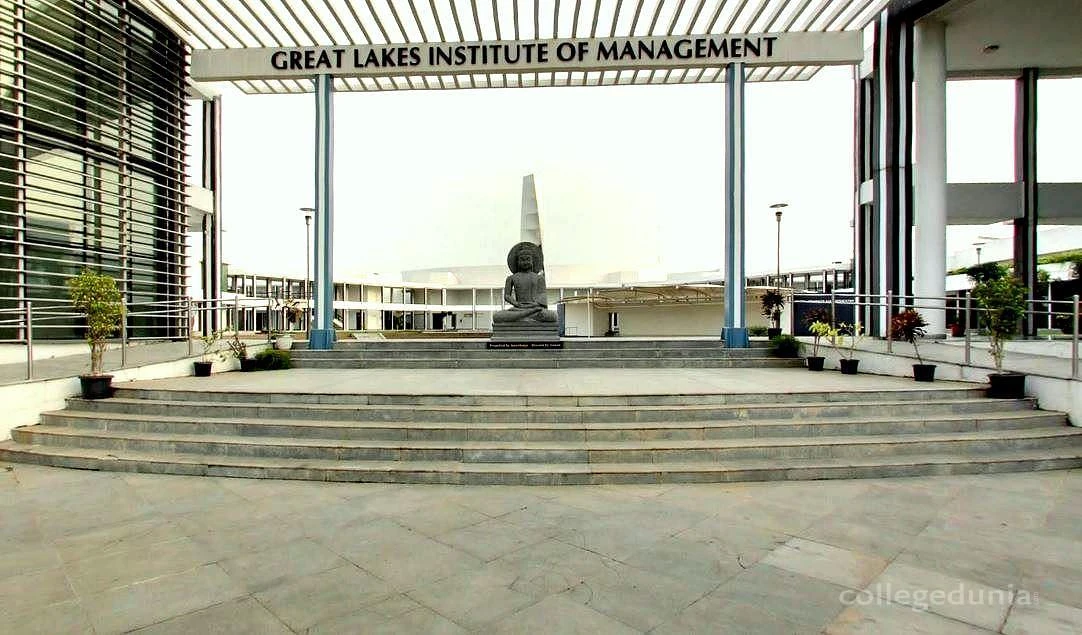
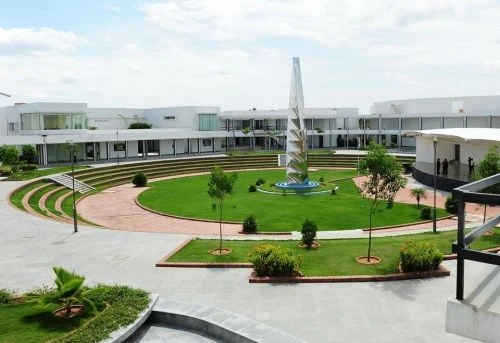
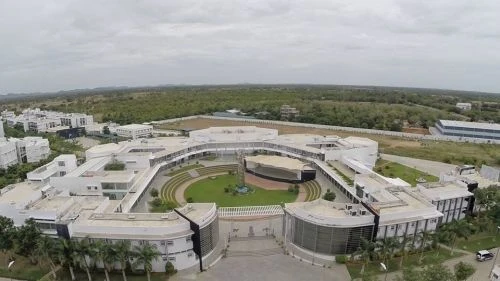
The 32-acre LEED Platinum-certified campus is a highlight—it's stunning, eco-friendly, and fully residential. Hostels are air-conditioned, with twin-sharing for PGDM students and single/twin options for PGPM. They're comfortable, but it's a contained environment. Food is managed by Sodexo, offering North and South Indian menus. Students call it professional but admit the taste can become monotonous over time.
Infrastructure is top-notch: a well-stocked library with Bloomberg terminals, high-speed Wi-Fi everywhere, a gym, football ground, basketball court, and an amphitheater. The catch? Location. Branded as 'Chennai,' the campus is actually a 60 km, 1.5-2 hour drive from the city on the East Coast Road. Trips to Chennai cost ₹1,500-₹2,000 by cab, creating a sense of isolation. Social life is thus heavily campus-centric, driven by student committees.
The consensus is clear. The peer group in the PGPM is highly diverse—you'll find engineers, CA's, armed forces personnel, and folks from family businesses. The analytics focus and ROI are universally praised. As one Reddit user put it: *"If you want to do a 1-year MBA and didn't get ISB, Great Lakes Chennai is the next best thing."
But the negatives are consistent. The academic pressure is immense, particularly in the PGPM. The remote location is a frequent gripe. Administrative hiccups, like last-minute schedule changes, pop up in discussions. It's a trade-off: a world-class, immersive learning bubble that's physically cut off from urban professional life.
It depends entirely on your profile and tolerance for pressure. For a professional with 2-5 years of experience looking to accelerate their career, pivot into analytics/consulting, and get a strong ROI from a one-year program, GLIM Chennai is arguably a top choice in India. The Double Crown accreditation, strong faculty, and placement record are legit. However, if you're a fresher, the two-year PGDM faces stiffer competition from older, more established universities. And you must be okay with a relentless academic pace and a campus that's more of a beautiful, secluded retreat than a city-based networking hub. Do the math on the fee versus the likely salary bump. For the right candidate, the calculus works.

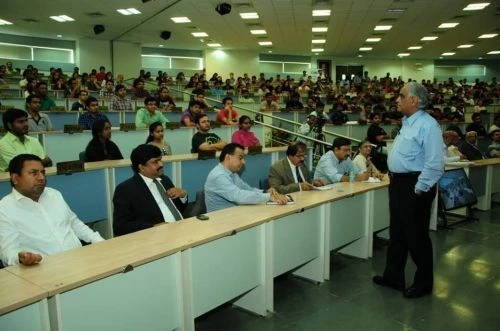
In this preview: 5 photos · 0 videos
The flagship Chennai campus generally has better rankings, a more established alumni network, and more international visiting faculty. The Gurgaon campus is often preferred by candidates specifically seeking networking opportunities and placements in the Delhi-NCR region.
For professionals with 2 to 5 years of work experience, the program can offer a high return on investment. The average salary jump post-graduation is reported to be nearly 200%, which can justify the significant fee for many candidates.
Yes, Great Lakes accepts NMAT scores, but primarily for admission to its PGPM program and during specific application cycles. The primary entrance exams for most applicants remain CAT, XAT, and GMAT.
Life at the residential Manamai campus is described as intense academically, creating a focused "bubble" environment. However, it is also socially vibrant due to numerous student-run committees and activities that foster a strong community.
While a CAT percentile of 85 and above is generally considered a safe zone for consideration, candidates with a percentile of 90 or higher have a significantly higher chance of converting their admission offer, provided they perform decently in the interview stage.
Share what future students should know about Great Lakes Chennai.
Student voices are not rewritten by colleges. We remove spam and abuse.
Wider admission question? Community PulseWhat should future students know?
Tell us which course you're considering. We'll help you work out the next step.
Get instant Partner access after mobile verification. Your public edits are reviewed before they go live.
Claim this college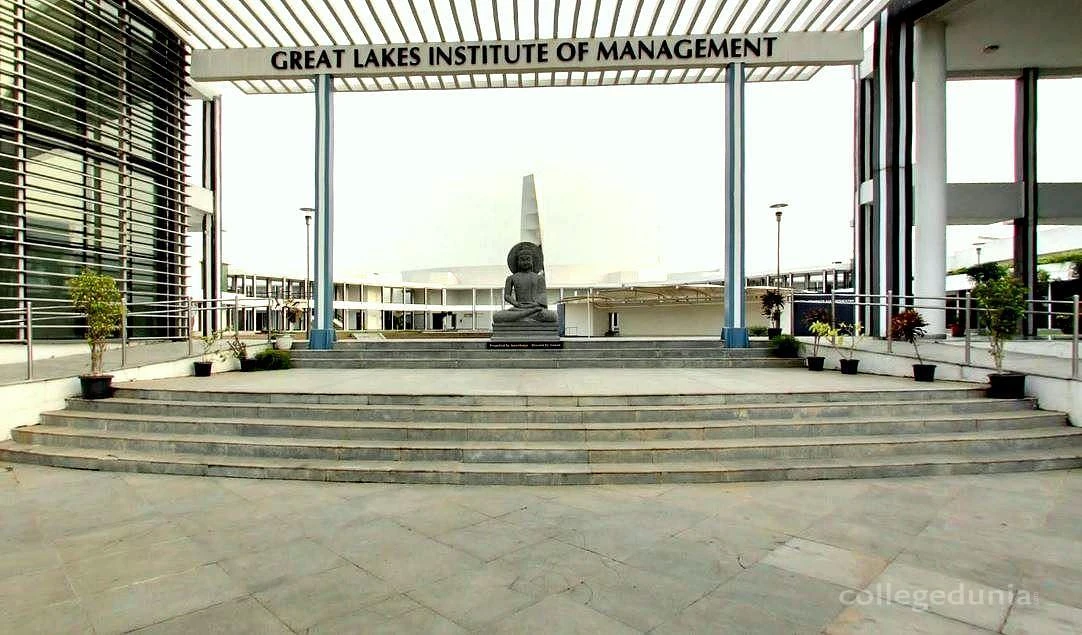
 Auditorium
 Cafeteria
 Campus Security
 Computer Labs
 Gym
Gym Hostel
 Medical
 Science Labs
 Study Library