Loading Admission Guardian content
Loading Admission Guardian content

1 programme · 1 institution. Check the admission year and requirements.
1 programme · 1 institution. Check the admission year and requirements.
IIM Jammu is a young management institute with a wider portfolio than its flagship MBA. The Institute’s official site describes MBA, MBA in Hospital Administration and Health Care Management with AIIMS Jammu and IIT Jammu, a B.Tech-MBA dual degree with IIT Jammu, an MBA in AI and Business Analytics, the five-year Integrated Programme in Management, Executive MBA, BBA options and doctoral study. These routes serve different applicants and use different selection rules, calendars and fee schedules. Start by choosing the exact programme, then use its own admission notice rather than carrying the flagship MBA process across the portfolio. (IIM Jammu: About; programme directory)
The official MBA admission policy captured for the 2026-28 batch says the process used CAT 2025, a Personal Interview and a merit list combining CAT, interview and profile scores. Its shortlisting cut-offs and dates belong to that batch. They are not 2027-29 requirements, and the current evidence does not establish a new 2027 policy or deadline. An applicant targeting the next intake should check the institute’s MBA admission page and the relevant CAT cycle when the new notice appears. IPM, the healthcare MBA, the AI and Business Analytics MBA, Executive MBA and doctoral programmes have separate pages; their entry routes should be read independently. (MBA admission policy, 2026-28)
For the flagship MBA, the 2026-28 handbook identifies a two-year programme. Its Annexure IV lists a course total of ₹22,80,756: ₹14,37,810 in tuition and ₹8,42,946 in other academic and non-academic expenses across six terms. The same schedule calls for a refundable ₹50,000 caution deposit in addition to the listed fees and says it is adjusted against the first-term fee. Mess bills are paid as incurred. These are batch-specific amounts, not a quote for 2027-29; the handbook does not make the actual mess bill a fixed part of that course total. Compare the next batch’s full schedule, payment timing and refund terms before budgeting. (MBA Handbook, batch 2026-28, Annexure IV)
The same handbook sets a demanding attendance standard for its MBA students. It says 100% attendance is mandatory, with a maximum 10% leeway for specified unexpected, medical, personal, placement, contest or institute activities. The policy describes grade penalties when attendance falls below the expected 90% threshold, with larger penalties at lower attendance bands. This is a real fit question for applicants balancing regular travel, health needs, work or other commitments. Read the full rule and its documentation requirements rather than reducing it to an informal “strict attendance” label. The handbook is for 2026-28; confirm the policy in the handbook issued for your batch. (MBA Handbook, batch 2026-28)
IIM Jammu’s About page says the Government of India established the institute in 2016 and that it inaugurated an off-campus in Srinagar on 24 January 2020. The 2026-28 MBA handbook identifies the institute at Jagti, Jammu. Because the institute also advertises collaborative and multi-campus offerings, confirm the teaching location, travel expectations and residential arrangements for the specific programme you are considering. The handbook includes hostel rules, but the cited MBA fee table does not quote a fixed mess bill; it says mess is charged at actuals. (About IIM Jammu; MBA Handbook, batch 2026-28)
The institute’s infrastructure page describes a computer centre connecting hostels, classrooms, library, laboratories and sports areas through wired and Wi-Fi networks, along with servers and projector-equipped classrooms. That page is useful for understanding the facilities the institute reports, but it does not assess service quality or guarantee current network performance. Applicants who depend on particular accessibility, health, internet or residential services should ask the relevant campus office about their programme and campus. (IIM Jammu infrastructure)
IIM Jammu’s final placements page lists reports by programme and batch, including MBA and MBA Hospital Administration and Health Care Management reports. That separation matters: an MBA result is not automatically a result for the healthcare programme, IPM, Executive MBA or a later cohort. The official page lists a report for the MBA 2024-26 batch, but a report link alone is not an outcome figure. Before comparing offers, open the relevant full report and check its placement year, participating and placed counts, salary measure, exclusions and whether the statistic is a median, average or highest package. Avoid treating a brochure headline as a guaranteed or typical salary. (Final placements and reports)
The institute’s NIRF page links data submissions for several editions. A submitted dataset and a published category rank are different things. This refresh does not repeat a numeric rank from the older Overview because the ranking authority’s same-row result was not verifiable from the saved official result pages. If a rank is important to your shortlist, check the exact NIRF edition and Management category on the NIRF results site rather than inferring it from a submission link. (IIM Jammu NIRF page)
IIM Jammu may suit applicants who want a management-focused institute with several distinct pathways, including a conventional MBA and specialised or collaborative programmes, and who are comfortable with the documented attendance regime. It may be a weaker fit if your budget depends on a yet-to-be-announced fee, if you need flexibility that conflicts with the MBA attendance policy, or if you are choosing primarily on an unverified ranking or placement headline. The institute was established in 2016, so applicants comparing alumni depth or long-run outcome trends should look at programme-specific reports and cohorts instead of assuming the track record of older IIMs transfers directly.
Before accepting an offer, verify five items in the current programme notice: the exact award and campus; the next batch’s selection steps and dates; the total fee plus separately billed mess or residential costs; refund and deposit treatment; and the latest placement report for that same programme. For the flagship MBA, the available official cost and policy evidence here is for 2026-28 only. It is a useful planning baseline, not a promise for the 2027 intake.
The official programme list is a portfolio, not a single MBA with interchangeable labels. The flagship MBA is the two-year full-time route described in the 2026-28 handbook. The institute separately lists an MBA in Hospital Administration and Health Care Management with AIIMS Jammu and IIT Jammu, and an MBA in AI and Business Analytics with AIT Thailand. It also lists the Integrated Programme in Management, a five-year B.Tech-MBA dual degree with IIT Jammu, an Executive MBA described as blended, eBBA, BBA (Hons.) and doctoral study. The institute’s homepage links the programmes to distinct admission and academic pages. Before comparing costs or outcomes, make sure the notice and report you are reading name the same award. A collaborative programme may have a different curriculum, admissions calendar, teaching arrangement or partner responsibilities. (IIM Jammu: About; official programme navigation)
This table is a navigation aid, not a substitute for the programme handbooks. The About page and homepage confirm that these routes are listed; the available MBA handbook does not establish the terms of the other programmes.
The ₹22,80,756 total in the 2026-28 handbook is built from six terms, not a single annual invoice. Terms I, II and III each list ₹3,79,126. Term IV lists ₹3,85,126, while Terms V and VI each list ₹3,79,126. The first-year total is ₹11,37,378 and the second-year total is ₹11,43,378. The small difference comes from the Term IV other academic/non-academic expense line, which is ₹1,45,491 rather than ₹1,39,491. Tuition is ₹2,39,635 in each term, or ₹7,18,905 per year. The schedule’s other academic and non-academic expense is ₹4,18,473 for year one and ₹4,24,473 for year two.
Those rows help a family plan payment timing and distinguish tuition from the other listed charges. They do not establish that the same amounts will apply to a later batch. The handbook separately says a ₹50,000 refundable caution deposit is payable at admission and describes its adjustment against Term I. It also states that mess bills are paid at actuals. Do not simply add a guessed mess amount to the published course total, and do not assume the deposit is a permanently additional charge after the stated adjustment. Ask the admissions office for the payment ledger and due dates for the batch you are offered. The current evidence does not establish a fixed hostel or mess cost for 2027-29. (MBA Handbook, batch 2026-28, Annexure IV)
A practical comparison should put the offer acceptance payment, each term’s amount, refundable deposits, any mess or residence charges, financing, withdrawal dates and refund deductions on one sheet. The 2026-28 MBA admission page gives a dated withdrawal deadline and refund terms for that cycle; those dates have passed and should not be reused for a new intake. The handbook also points students to programme rules and payment procedures, but the next batch’s final schedule should control your budget. (MBA admission policy, batch 2026-28; MBA Handbook, batch 2026-28)
For the 2026-28 MBA, IIM Jammu’s admission document describes CAT 2025, a personal interview and a merit list based on CAT, PI and profile scores. It also presents category-specific sectional and overall cut-offs and says the institute may modify criteria before that batch’s process is complete. These details show why a generic “CAT cutoff” can mislead: applicants must read the exact category, each section and overall percentile, the shortlist stage, and the stage at which profile points are applied. They should also distinguish eligibility to be considered for an interview from the final admission score.
For the next intake, wait for a new policy and compare the application form, test year, category table, interview method, profile scoring and withdrawal rules against your own profile. Do not carry the 2026-28 CAT 2025 thresholds forward, and do not use the flagship MBA policy for the healthcare, AI and Business Analytics, IPM, Executive MBA or PhD programmes. The admissions site lists separate pages for several of these offerings, so applicants should confirm that the policy URL and programme name on an offer match their application. (MBA admission policy, batch 2026-28; official programme navigation)
IIM Jammu’s official About page identifies the main institute and records an off-campus inauguration in Srinagar in 2020. The MBA handbook is issued by the institute at Jagti, Jammu, while the site also advertises partner-linked programmes and other campuses. The page sources here do not establish the exact classroom location or travel pattern for every offering. Ask whether your programme is taught at Jagti, at a partner campus, or across more than one site; then check the academic calendar, transport plan, accommodation options and who handles student support at each location.
The infrastructure page describes a computer centre with more than 500 networked devices and wired and Wi-Fi connections across hostels, faculty and administrative blocks, classrooms, library, laboratory and sports areas. It also reports three high-end servers and projector-equipped classrooms. These are institute-reported facilities, not an external service audit. If daily access to high-speed internet, a specialist lab, medical support, accessible housing or particular sports facilities is essential to your decision, ask the responsible office to confirm availability for your batch and campus. The page’s technical description alone cannot tell you reliability at peak times or whether a facility is open to your programme. (IIM Jammu infrastructure; About IIM Jammu)
The handbook’s attendance provisions deserve the same kind of practical check. They are stricter than a general “attend most classes” expectation: it sets 100% attendance as mandatory, allows up to 10% leeway for documented or specified reasons, and describes grade penalties below the expected threshold. Applicants managing chronic health needs, family responsibilities, long travel or work commitments should read the full policy and ask how evidence is handled. The 2026-28 rule is not a guarantee that the next handbook will be identical, but it is strong evidence that attendance should be treated as a serious fit factor rather than a minor administrative detail.
The official placement archive separates MBA reports from MBA Hospital Administration and Health Care Management reports and lists batch-level material, including 2024-26. That is a useful starting point, but the listing itself does not establish a salary, placement rate or guarantee. When reviewing the full report, record its batch, programme, reporting date, eligible and participating students, number placed, number seeking higher studies, and the definition of any published rate. Then distinguish median from average and highest compensation, and note whether an international or domestic figure is being compared. A small group’s highest offer cannot describe what most students receive.
Applicants should also check whether the report covers the current programme format. A healthcare MBA’s recruiters and role mix can differ from the flagship MBA; an Executive MBA may not use the same campus placement process. Reports should be compared only when the programme, batch window, statistic and denominator match. If you cannot access the full report, keep the page’s report link as a lead and avoid repeating an isolated number from an old brochure or third-party summary. IIM Jammu’s NIRF page links submitted data files for multiple editions, but those submissions are not themselves a published rank. Verify a ranking on the issuing authority’s results page, with the institution, Management category and edition visible together. (Final placements and reports; IIM Jammu NIRF page)
IIM Jammu is a plausible fit if you want a management-focused route in Jammu, value the institute’s MBA and specialised programme options, and are prepared for a highly structured academic schedule. It may be a weaker fit if your budget requires a fee promise for 2027-29 that has not yet been issued, if the attendance terms conflict with commitments you cannot change, or if you need an outcome guarantee. As a young institution established in 2016, it offers a shorter institutional history than older IIMs; assess that difference through programme-specific cohorts, faculty and curriculum information rather than assuming reputation alone answers the question.
Before paying an offer amount, ask the programme office to confirm: (1) the exact award and partner responsibilities; (2) the campus or campuses used for teaching; (3) the next batch’s selection and withdrawal rules; (4) the full term-wise fee, what the caution deposit offsets, and whether mess or hostel charges are separate; (5) attendance and grade-penalty rules; and (6) which placement report matches your programme and batch. Keep the written reply with the official notice. For the flagship MBA, the sources captured for this refresh support the 2026-28 batch only, so they are a planning reference rather than an announcement for the 2027 intake.
Programme information: Official source · Source as of: 2026-11-01
Each route applies only to this named programme and the stated year.
CAT: Common Admission Test · 2026-27
Admission-route evidence: Official source · Source as of: 2026-11-01
1 recorded programme · 1 institution. Admission years and conditions apply to the named programme.
Selected ranking categories, with the recorded year beside each result. Open all records for the complete history.
10 published records · Lower numeric ranks are stronger
NIRF
MBA
#362022
IIRF
Management · public
#222025
Find a program, read its fee details and explore the admission requirements.
Summary of the programs shown below. First-year fee
Showing 5 courses
Eligibility: Post Graduation with 50%
Listed entrance exams
Eligibility: 10+2 with 60% + JIPMAT
Specializations
Listed entrance exams
Eligibility: Graduation with 50% + CAT
Eligibility: 10+2
Eligibility: Post Graduation
1 exam with cutoff data available
 Bank of Baroda
 Bharti Airtel
 Dr. Reddy's Laboratories
 Evalueserve
 Ford India Ltd
 FUJITSU
 Future Group
 GAIL
 GMR Group
 HDFC Bank
 Housing Development Finance Corporation (HDFC)
 HT Media
 IBM
 ICICI Bank
 Jindal Power and Steel
 JP Morgan
 Larsen & Toubro Ltd.
 Morgan Stanley
 Myntra
 Oyo Rooms
 Philips
 PNB Met Life Insurance Company Limited
 Reliance
 Reliance Jio
 Safe Express
 Sodexo India
 Tata Power
 Tata Steel
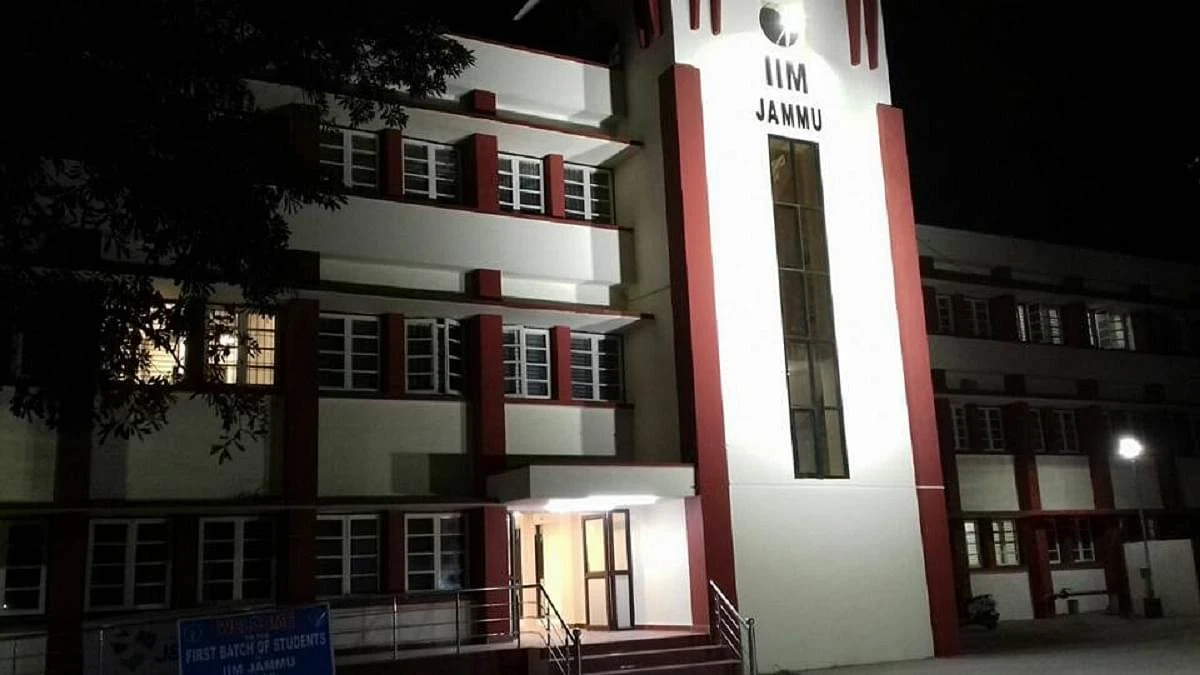
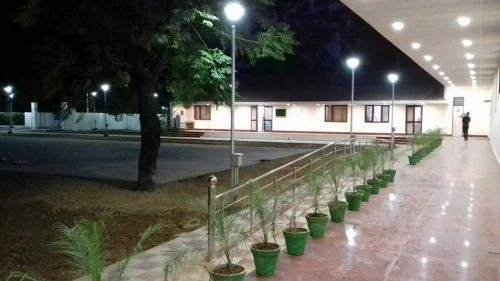
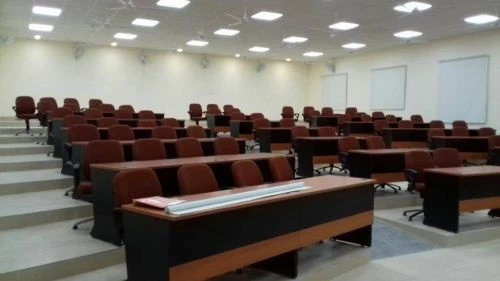
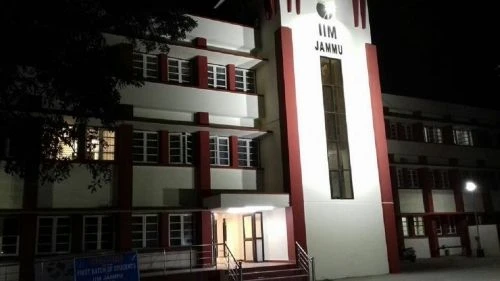
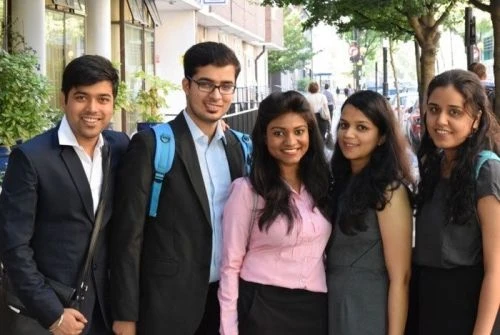
In this preview: 5 photos · 0 videos
Currently, IIM Jammu is ranked higher in NIRF and generally reports slightly better average placement packages, though all three are comparable "Baby IIMs."
Yes, the 90% attendance rule is real and strictly enforced with grade penalties for defaults.
IPM students spend their first three years at the Canal Road (city) campus, which has more social access but older infrastructure, before moving to the main Jagti campus for the MBA phase.
For IIM Jammu’s MBA class of 2026 (the 2024-26 cohort), the official final placement report lists average CTC of ₹16.47 LPA and median CTC of ₹15.00 LPA. CTC is not take-home pay. The earlier FAQ’s approximately ₹15.5 LPA average and roughly ₹14 LPA middle-50 figure are not tied to a cohort in the saved source, so they should not be compared with this report as like-for-like results; the report does not establish a median for the middle 50%.
The campus has high-level security (CRPF/Private). While regional tensions exist, the campus itself is a secure, gated environment.
About IIM Jammu.
Colleges cannot rewrite published reviews. We remove spam and abuse.
Ask the communityWhat should future students know?
Tell us which course you're considering. We'll help you work out the next step.
Get instant Partner access after mobile verification. Your public edits are reviewed before they go live.
Claim this college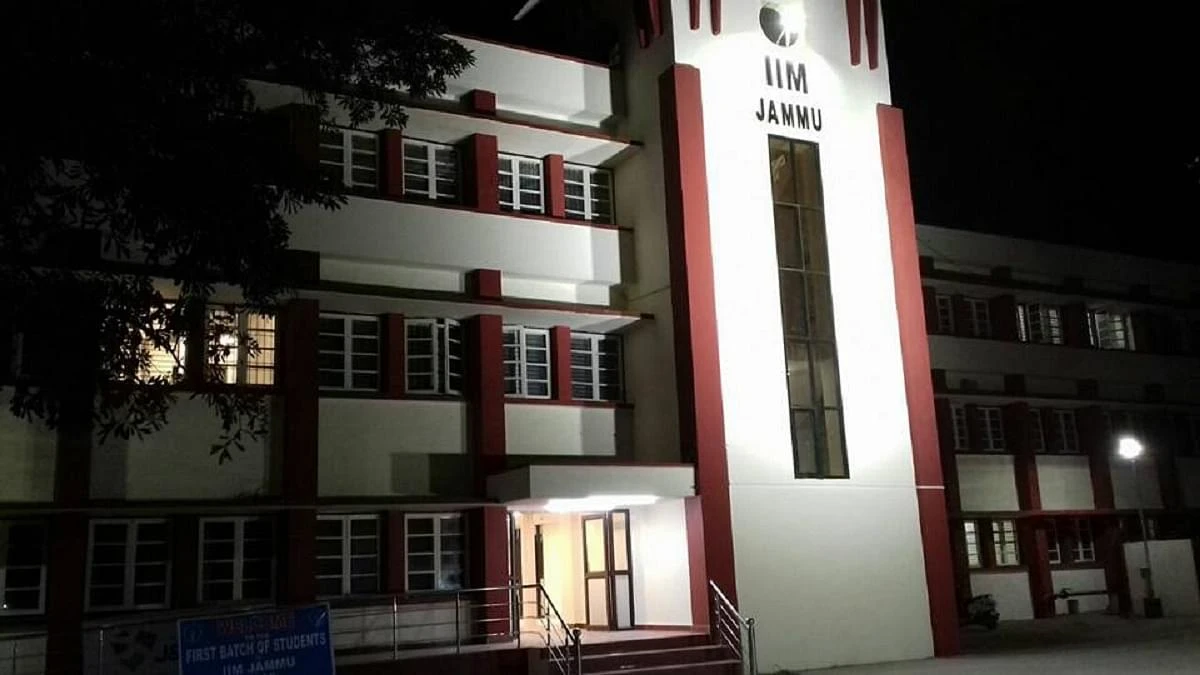
 Auditorium
 Bank & ATM
 Cafeteria
 Campus Shuttle
 Computer Labs
 Hostel
 Medical
 Science Labs
 Sports Complex
 Study Library