Loading Admission Guardian content
Loading Admission Guardian content

2 programmes · 1 institution. Check the admission year and requirements.
2 programmes · 1 institution. Check the admission year and requirements.
IIM Raipur is a two-year, full-time residential postgraduate management institute in Chhattisgarh. Its core MBA admission route is CAT-based: for the 2026–28 cohort, applicants went through the Joint Admission Process (JAP) with IIM Kashipur, Ranchi and Tiruchirappalli, followed by a common personal-interview process and an IIM Raipur category-wise merit list. The institute’s September 2025 release reported a 15th-place NIRF business ranking; that is a dated ranking, not a prediction of future outcomes.
The institute describes its Post-Graduate Programme in Management as its flagship programme and a two-year course. The 2026–28 admission policy identifies the award as an MBA and the programme as full-time and residential. Applicants should therefore compare the course as a campus-based commitment, not as a part-time or online MBA. The published fee schedule is specific to that cohort and totals ₹20.08 lakh before boarding, medical insurance and the separately listed caution deposit.
For the 2026–28 batch, IIM Raipur participated in JAP 2026 alongside three other IIMs. CAT 2025 results and an invitation triggered candidate registration; shortlisting and the personal interview were common across the four participating institutes. After the interview, IIM Raipur prepared its own category-wise merit list. Its policy assigned 50 of 150 final-score marks to the CAT index score and 40 to the interview, with the remaining score attached to school marks, work experience, diversity and profile components. This distinction matters: sharing the interview process did not mean sharing a single final merit list or offer decision.
The same policy listed minimum graduation marks of 60% for General, EWS and NC-OBC candidates, 50% for SC, 45% for ST and 45% for PwD candidates. These are the stated academic thresholds for the 2026–28 policy, not a substitute for checking the detailed JAP rules, reservation provisions and current official notice. The policy also says that ₹1 lakh offer-acceptance payment is adjusted against Term I fees. Applicants should follow the dates and withdrawal terms in their own offer documents rather than rely on an older fee or deadline page.
The policy gives a useful picture of what happens after the common interview. It labels the final score as out of 150 and assigns 50 marks to CAT 2025, 40 to the personal interview, 15 each to Class X and Class XII or equivalent, 15 to work experience and 5 to profile. It also lists 8 marks for gender diversity and 2 for academic diversity, while stating that an eligible candidate receives one of those diversity scores, not both. Read literally, the listed marks add to 150 only if both diversity components are included, so the policy page does not make the arithmetic for an individual candidate fully transparent. Applicants should seek clarification from the current admission office if the component total affects their assessment. This score table is a cohort-specific formula, not a public promise of any candidate’s final rank.
For CAT 2025, the policy says the index uses scaled section and overall percentiles with equal weights. That makes a single overall percentile an incomplete representation of the policy’s CAT component. The policy does not publish a one-number CAT threshold that guarantees an interview or an offer on this page; candidates should not convert the score weights into a predicted cutoff. JAP handles the common registration and interview stages, while the institute’s post-interview category-wise merit list determines its own offers.
The work-experience component is also more specific than a simple “experience preferred” statement. In this policy, the cutoff date is 31 December 2025. The score rises in increments through 36 months, reaching the 15-mark maximum for 36–42 complete months, and then falls to 10 marks for 43–48 months and 5 marks above 48 months. The policy’s table gives no score below 12 months and begins awarding marks at 12 months. Applicants should read the JAP policy alongside IIM Raipur’s policy because the institute directs candidates to JAP for the experience-score eligibility details. Work history is therefore only one part of the score and a longer record does not automatically translate into a larger component score.
The diversity and profile terms have their own conditions. The institute policy says female and transgender candidates are eligible for the 8-mark gender score. It says a 4-mark profile score may be awarded for an undergraduate institution in the top ten of NIRF 2025 in specified categories, and another mark may be awarded for CFA Level I, II or III certification. The academic-diversity component is limited to the degree categories in the policy’s annexure, with final classification of unlisted degrees left to the admission committee. These details matter for applicants reviewing their own profile, but the policy cautions against treating any one component as a stand-alone admission threshold.
IIM Raipur says it follows the Government of India reservation policy applicable to Central Educational Institutions. Its 2026–28 policy also states that selected candidates must pay an offer-acceptance amount of ₹1 lakh by the deadline in the offer letter; this is adjusted against the first term, after which the balance first-term amount is due at registration. The policy describes separate withdrawal treatment before and after its stated date and explains that refunds can depend on timing and whether a withdrawal creates a shortfall against the sanctioned batch size. Because the applicable dates and consequences are cohort-specific, use the withdrawal procedure attached to the current offer rather than relying on a summary.
IIM Raipur’s published fee table for the 2026–28 PGP batch lists first-year charges of ₹10,37,500 and second-year charges of ₹9,70,500, for ₹20,08,000 in total. That total explicitly excludes boarding, medical insurance and the ₹30,000 one-time caution deposit. The table separately states mess charges of ₹16,620 per trimester and medical insurance of ₹1,500 per year; it also says accommodation is twin-sharing. The acceptance payment of ₹1 lakh is not an extra amount on top of the total: the institute says it is adjusted against first-term fees.
These distinctions are useful when comparing offers. The headline academic-and-lodging total is not a complete estimate of living costs, and the page reserves the right to change fees. The 2026–28 figures should not be carried forward as a confirmed price for a later batch. Check the fee table attached to the next admission cycle before making a financing decision.
The component table helps identify what is and is not already covered. In year one, the listed ₹9.41 lakh academic charge sits alongside ₹70,500 lodging, a ₹7,000 rural-immersion module, a ₹7,000 student-association charge and ₹12,000 for alumni activities. These items add to the stated first-year total of ₹10.375 lakh. In year two, the listed total of ₹9.705 lakh combines ₹9 lakh academic fees with ₹70,500 lodging. Adding the two years reproduces the published ₹20.08 lakh headline total. This arithmetic is a check on the page’s own table, not a projection of optional or personal spending.
The table places the ₹30,000 caution deposit outside the total and identifies it as a one-time payment. Mess is billed at ₹16,620 each trimester and insurance at ₹1,500 each year. On the six-term structure implied by the year-wise table, the mess charge would be repeated by term, but the institution’s current invoice and billing schedule should be used for a final budget. The published total also excludes boarding and insurance by its own wording. Students should distinguish the amount paid to accept an offer from the programme cost: the ₹1 lakh acceptance payment is credited against first-term fees rather than added to the ₹20.08 lakh total.
For a family comparing offers, a responsible estimate should therefore keep at least four columns separate: academic and lodging charges, the one-time caution deposit, meal payments and annual insurance. The page’s total is useful for comparing the specified batch’s programme charges, but it is not a full cost-of-attendance figure. It does not give an individual’s travel, books, personal expenses or possible financing cost, and it does not establish what a later batch will pay. Any fee revision should be checked on the official page before each payment.
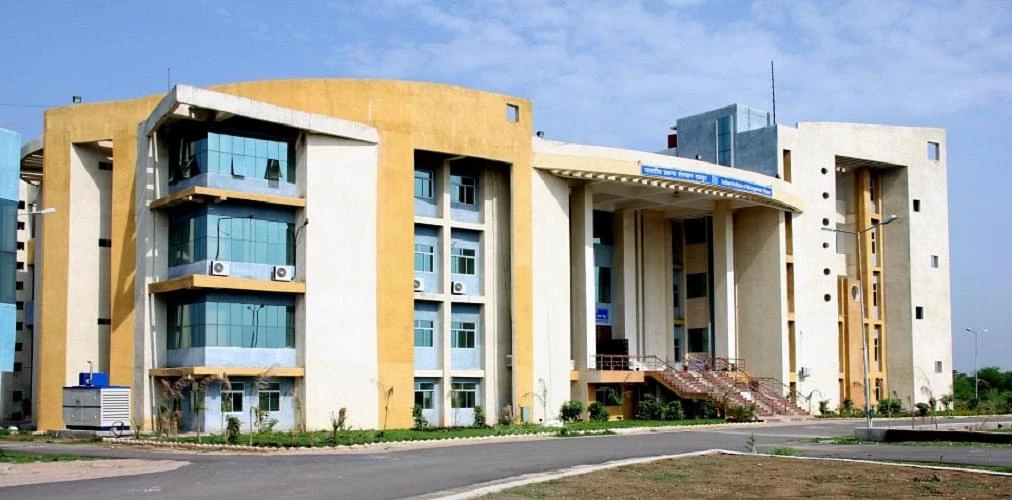
The institute describes its student hostels as individual rooms with attached bathrooms and separate male and female residential areas. The hostel page lists five hostels and Wi-Fi, round-the-clock hot water, radiant cooling and laundry. Those are institutional descriptions; applicants who need specific accessibility arrangements, room allocation details or current operating rules should confirm them with the institute.
The institute’s facilities page also describes a 24-hour campus medical facility with first aid and ambulance services, and an indoor/outdoor sports centre with a gym and swimming pool. It separately describes the Management Development Centre accommodation and classrooms for participants in management-development programmes. That centre’s rooms and training facilities should not be assumed to be ordinary MBA student accommodation. The practical takeaway is that IIM Raipur is presented as a residential campus with core student hostel and medical provisions, while some facilities listed on the site are programme-specific.
The residential format has a planning consequence beyond room amenities: students should expect their ordinary academic week and accommodation arrangements to be organised around the campus. The official hostel description says individual rooms have attached bathrooms and that male and female students have separate residential areas; it does not specify the current room-allocation formula, whether every individual preference can be met, or special accessibility arrangements. Applicants with a particular need should ask the institute directly rather than treating a general facilities page as a guarantee of allocation.
Likewise, the facilities page mixes student-relevant campus services with information aimed at external management-development participants. It describes a Management Development Centre with its own accommodation, dining hall, lounge and smart classrooms, and notes that its participants may use library and computer facilities. That is not evidence that MBA students are assigned to the Centre’s guest rooms. For a prospective MBA student, the hostel page is the more relevant source for accommodation, while the facilities page is useful for the campus medical centre and sports complex. This distinction helps avoid comparing a professional-training venue with student housing.
IIM Raipur’s September 2025 release reported 15th in the NIRF business ranking. Treat that as a result for the 2025 ranking edition, not a current-cycle admission cutoff or a guarantee of placement. The institute’s release also reports growth in several submitted institutional indicators, but these refer to different reporting periods: for example, postgraduate admissions rose from 580 in the prior year to 713 in 2025, while consultancy projects were reported as 10 in 2023–24 versus four in the preceding year. These are institutional reporting figures, not a measure of an individual student’s likely outcome.
Ranking and outcome data answer different questions. A ranking is an aggregate result under a specific framework and edition; it does not reveal the admission chance for a particular category, the suitability of a curriculum for a particular career, or an individual’s employment outcome. IIM Raipur’s press release reports 15th in its NIRF business ranking in 2025, while the admission policy describes a separate CAT, interview and profile score process for the 2026–28 batch. The former should not be read as a cutoff table for the latter. Candidates comparing programmes should read the ranking year alongside the admission cycle and check the latest placement report for its exact cohort and measurement definitions.
The same caution applies to the institute’s press-release indicators. It reports 580 postgraduate admissions in the previous year and 713 in 2025, and 10 consultancy projects in 2023–24 compared with four in the preceding year. These numbers signal changes in institutional activity as described by the institute, but the page does not establish that they caused a particular ranking position or predict future student outcomes. They should be treated as dated context rather than as independent evidence of classroom quality, salary prospects or placement probability.
IIM Raipur’s placement-report index currently links a 2023–25 final placement report as well as an audited 2022–24 report. Those are useful source documents for students seeking cohort-specific employment figures, but their denominators, participation rules, programme scope and salary definitions must be read from the report itself. This Overview does not transfer any placement number from one cohort to another or use a press release as a substitute for audited programme-level outcome evidence. Applicants should compare placement reports only after matching cohort, programme, eligible students, students seeking placement, placed students and the reported pay measure.
The evidence supports IIM Raipur as an option for graduates seeking a full-time, residential management degree and willing to plan for the published two-year cost plus meals, insurance and personal expenses. The 2026–28 selection policy combines CAT performance with interview, academic history, work experience and profile factors, so applicants should review the whole scoring framework rather than treat a CAT percentile as an offer threshold. The institute’s public materials also list separate MBA Public Policy and Governance, executive and doctoral offerings; their admission routes, attendance format and fee schedules are distinct from the flagship MBA and should be checked separately.
For a current decision, use the official admission policy and JAP portal for the applicable cycle, the cohort-specific fee page for costs, and the institute’s placement report for outcome figures. The available sources reviewed here do not establish a universal future cutoff, an individual salary outcome or a confirmed future-cycle fee.
IIM Raipur’s public site also lists offerings beyond the flagship MBA, including an MBA in Public Policy and Governance, executive programmes and doctoral study. Their presence on the website does not make them variants of the same admission route. The MBA policy specifically assigns the 2026–28 flagship programme to JAP and CAT 2025; a separate programme notice may prescribe different eligibility, selection, delivery format or fee terms. Anyone interested in a specialised or executive option should follow that programme’s own brochure and current admission notice, rather than apply the flagship MBA’s test or fee information by analogy.
The institute’s current materials support a clear profile of the flagship choice: a two-year residential MBA, a multi-factor CAT and interview selection process, and a published two-year fee total with substantial additional meal and insurance costs. The evidence also describes individual hostel rooms and core campus services. What the reviewed materials do not support is a single future-cycle CAT cutoff, a guaranteed salary, a universal scholarship entitlement or a precise personal cost of attendance. Keep those unknowns visible while comparing IIM Raipur with other offers, and confirm current dates and conditions in the official cycle documents before paying or making travel plans.
Loading programmes and admission routes.
Selected ranking categories, with the recorded year beside each result. Open all records for the complete history.
32 published records · Lower numeric ranks are stronger
IIRF
Management · public
#122025
Outlook
Management · public
#72023
Outlook
MBA · public
#82023
TOI
MBA
#22021
Find a program, read its fee details and explore the admission requirements.
Summary of the programs shown below. Total course fee
| Course | Stream | Fees |
|---|---|---|
| Post Graduate Program in Management for Working Executive [PGPWE] | Management | 1325000 |
| Management Development Programme | Management | 1400000 |
| Post Graduate Program in Management [PGPM] | Management | 2008000 |
| Faculty Development Programme | Education | |
| Fellow Programme in Management [FPM] | Management |
All accepted exams
Eligibility: Graduation with 50% + CAT
Eligibility: Graduation
All accepted exams
Eligibility: Graduation with 50% + CAT
Eligibility: Graduation
Specializations
Eligibility: Post Graduation
1 exam with cutoff data available
 Aakash Educational Services Ltd.
 Accenture
 Amara Raja Batteries Limited
 Ashirvad Pipes
 Asian Paints
 Axis Bank
 Byju's
 Clear Tax
 Cognizant
 Decimal Point
 Deloitte
 Dish TV
 DS Group
 Ernst & Young
 Gartner Inc
 Genpact
 HCL Technologies
 Hero Motocorp
 Hindware
 IBM
 ICICI Bank
 ICICI Prudential
 Infosys
 Larsen & Toubro Limited
 MAQ Software
 MindTree
 Mu Sigma
 Neeyamo Enterprise
 Nilkamal
 NPCI
 Polycab
 Royal Enfield
 Rubicon Red
 SUZLON
 Tata Advanced Systems
 Tata AIA
 Tata Elxsi
 Tata Steel
 Tredence
 Tresvista Financial Services
 TVS Motors
 Vedanta
 Virtusa
 Xiaomi
 Yes Bank
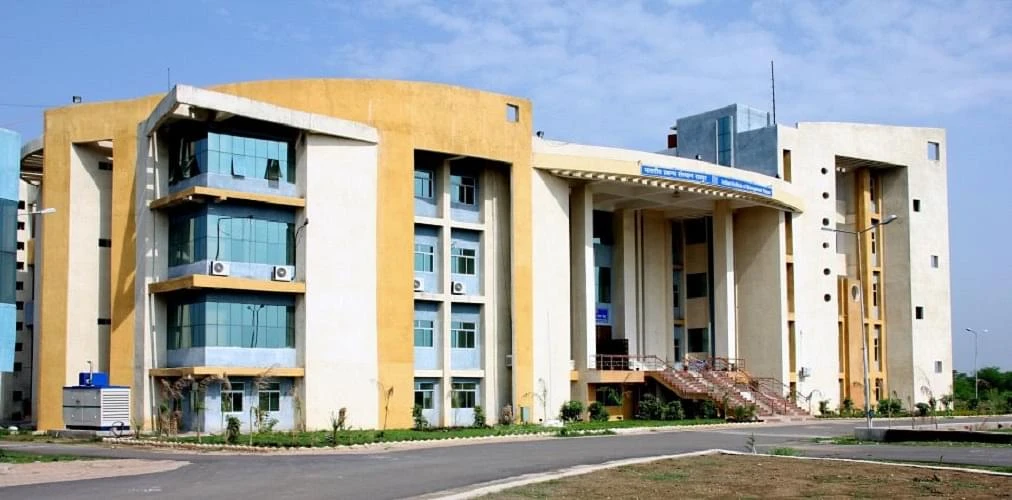
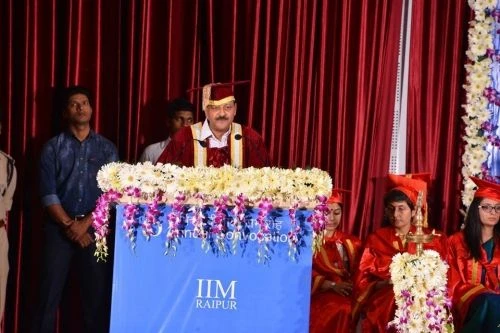
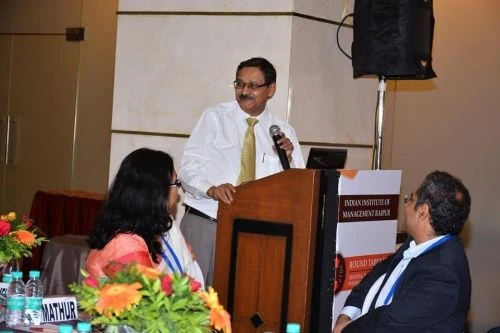
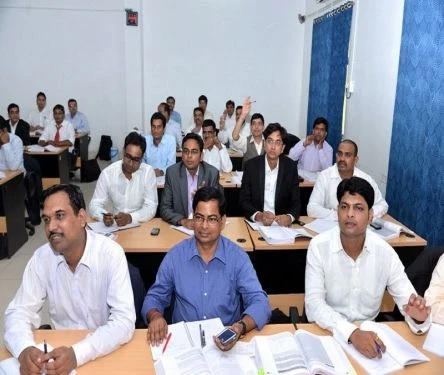
In this preview: 5 photos · 0 videos
IIM Raipur’s official MBA 2026–28 policy says the admissions process used JAP with IIM Kashipur, IIM Ranchi and IIM Tiruchirappalli; after the common interview, IIM Raipur prepared its own category-wise merit list. That describes an admissions pathway, not comparative rankings, single-room superiority or finance-placement performance. Compare current policies, facility information and same-cohort reports before drawing those conclusions.
The official final placement report for IIM Raipur’s MBA 2023–25 cohort reports average CTC of ₹18.83 lakh and median CTC of ₹18.40 lakh per annum for students who accepted offers. It does not report a separate median fixed-salary component, so ₹13–15 lakh should not be treated as an official fixed-pay figure. These are cohort-level CTC statistics, not a guarantee for another batch.
For IIM Raipur’s MBA 2026–28 policy, CAT 2025 index scoring uses scaled percentiles from the three sections and the overall percentile with equal weights. The policy does not substantiate a fixed 70–75 percentile floor in each section. Use the official JAP 2026 policy and IIM Raipur policy for the applicable cycle; a later batch may differ.
The mess food at IIM Raipur is generally rated as average to good. The mess is student-managed and offers both North and South Indian cuisine. However, the quality can vary depending on the current food service contractor.
IIM Raipur’s official site lists MBA BA with separate admission, fees, curriculum, academic-calendar and batch-profile information. That supports treating it as a distinct option, but the cited sources do not establish a quality verdict, industry-demand claim, or placement results on par with the flagship MBA. Review the programme’s own curriculum and cohort materials before comparing outcomes.
About IIM Raipur.
Colleges cannot rewrite published reviews. We remove spam and abuse.
Ask the communityWhat should future students know?
Tell us which course you're considering. We'll help you work out the next step.
Get instant Partner access after mobile verification. Your public edits are reviewed before they go live.
Claim this collegeProgramme information: Official source · Source as of: 2026-11-01
Each route applies only to this named programme and the stated year.
CAT: Common Admission Test · 2026-27
Admission-route evidence: Official source
Programme information: Official source · Source as of: 2026-11-01
Each route applies only to this named programme and the stated year.
CAT: Common Admission Test · 2026-27
Admission-route evidence: Official source · Source as of: 2026-11-01
2 recorded programmes · 1 institution. Admission years and conditions apply to the named programme.
 Auditorium
 Bank & ATM
 Cafeteria
 Campus Wi-Fi
 Computer Labs
 Gym
 Hostel
 Medical
 Sports Complex
 Study Library