
 Auditorium
 Cafeteria
 Campus Wi-Fi
 Computer Labs
 Gym
 Hostel
 Medical
 Science Labs
 Sports Complex
 Study Library
Campus Setting, Forest Geography and Internal Transit Rules
The Indian Institute of Technology Madras (IIT Madras) occupies an expansive 2.5 square kilometre (617-acre) residential campus carved out of the tropical dry evergreen forest of the Guindy National Park in Chennai, Tamil Nadu. Located along Sardar Patel Road in the southern urban corridor of Chennai, the campus directly borders the Central Leather Research Institute (CLRI) and Anna University, approximately 10 kilometres from Chennai International Airport (MAA) and 12 kilometres from Chennai Central Railway Station (Puratchi Thalaivar Dr. M.G. Ramachandran Central Railway Station). The campus features a unique biodiversity reserve inhabited by protected herds of blackbuck (Antilope cervicapra), spotted chital deer, bonnet macaques, and more than 100 species of resident and migratory birds centred around a deepened rainwater retention lake.
For incoming students, the sheer geographic scale of the campus imposes rigid daily transit conditions. From the main entrance gate on Sardar Patel Road, the central administrative rotary known as Gajendra Circle (GC) lies 2.5 kilometres inward, with academic departments, laboratories, and the student residential zones spread further along arterial avenues (Bonn Avenue and Delhi Avenue). To protect the wildlife habitat and preserve air quality, IIT Madras enforces a strict restriction: undergraduate and postgraduate students are not permitted to operate powered motor vehicles (motorcycles, scooters, or cars) inside the campus. Violation of this transport mandate leads to disciplinary fines and vehicle impoundment by the institute security wing.
Student daily mobility depends on two primary modes:
- Bicycles and Walking: The campus layout is engineered for non-motorized personal mobility. Bicycles are the standard mode of student transit between hostels, mess halls, academic complexes, and sports grounds. Paved cycling tracks with shaded canopy cover connect all campus zones. Most entrants purchase a new or refurbished bicycle during the orientation week from campus vendors at the Student Facility Centre.
- Institute Shuttle Bus Network: For transit across longer internal routes, the institute operates a scheduled internal fleet comprising 4 regular buses and 10 electric battery-powered vehicles. Named after major Indian mountain peaks and ranges, these shuttles run at frequent intervals of 20 to 30 minutes between 06:00 AM and 10:00 PM. The primary route runs from the IN-Gate (main entrance) through Gajendra Circle to the Hostel Zone and the Department Complex, terminating near the Staff Canteen and bus shed.
Internal vehicular traffic is subject to an institute-wide speed limit of 40 km/h, monitored by radar checkposts and automated security cameras. Outside campus gates, students have rapid connectivity via Chennai MTC buses stopping directly outside the main gate, the Guindy Metro and Suburban Railway stations (3 km), and the Kasturba Nagar MRTS station near Madhya Kailash.
Hostel Infrastructure, Governance and Room Allocation
IIT Madras is a fully residential institution where on-campus living is mandatory for regular full-time undergraduate, dual degree, and postgraduate students. The residential sector is organized into a cluster of 20 student hostels, each named after one of India's major rivers. The residential system is segregated into 15 hostels for male students and 5 hostels for female students, accommodating over 10,000 residents across undergraduate, master's, and doctoral programmes.
Hostel room allocation follows a structured cohort-based progression:
- First-Year Undergraduate Allotment: Incoming first-year B.Tech and Dual Degree entrants are housed in designated freshman hostels under a shared accommodation policy (double or triple occupancy per room). Shared occupancy is intentionally designed to facilitate peer adjustment, collaborative study habits, and inter-regional cohort integration.
- Senior Undergraduate and Postgraduate Allocation: From the second year onward, students participate in an annual hostel room allotment process managed by the Council of Wardens (CCW) via the online hostel management portal (
ikollege.iitm.ac.in). Depending on hostel capacity and student seniority, students transition to single occupancy or double rooms in senior residential blocks such as Mandakini, Cauvery, Brahmaputra, Ganga, and Jamuna. Postgraduate master's and doctoral research scholars are allocated single rooms or two-person shared suites designed for extended research tenures.
Each student room is furnished with essential institutional amenities:
- Individual wooden or steel single cot
- Dedicated study desk and ergonomic chair
- Personal wardrobe/almirah with lockable compartments
- High-speed Local Area Network (LAN) port offering gigabit connectivity alongside campus-wide eduroam and institute Wi-Fi
- Standard ceiling fan and electrical fixtures
Hostels function as self-governing units administered under the overall oversight of the Chairman, Council of Wardens (CCW) and the Office of Hostel Management (OHM). Daily operations in each hostel are managed by a faculty Warden, a resident Assistant Warden, and an elected student Hostel Council led by the General Secretary, Mess Secretary, and Sports Secretary. Each hostel block houses a common reading library, television and recreational lounge, indoor game tables (table tennis and foosball), music/tech activity rooms, and a dedicated laundry room equipped with commercial automatic washing machines. Resident safety is maintained through 24/7 biometric or security desk check-ins, CCTV monitoring in common entry foyers, and strict anti-ragging protocols.
Dining Facilities, Mess Systems and Food Services
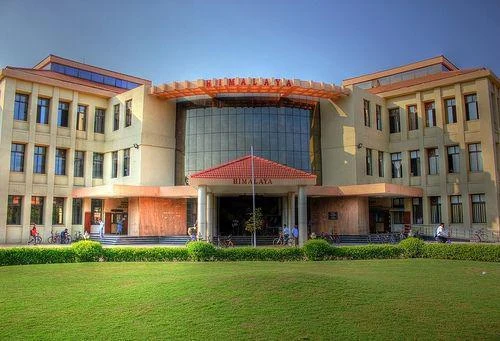
The student dining ecosystem at IIT Madras is anchored by Himalaya, a landmark multi-storey centralized dining complex situated in the heart of the hostel sector. Himalaya houses several independent dining halls managed by competing commercial caterers contracted under strict quality guidelines formulated by the Mess Monitoring and Control Committee (MMCC). Complementary dining halls operate in the Nilgiri and Vindhya hostel facilities to distribute dining traffic during peak lunch and dinner hours.
The dining operational model is designed to provide regional variety, nutritional balance, and dietary flexibility:
- Regional Caterer Choice: Students select from multiple specialized mess streams, including South Indian vegetarian, North Indian vegetarian, non-vegetarian, and special continental/fusion menus. Caterers are audited regularly by student mess secretaries for hygiene, food quality, raw ingredient sourcing, and nutritional compliance.
- Monthly Mess Registration: Through the CCW student portal, residents have the freedom to switch their mess allocation at the end of each billing cycle, fostering competitive service quality among vendors.
- Rebate Mechanism: Students travelling on approved academic leave, conference delegations, or semester vacations can claim a mess rebate for absences exceeding the minimum threshold stipulated in CCW mess rebate rules, ensuring students do not pay for unconsumed meals.
Beyond formal mess halls, the campus hosts diverse food joints and utility eateries catering to odd-hour schedules and project work:
- Student Facility Centre (SFC / Gurunath): Located opposite Narmada hostel, Gurunath serves as the primary evening hub for hostellers, providing fresh juice bars, chats, bakery goods, packaged snacks, and stationary essentials.
- Campus Food Joints: Food outlets such as Kannan Catering Services-FFT, bakery counters near the residential shopping centre, and night food stalls near Himalaya operate until late night, accommodating students working through deadlines and exam preparations.
- Automated Vending: Multiple 24/7 snack and hot-beverage vending machines are installed inside hostel lounges and academic blocks.
Central Library and High-Performance Academic Computing
Academic infrastructure at IIT Madras is engineered to support intense study, advanced coursework, and multidisciplinary research across pure sciences, engineering, humanities, and management.
Central Library
The Central Library is a five-storey, fully air-conditioned, and Wi-Fi-enabled academic nerve centre that received the prestigious Wiley Library Award in 2019 in the 'Digitally Transformed Academic Library (Government)' category. The library serves the informational needs of over 11,000 students, faculty, and research fellows through distinct functional divisions spread across four public floors:
- Collections and Digital Holdings: The facility houses extensive collections of printed books, reference treatises, master's and doctoral theses, technical standards, patents, monographs, and back volumes of prestigious journals. Digital subscriptions encompass hundreds of international e-journals, IEEE Xplore, ScienceDirect, ACM Digital Library, SpringerLink, and Web of Science databases.
- Reading Zones & Operating Hours: General library operations run from 08:00 AM to 12:00 Midnight on all days of the week, extending study access through evenings and weekends. For uninterrupted night study, the Ajanta Reading Hall on the ground floor remains open 24/7 throughout the academic year.
- Book Bank Facility: Under the Book Bank scheme, undergraduate students—particularly from economically weaker backgrounds and reserved categories—can borrow sets of required core engineering and science textbooks for an entire semester without fee charges.
- Digital Knowledge Centre: Equipped with networked high-speed computer terminals, enabling students to access institutional repositories, computational databases, and online academic catalogues.
P.G. Senapathy Centre for Computing Resources
Originally established in 1973 with an IBM System/370 and upgraded through historic milestones (including India's earliest inter-building Ethernet in 1994), the institute computing hub was re-inaugurated in 2007 as the P.G. Senapathy Center for Computing Resources.
- Computational Infrastructure: The centre operates a high-density data centre designed to house 12,000 CPUs, delivering an aggregate high-performance computing capacity of 10 petaflops.
- Network Backbone: The centre manages the gigabit campus-wide backbone network connecting academic departments, research centres, and 20 hostels via optical fibre. It oversees centralized enterprise email services, high-performance computing clusters for computational fluid dynamics (CFD) and molecular dynamics simulations, software license servers (MATLAB, ANSYS, Cadence, SolidWorks), and high-throughput research storage.
Complementing the central data centre, common lectures and evaluations take place in modern lecture theatres: the Central Lecture Theatre (CLT) facing the Open Air Theatre, the Classroom Complex (CRC), Raman and Ramanujan Blocks, and the New Academic Complex constructed at an investment of ₹115 crore.
Advanced Research Facilities, Science Labs and Innovation Hubs
IIT Madras integrates advanced departmental laboratories with centralized shared instrumentation centres that enable undergraduate and postgraduate researchers to conduct experimental work without institutional bottlenecks.
Centralized Instrumentation Facilities
- Sophisticated Analytical Instruments Facility (SAIF): Formerly known as the Regional Sophisticated Instrumentation Centre (RSIC) and supported by the Department of Science and Technology (DST), SAIF is a premier regional hub for advanced materials characterization. The facility houses high-end equipment including high-resolution transmission electron microscopes (HR-TEM), field emission scanning electron microscopes (FE-SEM), nuclear magnetic resonance (NMR) spectrometers (500 MHz and above), X-ray diffractometers (single crystal and powder XRD), inductively coupled plasma mass spectrometers (ICP-MS), and laser Raman spectrometers. The facility supports research across chemistry, physics, materials science, and biomedical engineering.
- Central Electronics Centre (CEC): Serves as an institutional testing, fabrication, and equipment servicing facility, assisting students with custom electronics design, PCB prototyping, calibration, and test-bench measurements.
- Central Skill Training and Fabrication Facility (CSTF): Provides comprehensive metalworking, precision machining, CNC milling, and additive manufacturing facilities where students complete mandatory workshop courses and build functional prototypes for capstone projects.
Student Innovation and Entrepreneurship Infrastructure
- Centre for Innovation (CFI): Established with endowment funds from the alumni batch of 1981, CFI is IIT Madras's flagship 24/7 student-led makerspace. The centre provides workspace, 3D printers, laser cutters, advanced testing equipment, and micro-grant funding for student innovation. CFI hosts world-renowned competitive engineering teams, including Raftar Formula Racing (Formula Student electric vehicles), Team Avishkar Hyperloop (global finalists in hyperloop pod engineering), Team Abhiyaan (autonomous robotics), and the Aerial Robotics team.
- Nirmaan Pre-Incubator: Operates as a formalized pre-incubation facility providing student and faculty innovators with business mentorship, technical workspace, seed grants up to ₹2–5 Lakhs, and legal incorporation assistance before startup transition.
- IIT Madras Research Park (IITMRP): Located adjacent to the main campus on Kanagam Road, the IIT Madras Research Park is India's pioneer university-anchored commercial research park. Spanning over 1.2 million square feet, it houses dedicated R&D centres of leading multinational corporations alongside the IITM Incubation Cell (IITMIC), creating seamless access for students to industrial internships, corporate collaborative projects, and angel funding.
Sports Infrastructure, Fitness Complexes and Cultural Arenas
Athletics, fitness, and inter-hostel sports competition represent core facets of student life at IIT Madras. The institute's sporting infrastructure rivals international collegiate standards, enabling both beginner participation and elite athletic performance.
Sports Complexes and Playing Grounds
- Olympic-Standard Swimming Pool: Located near the gymkhana grounds, the swimming complex features a full-sized 50-metre competition pool with certified lifeguards, dedicated training sessions for beginners, and separate practice slots for student-athletes and campus residents.
- Athletics Stadium: The Manohar C. Watsa Stadium features an eight-lane 400-metre synthetic athletic track, floodlit long jump and high jump pits, and spectator seating for campus track meets.
- IIT-Chemplast Cricket Ground: Known as one of the finest cricket grounds in southern India, the facility features lush natural turf wickets maintained to BCCI standards, accompanied by the K.S. Narayanan Centre for Cricketing Excellence with practice net facilities.
- Sitara Indoor Sports Complex: A state-of-the-art indoor sports facility featuring synthetic-floored badminton courts and dedicated table tennis halls equipped with tournament-standard lighting and anti-glare surfaces.
- Students' Activities Center (SAC) & Gymkhana: Houses a multi-purpose indoor sports arena with high-grade wooden flooring, a fully equipped gymnasium with heavy resistance machines, free weights, and cardio equipment supervised by professional fitness instructors, a dedicated yoga hall, a weightlifting arena, a chess hall, and two newly constructed squash courts.
- Outdoor Courts and Fields: Floodlit synthetic basketball courts, outdoor volleyball courts, floodlit natural turf football fields, and dedicated hockey grounds spread across the sports zone.
Sporting Competitions and Cultural Landmarks
- Inter-Hostel Schroeter Cup: The premier campus-wide annual sporting championship where all 20 hostels compete across 15+ disciplines. Points accumulated throughout the year determine the winning hostel of the coveted Schroeter Trophy.
- Inter-IIT Sports Excellence: IIT Madras holds an unmatched competitive record at the annual Inter-IIT Sports Meet, having won the prestigious General Championship (GC) trophy 19 times, including a historic run of 11 consecutive championship victories.
- Open Air Theatre (OAT): Situated between Gajendra Circle and the hostel sector, the Open Air Theatre is an iconic outdoor amphitheatre with stepped seating for over 5,000 spectators. OAT hosts Saturday night student movie screenings, inter-hostel cultural battles (Lit Soc), and the annual cultural extravaganza Saarang and technical festival Shaastra.
Healthcare Hospital, Student Safety and Commercial Utilities
The IIT Madras campus is planned as a self-contained academic township, providing comprehensive healthcare, institutional safety, and commercial utility services within walking distance of student residences.
Institute Hospital and Healthcare System
Healthcare for students is delivered through the Institute Hospital, located centrally near the Central Workshop:
- Clinical Facilities: The hospital operates 24/7 for acute emergencies and runs regular outpatient consultations staffed by resident medical officers. Specialist clinics are scheduled throughout the week, covering general surgery, orthopaedics, ophthalmology, ENT, cardiology, and psychiatry.
- Diagnostic and In-Patient Infrastructure: The facility is equipped with digital X-ray suites, diagnostic pathology laboratories for clinical blood and biochemical analysis, observation wards, and an emergency in-patient bed facility.
- Pharmacy & Ambulance: A fully stocked retail pharmacy operated in partnership with Apollo Hospitals is housed on-site, dispensing prescribed medications at subsidized institutional rates. A round-the-clock emergency ambulance is stationed at the hospital entrance for immediate transport to tertiary multispecialty centres (such as Apollo, Fortis Malar, or Voluntary Health Services) in case of critical illness.
- Student Medical Insurance: All enrolled students are covered under a mandatory group student medical insurance policy. For the 2026-27 academic session, students pay an annual medical insurance premium of ₹2,402 and a semester medical fee of ₹1,500. This insurance policy provides cashless hospitalization coverage for accidental injuries and major medical treatments across networked hospitals nationwide. Married research scholars can extend medical coverage to spouses and up to two minor children for an additional premium of ₹418.
Mental Health and Psychological Wellness
To assist students managing academic workloads or personal stress, the institute operates a multi-tiered wellness network:
- Wellness Centre: Located near the hostel zone and DOST building, professional counsellors provide free, confidential in-person counselling and 24/7 telephonic consultation (
dost.iitm.ac.in/wellness-center). - Student Initiatives (MiTR & SAATHI): Senior student volunteers under the MiTR network serve as peer mentors for incoming freshers, while SAATHI runs proactive mental health awareness workshops and orientation sessions.
- Psychiatric Care: Two visiting consultant psychiatrists at the Institute Hospital provide clinical interventions for students referred through faculty advisors or the Wellness Centre.
Campus Safety and Jurisdictional Framework
- Security Operations: Campus security is administered by the Security Wing under the Chief Security Officer (CSO). Uniformed guards control all perimeter gates (Main Gate, Velachery Gate, Taramani Gate) through mandatory physical identity card verification, vehicle pass checks, and digital visitor logging.
- Legal Jurisdiction: The campus falls under the civic police jurisdiction of the J-4 Kotturpuram Police Station for law-and-order matters, while traffic-related infractions are processed under the Adyar Traffic Police jurisdiction.
- Safety Regulations: Speed limits are strictly capped at 40 km/h; consumption of alcohol in public places and possession of any narcotics or contraband are zero-tolerance offences carrying immediate disciplinary suspension and police referral.
Banking, Postal and Commercial Utilities
- Campus Banks and ATMs: The campus houses two full-service nationalized bank branches in dedicated buildings: State Bank of India (SBI) and Canara Bank. SBI operates two ATMs (one inside the branch and another near Taramani Guest House), while Canara Bank operates two ATMs (one at the branch and one at the Student Facility Centre). An additional ICICI Bank ATM is installed at the Hostel Management Office.
- Postal and Telecommunication Services: A full-fledged branch Post Office operates near the SBI building from 07:00 AM to 05:00 PM on weekdays (and until 02:00 PM on Saturdays). A Telecom Centre near the Management Science building provides documentation, fax, and long-distance connectivity services.
- Shopping and Personal Services: Two dedicated shopping complexes cater to daily consumer needs. The Student Facility Centre (Gurunath) near Narmada hostel handles stationery, computer peripherals, and snacks, while the residential shopping centre features a supermarket, grocery store, bakery, and men's/women's hair saloon.
- Guest Houses: Visiting parents and academic delegates can stay at the Bose-Einstein Guest House near Gajendra Circle or the Taramani Guest House (TGH), a double-storey facility with 119 rooms (including 18 suites and 101 air-conditioned rooms). Parents can also reserve designated hostel guest rooms through the Office of Hostel Management.
Campus Fit Analysis: Trade-offs and Decision Matrix for 2027 Entrants
Evaluating whether IIT Madras is the right educational environment requires balancing its extraordinary academic and extracurricular infrastructure against the practical realities of daily life inside a protected forest campus.
+----------------------------------------------------------------------------------------------------+
|                                    IIT MADRAS CAMPUS FIT MATRIX                                    |
+------------------------------+----------------------------------+----------------------------------+
| Dimension                    | Core Institutional Strengths     | Practical Friction / Trade-offs  |
+------------------------------+----------------------------------+----------------------------------+
| Campus Mobility              | Unpolluted, peaceful forest      | Powered student vehicles banned; |
|                              | environment; frequent shuttle    | daily 5-15 km cycling or walking |
|                              | buses and electric vehicles.     | unavoidable in tropical heat.    |
+------------------------------+----------------------------------+----------------------------------+
| Residential Life             | Vibrant river-hostel culture;    | Compulsory sharing for freshers; |
|                              | gigabit LAN/Wi-Fi in every room; | standard rooms lack air          |
|                              | strong student self-governance.  | conditioning; humid summers.     |
+------------------------------+----------------------------------+----------------------------------+
| Dining & Food Choices        | Massive central Himalaya complex;| Peak-hour queues; periodic       |
|                              | multi-regional caterer choice;   | menu rotation needed to maintain |
|                              | flexible monthly mess switching. | personal palate satisfaction.    |
+------------------------------+----------------------------------+----------------------------------+
| Academic & Study Support     | Five-storey library with 24/7    | High competition for private     |
|                              | Ajanta Hall; 10-petaflop HPC     | cubicles during JoSAA/end-sem    |
|                              | centre; world-class CFI makers.  | examination rush periods.        |
+------------------------------+----------------------------------+----------------------------------+
| Natural Environment          | Unique biodiversity reserve;     | Macaque and deer co-existence    |
|                              | deer and blackbuck co-existence; | requires locking hostel windows; |
|                              | natural rainwater lake.          | occasional monsoon waterlogging. |
+------------------------------+----------------------------------+----------------------------------+
| Healthcare & Security        | 24/7 on-campus hospital; Apollo  | Non-specialist emergency care    |
|                              | pharmacy; cashless student group | requires referral to off-campus  |
|                              | medical insurance; tight safety. | multi-specialty hospitals.       |
+------------------------------+----------------------------------+----------------------------------+
Who Thrives at IIT Madras
- Self-Driven Experimental Innovators: Students who wish to turn ideas into prototypes thrive at the Centre for Innovation (CFI), which provides round-the-clock lab access, funding, and mentorship without faculty gatekeeping.
- Active Student-Athletes: Applicants with serious sporting ambitions benefit from world-class cricket, aquatic, athletic, and indoor complexes, supported by professional coaches and inter-hostel traditions.
- Community-Oriented Scholars: Those who value rich residential camaraderie, inter-hostel cultural rivalries (Lit Soc and Tech Soc), and massive student-organized fests (Saarang and Shaastra) find an invigorating peer community.
Key Considerations for 2027 Applicants
- Physical Stamina and Climate Resilience: Chennai's tropical climate features sustained humidity and peak daytime temperatures exceeding 38 degrees Celsius from April through June. Combined with mandatory cycling across the 617-acre layout and standard non-AC hostel rooms, students must be prepared for a physically active daily routine.
- Wildlife Co-existence Discipline: The forest ecology is legally protected under Indian wildlife conservation statutes. Residents must adhere to campus wildlife guidelines: feeding deer or monkeys is strictly prohibited, food cannot be left unattended in hostel rooms, and ground-floor hostel windows must remain secured to prevent monkey intrusion.
- Mandatory Residential Fees: For the 2026-27 admission batch, hostel seat rent is ₹7,500 per semester, accompanied by semester amenity charges (enrolment fee ₹1,500, medical fee ₹1,500, student wellness fee ₹500, and annual medical insurance premium ₹2,402). Advance mess charges are finalized each semester based on prevailing catering tenders. Prospective 2027 entrants should budget approximately ₹35,000 to ₹42,000 per semester for comprehensive living and dining expenses.