
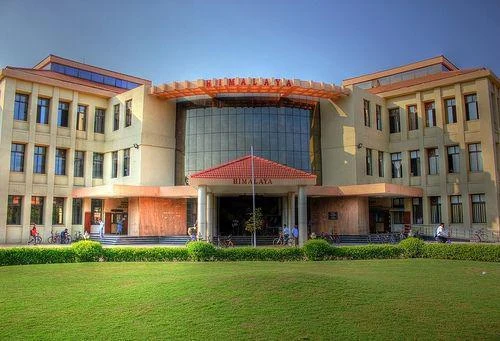


Career Pathway Centre (CPC) and Placement Framework
Campus recruitment at the Indian Institute of Technology Madras is coordinated through the Career Pathway Centre (CPC) under the aegis of the Office of the Dean of Students. The CPC integrates three vital arms of student development: the Placement and Internship Office, the Skill Development Cell (SDC), and the Entrepreneurship Cell (E-Cell). This unified structure ensures that graduating students and research scholars are guided across multiple career avenues, including corporate employment, industrial internships, venture creation, and advanced academic research.
The formal placement and internship season operates as a year-long cycle spanning July to May, coinciding with the institute's academic calendar. The administrative leadership for the 2026-2027 academic session includes Academic Affairs Secretary Madhavan A B, Research Affairs Secretary Saptarshi Das, Undergraduate Placement Heads Priyadarshi Ubale and Poushik J, M.Tech Placement Head Sagnik Barman, Postgraduate Placement Head Shubhra Banerjee, and Institute Placement Representatives (IPR) Joshua John, Soham Shaw, and Kanishka Pareta, supervised by faculty Advisors and Co-Advisors.
The recruitment cycle is organized into strict procedural milestones to maintain institutional discipline and equity:
- Eligibility and Registration Window: All students expecting to graduate from IIT Madras by the close of the 2026-2027 academic year across undergraduate, postgraduate, and doctoral streams are eligible to register. The formal registration process is conducted during August. For Master of Science (M.S. by Research) and Doctor of Philosophy (Ph.D.) scholars, recruitment operates on a rolling basis round the year, with registrations remaining valid for one full calendar year.
- Academic Standing Constraints: To maintain academic rigour, students carrying a backlog of four or more courses are strictly barred from participating in campus recruitment.
- Placement Registration Credentials: Upon successful registration, each eligible candidate is allocated a unique Placement Registration (PR) Number. This identifier governs access to the centralized placement portal, company job notifications, resume uploads, and interview scheduling.
- Selection Process Timelines: Pre-interview activities, including Pre-Placement Talks (PPTs), aptitude assessments, domain-specific written tests, and coding rounds, take place between September and November. Formal final interviews commence on December 1 (Phase 1) and extend through subsequent interview slots, followed by Phase 2 sessions during the spring semester.
- Single-Offer and Deregistration Policy: IIT Madras enforces a strict one-job policy. Once a candidate is selected and an offer is extended by an employer, the student is immediately deregistered from the placement portal to preserve career opportunities for unplaced peers.
- Pre-Placement Offer (PPO) Protocols: Pre-Placement Offers resulting from summer internships are classified into two categories. Closed PPOs must be formally accepted or rejected within 72 hours of issuance; upon acceptance, the candidate is deregistered from further placement rounds. Open PPOs permit the candidate to participate in placement sessions up to the scheduled slot of the firm extending the PPO, provided the offer is processed through the Placement Office prior to November 30.
Undergraduate Placement Outcomes and Branch-Wise Median CTC
Undergraduate recruitment outcomes at IIT Madras encompass graduating cohorts across Bachelor of Technology (B.Tech.), Dual Degree (B.Tech. + M.Tech.), and Interdisciplinary Dual Degree (IDDD) programmes across 11 engineering disciplines. In the 2022-23 placement season, the institute registered 1,612 total full-time job offers accepted across more than 480 participating corporate recruiters. This confirmed a sustained trajectory in hiring volume across recent reporting cycles, advancing from 1,151 offers in 2018-19, 1,078 offers in 2019-20, 1,046 offers in 2020-21, and 1,491 offers in 2021-22.
Across the entire undergraduate cohort (B.Tech., DD, and IDDD), compensation metrics spanned a broad operational range, reflecting differences in job profiles, technical specialization, and geographic postings:
- Undergraduate Aggregate Minimum CTC: ₹6,00,000 per annum
- Undergraduate Aggregate Median CTC: ₹17,00,000 per annum
- Undergraduate Aggregate Maximum CTC: ₹1,31,63,530 per annum
Branch-level compensation reveals marked divergence driven by industry demand across software engineering, quantitative finance, microelectronics, core infrastructure, and heavy engineering:
The reported metrics highlight essential decision factors for prospective candidates. While Computer Science and Engineering achieved an exceptional median package of ₹30.37 LPA, core engineering departments demonstrated robust baseline stability, with medians clustering between ₹14.10 LPA and ₹21.28 LPA. The upper extreme figures (such as ₹1.316 Crore in CSE and over ₹66 Lakhs in Mechanical, Aerospace, and Materials) represent specialized domestic trading roles or foreign currency international postings. Candidates must evaluate branch choice based on verified median compensation rather than isolated headline outliers.
Postgraduate and Research Placement Metrics
Postgraduate and doctoral programmes at IIT Madras represent a major segment of the annual graduating cohort. Specialized recruiters hire across technical research, corporate strategy, quantitative modelling, and advanced laboratory R&D. The official Placement Report establishes distinct compensation metrics across master's and doctoral degrees:
- Master of Technology (M.Tech. Aggregate): Across all M.Tech. specializations, the aggregate median CTC stood at ₹15,00,000 per annum, with a reported minimum CTC of ₹6,00,000 and a maximum CTC of ₹49,70,000 per annum. Within specific departments, quantitative demand generated notable variations:
- M.Tech. in Mathematics (Industrial Mathematics and Scientific Computing): Recorded a median CTC of ₹35,89,464 per annum (minimum ₹15,00,000; maximum ₹49,34,000), driven by extensive recruitment from quantitative hedge funds, algorithmic trading desks, and risk management analytics.
- M.Tech. in Computer Science and Engineering: Achieved a median CTC of ₹24,50,000 per annum (minimum ₹12,00,000; maximum ₹54,21,616).
- M.Tech. in Electrical Engineering: Reached a median CTC of ₹16,00,000 per annum (minimum ₹10,00,000; maximum ₹26,00,000).
- M.Tech. in Mechanical Engineering: Attained a median CTC of ₹15,00,000 per annum (minimum ₹6,25,000; maximum ₹49,70,000).
- M.Tech. in Aerospace Engineering: Reached a median CTC of ₹11,00,000 per annum (minimum ₹8,00,000; maximum ₹16,00,000).
- Master of Business Administration (MBA - DoMS): The Department of Management Studies (DoMS) at IIT Madras reported a median CTC of ₹20,80,000 per annum, bounded by a minimum CTC of ₹11,00,000 and a maximum CTC of ₹30,66,000 per annum. Hiring profiles focused on corporate strategy, product management, supply chain analytics, and financial advisory.
- Master of Science by Research (M.S. Engineering Streams): Designed as an intensive research degree, M.S. graduates achieved a median CTC of ₹15,00,000 per annum (minimum ₹6,00,000; maximum ₹54,21,616 per annum). Specialized R&D laboratories value M.S. scholars for specialized experimental and computational thesis backgrounds.
- Master of Science (M.Sc. Sciences): Graduating students across Physics, Chemistry, and Mathematics streams recorded an aggregate median CTC of ₹9,62,333 per annum, with a minimum of ₹6,00,000 and a maximum of ₹19,71,000 per annum. A significant fraction of this cohort opts for doctoral research fellowships in India and abroad rather than immediate corporate placement.
- Master of Arts (M.A. Humanities & Social Sciences): Graduating scholars across Development Studies and English Studies recorded a median CTC of ₹10,95,705 per annum, with compensation ranging from ₹5,40,000 to ₹26,57,000 per annum. Major recruiters included socio-economic policy think tanks, non-governmental research institutions, corporate sustainability units, and communications consultancies.
- Doctor of Philosophy (Ph.D.): Doctoral scholars participating in campus recruitment attained a median CTC of ₹15,00,000 per annum, with figures ranging from ₹6,00,000 to ₹35,89,464 per annum. Corporate research facilities, including industrial labs in semiconductors, artificial intelligence, automotive engineering, and biotechnology, actively recruited alongside premier academic and national scientific institutions.
Recruiting Sectors, Industry Distribution and Prominent Employers
Placement activity at IIT Madras is distributed across five broad industrial sectors, reflecting the versatility of its academic programmes and interdisciplinary curricula:
- Core Engineering, Aerospace & Heavy Manufacturing: Core engineering firms represent the traditional backbone of recruitment at the institute. Prominent recruiting partners include Airbus, Agnikul Cosmos, Caterpillar India Engineering Solutions, Collins Aerospace, General Electric, GKN Aerospace Engine Systems, Eaton Technologies, Deccan Industries, ExxonMobil Services & Technology, and Chetak Technology (Bajaj Auto). A distinctive aspect of core hiring at IIT Madras is the active presence of deep-tech startups spawned from the IIT Madras Research Park and Incubation Cell, such as Agnikul Cosmos, which hire directly from campus cohorts for space systems and propulsion engineering.
- Information Technology, Software Architecture & Cloud Infrastructure: Global and domestic technology enterprises recruit extensively for roles in software development, cloud systems, network engineering, and cybersecurity. Key recruiters include Google, Microsoft, Amazon, Apple, Adobe, Cisco, CommScope, Cohesity, Glean Search Technologies, BigBasket, and Flipkart.
- Financial Services, Quantitative Trading & High-Frequency FinTech: Quantitative finance, high-frequency algorithmic trading, and investment banking constitute the highest-compensating segment of campus recruitment. Major participants include Graviton Research Capital, DE Shaw India, Goldman Sachs, American Express, Credit Suisse, Fidelity Investments, FinMechanics, DMI Finance, Franklin Templeton, and FN Mathlogic Consulting Services. Roles encompass algorithmic trader, quantitative strategist, risk modeller, and quantitative developer.
- Management Consulting, Business Analytics & Strategic Advisory: Top-tier strategy and operations consulting firms recruit graduating candidates across all disciplines. Employers include Boston Consulting Group (BCG), McKinsey & Company, Dalberg Advisors, EXL Service, Course5i, and Beghou Labs India.
- Biotechnology, Pharmaceuticals & Healthcare Technologies: Technical recruitment in life sciences and computational biology features Biocon Biologics, Dr. Reddy's Laboratories, and GE Healthcare, hiring for computational biology, bioprocess development, and medical imaging systems.
Recruiting patterns demonstrate a progressive transition toward interdisciplinary profiles, where mechanical, aerospace, and electrical graduates increasingly secure roles combining physical system modelling with machine learning, data architecture, and embedded edge computing.
Internships, Pre-Placement Offers and Career Progression
Industrial internships form a critical stepping stone toward full-time career placement at IIT Madras. The Internship Office facilitates formal summer internship recruitment during the pre-final year (commencing in the fifth semester for B.Tech. and third semester for postgraduate students), leading to significant conversion into Pre-Placement Offers (PPOs).
Data from the official Placement and Internship Report indicates strong industry investment through monthly intern stipends:
- Financial Services: Median monthly stipend of ₹1,30,000 (minimum ₹39,070; maximum ₹12,00,000 per month for international trading desks).
- IT & Software Development: Median monthly stipend of ₹80,000 (minimum ₹10,000; maximum ₹12,00,000 per month).
- Management: Median monthly stipend of ₹60,000 (minimum ₹10,000; maximum ₹1,50,000 per month).
- Data Science & Analytics: Median monthly stipend of ₹50,000 (minimum ₹10,000; maximum ₹2,00,000 per month).
- Engineering & Technology: Median monthly stipend of ₹40,000 (minimum ₹7,500; maximum ₹2,00,000 per month).
- Research & Development: Median monthly stipend of ₹40,000 (minimum ₹10,000; maximum ₹1,50,000 per month).
The pre-placement pipeline accounts for approximately 20% to 30% of total full-time placements annually, shielding students from the intensity of Day 1 recruitment. Students securing closed PPOs must decide within 72 hours, while open PPOs provide calculated flexibility up to the arrival slot of the offering organization.
Beyond corporate placements, institutional outcomes are independently verified by the National Institutional Ranking Framework (NIRF), Ministry of Education, Government of India:
- NIRF 2024 Engineering: Ranked Number 1 nationwide with an overall score of 89.46 and a Graduation Outcome (GO) metric of 81.07.
- NIRF 2024 Overall: Ranked Number 1 nationwide with an overall score of 86.42 and a Graduation Outcome (GO) metric of 85.76.
A substantial portion of graduating students consciously opt out of campus recruitment to pursue advanced research degrees at premier global universities (including MIT, Stanford, UC Berkeley, Carnegie Mellon, ETH Zurich, and IISc Bengaluru) or to launch technology startups supported by the IIT Madras Incubation Cell (IITMIC), the Centre for Innovation (CFI), and the Nirmaan pre-incubator.
Practical Evaluation Guidance for Candidates
Prospective applicants analyzing IIT Madras placement statistics must account for standard compensation reporting conventions:
- Cost to Company (CTC) Composition: Published CTC values frequently combine base salary, performance-linked variable pay, one-time joining bonuses, and employer contributions toward provident fund and gratuity. Furthermore, major technology and trading packages often incorporate equity incentives (ESOPs or Restricted Stock Units) that vest over a multi-year period (typically three to four years). The annual take-home component is consequently lower than gross CTC.
- International versus Domestic Valuations: Upper extreme compensation packages exceeding ₹1.0 Crore are predominantly foreign postings denominated in US Dollars, Euros, or Singapore Dollars. While optically striking, they must be assessed against local purchasing power and taxation regimes rather than directly equated with domestic living costs.
- Median as the Decision Anchor: Candidates shortlisting academic departments should rely on departmental median figures (e.g., ₹30.37 LPA in CSE, ₹21.28 LPA in EE, and ₹15.92 LPA in Mechanical) rather than maximum packages to form realistic career expectations.