
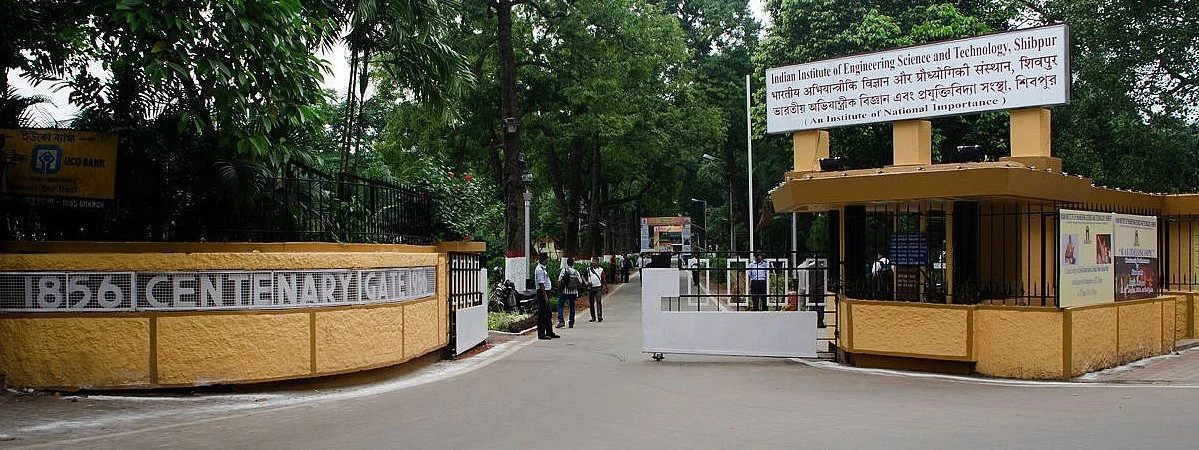

IIEST Shibpur admission routes
IIEST Shibpur’s undergraduate admission route depends on the programme. For B.Tech, the institute’s admissions page identifies JEE Main and names nine engineering departments: Aerospace and Applied Mechanics, Civil Engineering, Computer Science and Technology, Electrical Engineering, Electronics and Telecommunication Engineering, Information Technology, Mechanical Engineering, Metallurgy and Materials Engineering, and Mining Engineering. JoSAA’s 2026 business rules classify IIEST in the NIT+ system and use JEE Main Paper I for B.E./B.Tech seat allocation. The institute lists B.Arch separately; the 2026 JoSAA rules specify JEE Main Paper IIA for B.Arch programmes. Check the live 2027-28 programme list and rules before selecting a paper or building a choice list, because neither the 2026-27 rules nor older institute brochures establish next cycle’s final offerings.
For the 2026-27 cycle, JoSAA was the common seat-allocation process for IIEST, followed by CSAB special-round counselling for eligible vacant NIT+ seats under CSAB’s own rules. These processes are not interchangeable with an institute application: candidates register, complete choice filling and follow allotment, document verification and payment instructions on the official counselling portal. The institute’s 2025-26 reporting guide also listed DASA, MEA and Study in India routes for allotted international candidates. Those are cycle-specific historical procedures; verify the current DASA and institute notices rather than assuming that the same categories, portal or steps will apply in 2027-28.
Sources: IIEST B.Tech admissions page, JoSAA 2026 overview, JoSAA Business Rules 2026.
Eligibility and seat pools
Eligibility is determined by the applicable JoSAA rules and the programme’s subject requirements, not by the entrance score alone. Under the 2026-27 JoSAA rules, a candidate seeking a NIT+ B.E./B.Tech seat had to secure a JEE Main Paper I rank and satisfy the Class XII performance conditions in the rules’ annexure. B.Arch applicants had to secure a JEE Main Paper IIA rank and satisfy the separate Class XII conditions. JoSAA explicitly cautions that qualifying in an examination does not itself guarantee admission: candidates must also meet the requirements for the particular institute and programme. Read the current rules and the programme restrictions before registering, especially if your qualification is equivalent to Class XII or your subjects/marks do not fit a standard case.
The 2026 rules also define state code of eligibility from the state where a candidate first appeared for Class XII or equivalent, rather than from residence or native place. IIEST’s NIT+ seats are divided into Home State and Other States pools under those rules. Use the state code assigned through the examination process and the current seat matrix to identify the applicable pool; living in West Bengal by itself does not establish Home State eligibility. The allocation system also separates candidate category from programme-section labels, so read the current certificate rules and verify that your category documentation matches the declaration used for counselling.
These are 2026-27 provisions, not a confirmed 2027-28 eligibility notice. At the time of this update, the latest opened JoSAA rulebook was the 2026 edition. The institute’s current website does not provide a 2027-28 undergraduate admission brochure or published reporting schedule. Avoid relying on third-party cutoff pages or old brochures for eligibility; use the fresh JoSAA rules, seat matrix, programme restrictions and IIEST notices when the next cycle opens.
Sources: JoSAA Business Rules 2026, JoSAA 2026 seat matrix page, IIEST admission notices.
Choice filling, allotment and reporting
JoSAA choice filling is a preference exercise with binding consequences. In the 2026 rules, seat allocation considers the candidate’s rank list, category and eligible seat pool, the order of academic-programme choices, seat availability and the rules for the round. Build a considered list of institute-programme pairs in genuine preference order; do not rank a branch above another merely because a third-party page labels it “better.” Review the official seat matrix and programme restrictions for the applicable year, and check that you have included every course you would actually accept. If no choice is acceptable, omit it rather than treating counselling as a guaranteed route to a preferred branch.
After an allotment, read the candidate portal for the actions and deadlines for that round. The 2026 process required candidates to complete the specified confirmation, document-verification and fee steps. The JoSAA site also announced a Partial Admission Fee for NIT+ candidates after Round 5 and directed NIT+ applicants considering CSAB special rounds to follow the separate CSAB process. Missing a required portal action can affect whether an offer remains valid; do not rely on a screenshot, an agent’s message, or an old calendar in place of the candidate login and official notices.
For institute reporting, IIEST’s published step-by-step guide for 2025-26 describes physical reporting at the institute, document verification and follow-up enrolment steps. It explicitly says those instructions apply to 2025 admission and gives dates that have passed. Treat it as a preview of the kind of institute-level checklist to expect, not as the venue, dates or process for 2027-28. The 2026 JoSAA page likewise records the 2026 schedule and is now historical. When a later cycle is announced, compare its counselling calendar with the institute’s own reporting notice and keep both portals’ deadlines in your calendar.
Sources: JoSAA Business Rules 2026, JoSAA 2026 portal and notices, IIEST 2025 UG reporting guide.
Documents and next steps
Prepare a digital and paper folder before counselling begins. The IIEST guide for 2025-26 asked JoSAA/CSAB candidates to bring the institute admission form and provisional allotment letter, confirmation of the applicable admission-fee payment, medical-fitness certificate, Class X and XII records, photo identification, and category or disability certificates where applicable. It also listed anti-ragging affidavits, a blood-group report and migration, school-leaving or transfer documentation. The exact list and acceptable formats can change, so use the current institute checklist and JoSAA certificate formats rather than reproducing last year’s forms. Keep originals available for verification and maintain clear scans where the current portal requests uploads.
Check names, dates of birth, category details and certificate validity across your application, exam record and supporting documents before uploading. If a document is missing or a portal flags a discrepancy, respond through the official candidate login within the notice’s time limit. Save payment confirmations, allotment letters and submitted forms, but treat the portal’s latest status as authoritative. Ask the official JoSAA/CSAB helpdesk or IIEST admissions contact listed in the current notice when instructions conflict; do not send sensitive documents to unofficial advisers.
As of 1 November 2026, the opened official sources did not provide IIEST’s 2027-28 undergraduate schedule, reporting venue, document checklist, fee-payment instructions or final programme-specific eligibility notice. Check the JoSAA portal for the new rules, calendar, seat matrix and programme restrictions, then check IIEST’s Admission notices for its own reporting instructions. This page is an orientation to the route, not a substitute for those cycle-specific notices.
Sources: IIEST 2025 UG reporting guide, JoSAA 2026 certificate formats and helpdesk, IIEST Admission notices.