
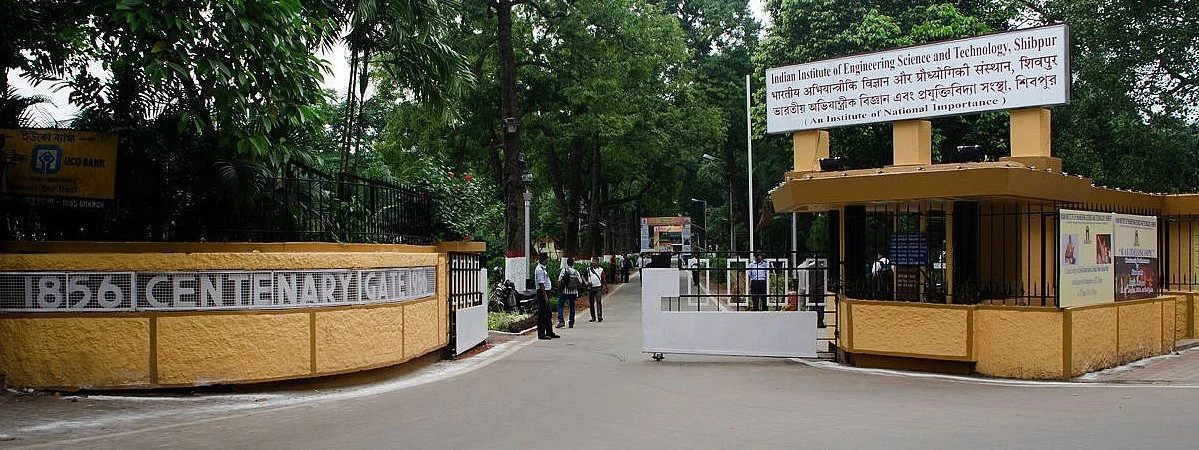

IIEST tuition-fee waiver: confirm the current notice
IIEST’s 5 December 2025 notice invited first-year B.Tech and B.Arch students admitted in 2025-26 to seek full or partial tuition-fee waiver based on total family income in financial year 2024-25. It set full waiver eligibility at income not exceeding ₹1 lakh and partial waiver eligibility at income not exceeding ₹5 lakh, with applications restricted by that notice to applicants other than SC, ST and persons with disabilities. The required income certificate had to cover 1 April 2024 to 31 March 2025 and be issued by an authority listed in the notice’s state-wise annexure. This is a dated example of an institute-administered waiver, not a promise that the same thresholds or categories apply to a later batch.
The 2025-26 application closed on 19 December 2025. Do not submit that old form or reuse its deadline for 2027-28. Ask the Dean of Students’ Welfare or check the latest IIEST notice board for the admission year, family-income period, eligible student cohort, excluded categories, certificate authority, online form and last date. A tuition waiver reduces the specified tuition component; it should not be treated as a waiver of hostel, mess, admission, examination or other charges unless the current notice says so.
GAABESU alumni scholarships and awards
The Global Alumni Association of IIEST Shibpur (GAABESU) announced 82 need-based scholarships for 2025-26 and three special first-year scholarships valued at ₹25,000 each. The number of awards can vary with donor confirmations and the pool of eligible applicants. The published minimum requirements for that year included current undergraduate enrolment at IIEST, GAABESU student membership, certified annual family income not exceeding ₹5 lakh and an SGPA above 8.00 in the specified previous-year semester. A student with annual family income below ₹1 lakh could apply even with a lower SGPA; first-year students without a previous semester result could apply only for awards reserved for first years. The page also states that students with an IIEST tuition waiver could still apply, although generally a student must not receive another scholarship in the same year. Donor-specific rules can add conditions.
The 2025-26 page contains a date discrepancy: the scholarship panel lists 22 October 2025 as the end date, while the announcement body says 15 October 2025. Both dates are past. Treat that difference as a reason to verify the next announcement directly with GAABESU, not to infer a current deadline. The process asks applicants for prior semester mark sheets and the income certificate submitted at IIEST admission. Review the live scholarship announcement for the current year’s membership, criteria, award count, form and documents before applying.
Government scholarships: match the scheme before applying
The National Scholarship Portal lists central and welfare-based schemes with separate eligibility rules. For academic year 2026-27, the portal states that students may apply for one merit-based scheme and one or more welfare-based schemes where eligible, and that One Time Registration is required. Its student page names PM-USP Central Sector Scheme of Scholarship for College and University Students and the PM-USP special scheme for Jammu, Kashmir and Ladakh among schemes with renewal activity. The portal also lists the National Scholarship and Fellowship for Higher Education of Scheduled Tribe Students. These are national schemes, not IIEST grants: eligibility depends on the current scheme guideline, student category, course, income, prior award and other conditions.
Use the official NSP search to determine whether you qualify, then read that scheme’s current guideline and application/verification dates. Institute verification may have a separate deadline after student submission. Do not treat a page’s general list of schemes as proof that every IIEST student can receive each award. Also check whether accepting an external award affects a GAABESU application or any other support; the alumni programme’s 2025-26 terms restrict most recipients from holding another scholarship in the same academic year, with an express exception for IIEST tuition-fee waiver.
A practical application checklist
Before applying, identify the exact programme and batch covered by the notice, then check the award’s provider and purpose. Tuition waiver, merit scholarship, need-based alumni aid, research award and government welfare scheme are different forms of support; they may use different income periods, academic-performance thresholds and application portals. Keep the relevant official notice and guideline with your records.
Prepare clear copies of the documents actually requested, such as family-income certificate, semester marksheets, category certificate, bank details and proof of admission. Confirm the issuing authority and validity period for an income certificate rather than relying on an older document from another application. Use the institute, GAABESU or NSP portal linked by the responsible provider, and save the submission confirmation. If details conflict, contact the provider before submitting.
As of 1 November 2026, the sources checked provide a historical IIEST tuition-waiver notice for 2025-26, GAABESU’s 2025-26 criteria, and NSP’s 2026-27 portal information. They do not establish a current IIEST 2027-28 application window, award amount or confirmed eligibility rules. Recheck the latest notice before planning on any award or deducting it from the published fee.