
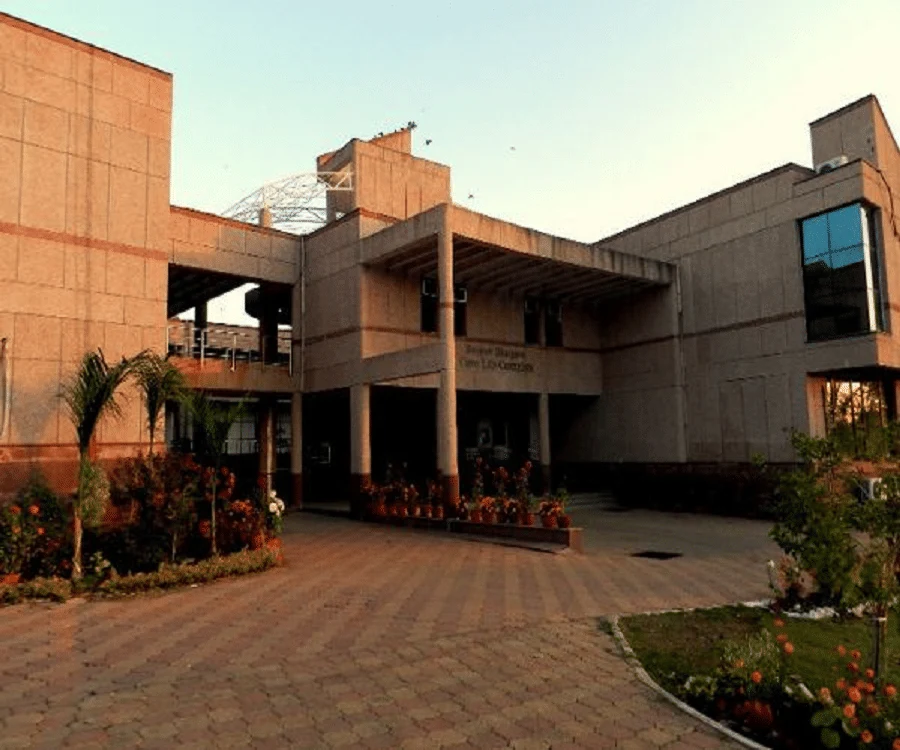

Latest official result: NIRF Engineering 101-150
The latest official NIRF Engineering result verified for this guide is the 2025 edition. The Ministry of Education’s NIRF page places Pandit Dwarka Prasad Mishra Indian Institute of Information Technology, Design and Manufacturing (IIITDM) Jabalpur in the 101-150 rank band. The 2024 Engineering list also places the same institution in the 101-150 band. These are two consecutive editions with the same published band; they do not show a rise or fall within it. NIRF lists the institutions in a band alphabetically, so the page does not disclose IIITDM Jabalpur’s exact position among those institutions or its score. NIRF 2025 Engineering band · NIRF 2024 Engineering band
This is an Engineering-category result for the institute as a whole. It is not a ranking of CSE, ECE, Mechanical Engineering, Smart Manufacturing, Design, a particular degree, or a Jabalpur branch cohort. Nor does it establish a separate overall or innovation position. NIRF publishes separate category lists, and a result in one list should not be transferred to another. The institute’s own NIRF portal keeps submitted-data links by category and year; those submissions are evidence about what the institute supplied, not a substitute for the Ministry’s published rank. IIITDM Jabalpur NIRF portal
What the 2025 Engineering score measures
NIRF’s 2025 Engineering framework gives Teaching, Learning and Resources (TLR) a 30% weight, Research and Professional Practice (RP) 30%, Graduation Outcomes (GO) 20%, Outreach and Inclusivity (OI) 10%, and Perception (PR) 10%. Within those groups, the framework includes measures such as student strength, faculty-student ratio, faculty qualifications and experience, financial-resource use, publications and their quality, patents, projects and professional practice, placement and higher-study outcomes, university examinations, median salary, doctoral graduates, student diversity, women’s participation, support for economically and socially challenged students, accessibility, and peer perception. NIRF 2025 Engineering framework
That mix helps explain why the band cannot be read as a direct proxy for one applicant’s likely experience. It combines resources, research, outcomes, inclusion and perception into one institutional score. It does not say that every department has identical faculty capacity, research activity, placement access or student support. A prospective student comparing programmes should use the ranking as one broad screening signal, then inspect the evidence for the course and cohort that matter to them.
The GO component is also a useful reminder to read NIRF placement figures with their denominators and programme groups attached. IIITDM Jabalpur’s NIRF 2025 submission reports separate four-year UG and two-year PG cohorts through 2023-24; those historical institution-level groups do not establish a branch-specific placement rate or a 2027-28 result. The institute’s separate placement guide discusses the cohorts and their limits. The framework’s presence of median salary or placement outcomes in a composite score does not turn the 101-150 band into a salary forecast.
How to compare this band responsibly
First compare like with like: NIRF Engineering with NIRF Engineering, and the same edition with the same edition. For 2024 and 2025, IIITDM Jabalpur remains in 101-150. Because the bands group multiple institutions and are alphabetically displayed, a same-band result cannot distinguish whether one institution is just above or below another inside the interval. It also cannot show whether the underlying score changed while the displayed band stayed constant. Do not convert the band into “rank 101,” “rank 150,” or an internal order.
Second, compare programme-level evidence separately. For a BTech choice, applicants can examine the exact JoSAA round, seat pool, category and closing-rank basis for each programme; these counselling cutoffs answer an allocation question, not the NIRF ranking question. For BDes, UCEED score-based spot-admission notices are a different route and metric. For postgraduate study, check the programme’s own admission route, curriculum, research opportunities and cohort-specific outcomes. None of these course-level facts changes the institute’s NIRF Engineering band, and the band does not replace them.
Third, read the underlying evidence rather than relying on an isolated ranking label. NIRF publishes institutional submissions and category-specific methods. The institute portal lists Engineering submissions for 2026, 2025 and earlier years, but a submitted 2026 dataset is not a 2026 ranking result. Confirm the edition on the Ministry’s result page before quoting a value. Where the result is still in a rank band, preserve the band as published and avoid filling in a score or exact position from an aggregator’s estimate.
What this ranking does and does not tell a 2027 applicant
For 2027-28 applicants, the verified NIRF comparison is historical: 2025 is the latest published Engineering band used here, with 2024 as the prior comparison. It can help establish a broad national category and show that the institute appeared in the same band across those two editions. It cannot predict the next NIRF result, determine which branch is best, or answer whether the fees, location, curriculum or campus environment suit a particular student.
Use the band alongside current admission and programme information. Check the applicable examination and counselling route, compare the branch-specific closing ranks only within matching categories and rounds, and read current fee notices before deciding. Then weigh the institute-level ranking against practical factors that the band does not resolve: the curriculum for the chosen programme, the student’s preferred subject, costs over the full degree, placement evidence for the relevant cohort, and access to facilities or research work. If a decision depends on a department-level comparison, ask for department-level evidence rather than treating the institutional band as a substitute.
The concise reading is therefore: IIITDM Jabalpur is in NIRF’s Engineering 101-150 band in both 2024 and 2025; the official band pages do not publish an exact in-band rank or score. Keep that statement attached to its category and editions. It is a useful snapshot, not a prediction or a standalone verdict on any one course.