Loading Admission Guardian content
Loading Admission Guardian content

6 programmes · 1 institution. Check the admission year and requirements.
6 programmes · 1 institution. Check the admission year and requirements.
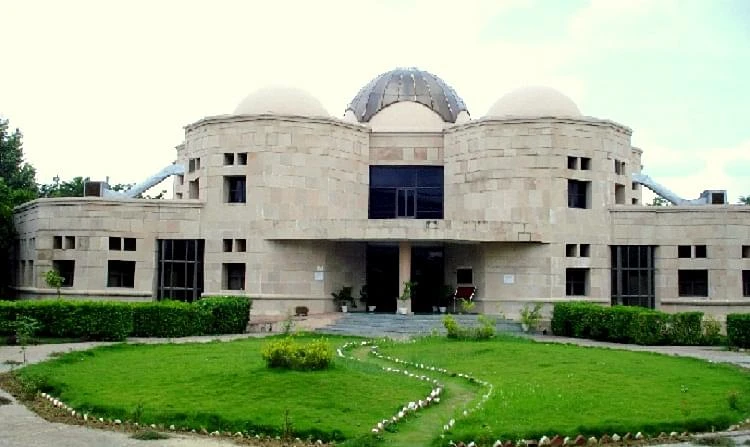
The Indian Institute of Information Technology Allahabad, usually called IIIT Allahabad or IIITA, is a technical institute in Deoghat, Jhalwa, on the outskirts of Allahabad, now commonly called Prayagraj, Uttar Pradesh. Its official history traces the institute to 1999, when it was established as a centre of excellence in information technology and allied areas. It received deemed-university status in 2000 and was declared an Institute of National Importance through a parliamentary Act in 2014. These are three distinct institutional milestones: the founding year is not the date of its present statutory status. The institute’s official history also describes a 100-acre residential campus at Jhalwa, connected by the institute network.
The institute’s profile is deliberately technology-centred. Its undergraduate choices are Electronics and Communication Engineering, Information Technology, and Information Technology–Business Informatics. These are related areas, but they lead students into different course mixes: ECE includes communications and electronics; IT centres on computing; and IT-Business Informatics explicitly combines computing with business informatics. Applicants choosing among them should inspect the current department curriculum and course requirements, rather than selecting only by the institute name or by a general reputation for software jobs.
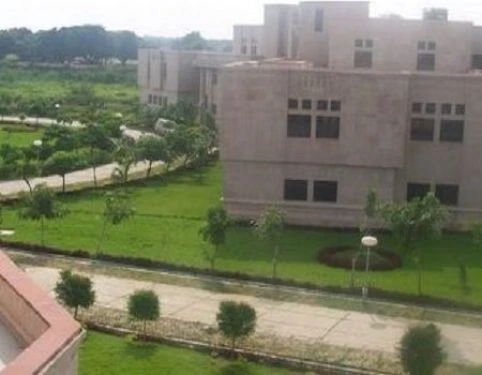
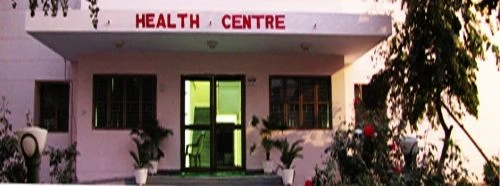
The Jhalwa location also shapes the student experience. The institute describes itself as residential, and its campus address is outside the old central-city core. Students should include accommodation, campus routines and travel needs in their comparison with colleges located in city centres. The Council of Wardens’ hostel information lists eight hostels on campus—five boys’ and three girls’ hostels—and describes network access, dining, common spaces, a gym, sports facilities and an Institute Health Centre. Room assignment and the applicable mess or accommodation charge should be verified for the specific admission year; a general campus description does not guarantee a particular room type.
This profile separates evidence that belongs to different years. Programme and seat information is for the 2026 intake; the fee circular covers the 2026-27 session; the placement page reports the 2026 batch; the NIRF data below are historical institute-submitted cohorts; and the ranking page gives a 2025 band. These measures are not interchangeable. None establishes a 2027-28 fee schedule, admission calendar or cutoff.
For the 2026 intake, the institute’s programme and seat matrix lists three four-year B.Tech streams: Electronics and Communication Engineering (ECE), Information Technology (IT), and Information Technology–Business Informatics (IT-BIn). The sanctioned totals shown are 151 seats for ECE, 307 for IT and 46 for IT-BIn. The table separates seats across the CSAB/JoSAA-side route, DASA and Study in India, so an overall programme total is not the number available in each category or channel. The institution’s 2026 eligibility guide says B.Tech admission is based on JEE Main merit or rank through CSAB or JoSAA allocation, with Class XII subject eligibility following JEE Main criteria.
For a prospective student, the practical sequence is to confirm the exact programme, check the current JEE Main and counselling eligibility rules, and then read the allocation notice for the correct category and seat pool. JoSAA and CSAB are cycle-specific processes; DASA and Study in India have distinct application and eligibility instructions. The institute’s seat matrix is useful for understanding programme scale, but it should not be used as a substitute for the official counselling matrix or as a forecast of a later year’s allocation. For cutoffs, use the official JoSAA opening and closing ranks tool and set the institution, programme, quota, category and round. No future cutoff is predicted here.
The 2026 institute list also includes three five-year integrated pathways: Dual Degree B.Tech (ECE)–M.Tech (ECE), Dual Degree B.Tech (IT)–M.Tech (IT), and Dual Degree B.Tech (IT-BIn)–MBA. The listed totals are 13, 29 and 25 respectively. A five-year integrated or dual-degree programme has a different duration and award structure from the four-year B.Tech. Students should compare its curriculum, progression rules, total fee schedule and later exit or award conditions directly with the current institute regulations before treating it as a simple extension of the corresponding B.Tech.
Postgraduate admissions follow separate routes. The 2026 programme list includes two-year M.Tech offerings in areas such as communications and signal processing, microelectronics and VLSI, biomedical analytics and engineering, bioinformatics, AI and machine learning, robotics and AI, human-machine interaction, software engineering and automation, and data engineering. The institute says M.Tech admission is through CCMT with a valid GATE score. A JEE Main route for undergraduate programmes should not be generalized to these postgraduate courses; candidates should use the current CCMT and institute notices for the exact specialization and year.
The institute’s Placement Statistics page, labelled “Placement Statistics 2026,” reports 615 students registered and 535 placed overall, giving an overall placement rate of 86.99% on that registered-student denominator. It separates 470 registered undergraduate students, of whom 433 were placed (92.12%), from 145 registered postgraduate students, of whom 102 were placed (70.34%). The page lists average CTC of ₹33.35 lakh per annum and a highest package of ₹150 lakh for its undergraduate group; for the postgraduate group it lists an average of ₹18.24 lakh and a highest package of ₹47 lakh. These are the site’s batch-2026 statistics, not promises of an individual result. An average is not a median, and the highest package describes one upper-end outcome rather than a typical offer.
A different view comes from the Ministry of Education’s NIRF 2024 Engineering data submitted by IIIT Allahabad. For four-year UG programmes, the 2022-23 graduating cohort had 384 graduates in minimum stipulated time, 372 placed, a reported median salary of ₹30 lakh per year and nine students recorded as selected for higher studies. The earlier cohorts were 275 graduates and 261 placed in 2021-22, with a ₹28 lakh median and 14 higher-study selections, and 221 graduates and 190 placed in 2020-21, with a ₹20 lakh median and two higher-study selections.
These NIRF rows are historical and use programme-duration and cohort definitions that differ from the institute’s placement-season registration count. The 2026 page’s 535 placed students cannot be added to or reconciled against a NIRF cohort table. Applicants comparing institutions should note the year, programme scope, denominator and whether the salary measure is average or median. For more detail on internships and recruiting, the institute identifies its Student Career Progression Office as the official interface between students and recruiters.
The institute’s 2026-27 fresher fee circular is the source to use for a new B.Tech entrant’s estimate. It separates one-time charges, annual dues, semester charges, hostel charges and applicant categories. In the General/EWS/OBC table for B.Tech IT, ECE and IT-BIn, the one-time subtotal is ₹28,120 and annual dues are ₹4,520. Tuition is ₹99,000 per semester. The table lists ₹14,410 per semester for the double-sharing room and related hostel charges; a separate single-occupancy total is higher. Its combined first-semester total with double-sharing accommodation is ₹1,55,430, followed by ₹1,22,790 for the second semester. The first amount includes the listed one-time and annual items, so it is not representative of every term.
The same circular publishes different schedules for SC/ST/PwD and DASA groups, including separate SAARC, non-SAARC and CIWG categories. Do not apply the General/EWS/OBC total to another applicant group. The circular also explains that an amount already deposited to CSAB is transferred and deducted from the institute payment for the first semester. Hostel and room choice affect the total, and the fee circular is explicitly for 2026-27. Before paying, check the current admission instructions and calculate the line items that apply to the student’s category and room arrangement; this page does not establish a future intake’s fees.
The official Scholarships and Financial Aid page describes two institute awards. Merit-cum-Means requires an average SGPI of at least 8.50 across the two semesters in a year and parental income below ₹5 lakh per annum. The page says up to 3% of the strength of an individual programme may benefit, at ₹36,000 per year. The Merit Incentive Award requires an average SGPI of at least 9.00, is limited to up to 2% of a programme’s strength, and also lists ₹36,000 per year. A student receiving the merit incentive is not eligible for the Merit-cum-Means scholarship at the same time.
The scholarship page links national and state portals, including the National Scholarship Portal and Uttar Pradesh post-matric scholarship. It does not state a current application deadline for those external schemes. Scheme names and portal links are starting points, not proof of eligibility or an open application window. Read the current notice for documents, income definitions, renewal rules and dates; do not budget a scholarship as guaranteed fee relief before an award is confirmed.
The institute’s NIRF ranking disclosure lists Engineering at rank 87 in 2024 and in the 101-150 band in 2025. The 2025 result is a band rather than an exact rank, so it cannot be described as a precise numerical change from 2024. The page also reports a 2025 QS World University Ranking band of 1401+ and a QS Asian University ranking band of 581-600. These systems use different coverage and methods. Keep the publisher, category and year attached to each value instead of combining them into one score. Compare only like-for-like categories. A ranking can help with broad screening, but it cannot tell an applicant whether IT, ECE or IT-BIn is the better academic fit.
The residential campus can make hostels, institute network access and shared facilities central to student life. The Council of Wardens’ page describes dining, a gym, sports areas, common spaces and the on-campus health centre. It also says room allotments are managed by the wardens’ office and depend on availability, programme and year. Applicants should confirm what is available to their cohort and whether specific charges are included in the current bill. The official history page describes the institute as a fully residential campus; the practical details should be checked against current hostel notices.
A useful comparison starts with the programme, not a package headline. Match the desired curriculum to the degree, confirm the correct entrance and counselling route, estimate the full first-year bill using the right category and room, and review outcomes using the same cohort and denominator. IIIT Allahabad’s published numbers give applicants several decision points, but each figure has a defined year and scope. Check the next official notice before acting on admission, fee, scholarship or cutoff information.
Loading programmes and admission routes.
Selected ranking categories, with the recorded year beside each result. Open all records for the complete history.
42 published records · Lower numeric ranks are stronger
IIRF
Engineering · public
#172022
Outlook
Engineering · public
#182023
India Today
Engineering · public
#82020
IIRF
B.Tech · public
#182022
Find a program, read its fee details and explore the admission requirements.
Summary of the programs shown below. First-year fee
Showing 5 courses
Specializations
Eligibility: Post Graduation
Specializations
Listed entrance exams
Eligibility: 10+2 with 75% + JEE Main
Specializations
Listed entrance exams
Eligibility: For JoSAA 2026, use your JEE Main Paper 1 rank. Pass the five required Class XII subjects and meet either 75% aggregate (65% for SC, ST and PwD) or your board’s category-wise top 20 percentile. Check the current rules and any institute-specific conditions for your admission route.
JoSAA 2026 business rulesSpecializations
Listed entrance exams
Eligibility: Pass in Graduation + GATE
Specializations
Listed entrance exams
Eligibility: Graduation with 50% + CAT
JEE Main 2026 cutoffs for Indian Institute of Information Technology, Allahabad · JoSAA Round 5 opening and closing ranks by programme and seat profile.
4 exams with cutoff data available - showing recent entries
 3i Infotech
 Accolite
 Acko
 Adobe
 Amazon
 Areva
 Asian Paints
 Bank of Baroda
 Canara Bank
 Compare Infobase
 Corporation Bank
 Crompton Greaves Ltd.
 Cvent India Pvt. Ltd
 Deloitte
 DevFactory
 DSCL
 Ernst & Young
 First Flight
 Flipkart
 Grofers
 Hackerearth
 HCL Comnet
 HCL Info System
 HDFC Bank
 Hindalco
 ICICI Bank
 ICICI Prudential
 IFFCO-Tokio
 IL & FS
 Indiabulls Ventures Limited
 IndiaMart Company
 IndusInd Bank
 Infosys
 Intel
 Johnson & Johnson
 KPMG
 L&T Infotech
 MAQ Software
 Matrix Labs
 Microsoft
 Mindtickle
 Nalco
 Newgen
 Pantaloons
 Patni Computers
 Piaggio
 Practo
 PWC
 Qualcomm India Pvt. Ltd.
 RBI
 Ricoh Innovations
 Sail
 SBI
 Snapdeal.com
 Tata Motors
 Tata Teleservices
 VIP
 Wipro



In this preview: 5 photos · 0 videos
For students targeting pure software roles and a strong coding culture, IIIT Allahabad is often preferred. However, for a more diverse college experience and broader brand recognition, the top National Institutes of Technology (NITs) are generally considered better.
The key difference is in the curriculum. The IT-BI (Information Technology and Business Informatics) program includes management subjects like Economics and Finance alongside core IT courses. This makes it an ideal choice for students aiming for future MBAs or careers as Product Managers.
Yes, most IIITs offer a branch change option. However, the process is extremely competitive and is typically based on a student's CGPA performance during their first year of study.
Placements for the Electronics and Communication Engineering (ECE) branch at IIIT Allahabad are excellent. Many ECE students secure roles in the software industry, and opportunities in core VLSI (Very-Large-Scale Integration) fields are also increasing.
The attendance rule, which commonly requires 75% attendance, is strictly enforced. The administration and most faculty members at these institutes are known to be very rigid about adhering to this policy.
About Indian Institute of Information Technology, Allahabad.
Colleges cannot rewrite published reviews. We remove spam and abuse.
Ask the communityWhat should future students know?
Tell us which course you're considering. We'll help you work out the next step.
Get instant Partner access after mobile verification. Your public edits are reviewed before they go live.
Claim this collegeProgramme information: Official source · Source as of: 2026-11-01
Programme information:
Each route applies only to this named programme and the stated year.
JEE-Main: Joint Entrance Exam Main · 2026-27
Admission-route evidence: Official source · Source as of: 2026-11-01
Programme information: Official source · Source as of: 2026-11-01
Each route applies only to this named programme and the stated year.
JEE-Main: Joint Entrance Exam Main · 2026-27
Admission-route evidence: Official source · Source as of: 2026-11-01
Programme information: Official source · Source as of: 2026-11-01
Each route applies only to this named programme and the stated year.
JEE-Main: Joint Entrance Exam Main · 2026-27
Admission-route evidence: Official source · Source as of: 2026-11-01
Programme information: Official source · Source as of: 2026-11-01
Programme information: Official source · Source as of: 2026-11-01
6 recorded programmes · 1 institution. Admission years and conditions apply to the named programme.

 Auditorium
 Cafeteria
 Computer Labs
 Gym
 Hostel
 Medical
 Science Labs
 Sports Complex
 Study Library