Loading Admission Guardian content
Loading Admission Guardian content

Explore the available options or ask for admission guidance.
Explore the available options or ask for admission guidance.
The Indian Institute of Management Nagpur (IIM Nagpur or IIMN) is a public management institute located in the MIHAN area of Nagpur, Maharashtra. The institute says it moved to its permanent 132-acre campus in November 2021. Its flagship MBA is described in the current official admissions material as a two-year, full-time residential programme, also referred to as the Post Graduate Programme in Management. This guide is for applicants considering the next admission cycle, labelled 2027-28 in this page assignment. The official MBA policy and fee pages checked for this update describe the 2026-28 batch. They are useful dated evidence, but they do not establish a 2027-29 admission formula or fee schedule.
The distinction between a programme profile and a batch policy matters. The institute’s identity, city and campus are useful for comparing schools; cut-offs, selection weights, payment deadlines, tuition, seat counts and scholarship rules can change between batches. Treat every 2026-28 figure below as a historical reference. Before paying an application or acceptance amount, check the institute’s live admissions portal and the policy that names your own batch. If the next policy changes the format, deadlines or eligibility, the newer batch document should govern.
IIM Nagpur describes the MBA as a full-time residential programme. Its published curriculum uses three terms in each academic year. The first year is built around core management courses; the second year allows students to select electives. The curriculum page lists a minimum of 30 elective credits by the end of Term V and a six-credit Field Immersion Module that is audited. The published design includes a summer internship between the two academic years. These are useful features to compare when deciding whether a residential, cohort-based MBA fits your plans.
Course menus and credit rules are operational curriculum details, so check the current curriculum before planning a specialization. An elective listed in a prior catalogue is not a promise that it will run in a particular term: availability can depend on faculty, student demand and scheduling. Likewise, the Field Immersion Module is described as audited in the institute’s curriculum; applicants should not interpret that label as a separate degree or assume a particular placement outcome.
The programme’s residential format has practical consequences. Students should plan for time on campus, housing and meal arrangements, and the opportunity cost of leaving full-time work. The institute’s facilities and mess materials are described further below. A person seeking a part-time or distance format should verify alternatives directly; the MBA covered by the current admissions materials is not described as an online or weekend programme.
At the time of this evidence check, the official admissions page linked a policy explicitly titled for MBA 2026-28 and based on CAT 2025. The admissions portal displayed offer and registration dates for 2026. Those dates have passed, and neither source establishes the 2027-29 deadline. I could not verify a published 2027-29 MBA policy in the official policy and portal pages used for this guide. Applicants targeting the next intake should watch those pages for a policy naming their batch and follow its application instructions. Do not copy a prior year’s dates into a calendar as if they were current.
The 2026-28 policy used a multi-stage selection process. CAT 2025 percentiles and positive scores in each CAT section were used at Stage 1. Candidates who crossed the relevant category threshold were to be invited to complete an institute application; submitting that form by the specified deadline was required for further consideration. Stage 1 was a screening step, not a promise of an interview or admission. The policy also reserved the institute’s ability to revise its criteria and intake.
For that cycle, the published minimum CAT percentiles were: General, 70 in VARC, 70 in DILR, 70 in QA and 95 overall; EWS and NC-OBC, 55 in each section and 85 overall; SC, 40 in each section and 65 overall; ST, 30 in each section and 40 overall; and DAP, 25 in each section and 40 overall. These are percentiles, not raw marks. The policy required a positive score in all CAT sections. Use the table only to understand the 2026-28 screen. A 2027-29 applicant needs the new policy’s category table and qualifying conditions.
The 2026-28 process separated the initial CAT screen from later shortlisting and final evaluation. The shortlist used CAT performance and profile details from the CAT application, including school and undergraduate academics, work experience and gender diversity. Shortlisted candidates were asked to confirm PI participation, complete an online form and rank at least three different interview-centre preferences. The policy named Bengaluru, Delhi, Mumbai, Kolkata and the IIM Nagpur campus as locations, with final allocation subject to available slots. It also stated that an extempore round might form part of the PI. These are descriptions of the 2026-28 procedure; a future policy may change the format or locations.
For final scoring in 2026-28, the policy assigned 45% to CAT, 25% to PI, 6% to past academic performance, 9% to work experience, 5% to academic diversity and 10% to gender diversity. The formula shows why the Stage 1 cut-off cannot be treated as an admission forecast: the PI and profile components contributed after the initial screen. The policy normalized component scores and described separate rating scales. Applicants should read the full formula and definitions for their own cycle instead of assuming that the percentages will continue unchanged.
The same policy counted full-time paid work after graduation as of 31 January 2026. It excluded internships, projects, part-time roles, unpaid work and pre-graduation experience. Its highest work-experience rating band was 18-24 months, so longer tenure did not automatically mean a higher score. The policy also specified evidence requirements for self-employment. For planning, candidates can keep employment dates and documentary proof organized, but should wait for the next policy’s measurement date and accepted documents before estimating points. Academic-diversity treatment and academic-rating tables are also cycle-specific. A candidate should confirm how the institute classifies their degree and marks rather than relying on informal equivalence assumptions.
The official fee page checked for this guide listed a total programme fee of ₹21,00,000 for MBA 2026-28. The 2026-28 admissions policy separately stated that the ₹1,00,000 offer-acceptance payment would be adjusted against Term I fees. The fee page and policy are the basis for those historical batch figures; they do not verify a 2027-29 total, a term-by-term installment calendar or what every incidental expense will be. Confirm the amount, payment schedule, refundable or non-refundable components and covered services in the next batch’s official fee notice before accepting an offer.
A total tuition figure is only one part of a residential-study budget. Candidates may need to plan for travel, personal expenses and any charges that the applicable fee schedule lists separately. This guide does not infer whether the 2026-28 total includes every future campus service or whether a later batch will use the same fee structure. Avoid using third-party estimates as a substitute for an official invoice or batch-specific notice. If you receive an offer, reconcile its stated payment with the official policy and retain the receipt and written adjustment terms.
IIM Nagpur’s fee and financial-aid page describes two internal MBA scholarship routes. Its merit scholarship is for the top ten CAT scorers who meet a stated minimum 95 percentile. Its Need-cum-Merit scholarship is for students with family income below ₹8 lakh, with ten awards listed. The page describes a two-year full-tuition waiver for selected scholars and says the process is conducted internally in the first year. It also says the policy is released once the academic year begins. These details should therefore be checked against the policy for the applicant’s own batch; eligibility and award availability are not guaranteed by the older description.
The same page identifies the K.S. Cheema Scholarship as a 2024-25 award and reports a total value of ₹10 lakh over two years. That is historical context, not a current promise. The institute also points students to central and state government schemes and the National Scholarship Portal. Scheme eligibility, application windows and funding depend on the external scheme and applicant circumstances. Check the relevant government notice and portal for the current academic year, category, domicile and income requirements.
A scholarship is different from an education loan. The PM Vidyalaxmi portal is a loan and interest-subvention channel; an application or eligibility check is not an approval or a guarantee of a subsidy. Compare lender terms, collateral rules, repayment start dates and interest support directly with the lender and current government guidance. Build a funding plan that still works if an internal award is unavailable, and do not count an unconfirmed scholarship as a fee reduction.
The detailed final placement report available for MBA 2023-25 reported 264 participating students, a median CTC of ₹17,03,700 and an average CTC of ₹18,07,253. Those are cohort-specific figures from the institute’s report, not a salary guarantee or a forecast for a future class. The report is more useful than an isolated highest offer when comparing outcomes because the median describes the middle observation in the reported group, while the average can be affected by the upper end of the distribution. Even then, applicants should read the report’s definitions and understand which students and compensation components are included.
A separate official institute news item in March 2026 said the MBA 2024-26 cohort had 347 graduates, six international offers and a highest offer of ₹73.17 lakh per annum. This is a different cohort and a limited set of headline indicators. It should not be combined with the 2023-25 median or average to create a single placement profile. The detailed 2024-26 final report was listed by the institute, but the detailed document was not verified in the source check for this guide. No 2024-26 median or average is asserted here.
When comparing schools, note the cohort dates, participant or graduating-student denominator, domestic and international treatment, fixed and variable pay, and whether the reported figure is a median, average or highest offer. A placement report reflects the outcomes of its named cohort under its stated methodology. It cannot predict an individual’s role, location or compensation, and a highest offer should not be read as a typical result.
In the Ministry of Education’s NIRF India Rankings 2025 for the Management domain, IIM Nagpur was ranked 25. The domain label matters: this is not an overall-university rank or a measure of every programme and service. NIRF’s Management framework uses five broad categories: Teaching, Learning and Resources (30%), Research and Professional Practice (30%), Graduation Outcomes (20%), Outreach and Inclusivity (10%) and Perception (10%). A rank summarizes performance under that framework and edition; it does not answer every applicant’s questions about curriculum fit, campus experience, cost or career goals.
The institute’s NIRF page showed submissions for the 2026 cycle, but a submission is not itself a published rank. The sources checked here establish the 2025 rank only. Use the edition and domain when citing it, and check the official NIRF release for later results. For personal decisions, compare the ranking with programme details, the latest comparable placement report, faculty and course information, financial cost and your own preferred career path.
IIM Nagpur says it moved to its MIHAN campus in November 2021; the institute describes the site as a 132-acre campus. The official mess-services tender published in 2026 describes the MBA as a two-year full-time residential programme and refers to furnished hostels, recreation, a gym and sports facilities. It also describes a mess service with four meals a day. The tender’s planning estimate of around 695 students and 100 staff or faculty using the mess is a service-capacity estimate, not the MBA class size or a guarantee of current occupancy.
The institute’s library page describes a library and e-resource centre with books, cases, journals, databases, audiovisual material, e-books, e-journals, a reading hall and cyberlab, alongside library services. An older 2022-23 annual report inventories additional facilities such as courts, hostels, gym, library and academic blocks, a utility block, café, laundry and an on-campus outpatient clinic. Those inventory statements belong to that annual-report year. They should not be treated as a live service directory or confirmation that every facility is open in the same form today.
For a residential MBA, ask the institute about current hostel allocation, room arrangements, meal charges, accessibility, medical support and any rules that affect your circumstances. The sources cited here establish the campus and describe facilities in official institutional material, but they do not settle every operational detail for the 2027-28 intake. A campus visit or written confirmation can help resolve practical questions that a general profile cannot answer.
IIM Nagpur may suit applicants seeking a full-time residential management programme in Nagpur with a structured core curriculum, later elective choice and a field-immersion component. A sensible comparison should also account for the time away from work, the total cost, funding uncertainty and the programme’s placement evidence by cohort. The 2023-25 report provides a median and average for its stated group; the 2024-26 news item provides different headline indicators. Keep those cohorts separate and avoid treating either as a personal outcome promise.
Before applying for the next batch, use this checklist:
The admissions and fee pages cited for this update describe 2026-28, while this page is assigned to the 2027-28 publication edition. That difference is deliberate: the older official material supplies context, not invented future rules. At the last check on 5 November 2026, the reviewed pages did not establish a 2027-29 MBA policy, deadline, fee schedule, CAT thresholds, seat count or scholarship package. Revisit the official admissions, fee and curriculum pages when the institute publishes the next batch documents, and rely on the version that specifically applies to your cohort.
Selected ranking categories, with the recorded year beside each result. Open all records for the complete history.
19 published records · Lower numeric ranks are stronger
Outlook
MBA · public
#192023
Find a program, read its fee details and explore the admission requirements.
Summary of the programs shown below. See each program's fee period below.
Eligibility: Post Graduation
Specializations
Eligibility: Graduation
Eligibility: Graduation with 50%
Specializations
Listed entrance exams
Eligibility: Graduation + CAT
Specializations
Eligibility: Postgraduation with 60%
1 exam with cutoff data available
 Ace Calderys
 Amazon
 Amul
 Bajaj Allianz
 Berger
 Bharat Petroleum Corporation Limited (BPCL)
 Cafe Coffee Day
 Crisil
 Deloitte
 DTDC
 Fincare Small Finance Bank
 Fractal Analytics ltd
 GMR Group
 ICICI Lombard
 IDBI Bank
 JLL India
 Jubilant Biosys
 Larsen & Toubro Ltd.
 LatentView
 MuSigma Business Solutions Ltd.
 Schindler Ltd.
 TA Digital
 Tata Consultancy Services
 Teach for india
 Tech Aspect
 Tech Mahindra
 Torrent
 ValueLabs
 Wipro Technologies
 Yes Bank
 ZS Associates
 Zycus
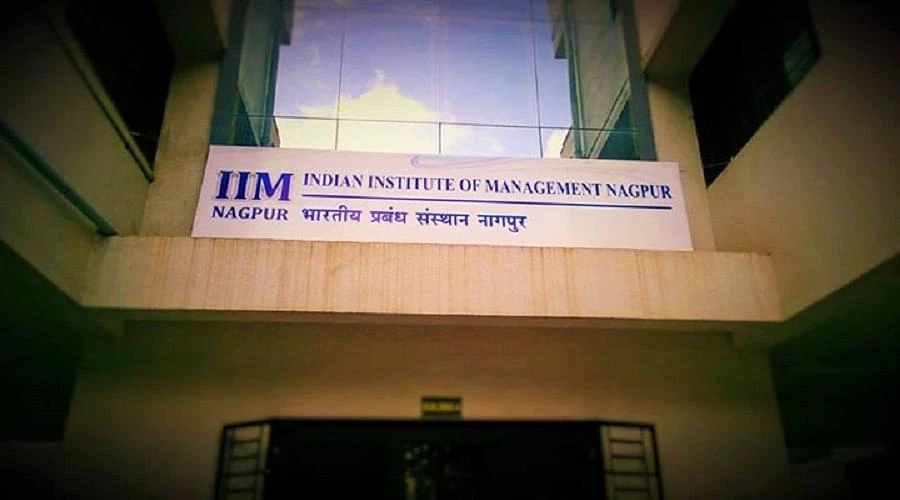

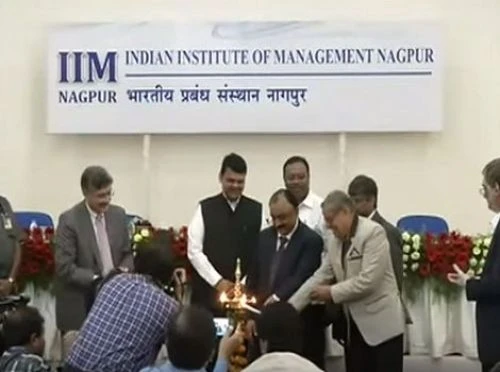

In this preview: 5 photos · 0 videos
While the official qualifying percentile for IIM Nagpur is 94, the actual cutoff for securing admission as a General Engineer Male (GEM) is typically much higher. Due to intense competition, a candidate usually needs a CAT percentile of 97-98 or above to convert the call successfully.
The ROI for IIM Nagpur's PGP program is considered moderate. With total program fees of approximately ₹21 Lakhs and an average annual salary of around ₹18 Lakhs, the ROI is lower compared to older, more established IIMs like IIM Calcutta or FMS Delhi. However, it is generally viewed as better than many private Tier-2 business schools.
Yes, the hostels at IIM Nagpur's new MIHAN campus provide single occupancy rooms for all students enrolled in the Post Graduate Programme (PGP). This ensures privacy and a dedicated living space for each student.
The mess food at IIM Nagpur is managed by a student committee and is generally rated around 3.5 out of 5. It offers both vegetarian and non-vegetarian options, with meals served four times a day to cater to the students' schedules.
The choice depends on your career focus. IIM Nagpur offers the prestigious "IIM Brand" and superior infrastructure. IMT Ghaziabad, however, has a stronger legacy and a more robust alumni network, particularly in Marketing. For careers in Finance or Consulting, IIM Nagpur is noted to be catching up rapidly with its peers.
About IIM Nagpur.
Colleges cannot rewrite published reviews. We remove spam and abuse.
Ask the communityWhat should future students know?
Tell us which course you're considering. We'll help you work out the next step.
Get instant Partner access after mobile verification. Your public edits are reviewed before they go live.
Claim this college
 Auditorium
 Cafeteria
 Campus Wi-Fi
 Computer Labs
 Hostel
 Medical
 Science Labs
 Sports Complex
 Study Library