
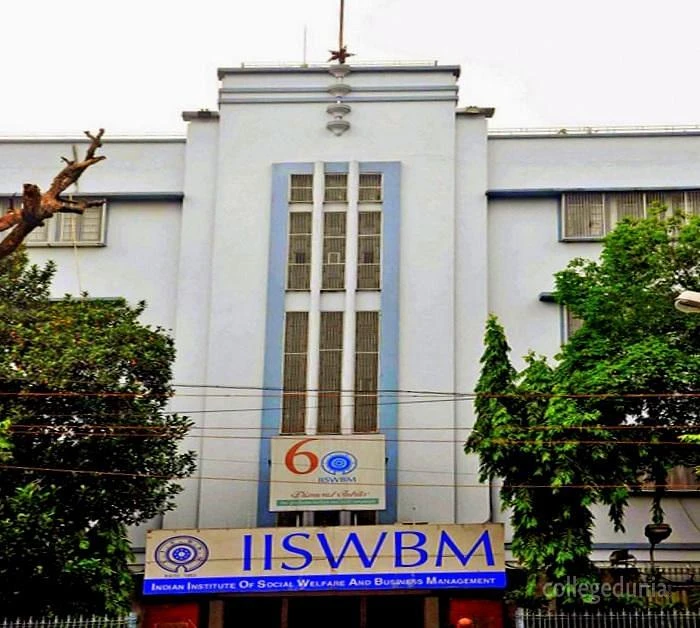

IISWBM’s latest ranking material that can be verified here is for 2025, and the numbers differ by publisher and comparison group. Outlook’s original public-school table places IISWBM Kolkata at 22nd among 25 listed public business schools. IISWBM’s own 2025 recognition poster instead says 21st among all-India public schools. Read the Outlook table as the primary list for that survey and treat the institute poster as a conflicting summary, not a second independent rank.
What the 2025 lists say
The Outlook discrepancy is material: the ranking article lists “22” for IISWBM and describes a 25-school public-institution set, while the institute’s poster states “21st.” The safer comparison is the source’s own table. Do not average or combine these positions. Rankings from different publishers use different populations and criteria, so a rank number is meaningful only with its publisher, year and category attached.
How to use the results
For a quick comparison with other public business schools in the same Outlook-ICARE table, use rank 22 and score 69.29 together; the article lists faculty-student ratio, research, employability, faculty quality and inclusiveness/diversity as weighted dimensions. A rank is a relative position within that survey, not a measure of admission probability, programme-level teaching quality or an expected salary. The institute’s reported The Week and Business Today figures add separate category views, but the poster alone does not give enough methodology or candidate-school coverage to normalize them against Outlook.
Outlook’s table labels the six published figures as faculty-student ratio (25% weight), research (20%), employability (25%), faculty quality (20%), inclusiveness and diversity (10%), and overall score. For IISWBM, the same row shows 99.39, 34.42, 84.67, 58.37 and 47.15 on those five dimensions, followed by an overall score of 69.29. These are publisher scores, not percentages of students or pass rates. The high faculty-student-ratio score and lower research score should be read as separate dimensions in that survey, not as a complete assessment of classroom experience or research output.
This distinction also helps explain why an institute can occupy different positions across tables. Outlook’s public-school list compares 25 selected institutions and gives IISWBM rank 22 in that set. The Week’s reported all-India and government-school positions use their own surveyed population; Business Today’s all-India and government-school positions likewise belong to that publisher’s edition. A place such as “5th in Eastern zone” is a regional position, while “48th all India” is national. Neither should be placed in a single sorted list with a public-school category position unless the comparison set and edition are made explicit.
The score row is useful when comparing two schools only if the reader is consulting the same Outlook edition and the same public-school table. It lets applicants see which scored dimensions differ, but it does not identify how an individual MBA programme performed, how the school will rank in the next edition, or whether a student will secure a particular job. The source provides scores and weights, not a causal explanation for IISWBM’s component scores. Avoid treating a component score as proof of a specific strength or weakness without the underlying data and methodology.
A practical comparison checklist is: (1) match the publisher and edition; (2) match the category, such as public schools or government schools; (3) distinguish national from regional rank; (4) keep rank separate from a score or rating; and (5) check whether the list is a ranking, a rating band, or only a participation statement. On this basis, Outlook’s rank 22 is the cleanest like-for-like 2025 public-school reference available in this source set. The institute poster’s rank 21 remains worth mentioning because it is public-facing, but it should not replace the publisher’s own table.
If you are choosing between IISWBM and another Kolkata institution, compare the same publisher’s row for both schools and then use programme-level evidence such as current curriculum, admission rules, fees and placement reports. A broad B-school rank cannot establish how the MBA (Day), MBA-HRM or MBA-Public Systems differs for your goals. Ask the institute for the full methodology or the publisher’s source table when a poster gives only selected positions. For the next cycle, check whether the institute has linked a new edition and whether the ranking publisher includes IISWBM in its full result; do not assume that a 2025 result carries forward into 2026 or 2027.
NIRF status and freshness
Do not describe IISWBM as NIRF-ranked based on its 2026 submission. The official PDF is titled “Submitted Institute Data for NIRF’2026’” and reports institution-submitted management data; the institute’s 2025 poster explicitly says “NIRF - Participated but not ranked.” Check the NIRF result list and IISWBM’s ranking page again before relying on a newer cycle. The institute’s dedicated ranking page currently links to its 2025 material, while the 2026 NIRF file is a submission, not evidence that a 2026 rank has been awarded.