Loading Admission Guardian content
Loading Admission Guardian content

Provisional score based on available data. It may change as more information is verified.
Selected ranking categories, with the recorded year beside each result. Open all records for the complete history.
2 published records · Lower numeric ranks are stronger
Find a program, read its fee details and explore the admission requirements.
Summary of the programs shown below. First-year fee. Check the note beside each amount for inclusions and exclusions.
| Course | Stream | Fees |
|---|---|---|
| Bachelor of Computer Applications [BCA] | Computer Applications | 55000 |
| Bachelor of Science [B.Sc] {Hons.} | Science | 55000 |
| Bachelor of Physiotherapy [BPT] | Medical | 70000 |
| Master of Science [M.Sc] | Science | 75000 |
| Master of Physiotherapy [MPT] | Medical | 85000 |
Specializations
Eligibility: 10+2 with 50%
Specializations
Eligibility: 10+2 with 50%
Eligibility: 10+2 with 45%
Specializations
Eligibility: Graduation with 60%
Specializations
Eligibility: B.P.T.
 Albert David
 Amazon
 Aptara
 Axis Bank
 Big Bazaar
 Britannia Industries
 Cipla Limited
 CNN IBN
 Coca-Cola
 Dainik Bhaskar
 Discovery Channel
 DNA India
 Doordarshan
 Global Nest
 HCL Technologies
 IBN7
IBN7 India News
 India Today Group
 Jabong.com
 Kotak Mahindra Bank
 Lenskart
 NDTV India
 Nestle India
 News 24
 News Nation
 Oye 104.8
 Patanjali
 Procter & Gamble
 PTC News
 Sadhna News
 Safe Express
 Six Red Marbles
 Sony Entertainment Television
 Tech Mahindra
 Titan Biotech
 Vodafone
 Wipro
Wipro Zomato
 Zydus Cadila Ltd.
If you're looking at private colleges in Ghaziabad for a professional degree, the Institute of Applied Medicines and Research (IAMR) is a name that comes up consistently. It's not a sprawling university campus, and it won't top any national ranking charts. But for specific programs—especially Physiotherapy and the Life Sciences—it has built a solid, if somewhat strict, reputation over two decades. The recent opening of the Namo Bharat Rapid Rail station practically at its gate has transformed its accessibility, pulling it firmly into the daily commute zone for students from Delhi and Meerut. Think of IAMR less as a typical 'college experience' and more as a focused training institute with a disciplined environment that appeals to a certain kind of student, and parent.
IAMR operates as a group of institutions, which means your academic experience is largely dictated by which university your program falls under. That's a crucial detail. If you're in BBA, BCA, B.Sc, Law, or B.Ed, you're following the Chaudhary Charan Singh University (CCS) curriculum and calendar. MBA and MCA students are under AKTU's umbrella. And the BPT program is governed by the medical university, ABVMU. This split affects everything from exam patterns to syllabus updates.
The faculty strength is around 100, and the standout departments are consistently noted to be Life Sciences and Physiotherapy, where a high ratio of PhD holders is reported. Students in these streams often mention accessible and knowledgeable professors. The academic calendar is the standard North Indian university schedule: odd semesters from August to December, even from January to May. Grading varies—AKTU uses a 10-point CGPA, while CCS often sticks to the percentage system.
Program intake tells a story about the college's focus. BPT has a sizable batch of 120, and the B.Sc programs have smaller, more focused intakes of 30-60. In contrast, BBA and BCA have large intakes of 180 each, which aligns with the more volume-driven approach to management and IT education. You can find the full list of programs and eligibility on the official IAMR group website.
This is where you need to read between the lines of the brochure. The college's official placement claim is 95-97%. Student reviews across platforms like CollegeDunia and Shiksha suggest the realistic figure for on-campus, core-role placements is closer to 60-70%. The rest? Many pursue higher studies or find their own opportunities.
Packages follow a predictable hierarchy. The highest package figures you'll see—like 24 LPA for BBA/BCA—are treated as outliers even by student reviewers. They're not the norm. For MBA, the highest reported range is 10-15 LPA, with an average between 4.2 and 5.4 LPA. For undergraduate programs like BBA, BCA, and B.Sc, the average settles in the 2.5 to 3.5 LPA range. That's a decent starting point for a private college in this tier, but don't expect tech-campus salaries for a BCA degree here.
Recruiters are a mix of service-based IT, banking, and pharma. Names like Wipro, HCL, Tech Mahindra, Axis Bank, ICICI Bank, Deloitte, and EY show up for management and IT roles. For the science and physio students, Zydus Cadila, Mankind Pharma, and Apollo Hospitals are key recruiters. The mandatory 6-month internship for BPT students and those in MBA is a plus, with stipends ranging from ₹5,000 to ₹15,000 monthly.
The consensus from alumni is clear: the placement cell is active, but its reach has limits. For BCA students especially, there's a common note that the CCSU syllabus can feel outdated, and to land better tech roles, you'll need to build coding skills independently. The cell tends to bring in a lot of sales and marketing roles.
For a private institution in the NCR, IAMR's fee structure is in the mid-range, not exorbitant. Undergraduate programs start at around ₹60,000 per year for B.Sc (Hons) and go up to ₹85,000 for BPT. BBA and BCA sit in the ₹70,000-75,000 bracket. The two-year MBA total fee is between ₹1.33 and ₹1.9 lakhs.
The major add-on is hostel and mess, which can significantly increase your annual cost. A non-AC hostel seat with mess is around ₹80,000 per year, and AC options cross ₹1 lakh. Remember to factor in one-time costs like a uniform fee (₹5,000-7,000) and a refundable security deposit.
Financial aid comes in the form of merit-based scholarships for students who scored over 80% in their 10+2, and the standard UP State Government scholarships for SC/ST/OBC and EWS categories. It's not a huge program, but it's there.
Admissions are a combination of entrance exam scores and merit. For most undergraduate programs (BBA, BCA, B.Sc), CUET-UG scores are now the primary gateway. For BPT, you need to appear for the CPET (Common Physiotherapy Entrance Test). Law aspirants need CLAT scores, and B.Ed requires the UP B.Ed JEE.
At the postgraduate level, MBA admissions consider CAT, MAT, XAT, or CMAT scores, followed by a personal interview. M.Sc and LLM admissions typically rely on CUET-PG scores and academic merit.
The application fee is a flat ₹1,000. And like most private colleges, there's a management quota—estimated at 15-20% of seats—for direct admission based on 10+2 or graduation marks. Cutoffs aren't published in the classic DU sense; selection is based on the entrance exam percentile and your performance in the qualifying board exams.
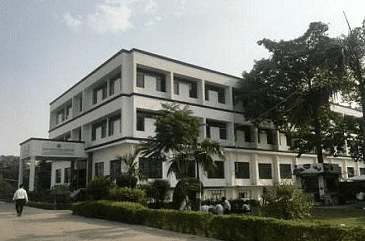
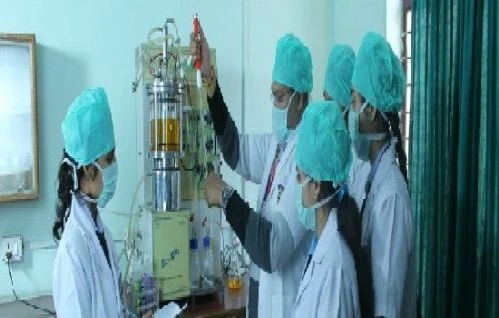
Let's be direct: the campus is compact, estimated at 2-5 acres. It's an urban campus, not a residential university town. Infrastructure gets mixed reviews. The labs for Life Sciences and Physiotherapy are well-regarded and functional—the Anatomy and Microbiology labs are specifically mentioned. The in-house Physiotherapy OPD is a major asset, giving BPT students real clinical exposure from early on. The computer labs have about 150 systems.
But. Some furniture is old, and maintenance of common areas like washrooms is a recurring gripe. The library has a collection of 10,000+ books and digital access.
Hostel life is defined by discipline. Separate blocks for boys and girls house about 300 students. Reviews rate it around 3.5 out of 5. The food is strictly vegetarian, and the canteen is often cited for limited variety and rising prices. Sports facilities exist for cricket, volleyball, basketball, and table tennis.
The biggest upgrade in recent years is connectivity. The Duhai Namo Bharat Station is within walking distance, and college buses cover routes in Delhi, Ghaziabad, Modinagar, and Meerut. This makes IAMR feasible for day scholars in a way it wasn't a few years ago.
Synthesizing the chatter from CollegeDunia, Shiksha, and Quora paints a consistent picture. The positives are strong but specific. Faculty in the science and physio departments get high praise for being qualified and supportive. The clinical exposure for BPT students through the OPD and hospital tie-ups is considered a top-tier advantage for a private college. Parents, in particular, appreciate the strict, safe environment.
And that strictness is the double-edged sword. The college enforces a formal uniform policy and a strict 75% attendance rule. To many students, it feels more like a school than a college. If you're looking for a liberal campus life with a vibrant social scene, this isn't it.
The placement reality check is the other major theme. As one reviewer on Quora put it: "If you want a degree with solid subject knowledge in Biotech or Physiotherapy, this is a great choice. If you want a 'cool' campus life with no restrictions, look elsewhere." Another on CollegeDunia noted, "The placement cell is active, but they mostly bring in sales/marketing roles even for BCA students."
IAMR is a college of clear strengths and equally clear compromises. It's worth serious consideration if you are focused on Physiotherapy (BPT/MPT) or the Life Sciences (Biotech/Microbiology). For these streams, the qualified faculty, dedicated labs, and crucial clinical/practical exposure offer solid value for the fee. The disciplined environment might even be a plus for focused study.
For BBA, BCA, or Law, the calculus changes. You're getting an affordable, recognized degree from a UGC-affiliated university with decent average placements for the region. But you are also signing up for a strict, somewhat dated campus atmosphere and a curriculum that may not be at the cutting edge. Success here, especially in IT, will require significant self-driven skill development outside the syllabus.
Ultimately, IAMR is a pragmatic choice. It delivers reliable professional training in its core fields without frills. Visit if you can, talk to current students in your chosen program, and weigh the discipline against the career pathway you want. For the right student, it's a perfectly sensible launchpad.



In this preview: 5 photos · 0 videos
Yes, the Institute of Applied Medicines and Research (IAMR) is considered one of the strongest private colleges for Physiotherapy in the Delhi NCR region. This reputation is bolstered by its dedicated OPD and strong clinical tie-ups, which provide essential practical experience for BPT students.
The closest rapid rail station to IAMR is the Duhai Namo Bharat station. For the Delhi Metro, the nearest station is Shaheed Sthal (New Bus Adda), which provides connectivity to the broader metro network.
Yes, the Institute of Applied Medicines and Research (IAMR) requires all students across its courses to wear a formal uniform. Wearing the uniform is mandatory on campus.
Yes, degrees from IAMR are valid for government job applications. The institute's degrees are awarded by CCS University (CCSU) or AKTU (Dr. A.P.J. Abdul Kalam Technical University), both of which are UGC-recognized state universities.
Placements for the BCA program at IAMR are generally considered average, with typical package offers ranging around 3-4 LPA. It is noted that the CCSU syllabus can be outdated, so students are actively encouraged to develop extra coding skills independently to enhance their employability.
Share what future students should know about IAMR.
Student voices are not rewritten by colleges. We remove spam and abuse.
Wider admission question? Community PulseWhat should future students know?
Tell us which course you're considering. We'll help you work out the next step.
Get instant Partner access after mobile verification. Your public edits are reviewed before they go live.
Claim this college

 Cafeteria
 Campus Security
 Computer Labs
 Hostel
 Medical
 Science Labs
 Study Library