
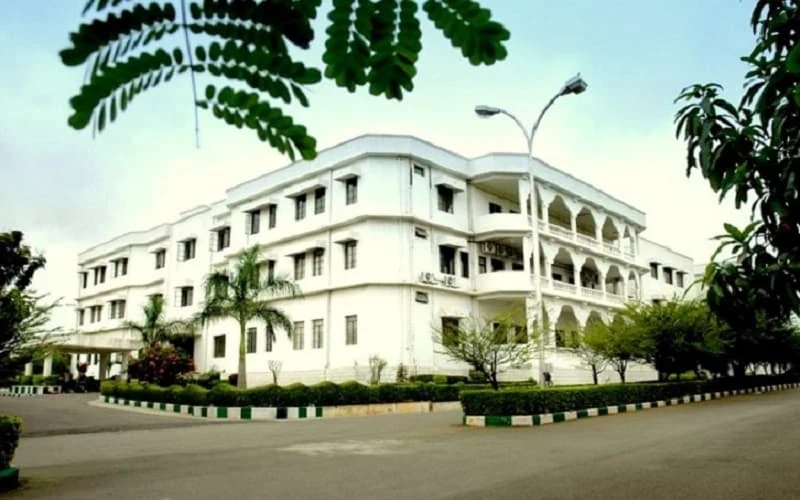

Short Answer For source terms, see the The official admissions page.
IIIT Hyderabad handles undergraduate admissions through its own route-specific application portals. The official admissions page lists JEE (Main), UGEE, LEEE, SPEC, Olympiad, DASA and Board channels, and warns that outside companies or portals do not represent the institute. The most recent detailed notices available in the captured research are for the 2026-27 intake. Their application dates have passed; they explain how the routes differ but do not set 2027-28 rules. At the time of this review, no 2027-28 schedule or complete eligibility notice was established. Confirm the new cycle directly on IIIT-H’s admission portal before acting.
The first decision is the degree and applicant profile. JEE (Main) was the route to the four-year B.Tech in Computer Science and Engineering (CSE) or Electronics and Communication Engineering (ECE). UGEE was for five-year B.Tech plus MS by Research dual degrees. LEEE was a lateral-entry option for students already completing specified engineering semesters. SPEC, Olympiad, DASA and Boards each used separate eligibility conditions. They are not interchangeable routes, and an applicant should check which programmes each route actually allows.
Route Comparison
In 2026, the routes used different selection evidence. The JEE route ranked applicants using JEE Main percentiles, with subject percentiles as tie-breakers. UGEE used two test sections before interview. Board and Olympiad applicants were shortlisted through defined academic or distinction criteria and then interviewed. LEEE began with prior engineering study, while DASA used SAT scores. Do not substitute a JEE cutoff for UGEE, assume an Olympiad award is automatically accepted, or infer that a general DASA process controls IIIT-H’s separate application.
Jee Main Cse Or Ece For source terms, see the 2026 JEE Main notice.
IIIT-H’s 2026 JEE notice listed four-year B.Tech CSE and ECE. It required applicants to have appeared for JEE Main 2026, report their percentile and application details, and obtain at least 60% aggregate in Mathematics, Physics and Chemistry in Class 12 or equivalent by July 2026. For candidates taking both sessions, the better total percentile was to be considered. Ties in total percentile were resolved first by Mathematics, then Physics, then Chemistry percentile from the corresponding examination. Class 12 marks did not affect JEE-mode ranking or seat allocation, even though the subject aggregate remained an eligibility requirement.
That means board eligibility and competitive ranking answer different questions: meeting the subject threshold does not determine the JEE rank, while a stronger board aggregate does not improve that rank under the published 2026 rule. Applicants also had to order programme preferences. The notice advised listing only programmes they would genuinely accept and said there was no sliding after the last allotment round. Check the next notice for the accepted JEE year, subject threshold, any seat-pool rules, preference-edit deadline and allotment/cancellation terms. IIIT-H’s FAQ says it does not participate in CSAB counselling; its JEE admissions use an institute portal.
Ugee And The Dual Degree Choice For source terms, see the 2026 UGEE notice.
The 2026 UGEE notice describes a five-year B.Tech plus MS by Research. The MS requires a research thesis. UGEE had a computer-based examination with SUPR, a 60-minute subject-proficiency section, and REAP, a 120-minute research-aptitude section. Shortlisting used SUPR performance and then REAP ranking; shortlisted applicants were interviewed, and the interview committee decided the final offer. This is a multi-stage process, so preparation should address both subject knowledge and research aptitude rather than assuming a single aggregate cutoff.
The listed tracks paired computing with areas including Computer Science and Engineering, Electronics and Communication Engineering, Computational Linguistics, Computational Natural Sciences, Computing and Human Sciences and Geospatial Technology. The degree combinations vary by track. For 2026, the notice required Class 12/equivalent with Mathematics, Physics and Chemistry and specified a passing-year window ending in June 2026. That window is historical and must not be reused for a later intake. The institute’s FAQ says students cannot exit the dual-degree programme after earning only the B.Tech. Consider whether the research area and thesis are worth the additional year for your goals before ranking a dual-degree preference.
Special Routes And Their Limits For source terms, see the 2026 LEEE notice.
LEEE is for students already in engineering. In 2026, CSD applicants needed four semesters in listed computing branches and ECD applicants needed four semesters in listed electronics branches by July 2026. The test included aptitude and subject sections, followed by an interview for shortlisted candidates. The exact branch lists matter; an adjacent field or a similar course title is not automatically accepted.
SPEC was not a general hardship quota. Its 2026 notice described a single-degree channel for students currently in the fourth semester of a six-year integrated 12th-plus-B.Tech programme after Class 10, or students who had studied at a Jawahar Navodaya Vidyalaya from Classes 6 to 12. Applicants needed Mathematics, Physics and Chemistry and sat an institute subject test followed by interview. The notice excluded droppers and applicants using UGEE. Check the live notice to see whether these conditions remain applicable.
The 2026 Olympiad route used specific achievements: selection for training toward listed international Olympiads, selection to represent India, or—in a defined CSD category—an Indian National Olympiad in Informatics medal. The qualifying Olympiad varied by degree programme. A school competition or unlisted contest should not be assumed to qualify. The official route table, not the general label “Olympiad”, defines the accepted achievement.
The 2026 Boards route was limited to CND and CHD dual degrees. It required at least 90% in Mathematics, then a 90% aggregate in Mathematics, Physics and Chemistry for CND or 85% in Mathematics and a specified humanities/social-science subject for CHD. The notice excluded business/commerce Mathematics, required standard Mathematics, excluded English Core/Compulsory from the CHD aggregate and accepted English Elective. Only Class 12 marks were counted and a single board had to issue the marksheet. These conditions are narrow; calculate the required aggregate using the route’s listed subjects, not the overall board percentage.
DASA used a separate IIIT-H process in 2026-27. Its notice covered applicants completing Classes XI and XII with Mathematics, Physics and Chemistry outside India, or foreign-passport holders who completed those classes anywhere. SAT was mandatory (essay not required), with a stated minimum of 1070/1600 and direct College Board score reporting by the deadline. Total SAT score ranked applicants; Evidence-Based Reading and Writing, then Mathematics, broke ties. This is the institute’s route-specific process, so confirm the eligible applicant category and accepted score timing on its own page.
Applications Preferences And Offers For source terms, see the IIIT-H admissions FAQ.
Start from the official IIIT Hyderabad admissions page and follow its link to the particular route. The institute warns that unauthorised companies and online portals do not represent it. The FAQ says candidates may apply through multiple modes but can accept, pay for and hold only one seat at a time; accepting an offer in another mode requires releasing the earlier accepted seat first. Read the current cancellation and refund terms before paying, because later seat offers do not necessarily reset the original cancellation schedule.
Keep a route checklist: academic cycle; permitted programmes; qualifying subjects and marks; passing-year or prior-semester requirement; exam and score-reporting rule; application and interview dates; preference changes; acceptance payment; and withdrawal/refund dates. Save the official notice and application confirmation. The institute page lists [email protected] and phone numbers +91 (40) 6653 1250 and +91 6653 1337 for UG admission queries. Use those contacts for case-specific eligibility or payment questions rather than relying on third-party summaries.
Fees And Financial Assistance For source terms, see the official 2026-27 JEE notice.
The detailed domestic UG route notices reviewed list tuition of ₹5,00,000 for academic year 2026-27. Hostel and mess were extra; 2026 notices gave approximate monthly amounts of ₹6,000 and ₹5,000 respectively, paid semester-wise. The DASA notice separately listed USD 15,000 tuition for 2026-27 and its own applicant scope and payment/refund terms. These are published figures for that intake, not a quote for 2027-28. The general admissions page also showed a 2025-26 fee heading, so applicants should use the live route-specific fee notice rather than a cached summary.
IIIT-H describes financial assistance in the form of a repayable loan. That should not be budgeted as an automatic scholarship or waiver. Ask the institute about current eligibility, amount, repayment conditions and application process. The reviewed sources do not establish 2027-28 tuition, hostel or mess amounts, application fees, or assistance terms; those values remain unknown until the next official schedule is published.
What To Verify For 2027 28
The captured detailed notices are for the completed 2026-27 admission cycle. Before applying, verify that a fresh official notice has been issued and check its academic-year label, opening/closing dates, exam year, accepted programmes, eligibility and passing-year window, fees, preference and seat-holding rules, and cancellation schedule. Use prior-cycle information to understand the route structure, not as a forecast of future dates or a promise that every channel will reopen. Choose a four-year degree, research dual degree or lateral-entry programme based on the course structure and your own eligibility; then make only preferences you are willing to accept.