
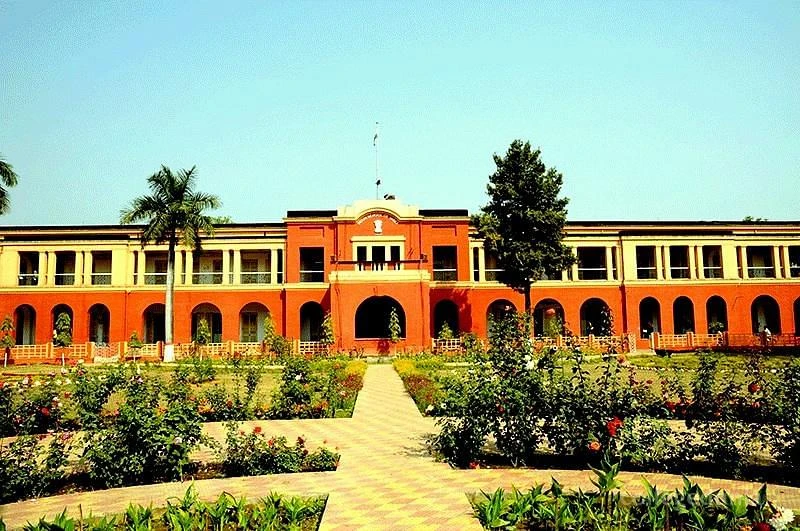

IIT (ISM) Dhanbad has more than one undergraduate admission route. The standard route for its engineering and science degree programmes is JEE (Advanced) followed by JoSAA seat allocation. The institute’s four-year integrated B.Sc.-B.Ed. programme, launched for 2026-27, instead used NCET 2026 and a separate institute application and verification process. Applicants should identify the exact programme before using an exam result, counselling schedule or eligibility table. A JEE score alone is not an offer, and the 2026 dates below are historical cycle facts, not a schedule for a later intake. See the 2026 undergraduate admissions page, the undergraduate manual, and the B.Sc.-B.Ed. admissions page.
Route for JEE (Advanced) programmes
IIT (ISM)’s undergraduate manual says admission to its UG programmes is usually made in July through JEE (Advanced), and directs candidates to read the applicable JEE (Advanced) information brochure together with the applicable JoSAA business rules. In practice, this means a candidate first meets the examination’s own eligibility and rank requirements, then participates in JoSAA choice filling and seat allocation. A candidate must keep the examination, rank list, programme choice and seat category aligned: qualifying the examination and receiving a seat in a preferred branch are separate outcomes.
The institute’s 2026 programme list included four-year B.Tech. courses and five-year integrated or dual-degree options. The 2026 admissions page listed 15 B.Tech. disciplines, two five-year integrated BS-MS programmes and a five-year Mining Engineering plus MBA in Logistics and Supply Chain Management programme jointly offered with IIM Mumbai. The B.Tech plus MBA option had an intake of 60 for its stated programme. These routes should not be treated as interchangeable merely because the seat-allocation process is common. Check the live JoSAA programme list and the exact year’s institute admission notice before ordering choices; a programme appearing in an older list does not prove that it is offered in a later cycle.
For the 2026 JEE (Advanced) cohort, IIT (ISM)’s published timeline asked candidates to complete online semester-fee payment and registration from 20 to 27 July 2026 and to report physically at Dhanbad on 24 July. Those events have passed. They are useful only as a dated example of the post-allotment stage, not dates to reuse for a future batch. The admissions page linked separate JoSAA online reporting, physical reporting, document-verification instructions and a reporting schedule. Applicants should follow the order and deadlines on the current official page, retain payment and allotment confirmations, and contact the Office of JEEA if a notice conflicts with a counselling portal entry.
A separate route: integrated B.Sc.-B.Ed.
IIT (ISM) began a four-year integrated B.Sc.-B.Ed. programme for academic year 2026-27. The institute’s page describes three combinations: Physics, Chemistry or Mathematics with a B.Ed. major and secondary-stage specialisation. The first cohort was selected using NCET 2026 performance and the institute’s own application details, followed by physical verification of original documents. This is not a JEE (Advanced) route. The published page also stated that NCET 2026 online registration had closed, so the 2026 process should be read as a completed cycle.
For that 2026-27 intake, applicants needed to have passed 10+2 and meet category-specific marks thresholds: 60% for Unreserved and EWS, 55% for OBC-NCL, and 50% for SC, ST and PwD candidates. The page additionally listed birth-date thresholds and a subject condition for each major: Physics applicants needed Physics and Mathematics in 10+2 and Physics as an NCET domain subject; Chemistry applicants needed Chemistry and Mathematics plus Chemistry in NCET; Mathematics applicants needed Physics and Mathematics plus Mathematics or Applied Mathematics in NCET. The seat matrix listed 15 seats in Physics, 15 in Chemistry and 20 in Mathematics, with a 5% horizontal reservation for PwD candidates with at least 40% benchmark disability. These are specific 2026-27 conditions and cannot be carried into the next intake without a new notice.
What to verify before applying
Start with the institute page for the programme and cycle, then check the responsible exam authority’s eligibility rules and the counselling or institute application instructions. Confirm the board-subject combination, category certificate format, medical-fitness requirements where listed, document-verification method, fee amount, reporting location and deadline. The 2026 B.Sc.-B.Ed. page provided category and medical fitness certificate formats; the JEEA page linked physical-reporting and document-verification notices. Use those checklists rather than a third-party summary, and do not assume a document submitted in one portal replaces a document required at institute reporting.
After an allotment, read the current offer and reporting instructions carefully. JoSAA seat acceptance, institute semester registration, fee balance and physical verification may be separate actions. Preserve the exact allotment round, programme name and category in your records. The 2026 institute page also stated a full tuition-waiver scheme for the top ten admitted candidates with JEE (Advanced) Common Rank List ranks up to 1,000, subject to eligibility and stated continuation conditions. That award is not a general fee promise and should be checked against the applicable annual fee notice. For questions about B.Tech admission, IIT (ISM) publishes the Office of JEEA email addresses and weekday contact hours on its admissions page; use that office for route-specific clarification rather than inferring an exception from another programme’s rules.