Loading Admission Guardian content
Loading Admission Guardian content

1 programme · 1 institution. Check the admission year and requirements.
1 programme · 1 institution. Check the admission year and requirements.
IIT (ISM) Dhanbad is a public technical institute in Dhanbad, Jharkhand, with programmes spanning engineering, science, earth-science disciplines and management-linked study. Its undergraduate catalogue includes four-year B.Tech. courses, five-year integrated or dual-degree options and a separate integrated B.Sc.-B.Ed. route introduced for 2026-27. The right admission path depends on the exact programme: most engineering and science UG seats are routed through JEE (Advanced) and JoSAA, while the first B.Sc.-B.Ed. cohort used NCET 2026 and an institute process. This distinction affects eligibility, dates, documents and counselling. Start by confirming the course and academic year on the official admissions page, then consult the applicable exam authority and programme notice.
The 2026 admissions listing described 18 undergraduate programmes, including 15 B.Tech. disciplines, two five-year integrated BS-MS programmes and a five-year Mining Engineering plus MBA in Logistics and Supply Chain Management option jointly offered with IIM Mumbai. The integrated MBA route is a specific programme, not a general label for all management study at the institute. The B.Sc.-B.Ed. programme is also distinct: it combines a science major with teacher education and was introduced for academic year 2026-27. Always check whether a programme appears in the current cycle rather than assuming an older list remains open.
The undergraduate manual describes a structured curriculum with institute core, department-specific courses, engineering-science courses, ability-enhancement components and other credit categories. It also provides for some double-major, minor and honours possibilities subject to eligibility and applicable academic rules. These are options governed by the current curriculum, not automatic entitlements. A student comparing branches should examine the programme-specific course catalogue, prerequisites, labs and project opportunities rather than relying only on the institute’s name or broad discipline label.
For most UG engineering and science programmes, the manual says admission is usually through JEE (Advanced) under the applicable JoSAA business rules. Candidates must satisfy the current examination eligibility conditions, submit choices in JoSAA, receive an allotment and follow reporting and fee instructions. A qualifying examination rank does not by itself guarantee a particular branch. JoSAA rows also vary by year, round, seat category, quota and gender pool, so candidates should compare complete rows rather than a single unqualified cutoff.
IIT (ISM)’s published 2026 timeline asked JEE (Advanced) entrants to complete online semester-fee payment and registration from 20 to 27 July 2026 and to report physically on 24 July. These are historical 2026-27 dates and should not be reused as a future calendar. The institute’s page linked reporting schedules and document-verification instructions; current applicants should use the newest notice and keep payment, allotment and document confirmations. The separate B.Sc.-B.Ed. 2026-27 intake used NCET 2026 and institute application/document verification. Its page stated that NCET registration had closed. Do not apply JEE-based eligibility or dates to this programme.
For the 2026-27 B.Sc.-B.Ed. intake, the institute listed Physics (15), Chemistry (15) and Mathematics (20) seats, with a 5% horizontal PwD reservation. The source does not make the seat counts a guarantee for a later cycle. The published marks thresholds were 60% for Unreserved/EWS, 55% for OBC-NCL and 50% for SC/ST/PwD candidates, along with subject, NCET-domain and birth-date conditions. These are dated first-cohort rules, not an assertion about a future batch. Applicants should verify the next notice for updated criteria.
The institute’s 2026-27 fee schedule is a useful dated example, but it reports admission-time amounts rather than annual or complete programme costs. For the listed General, OBC-NCL and General-EWS/OCI/PIO category, the schedule shows ₹1,00,000 tuition, ₹41,400 other fees and ₹19,500 mess charges, with a ₹5,000 JoSAA charge, for ₹1,65,900 at admission. After the ₹30,000 seat-acceptance payment, the listed balance is ₹1,35,900. For specified SC/ST/PwD categories, tuition is listed as nil and total admission-time charges are ₹65,900, including a ₹15,000 seat-acceptance amount and ₹50,900 balance.
The same schedule gives lower-income group examples for General/OBC/EWS: below ₹1 lakh family income, the listed total is ₹65,900; at ₹1-5 lakh, tuition is ₹33,333 and the total is ₹97,733. These numbers are tied to the 2026-27 admission table and its categories. They do not establish the total cost over four or five years, and hostel room charges are not established by that table. Recheck the official fee notice for your entry year and ask the institute which charges recur each semester. Scholarships should be treated as conditional and not deducted from the amount payable until awarded.
IIT (ISM)’s placement report for 2024-25, dated 23 September 2025, records 1,687 registered students and 1,331 active participants in its headline. It reports 1,132 job offers including PPOs, 1,072 unique offers including accepted PPOs, and a headline average CTC of ₹17.53 lakh with median ₹13.38 lakh. A separate JEE Advanced-admitted undergraduate table reports 739 placements among 886 active students across B.Tech., double-major, B.Tech.-M.Tech. and integrated M.Tech. categories. That table’s overall mean and median are ₹20.77 lakh and ₹16 lakh. These figures apply to the report’s particular year and groups; offers are not students, CTC is not take-home pay, and the detailed report uses an active count of 1,335 in a table where the headline says 1,331. Use the report’s own denominator and category labels when comparing outcomes.
The Dean (Academics) page displays NIRF values of 15 for Engineering, 48 for Management and 35 for Overall, but the reviewed page did not show an edition beside them. Treat these as undated institutional display values, not verified 2025 ranks. Ranking position is one comparison signal and does not establish a programme’s curriculum, placement result or student experience. Check the publisher’s year-labelled result before quoting a current rank.
The official Hostel Affairs page gives hall-specific examples. It lists Amber at about 1,609 capacity and mentions badminton courts, basketball, Wi-Fi and canteens; Jasper at 1,200 capacity with 24-hour ambulance, electricity and water; and Diamond, built in 1926, with a gym. These figures are not a current vacancy count or a promise that every resident has the same amenities. Hostel allotment, room type, mess arrangements and charges should be verified through the current notice. The admission page links to shuttle services, but no readable route or schedule was available in the reviewed material.
For academic facilities, use the chosen department’s current information. The manual and course catalogue establish programme structures but do not prove the availability or access terms of every laboratory or field facility. Students who need accessible accommodation, medical support, dietary arrangements or specific transport should ask the relevant office before accepting an allotment.
IIT (ISM) lists institute and external financial-support schemes, including merit-cum-means assistance, tuition-fee waiver provisions, a Benevolent Fund and government or donor scholarships. The official scholarship pages describe an MCM family-income ceiling of ₹6 lakh per year alongside merit or continuing-student CGPA conditions. They also describe award portions for selected candidates, so satisfying the income condition is not itself an award. The Benevolent Fund page states a 50% tuition or ₹50,000 maximum basis with a ₹2 lakh income threshold. These terms should be rechecked against the current notice because a scholarship page’s tuition amount conflicts with the newer 2026-27 fee schedule. Do not budget an unconfirmed award as a guaranteed fee reduction.
Students should verify the exact scheme, eligible programme and fee component, accepted income documents, academic renewal rule, application deadline and whether awards can be combined. Government schemes may require a separate portal application in addition to institute paperwork. Save the notice and application receipt, and ask the scholarship office how an award affects the current payable balance. Published maximum benefits do not determine an individual award or disbursement date.
A practical comparison begins with the precise programme and route, not a general ranking or salary headline. Confirm the current programme list, exam eligibility, counselling rules, category documentation and reporting deadlines. Compare the fee basis and duration; separate admission-time charges from recurring costs and possible aid. For outcomes, use the exact programme/cohort row and distinguish offers from students placed. For campus life, verify the hall and service that would apply to you.
The official pages reviewed support a useful picture of IIT (ISM)’s 2026-27 routes, fees and facilities, and its 2024-25 placement reporting. They do not establish future admission dates, future fee totals, future cutoffs, universal placement chances or guaranteed scholarship awards. Where the ranking page omits its edition, or where the JoSAA result table could not be read during research, this overview keeps the evidence limitation explicit rather than filling it with a guessed number. Revisit the institute, exam authority and counselling websites for the cycle in which you intend to apply.
For an engineering applicant, confirm that the branch is in the live JoSAA choice list for the relevant year and note the exact course title. The institute’s manual describes JEE (Advanced) and JoSAA as the usual UG path, but the current brochure and seat-allocation rules govern eligibility, category documentation and allotment. A past opening or closing rank is a historical allocation outcome rather than a minimum eligibility rule. Keep your selected programme, category, gender pool and round together when using any rank table. If you qualify for more than one programme, compare the curriculum and degree duration before ordering choices; a five-year integrated course is a different commitment from a four-year B.Tech.
For the Mining Engineering and MBA dual degree, check the current programme notice for the partner arrangement, intake and academic structure. The 2026 listing described the programme as jointly offered with IIM Mumbai and showed an intake of 60 for that specific option. The listing alone does not answer how every year is delivered, the applicable tuition in later years, or what continuation conditions apply. Ask the responsible academic office for the current written scheme, and distinguish the programme from an independent postgraduate management degree.
For a B.Sc.-B.Ed. applicant, use the separate NCET and institute instructions. The first cohort’s 2026-27 page specified subject combinations, marks and age conditions. It also described original-document verification and medical fitness documentation. Because the process is new and cycle-bound, do not infer a future application deadline or eligibility threshold from the inaugural cohort. Check whether the next notice names the same teaching subjects, recognized NCET domain requirements, seat distribution and reservation arrangement. Keep copies of certificates in the exact formats requested.
Save a dated copy of the programme notice, examination information brochure, seat-allocation rules and fee schedule used for your decision. Note the version or publication date of each document and the date you checked it. Keep a list of unresolved questions such as hostel eligibility, fee balance, scholarship renewal and whether a reported placement statistic covers your specific programme. This is more reliable than relying on a saved search result, since pages and notices can be replaced without preserving their previous wording.
When asking the institute for clarification, state the programme, academic year, category and exact document or table row. For example, ask whether a category tuition exemption changes the fee balance in the current schedule, or whether a particular integrated course appears in the upcoming choice list. A precise question helps the office answer the individual case without implying that an answer for one programme applies to every student. For any financial aid query, attach the scheme name and relevant income or merit condition, but avoid sending sensitive documents outside the official process.
These checks do not replace the official admission notice. They help keep the decision traceable: the programme and route are explicit, the cost estimate uses the proper scope, and the outcome or ranking evidence is tied to its year. If a needed answer is not published, mark it unresolved and obtain written confirmation before treating it as a requirement or benefit.
Programme information: Official source · Source as of: 2026-10-28
Each route applies only to this named programme and the stated year.
JEE-Advanced: Joint Entrance Examination Advanced · 2026-27
Admission-route evidence: Official source · Source as of: 2026-10-28
1 recorded programme · 1 institution. Admission years and conditions apply to the named programme.
Selected ranking categories, with the recorded year beside each result. Open all records for the complete history.
44 published records · Lower numeric ranks are stronger
NIRF
B.Tech
#112021
IIRF
Engineering · public
#222022
THE
Overall
#6012024
Find a program, read its fee details and explore the admission requirements.
Summary of the programs shown below. First-year fee
Showing 5 courses
Specializations
Listed entrance exams
Eligibility: Graduation with 55% + IIT JAM
Specializations
Eligibility: Postgraduation
Specializations
Listed entrance exams
Eligibility: Graduation with 60% + GATE
Specializations
Listed entrance exams
Eligibility: Graduation with 60% + CAT
Specializations
Listed entrance exams
Eligibility: 10+2 with 75% + JEE
4 exams with cutoff data available - showing recent entries
 Accenture
 Adani group
 Aditya Birla Group
 Akash Institute
 Amadeus
 Amazon
 Axis Bank
 Bajaj Allianz
 Barclays Bank
 Bharat Electronics Limited
 Cairn
 Cognizant
 Cogoport
 Essar Group
 EXL Services
 Flipkart
 Futures First
 Goldman Sachs
 Google
 HCL
 Hexaware Technologies
 IBM
 ICICI Bank
 Jaguar
 KPMG
 L&T Infotech
 Legato
 MAQ Software
 Maruti Suzuki
 Mercedes Benz (India) Ltd.
 Microsoft
 Morgan Stanley
 Myntra
 NTPC Limited
 Nucleus Software
 ONGC
 Oracle
 Paytm
 PhonePe
 Publicis Sapient
 PWC
 Qualcomm India Pvt. Ltd.
 Razorpay
 Reliance Industries Limited [RIL]
 Reliance Jio
 Samsung
 Schneider Electric India Pvt. Ltd.
 Standard Chartered Bank
 Tata Motors
 Tata Steel
 TCS
 Texas Instrument
 Uber
 Vedanta
 Walmart
 Walt Disney
 Zomato
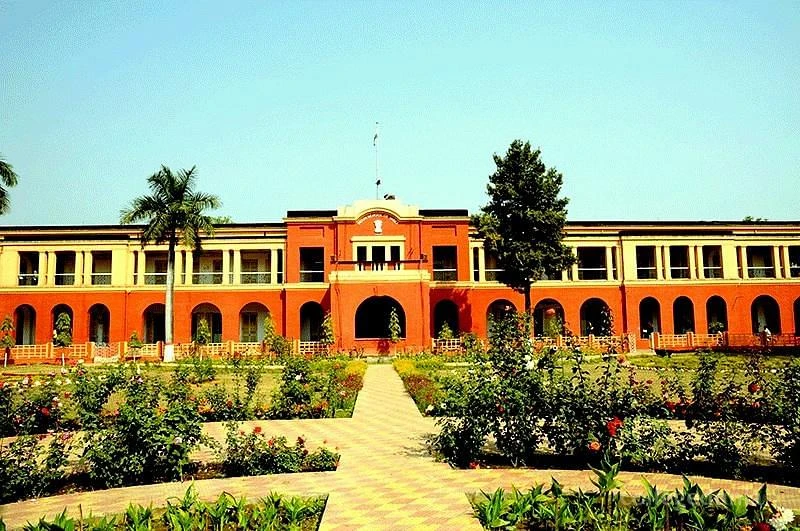
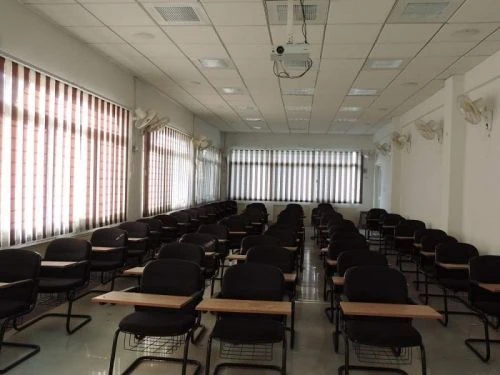
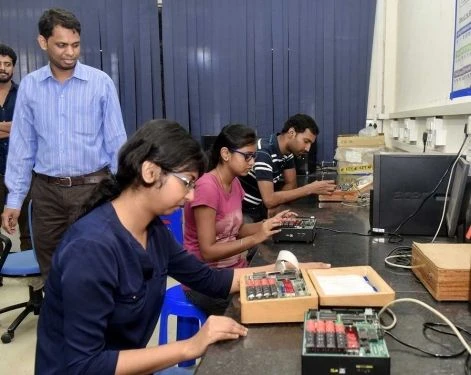
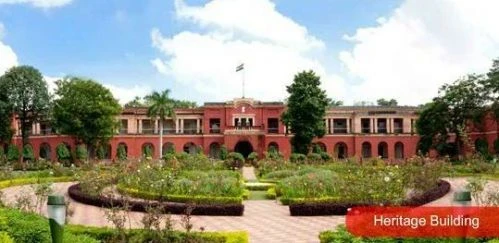
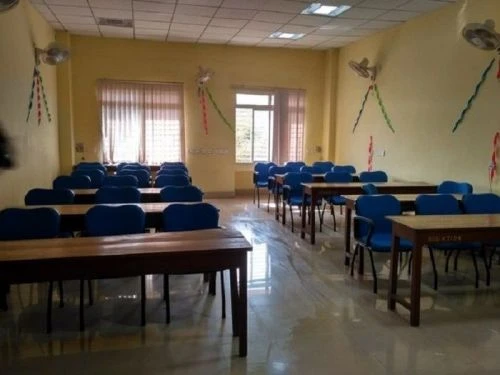
In this preview: 5 photos · 0 videos
Placements for Computer Science and Engineering (CSE) and Electronics and Communication Engineering (ECE) at IIT ISM Dhanbad are excellent, with average packages often exceeding ₹20 LPA. The institute's strong coding culture also enables many students from core branches to secure roles in IT and analytics.
Yes, IIT ISM Dhanbad is generally considered better and is ranked higher than newer, third-generation IITs. This preference is based on its established alumni network, strong placement history, and superior infrastructure.
The institute retains "ISM" in its official name, IIT (ISM) Dhanbad, to preserve its century-long legacy and unique identity in earth sciences and mining. This historical tag remains a key part of its brand and unique selling point.
The gender ratio at IIT ISM Dhanbad, historically skewed due to its traditional focus on mining engineering, has improved significantly. It now stands at approximately 20% female students, largely due to supernumerary seat policies.
Yes, branch change is allowed at IIT ISM Dhanbad after the first year, based on academic performance (CGPA). Securing a change to top branches typically requires a high CGPA, often 8.5 or above, though the rules for such transfers are becoming stricter across all IITs.
About IIT Dhanbad.
Colleges cannot rewrite published reviews. We remove spam and abuse.
Ask the communityWhat should future students know?
Tell us which course you're considering. We'll help you work out the next step.
Get instant Partner access after mobile verification. Your public edits are reviewed before they go live.
Claim this college
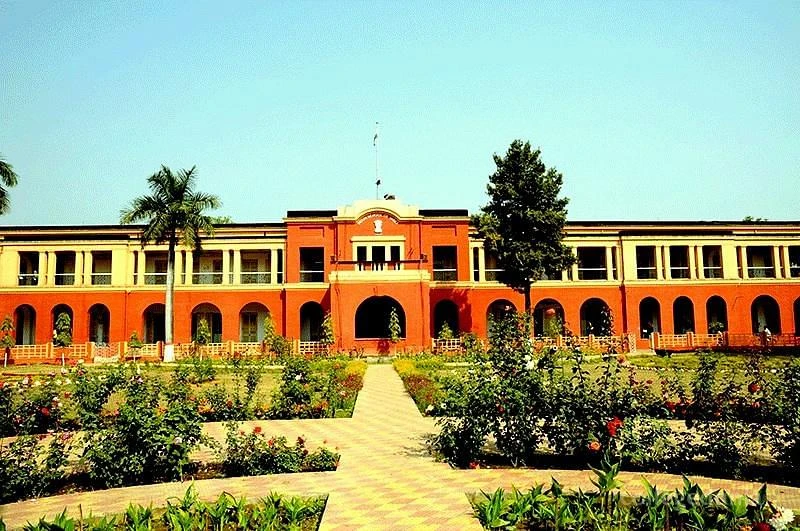
 Auditorium
 Cafeteria
 Campus Security
 Computer Labs
 Gym
 Hostel
 Medical
 Science Labs
 Sports Complex
 Study Library