

Start with the exact course and award
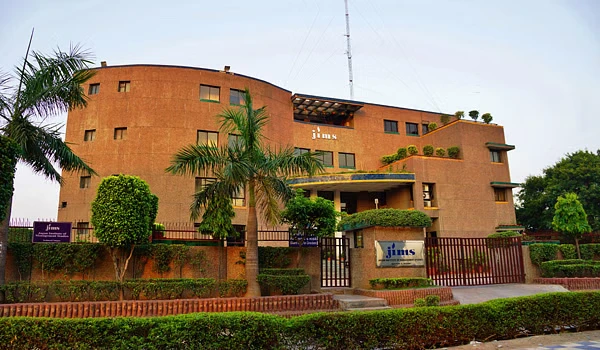
Jagannath Community College (JCC) is the name used by JaganNath Institute of Management Sciences (JIMS) for an AICTE-approved Skill Knowledge Provider. The institute describes programmes across management, information technology, journalism, hospitality, design and other areas. Its course menu also marks some courses as offered in collaboration with Guru Gobind Singh Indraprastha University (GGSIPU) and notes that partner providers operate at different locations in Delhi NCR and Haryana. Those arrangements are programme-specific. Before applying, write down the exact course title, teaching location, delivery partner and body that will issue the credential. The institute’s general description does not establish the award for every course. Confirm the four details with JCC for the course and campus you intend to choose. JIMS institute profile · JCC admissions page
This check matters if you are comparing a degree with a diploma or short-term skill programme. The admissions page lists several programme levels, while the site’s partner note applies to some offerings only. Do not assume that a course title, duration or JCC brand name alone identifies a university award.
Check the academic rule for your programme
JCC’s general Admission Procedure page states a minimum of 50% in Class 12, calculated from the best four subjects including English. Treat that as the published general rule, then confirm whether your chosen programme has an additional subject or board requirement. “Best of four” is not the same as an overall percentage across every subject, so ask which marksheet subjects JCC will count if your board uses a different combination. General eligibility and process
The dedicated BCA promotion for the 2026 UG batch gives a narrower example: it accepts Class 12 from a recognised board and says Mathematics or Computer Science is preferred. The wording marks those subjects as a preference, not a stated mandatory condition, and the page is explicitly for 2026. It should not be treated as a confirmed 2027–28 rule or applied to other JCC courses. BCA 2026 admission page
For another programme, check its own eligibility page and ask for written confirmation if the general 50% rule and course page appear different. Keep your Class 10 and 12 marksheets, board name, subjects and passing year ready when you contact admissions. That lets the college answer against your actual record instead of a broad course label.
Understand the selection steps before preparing
The general JCC procedure describes a written test followed by Group Discussion (GD) and Personal Interview (PI). It does not publish the written test syllabus, duration, score weight, date, delivery mode or a numeric closing score on the page captured here. Do not treat the written test as a named national entrance exam, and do not infer that an external CAT, CUET or other score can replace it. JCC selection process
The BCA page for the 2026 batch instead says admission is based on GD and PI and does not mention a written test. That difference is material: silence on the BCA page does not establish a written-test waiver, while the general procedure does not show whether its test applies identically to every course. Ask the admissions office which steps apply to your exact programme and campus. Request the test format and syllabus, whether it is online or in person, how GD and PI are scheduled, and whether any course has a separate interview or practical task. BCA 2026 selection note
The pages reviewed do not provide a programme-wise cutoff table, seat count or admission-round result. An internal selection test followed by GD/PI is a process description, not a published cutoff. Until JCC releases course-specific figures, use the published eligibility and process only; do not compare it with a national-exam closing rank.
Apply through a current course-specific form
The Admission Procedure page links to an online application and a downloadable JCC form. It also lists documents for submission: the Class 12 admit card; attested Class 10 and 12 marksheets and certificates; a character certificate; proof of residence; four passport-size photographs; and Aadhaar. Check the live instructions for the programme before preparing copies, since the exact list and submission method can change. Application directions and documents
The linked form that opened during this check is titled “Application for Admission 2025.” Its date and payment details are historical, so do not use that saved form or its charges as a current application instruction. The procedure page’s link alone does not confirm that the linked form has been updated for the next intake. Open the official course page and application link immediately before submitting; verify that the form names your programme, campus and intake. If the form still shows an old year or a different location, ask JCC for the correct application route rather than paying against an outdated document. Dated application form
The official contact page currently lists the Rohini address, 011-45184100 and +91-8178713702, with hours of Monday to Saturday, 9:00–18:00. Use those details to ask for a current form and document checklist, and keep the response with your application records. JCC contact details
Confirm the intake year, deadline and cost separately
The official pages do not present one consistent cycle label in the captured text: the general procedure page shows “Admissions 2026–2027,” the BCA promotion is for the 2026 batch, and the fee page header displays 2027–2028 while its schedule is titled “Fees Structure 2026.” A header on one page does not establish that every rule or amount applies to the same intake. At the time of this review, the admission pages did not show a confirmed application deadline, test calendar, seat count or course-wise cutoff for the next intake.
Ask JCC to confirm the intake year for your programme, the application closing date, test and interview dates, campus, remaining document steps and the date by which fees are due. The separate 2026 fee schedule distinguishes three-year totals, an optional fourth-year Honours amount and the amount payable at admission. Keep those payment stages separate when you compare costs, and ask for a current programme-wise fee statement before paying. 2026 fee schedule
If the course is listed under a GGSIPU collaboration or a skilling partner, confirm which fee schedule and refund terms apply to that specific arrangement. The admission page’s older form and a fee table with a different year label are not enough to answer that question.
Questions to settle before you submit
Before paying or attending a selection round, get direct answers to these points for the exact course:
- What is the current intake year and official closing date?
- Which campus will deliver the course, and is a delivery partner involved?
- Is the credential a JCC certificate or diploma, a JCC programme, or a university-awarded degree? Which body issues the final document?
- Does this course require the written test as well as GD and PI, or does its course page describe a different process?
- What subjects count toward the “best four” 50% rule, and does the course add a subject-specific requirement?
- Which application form and fee schedule are current for this programme and campus?
JCC’s public pages provide a useful starting point, but they do not settle every course-level award, selection and date question. Use the official admissions page and contact page, then keep the dated course-specific answer with your application. That is safer than carrying a 2026 rule, a 2025 form or a general procedure into a different intake.