
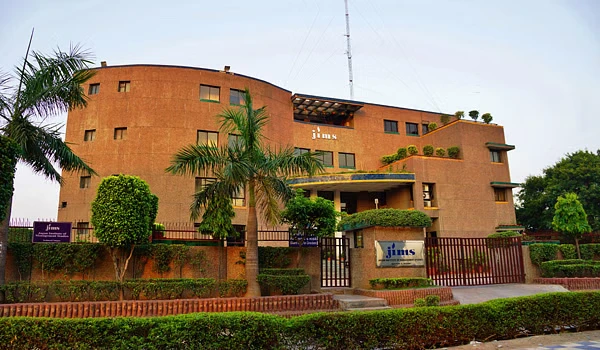

 Auditorium
 Cafeteria
 Campus Security
 Computer Labs
 Gym
 Medical
 Science Labs
 Sports Complex
 Study Library
Facilities JCC names on its official page
JCC’s Infrastructure page describes classrooms, an IT Centre, a Communication Lab, audio-visual equipment and presentation tools, classroom internet and intranet connectivity, digital electronic labs, FM radio studios, hospitality kitchens and labs, design studios, a jewellery-manufacturing lab, and a library with books and journals. This is an inventory of spaces and equipment the institution says it has; the page does not give room capacities, equipment counts, opening hours or a course-wise access schedule. JCC infrastructure
The list points to different types of practical work. A student considering journalism or media can ask how the Communication Lab, audio-visual equipment and FM Radio Studio are used in scheduled coursework. Someone looking at hospitality can ask which kitchen and lab sessions are included, whether ingredients or uniforms carry extra costs, and how practical assessments are conducted. A design applicant can ask which studio activities form part of the specific course. These are questions prompted by the named resources, not proof that every student receives the same access or equipment time.
Match the space to the exact programme
The page also names an IT Centre, digital electronic labs and classroom connectivity. Ask the department which facility supports your course, what software or equipment students use, whether access is individual or shared, and how practical sessions fit the timetable. The published page does not list computer specifications, software licences, student-to-device ratios or maintenance arrangements. Request a current equipment list if a particular tool is essential to your plans.
For a media programme, a studio name alone does not show whether students record broadcasts, edit audio or use the room only for demonstrations. Ask for an example of a recent practical assignment and whether students can reserve equipment outside class. For hospitality, ask which kitchens students use, what safety training is required, and whether practical materials are covered by the fee or charged separately. For design, confirm which course groups work in a studio and whether students supply their own materials. The Infrastructure page names these kinds of spaces but does not publish the operating rules.
Check the library and learning access
JCC describes its library as a hybrid collection of books and journals. The page does not provide a catalogue, subject holdings, database subscriptions, opening hours, borrowing limits, quiet-study capacity or access during examinations. If you rely on a particular collection or online research service, ask the librarian for a current catalogue or list of subscriptions and whether students can access them from off campus. A general reference to a library does not confirm that a specific textbook or journal is available.
The page also mentions internet and intranet connectivity in classrooms, but it does not describe campus-wide Wi-Fi coverage, login limits, bandwidth, device lending or remote access. Ask what students need to bring for class and whether the department has separate software or hardware requirements. These practical details can affect the total cost of study even when they are not part of a published tuition figure.
Confirm which campus has the listed facilities
JCC’s website describes courses and partner arrangements across Delhi NCR and Haryana. The institute profile says some courses are collaborations with Guru Gobind Singh Indraprastha University and notes that skilling partners operate at different locations. The general Infrastructure page does not map each room to a named course or campus. Confirm the teaching location, the facility used by your cohort, and the body that awards your specific course before treating a campus-wide description as a programme commitment. JIMS institute profile
This check is important if two programmes share a subject area but are delivered at different locations or under different partner arrangements. Ask for the exact address where lectures and practical work take place, whether students travel to another site for labs, and whether access is included in the course fee. If a facility is shown during a campus visit, ask whether it is routinely used by your programme rather than assuming that a tour confirms course access.
Questions to ask before accepting an offer
Request a current, programme-specific facility list and timetable. For each lab or studio that matters to you, ask who can use it, how often it is scheduled, what equipment is available, whether consumables or safety gear cost extra, and how students book additional practice time. Ask whether the library has the books and digital resources required for your course and whether access changes during holidays or examinations. Keep the answers with the course and campus details in your offer documents.
If you cannot visit before enrolling, ask for a live or recorded demonstration that shows the actual facility used by your cohort. Request the room name, campus address and course timetable so you can distinguish a general institutional gallery from a scheduled student resource. Ask about accessibility, maintenance and safety arrangements directly; the page reviewed here does not describe those matters.
JCC’s infrastructure page is useful for identifying the kinds of spaces the institute reports, from digital labs and studios to hospitality kitchens and a library. It is not a capacity report, equipment specification or guarantee of access for every course. Use it to make a focused checklist, then confirm the facilities, location and practical access for your exact programme in writing.