Loading Admission Guardian content
Loading Admission Guardian content

Provisional score based on available data. It may change as more information is verified.
Find a program, read its fee details and explore the admission requirements.
Summary of the programs shown below. First-year fee. Check the note beside each amount for inclusions and exclusions.
| Course | Stream | Fees |
|---|---|---|
| Bachelor of Science [B.Sc] (Nursing) | Paramedical | 91300 |
| Post Basic Bachelor of Science [P.B.B.Sc] (Nursing) | Paramedical | 91300 |
| Master of Science [M.Sc] | Paramedical | 161000 |
Specializations
Eligibility: 10+2
Specializations
Eligibility: 10+2
Specializations
Eligibility: Graduation
Malik Deenar College of Nursing (MDCON) in Kasaragod is a name that comes up consistently when you talk about private nursing education in North Kerala. Established in 2002, it’s built on the legacy of the older Malik Deenar Charitable Hospital, and that connection is its biggest strength. You’re not just studying nursing theory here; you’re walking across a campus to train in a 425-bed, multi-specialty hospital from your first year. That’s a level of clinical immersion many newer colleges can’t match. It’s a private, unaided institution managed by the Kasaragod Muslim Welfare Association, and it operates with the kind of strict, disciplined focus that’s typical of Kerala’s serious nursing colleges. If you’re looking for a vibrant, liberal arts campus life, this isn’t it. But if your priority is hands-on patient care experience from day one, MDCON has built a solid reputation over two decades.
The academic portfolio is straightforward and focused on core nursing pathways. The college offers the standard ladder of programs: a basic diploma, undergraduate degrees, and postgraduate specializations. All programs follow the academic calendar and rigorous credit-based system of the Kerala University of Health Sciences (KUHS). You can find the official university regulations on the KUHS website.
The 4-year B.Sc. Nursing is the main draw, with an intake of 50 students. Alongside it, the 2-year Post Basic B.Sc. (P.B.B.Sc) program caters to working diploma holders looking to upgrade. At the postgraduate level, M.Sc. Nursing offers specializations in four key areas: Medical-Surgical, Pediatric, Obstetrics & Gynecology, and Community Health Nursing, with 5 seats in each. For those starting out, there’s also a 2-year ANM (Auxiliary Nurse Midwifery) or JPHN diploma.
Faculty strength is around 28 members, led by Principal Prof. Alice Daniel, who holds an M.Phil. The teaching staff is a mix of Associate Professors and Lecturers, most with M.Sc. qualifications. The academic culture is described as focused and demanding, with internal assessments carrying significant weight in your final university marks. Sessional exams are frequent—held in January, May, and August—keeping students in a consistent cycle of study and practical evaluation.
Nursing placements don’t work like engineering or MBA placements. There’s rarely a formal "placement day" with companies making offers. Instead, employability is almost guaranteed due to massive global and domestic demand, but the process is more self-driven.
The college cites a placement percentage between 72% and 90%. In reality, if you’re competent and licensed, you will find a job. The question is where and for how much. For freshers in Indian private hospitals, the starting salary is modest, typically in the range of INR 2.4 LPA to 3.0 LPA (about ₹20,000 - ₹25,000 per month). The parent Malik Deenar Charitable Hospital is a primary recruiter, along with major Kerala hospital chains like Aster DM Healthcare and Apollo.
The real opportunity, and what many students aim for, is an international posting. The college facilitates this through the Government of Kerala's ODEPC (Overseas Development and Employment Promotion Consultants) scheme. A significant number of alumni end up as Registered Nurses in the UK, Ireland, and the Middle East (UAE, Saudi Arabia), where salaries are substantially higher. The mandatory 6-month internship within the hospital system is your first professional step and often leads to a job offer if you perform well.
For a private institution, the fee structure is relatively transparent but requires careful budgeting for the full duration. The annual tuition fee for the B.Sc. Nursing program is estimated between ₹80,500 and ₹91,300. Over four years, that totals roughly ₹3.63 lakhs to ₹4.41 lakhs for tuition alone.
You must then add hostel and mess costs, which are a significant additional expense. Annual hostel and mess fees range from approximately ₹67,200 to ₹85,000. The boys' hostel is about a kilometer from campus, while the girls' hostel is closer. First-year students should also budget for a one-time admission, library, and laboratory fee of around ₹10,000-₹15,000.
Financial aid is available primarily through government scholarships. Eligible students from SC, ST, OBC, and minority communities can apply for the state's E-grantz scholarship and other national schemes. It’s crucial to check the official Kerala Higher Education Department portal for the latest eligibility criteria and application windows.
The admission process is bifurcated by seat quota, which is standard for professional courses in Kerala. For the B.Sc. Nursing program, 50% of seats are government seats. These are filled through centralized counseling conducted by the LBS Centre for Science & Technology based purely on the merit of your Plus Two (12th grade) marks. Competition is fierce, and cutoffs fluctuate yearly based on applicant scores.
The remaining 50% are management seats. For these, the college sets its own process. Eligibility requires a 10+2 with Physics, Chemistry, Biology, and English, and a minimum of 50% aggregate. Selection is based on your Plus Two marks, followed by a college-conducted written test and a personal interview. There’s also an NRI quota within the management seats for candidates with valid documentation.
The application window typically opens in May or June, right after the 12th-grade results are declared. You need to keep a close eye on both the LBS Centre announcements and the college's own website for application forms and deadlines. The process is administrative and sequential—missing a date can cost you a seat.
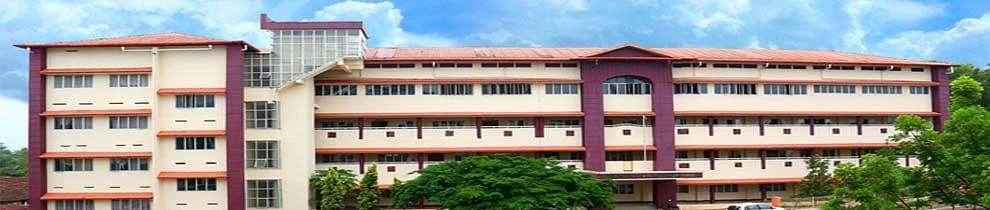
The campus spans about 5 acres in the Thalangara area of Kasaragod. It’s a green, relatively calm location and its biggest advantage is proximity: the Kasaragod Railway Station is less than a kilometer away, which is a huge plus for day scholars and those traveling home.
Infrastructure is functional. You’ll find well-equipped labs for Anatomy, Nutrition, Nursing Foundations, and other specialties. The library is stocked with core textbooks and nursing journals. But let’s be honest—this isn’t a sprawling university campus with endless amenities. Student reviews often point out that common areas and the canteen feel dated and could use modernization.
Hostel life comes with mixed feedback. The girls' hostel is on-campus/nearby, while the boys' hostel is in town. The accommodation is rated around 3.5/5—clean and adequate, but not luxurious. The most consistent complaint across student forums is about the mess food, with many wishing for better variety and quality. Social life is low-key. There’s an active NSS unit for community service, but don’t expect a bustling calendar of fests and events. The culture is academically and clinically focused, with strict rules regarding timings, outings, and even mobile phone usage.
Sifting through student feedback paints a consistent, two-sided picture. The praise is almost universally directed at the clinical exposure. “The clinical experience here is very useful; we get to practice in the parent hospital from the first year itself,” is a sentiment echoed repeatedly. Students value the high patient volume and the chance to apply theory immediately alongside working nurses and supportive faculty.
On the flip side, the discipline is a major point of contention. Descriptions like “strict timing” and “rigid rules” are common. The environment is structured and can feel restrictive if you’re not prepared for it. The hostel food complaints are a near-universal grievance. Another frequent note is that the fee for management seats feels high to some, especially when weighed against the basic hostel infrastructure.
The overall consensus? It’s a trade-off. You sacrifice a more relaxed campus life for exceptional, early clinical training that makes you job-ready. The alumni network, heavily populated with nurses working abroad, is a testament to where that training can lead.
Malik Deenar College of Nursing is a solid, no-nonsense choice for a specific kind of student. It’s best for someone who is dead-serious about nursing as a clinical profession, values hands-on hospital experience above campus luxuries, and can thrive in a disciplined, structured environment. If your primary goal is to become a competent, confident nurse with a strong practical foundation, MDCON delivers that effectively through its direct hospital link. The proximity to transport and the college’s established reputation in North Kerala are significant pluses.
However, you should probably look elsewhere if you prioritize a vibrant, liberal campus social life, modern hostel amenities, or a more flexible academic atmosphere. The fees for management seats are meaningful, and the return on that investment is in skill-building, not starting salary, which begins modestly in India. For the student aiming to work in Gulf countries or the UK, the college provides a respected launchpad. It’s a pragmatic choice for a pragmatic career.
Yes, Malik Deenar College of Nursing is highly regarded for its B.Sc. Nursing program, particularly due to its strong clinical training and direct affiliation with a 425-bed parent hospital, which provides extensive practical exposure.
The total fee for the four-year B.Sc. Nursing program at Malik Deenar College of Nursing ranges between ₹3.6 Lakhs and ₹4.4 Lakhs. This cost estimate does not include additional hostel and mess charges.
Yes, the college provides separate hostel facilities for boys. The boys' hostel is located about 1 kilometer away from the main college campus.
Yes, for the 50% management quota seats, Malik Deenar College of Nursing conducts its own entrance process, which includes a written test followed by a personal interview.
The college is very conveniently located, being approximately 0.5 km to 1 km away from Kasaragod railway station. This proximity makes it easily accessible for day scholars commuting by train.
Share what future students should know about Malik Deenar College of Nursing.
Student voices are not rewritten by colleges. We remove spam and abuse.
Wider admission question? Community PulseWhat should future students know?
Tell us which course you're considering. We'll help you work out the next step.
Get instant Partner access after mobile verification. Your public edits are reviewed before they go live.
Claim this college Auditorium
 Cafeteria
 Campus Shuttle
 Computer Labs
 Hostel
 Science Labs
 Study Library