Loading Admission Guardian content
Loading Admission Guardian content

Provisional score based on available data. It may change as more information is verified.
Find a program, read its fee details and explore the admission requirements.
Summary of the programs shown below. First-year fee. Check the note beside each amount for inclusions and exclusions.
| Course | Stream | Fees |
|---|---|---|
| Bachelor of Engineering [BE] | Engineering | 90000 |
| Bachelor of Engineering [BE] {Lateral} | Engineering | 90000 |
| Master of Engineering [ME] | Engineering | 90000 |
Specializations
All accepted exams
Eligibility: 10+2
Specializations
All accepted exams
Eligibility: 10+3
Specializations
All accepted exams
Eligibility: Graduation
3 exams with cutoff data available - showing recent entries
 Amway India
 Apollo Tyres
 AT&T
AT&T Aviva
Aviva Bajaj Allianz
 Bajaj Auto
 Bharti Enterprises Limited
 Birla Sun Life Insurance
 BPL Ltd
 Canon India Pvt. Ltd.
 Carnival Cruises
 Citi Bank
 Citicorp Finance India Ltd.
 CMC Limited
 Conneqt
 Ernst & Young
 Escorts
 Frito Lay
 Futuristic Simplified Ltd
 Ge Capital
 Gillette
 Glaxo Smithkline Consumer Ltd (GSK)
 Godfrey Phillips
 Goodyear
 Grand Hyatt
 Grasim Industries Limited
 HCL Comnet
 HCL Technologies
 HDFC Bank
 Hero Cycles
 Hewitt Technologies
 Hewlett-Packard (HP)
 Hindustan Times
 Holiday Inn
 Honda
Honda Honda 2 Wheelers
 HSBC Global Technology
 Hughes Systique
 IBM
IBM ICICI Bank
 ICICI Lombard
 Ikya
Ikya Indian Express
 Infosys Technologies
 ITC Hotels
 JCB
JCB Johnson & Johnson
 Just Dial
 L&T Ltd.
 LG Electronics
 Loreal
 Luxor
Luxor Max Newyork Life
 MetLife
 Microsoft
 Morgan Stanley
 Motorola India Limited
 Nestle India
 NIIT Ltd
 Nokia
Nokia Pantaloons
 Parle Agro
 Punj Lloyd
 QAI
QAI Ranbaxy Laboratories
Alard College of Engineering and Management sits right at the edge of Pune's Hinjewadi IT Park. That's its single biggest advantage. For students with mid-range MHT-CET scores, it offers a relatively affordable ticket to a campus within walking distance of tech giants like Infosys and Persistent Systems. But there's a transition happening. As of 2024, the old SPPU-affiliated ACEM is now a constituent school within the newly minted Alard University Pune. This creates a split reality: one batch follows the older, cheaper SPPU structure, while new intakes enter a more expensive private university system. The college is a classic trade-off. You get location and lower fees, but you trade away some academic polish and have to be proactive about your own career. The official placement brochure might tout a 16 LPA high, but the real story, according to students, is a grind for packages in the 3.5 to 4.5 LPA range.
The academic offering is split by the university transition. For now, the B.E. programs under SPPU—Computer, AI & ML, IT, E&TC, Mechanical, and Civil—are the mainstay. The AI & ML program is the new flagship, trying to catch the industry wave. Intakes are decent: 120 for CSE and AI/ML, 60 for IT, E&TC, and Mechanical, and 30 for Civil. That's a standard spread for a college of this size.
Faculty is a mixed bag, and students are pretty clear about it. With about 80-100 faculty across departments, only 15-20% hold PhDs. You'll find some dedicated HODs and senior professors, but junior lecturer quality is inconsistent. The feedback often points to a lack of industry depth in teaching. It's not a research powerhouse; it's a teaching college with a practical bent, though the execution can be uneven. The shift to Alard University promises a more "industry-aligned" curriculum, but it's too new to judge. For now, the academic culture is what you'd expect: you need to be self-driven. The library has a decent collection of over 20,000 volumes and digital access, but it's not a standout feature.
This is where the brochure and the ground reality diverge sharply. The college's official website and presentations might highlight a highest package of 16 LPA (or even 50 LPA under the new university banner) and an average of 7 LPA. You have to read those numbers with a heavy dose of context.
Talking to alumni and scanning reviews on CollegeDunia and Shiksha paints a different picture. The working average package most cite is between 3.5 and 4.5 LPA. The median is likely around 3.2 LPA. That 16 LPA (or the astonishing 50 LPA) is almost certainly an off-campus offer secured by a single exceptional student—it's not the norm for on-campus recruitment.
The placement percentage tells a similar story. While the official claim is 90%+, the consensus from students who've been through the process is 60-70% for core branches like Mechanical or Civil. For Computer Science and IT, it's higher, maybe pushing 80-85%, but still not universal.
The recruiter list is respectable and benefits hugely from the Hinjewadi location: Amazon, TCS, Infosys, Wipro, Capgemini, Cognizant, Accenture, Persistent Systems. For core engineering, names like Tata Motors, Mercedes-Benz, and L&T Construction appear. But the roles are overwhelmingly in IT services. About 70% of placed students go into software, 20% into core engineering, and 10% into sales or marketing. The verdict? The placement cell provides access and brings companies in. But landing a good package requires significant self-study and coding practice outside the classroom. That Reddit quote in the brief nails it: "the college only brings 3-4 major MNCs."
Here's the clearest split between the old and new Alard. If you're in an SPPU-affiliated B.E. program, the fee is a major selling point. At roughly ₹47,000 per year for tuition, it's a fraction of what other private colleges in Pune charge. Over four years, tuition totals about ₹1.88 lakhs. Add hostel and mess, and the total cost can range from ₹4.5 to ₹8 lakhs depending on your accommodation choice.
Now, the new Alard University B.Tech programs operate under a different, self-financed model. Expect annual fees between ₹1.5 and ₹2.2 lakhs—much more in line with typical private engineering costs.
For financial aid, the Shri Ram Sevak Scholarship is the key internal offering, providing up to a 100% tuition waiver for meritorious or economically disadvantaged students. State government scholarships via the MahaDBT portal are also available for eligible SC/ST/OBC/EBC candidates.
Admission for the SPPU B.E. seats is governed by the DTE Maharashtra's Centralized Admission Process (CAP), primarily based on MHT-CET scores. JEE Main scores are also accepted but are less common.
The 2024 MHT-CET cutoffs give a clear picture of demand: Computer Engineering required 82.7 to 88.7 percentile for the General Home State category. AI & ML was slightly lower at 78.5 to 84.2. For branches like Mechanical or Civil, cutoffs plummeted to between 15 and 30 percentile, with seats often available in spot rounds.
That's a telling spread. The college fills its computer-related seats with decently scoring students, but struggles to fill core engineering seats through CAP. This is where the management quota, accounting for about 20% of seats, comes into play. Admission through this quota involves a direct application to the college and payment of a higher fee.
The campus is spread over 15-20 acres within the larger 411-acre Alard Knowledge Park. It's green, quiet, and feels secluded—a pro for some, a con for those who want city life. The infrastructure is adequate but not luxurious.
Hostels are separate for genders, with standard triple-sharing rooms. Feedback on quality is a 3.5 out of 5: rooms are reportedly spacious, but maintenance issues pop up in reviews. The premium "Ivy League" hostel offers Wi-Fi, laundry, and better food for ₹1.25-1.3 lakhs a year. The standard hostel with mess runs ₹80,000 to ₹1,00,000.
The crown jewel of student life is the turf ground for football and cricket. Sports culture is strong. The annual fest, AURA, is a well-organized highlight. The canteen was under renovation in late 2024, with food quality historically rated as average. The location near Hinjewadi means easy access to off-campus food and entertainment, which many students use.
Synthesizing the chatter from review sites and forums, a clear consensus emerges.
The positives are consistent: the Hinjewadi location is unbeatable for internships and networking. The campus is peaceful and green. The fee structure (for SPPU batches) is a genuine bargain in the Pune market. And the sports facilities and fest get big thumbs up.
The negatives are equally consistent. Administrative hassles top the list—stories about delays in refunding caution deposits or unresponsive staff are common. Teaching quality is hit-or-miss. And there's palpable cynicism about the placement statistics; students feel the high numbers are misleading and that the onus is entirely on them to crack good jobs.
A major point of discussion is the university transition. There's uncertainty about how the degree value, fees, and curriculum will change. For now, the advice from current students is simple: if you're coming for the old SPPU degree and low fee, it's a calculated bet. If you're entering the new university program, scrutinize everything twice because you're paying a premium for an unproven entity.
It depends entirely on your profile and expectations. For a student with an MHT-CET percentile in the low-to-mid 80s, who wants to be in Pune's tech hub without bankrupting their family, the SPPU-affiliated B.E. in Computer Engineering or IT can be a pragmatic choice. You're buying location and opportunity, not hand-holding. You must be prepared to supplement your studies with online courses, coding practice, and hustling for internships off-campus.
For core engineering branches, it's a harder sell unless you get a very deep scholarship. The placement support is weaker. For anyone considering the new, more expensive Alard University B.Tech programs, extreme caution is advised. You're investing in a brand-new system with no track record, at a price point where you might have other, more established options.
In short, Alard (the old ACEM) is a functional, affordable springboard for self-motivated students targeting the Pune IT sector. It's not a destination for academic prestige or guaranteed high-paying placements. Manage your expectations, plan to work independently, and its value proposition—location and cost—becomes clear.
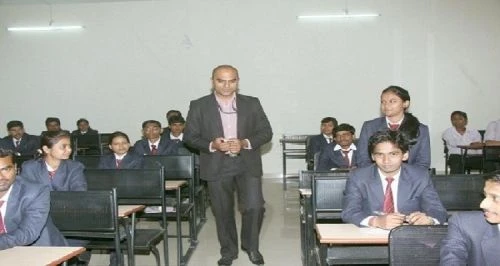
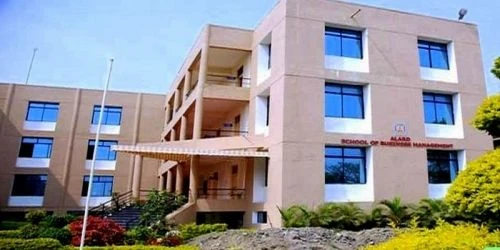
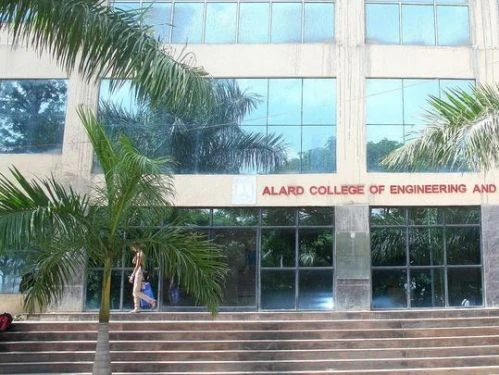
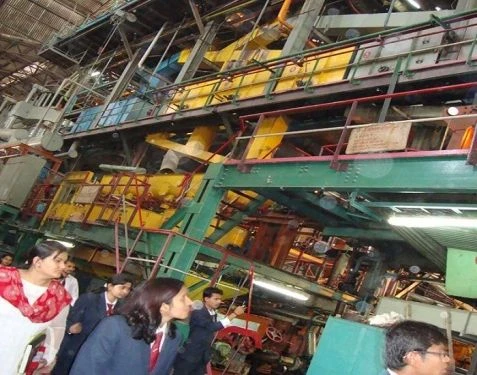
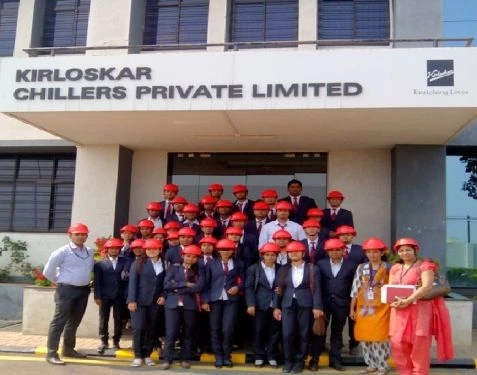
In this preview: 5 photos · 0 videos
Alard College of Engineering and Management (ACEM) is considered a "Tier 3" option for Computer Engineering. It is a good choice for students with 75-85 percentiles who want to be located near the Hinjewadi IT companies. However, students should be prepared for significant self-study to secure high-paying roles in the field.
Alard College of Engineering and Management (ACEM) was originally affiliated with Savitribai Phule Pune University (SPPU). From 2024, ACEM is being absorbed into Alard University, which will offer its own curriculum and award its own degrees, moving away from the SPPU affiliation.
The consensus on the hostel food at ACEM is that it is "Average." As a result, many students opt for private Tiffin services or the separate "Ivy League" premium mess facility for their meals.
No, Alard College of Engineering and Management does not provide 100% placements. While the college offers placement assistance and hosts many visiting companies, the actual placement rate is reported to be closer to 65-70% of students.
No, there is not a significant ragging culture at ACEM. The college maintains a strict Anti-Ragging Committee, and students generally report a safe and friendly environment on campus.
Share what future students should know about ACEM.
Student voices are not rewritten by colleges. We remove spam and abuse.
Wider admission question? Community PulseWhat should future students know?
Tell us which course you're considering. We'll help you work out the next step.
Get instant Partner access after mobile verification. Your public edits are reviewed before they go live.
Claim this college Rediff
![Reliance Industries Limited [RIL]](https://assets.admissionguardian.com/imgproxy/insecure/w:64/h:64/rt:fit/el:0/f:avif/q:82/sm:1/plain/local%3A%2F%2F%2Fimages%2Frecruiter_logos%2Freliance-industries-limited-ril-logo.webp) Reliance Industries Limited [RIL]
Reliance Industries Limited [RIL] Royal Sundaram
 RPG Enterprises
 Samsung
 SBI Life Insurance
 SKF
SKF Sony India
 Spice Telecom
 Standard Chartered Bank
 Star India
 Tata Aig
 Tata Chemicals
 Tata Consulting Engineers Ltd.
 Tata Infotech
 Tata Motors
 Tata Power
 TATA Technologies
 TCS
TCS TELCO
TELCO Times of India
 Tudip Technologies
 TVS Motors
 Vardhman Steel
 Wipro
Wipro Wockhardt Ltd.
92 named recruiters in the recorded data. Company names are deduplicated.

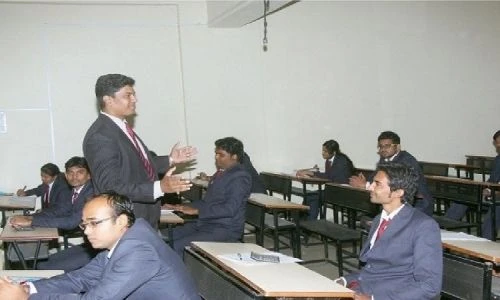
 Auditorium
 Communication Centre
 Computer Labs
 Gym
Gym Hostel
 Medical
 Science Labs
 Smart Classrooms
 Sports Complex
 Study Library