
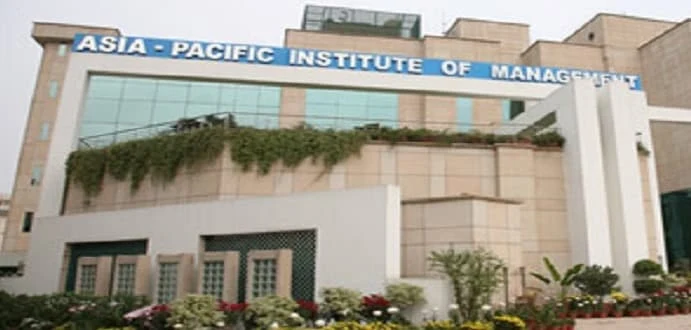

What is open for the 2027 intake
AIM’s official admissions overview currently carries a 2027–29 PGDM banner inviting applicants to apply. This is a useful cycle marker, but the page does not publish a closing date, counselling calendar or last date for each specialisation. The banner also does not establish that every programme or seat will remain available through a particular date. Confirm live form availability and the applicable deadline directly with the institute before paying. AIM admissions overview
Which AIM programmes are advertised?
The two-year PGDM family is the primary route described in the current 2027–29 banner. AIM’s site lists PGDM General, Marketing, Banking & Financial Services and Big Data Analytics. Each specialisation page describes its own academic focus; the common process page supplies the eligibility and selection steps. The current site also lists MBA Healthcare Management, a one-year Executive MBA in Healthcare and BBA, but the PGDM process should not automatically be treated as the application procedure for those distinct programmes. Check each programme page and its linked form for its intake, eligibility and deadline. AIM programme directory · PGDM General
Who can apply to the PGDM programmes
The current admission-process page says applicants need a bachelor’s degree with at least 50% marks; final-year students may also apply. It does not provide a separate threshold by undergraduate discipline, university, category or specialisation on the page reviewed. If your final marks are pending, you may begin an application under the published rule, but you should confirm what proof and result-submission date AIM will require before admission is confirmed. The public page does not explain how a pending final result changes the selection or enrollment timetable. Admission process and eligibility
Which entrance tests are accepted?
AIM lists valid scores from CAT, XAT, CMAT, MAT, GMAT or ATMA for the PGDM process. The page does not state a minimum score, percentile, sectional cutoff, score-validity rule or method for converting one test into another. Do not assume that a particular score guarantees an interview or selection. Confirm which score report and test year AIM accepts for the application you submit, especially if you are relying on an older score or are applying after a test’s result release. The institute’s general admissions overview also lists these tests, while an older FAQ page names a narrower CAT/XAT/CMAT/MAT set; for the currently advertised cycle, use the current process page and seek written clarification if an individual programme page differs. Current process · FAQ
How selection works
The published sequence has three broad stages. First, complete the online application with academic details and an eligible test score. AIM asks applicants to enter information accurately because errors can delay or affect verification. Second, shortlisted candidates are invited to a group discussion and personal interview. The institute says it considers entrance scores, academic records and performance in those rounds; it does not publish a weighting formula or a guaranteed shortlist score on the page reviewed. Third, selected candidates receive an offer letter and must complete the stated admission formalities by the timeline in that offer. The practical implication is to keep your test result, degree records and current contact details consistent across the form and documents. AIM admission process
The pages reviewed do not give a detailed evaluation rubric for the group discussion or interview. Prepare to explain your academic choices, work or internship experience, motivation for management study and reasons for choosing a particular specialisation, but treat this as sensible preparation rather than a stated AIM scoring rule. Ask the admissions office whether the 2027–29 cycle uses online or on-campus interview slots, what documents are needed at each stage and how shortlisted candidates are notified. The site’s process description confirms GD and PI; it does not promise a fixed format, duration or interview date.
Application fee, documents and offer-stage payment
AIM’s current process page lists a ₹1,200 registration fee to secure a seat after selection and says the formalities must be completed within the offer-letter timeline. The same page does not clearly distinguish this amount from the application-processing charge or state whether it is refundable, adjustable against tuition or separate from other admission payments. An older FAQ also lists a ₹1,200 application-processing fee, but its other details concern earlier sessions. Do not treat that historical FAQ as the current fee schedule. Before paying, check the exact purpose and refund terms shown in the live portal and offer letter, then save the receipt. Current process · Older FAQ
The current process page asks for the online form and a valid test score but does not publish a complete cycle-specific document checklist. Have your degree or provisional records and entrance-score details available, then use the portal’s checklist for any identity, photograph, category or final-year documents it requests. The older FAQ describes online account creation and submission with an application fee; those instructions may help explain the portal sequence, but their payment and cycle details are not a substitute for the 2027–29 portal instructions. Applicants who need offline assistance can visit the Admissions Office at AIM’s Jasola, New Delhi campus according to the current process page.
What the site does not answer yet
The currently reviewed official pages do not show a 2027–29 application closing date, interview calendar, minimum entrance score, specialisation-wise intake, category-wise selection rule or a complete document checklist. The admissions banner confirms that the cycle is open; it does not resolve these items. Check the live admission overview and admission process before submitting, and contact AIM at [email protected] or +91-11-42094800 if the portal and programme page differ. Ask the office to confirm the exact programme, test year, deadline and payment purpose in writing.
AIM’s official programme pages publish separate descriptions for each PGDM specialisation, while the general admissions process supplies the common eligibility and interview sequence. Fees, scholarship amounts and programme-specific terms belong to their own pages and may change independently of this process guide. Applicants should compare the course-specific curriculum and current published fee schedule before accepting an offer; no fee or scholarship amount is inferred here. A current notice or offer letter should take precedence over older FAQ tables or third-party summaries. This distinction matters because an old amount, score rule or deadline can look precise while applying to a different session.
A practical checklist before you submit
- Select the exact PGDM programme and open its current page from AIM’s programme directory.
- Check that you meet the published bachelor’s degree and 50% requirement, or confirm the final-year applicant process.
- Verify that your CAT, XAT, CMAT, MAT, GMAT or ATMA score is accepted for the programme and application cycle; the public page gives no minimum threshold.
- Complete the online form using matching academic and test details, and check the live portal for the document list and current application charge.
- Monitor the email address and phone number in your form for shortlist and GD/PI instructions.
- If selected, use the offer letter to confirm the registration payment, refund terms and acceptance deadline before sending money.
- Recheck the official admissions pages for a published closing date; none was identified in the reviewed 2027–29 material.
This sequence reflects the official pages available when checked on 1 November 2026. It is a guide to the published route, not a promise that a form remains open or that a particular score leads to selection. Confirm live availability and programme-specific instructions with AIM before acting.