Loading Admission Guardian content
Loading Admission Guardian content
Provisional score based on available data. It may change as more information is verified.
Find a program, read its fee details and explore the admission requirements.
Summary of the programs shown below. First-year fee. Check the note beside each amount for inclusions and exclusions.
| Course | Stream | Fees |
|---|---|---|
| Post Graduate Diploma | Arts | 42000 |
| Doctorate of Medicine [MD] | Medical | 42000 |
| Master of Surgery [MS] | Medical | 42000 |
| M.B.B.S. | Medical | |
| Diploma | Paramedical |
Specializations
Eligibility: Graduation
Specializations
All accepted exams
Eligibility: Post Graduation
Specializations
All accepted exams
Eligibility: Graduation
All accepted exams
Eligibility: 10+2 with 50% + NEET
Specializations
Eligibility: 10 + 2
3 exams with cutoff data available - showing recent entries
If you want to learn medicine where the textbooks come to life, Baba Raghav Das Medical College in Gorakhpur is a serious contender. Forget pristine, quiet corridors. BRD is a 50-year-old government workhorse where the sheer volume and variety of patients—especially in pediatrics and infectious diseases like Japanese Encephalitis—is its defining feature. That clinical exposure is the trade-off for some dated infrastructure and bureaucratic inertia. It's a college that produces resilient, hands-on doctors, not pampered ones. And with annual MBBS fees under ₹50,000, it represents one of the most value-for-money medical educations in North India, provided you can handle its raw, unfiltered reality.
BRD offers a focused set of programs centered around its core strength: clinical training at the attached Nehru Hospital. The MBBS program, with an intake of 150, is the heart of the institution. Postgraduate studies are robust, with MD/MS seats ranging between 67 to 105 across key specializations like General Medicine, Pediatrics, General Surgery, and Orthopedics. They also run B.Sc Nursing and diploma courses.
The academic culture is traditional and strict, with a 75% attendance rule firmly enforced. Faculty are experienced, often veterans in their fields, but the teaching style leans more towards the conventional than innovative. Where BRD shines academically is in its research partnerships. The collaboration with the ICMR's Regional Medical Research Centre on vector-borne diseases is a standout, given the region's history with Japanese Encephalitis. A newer, intriguing development is the January 2026 MoU with Dr. APJ Abdul Kalam Technical University (AKTU) to integrate AI and bio-printing into healthcare—a forward-looking move for a traditionally grounded college.
Let's be clear: in a government medical college, 'placement' doesn't mean campus recruitment drives. Career progression here is about the compulsory internship, securing a Junior Residency (JR) post, and cracking PG entrance exams.
The financials are standard for Uttar Pradesh government colleges. MBBS interns receive a stipend of ₹12,000 per month. For postgraduates, the MD/MS stipend scales from roughly ₹79,000 in the first year to about ₹84,000 in the third. After graduation, most paths lead to government service through UP health department postings or JR roles in other hospitals. Private sector roles at chains like Apollo or Fortis are an option, with alumni-reported packages for specialists sometimes reaching ₹17-18 LPA. But the more common starting point for a fresh MBBS grad is closer to ₹6-7 LPA in a JR role.
The real 'placement' metric is clinical competence. And on that front, BRD alumni are nearly unanimous: the patient exposure here is exceptional. You learn by doing, seeing a caseload that rivals far more prestigious institutions. That practical skill set is the college's greatest career offering.
This is where BRD's value proposition becomes undeniable. For a 5.5-year MBBS degree, the total cost—including tuition, hostel, and mess—is estimated to be between ₹2.5 to ₹3 lakhs. Let's break that down.
The annual tuition fee is ₹40,800 for the state quota and ₹42,000 for the All India Quota. Hostel fees are about ₹12,000 per year, and the student-run mess costs around ₹2,500-₹3,500 monthly. Postgraduate MD/MS fees are approximately ₹64,000 per year.
Financial aid is available through state scholarships for SC/ST/OBC/EWS students and the Central Sector Scheme of Scholarships. The significant financial caveat isn't the fee, but the bond: a mandatory 2-year rural service commitment after MBBS, with a penalty of ₹10 lakhs for non-compliance.
Admission is strictly through national and state entrance exams. For MBBS, you need a qualifying NEET-UG score. Selection is via centralized counseling: the Medical Counselling Committee (MCC) handles the 15% All India Quota seats, and the Directorate of Medical Education (DGME), Uttar Pradesh, handles the 85% State Quota seats.
The cutoffs are competitive but accessible for a college of its reputation. For the 2024 academic session, the closing rank for the General category in the AIQ was 5835. For the UP State quota, it was around 9112. For OBC candidates, the AIQ closing rank is typically in the 6000-6500 range. B.Sc Nursing admissions are through the state's CNET exam, while MD/MS seats are filled via NEET-PG scores and counseling.
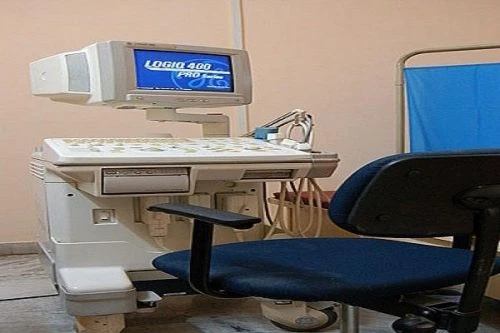
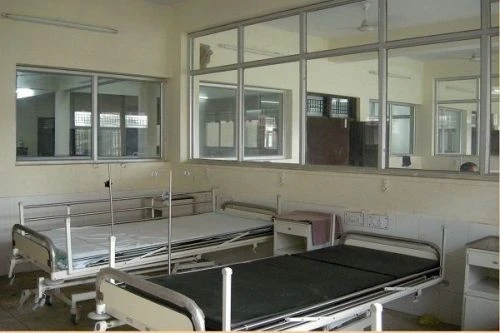
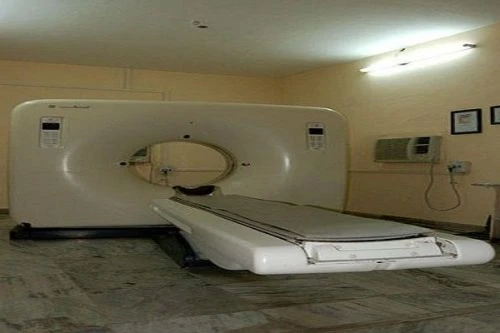
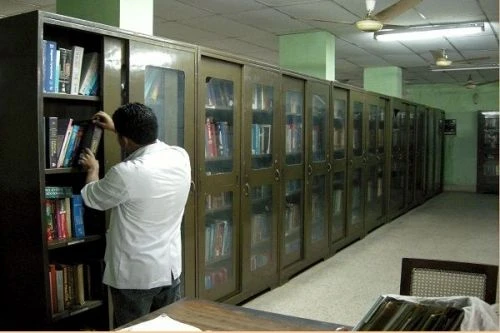
The campus is a study in contrasts. Academically, it's strong. The Nehru Hospital is a massive, 800-bed facility with a separate 500-bed pediatric block and a modern super-specialty wing for cardiology and neurology. The libraries are adequate, if not digitally cutting-edge.
Student life, however, is defined by the hostels. The boys' hostels (like the Rajendra Hostel for first-years) are functional. The girls' hostel, with 151 rooms, is older and has been a point of contention, though phased renovations are reportedly underway. A major gripe, repeatedly voiced online, is the disparity in curfew rules: a strict 9 PM deadline for female students that isn't as rigorously enforced for males.
Socially, it's a typical government college environment. There's a cricket ground, a gym, and a cemented badminton court. The student-run mess means food quality varies by batch management. Wi-Fi is available in academic blocks but spotty in hostels. The overall vibe is self-reliant and community-oriented, not luxurious.
Scouring forums like Quora, Reddit, and education portals reveals a consistent, nuanced picture. The praise is almost singularly focused on clinical exposure. Phrases like "clinical goldmine" and "you see things here you won't see in textbooks" are repeated verbatim. The high patient load in pediatrics and medicine is considered the college's unbeatable asset.
But the criticisms are just as specific. The hostel conditions, especially for women, are the top complaint. Administrative red tape is frustrating—getting simple paperwork done often involves navigating uncooperative clerical staff. A notable, and quite serious, caution emerged in a December 2025 Reddit thread on r/neetpgcounselling, where multiple users flagged the Orthopedics department as particularly "toxic" with high failure rates for MS students. On ragging, the consensus is that while official committees exist, traditional 'intro' sessions (largely non-violent) are part of the culture.
BRD Medical College is for a specific kind of student. If your priority is to become a clinically confident, resilient doctor without incurring massive debt, this college is an excellent choice. The cost-to-exposure ratio is arguably its best in class. You will graduate having managed a breadth of cases that peers from newer, shinier colleges might not see for years.
But you have to be willing to accept the trade-offs. The infrastructure is a mixed bag, the administration can be slow, and campus life is more about grinding than glamour. The bond is a significant post-graduation commitment. If you crave a premium, research-focused, or cushy campus experience, look at AIIMS or newer private institutes. But if you want to learn medicine in the trenches, where the real practice of healthcare happens every day, BRD Gorakhpur delivers that in spades. It's a no-frills, high-reward institution for the pragmatist.
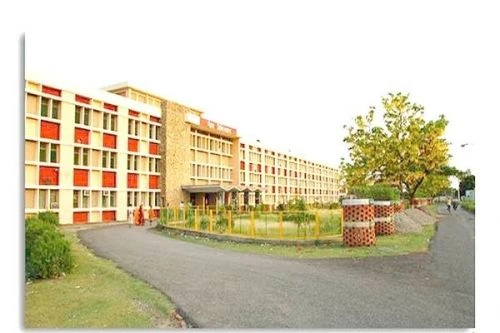
In this preview: 5 photos · 0 videos
While AIIMS Gorakhpur has superior infrastructure and brand recognition, BRD Medical College offers significantly higher clinical exposure and patient variety due to its established 50-year history in the region.
The bond amount is ₹10 Lakhs, which is applicable if a student fails to complete the mandatory 2-year rural service after their MBBS course.
The college has strict anti-ragging committees in place. Recent student reviews indicate that senior-junior interaction is generally healthy, though some non-violent introductory sessions for new students may occur.
The mess food is student-managed and receives an average rating of 3 out of 5. The quality can vary depending on the managing student batch from year to year.
For the All India Quota (AIQ) seats, the expected closing rank for the OBC category in 2025 is around 6,000 to 6,500.
Share what future students should know about BRD Medical College.
Student voices are not rewritten by colleges. We remove spam and abuse.
Wider admission question? Community PulseWhat should future students know?
Tell us which course you're considering. We'll help you work out the next step.
Get instant Partner access after mobile verification. Your public edits are reviewed before they go live.
Claim this college Auditorium
 Cafeteria
 Computer Labs
 Hostel
 Medical
 Science Labs
 Sports Complex
 Study Library