Loading Admission Guardian content
Loading Admission Guardian content

Provisional score based on available data. It may change as more information is verified.
Find a program, read its fee details and explore the admission requirements.
Summary of the programs shown below. First-year fee. Check the note beside each amount for inclusions and exclusions.
| Course | Stream | Fees |
|---|---|---|
| Bachelor of Engineering [BE] | Engineering | 70000 |
| Master of Engineering [ME] | Engineering | 85000 |
| Ph.D | Engineering |
Specializations
All accepted exams
Eligibility: 10+2
Specializations
All accepted exams
Eligibility: Pass in Graduation + GATE
Specializations
Eligibility: Postgraduation
3 exams with cutoff data available - showing recent entries
 Gammon India
Babasaheb Naik College of Engineering (BNCOE) in Pusad is a study in contrasts. It’s a sprawling, 30-acre campus with Grade ‘A’ accreditation, yet it’s tucked away in a remote part of Maharashtra’s Vidarbha region. For over four decades, it has served as a primary engineering destination for students from surrounding districts, offering a pragmatic, no-frills education at a cost that’s hard to beat. The college’s reputation hinges on its solid infrastructure, deeply experienced faculty, and a track record of getting graduates into IT service roles. But that reputation comes with a clear caveat: its isolated location fundamentally shapes the student experience and career opportunities. You won’t find the hustle of a metro campus here. What you will find is a functional, affordable path to an engineering degree, provided your expectations are calibrated to the reality of a taluka town.
BNCOE runs a standard set of undergraduate engineering programs under the SGBAU curriculum. The intake numbers tell the story of demand: Computer Science and Engineering leads with 180 seats, followed by the newer Artificial Intelligence and Data Science program at 60. The traditional core branches—Civil, Mechanical, and Electrical (Electronics & Power)—each have 60 seats. At the postgraduate level, M.E. programs in Digital Electronics, CSE, Structural Engineering, and CAD-CAM are offered with 18 seats each. The college is also a recognized Ph.D. research center for Civil, Mechanical, and Electronics Engineering.
Academically, the strength lies in the faculty's longevity. In departments like Electronics & Telecommunication, the average teaching experience is over 25 years, with a high percentage of PhD holders among the total academic staff of approximately 181. They follow the university's Choice Based Credit System. Industry tie-ups exist, notably with Tech Mahindra and Fulcrum Digital, though these are more relevant for final-year projects and occasional training than for a flood of high-profile recruiters. It’s a traditional, affiliation-driven system. You get what you need to pass the university exams, with some extra guidance from professors who’ve seen it all.
This is where you need to separate the official narrative from the ground-level consensus. The college claims a placement percentage north of 70%. Talk to alumni or scan reviews on portals like Shiksha, and a different figure emerges: a more realistic 40-50% for core branches like Civil and Mechanical, and a higher rate for CSE and AI & DS.
The packages follow a similar pattern. The touted "highest package" of 11 LPA is an off-campus, student-claimed outlier. The actual on-campus ceiling is between 6 and 7 LPA. The average settles in the ₹3.5 to 4 LPA range, with a median closer to ₹2.4-3 LPA. That’s the reality for the majority.
Recruiters are almost exclusively from the IT services and mass-recruitment sector: TCS, Infosys, Capgemini, Accenture, Tech Mahindra, and Cognizant. For core engineering, companies like UltraTech Cement and Fidesto Projects visit. About 70% of placed students go into IT services, 20% into core/construction, and a sliver into EdTech or sales roles. The remote location is the biggest hurdle for attracting a diverse recruiter pool. So, placements happen. They’re just not glamorous. If your goal is to land a foothold in an IT services firm at a starting salary, BNCOE can facilitate that. If you’re aiming for product-based companies or high-paying core engineering roles, the odds are long.
Affordability is BNCOE's undisputed strong suit. As a private unaided college, its fees are regulated by the Maharashtra Fee Regulating Authority (FRA), keeping them accessible. For the 2024-25 academic year, Open category students pay ₹97,150 per year in tuition. OBC/EBC students pay ₹54,255, while SC/ST and other scholarship category students pay only the university exam fees of ₹11,150.
Living costs are similarly low. A double-sharing hostel room costs ₹16,000 per year; a single is ₹30,000. Mess charges are around ₹2,000 per month for boys and ₹1,800 for girls. All state government scholarships—EBC, SC/ST/OBC, TFWS—are applicable. When you do the math, the total four-year cost for an Open category student, including modest living expenses, lands between ₹4.5 and ₹5.5 lakhs. In the current landscape of engineering education, that’s a remarkably low financial barrier to entry.
Admission to the B.E. programs is through the Maharashtra state centralized process. MHT-CET is the primary entrance exam, with JEE Main scores also accepted. Selection is done via the DTE Maharashtra Centralized Admission Process (CAP), with the application window typically open in June-July.
The 2024 MHT-CET Round 1 cutoff percentiles give a clear picture of branch-wise demand and accessibility:
These are not fiercely competitive cutoffs. They reflect the college's position as a solid regional option for students with mid-range scores. If your CET percentile is in the 40s to 60s and you’re looking for a reputable, accredited college in the Vidarbha region, BNCOE is a likely candidate on your CAP list.
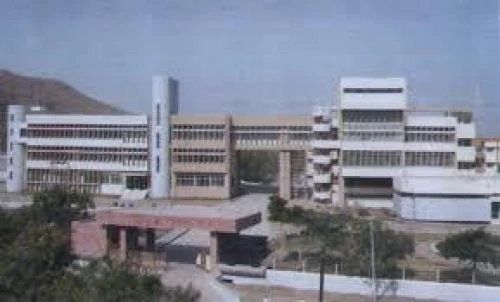
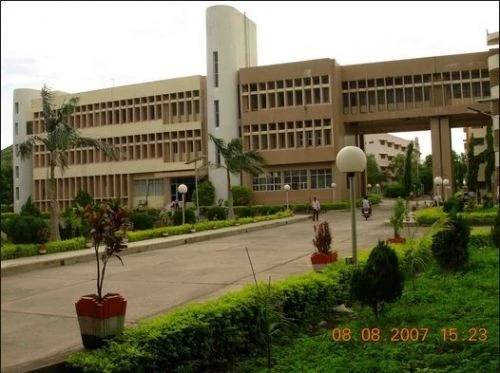
The 30-acre campus is consistently praised as the best in Yavatmal district. The architecture has an old-school, substantial feel with stone buildings. Infrastructure is comprehensive: a massive library (the "Knowledge Core") with over 58,600 books and digital access, well-equipped but somewhat dated labs, Wi-Fi in key areas, and extensive sports facilities including football and cricket grounds.
Hostels are adequate. The boys' hostel has a 714 capacity, the girls' hostel 310. Rooms come furnished with basic furniture. The food in the mess is considered hygienic but monotonous—a common grievance in hostels everywhere. Other amenities like an on-campus ATM, dispensary, cafeteria, and co-op store cover the essentials.
But campus life is defined by what’s outside the gates. Pusad is a taluka town. The nearest major railway stations are in Akola and Nanded, both about 110 km away. There’s no direct train connectivity. This remoteness means limited exposure to industry events, easy travel, or a vibrant urban social scene. The college fest, Gaiety, is a highlight, but it’s an annual event. Life here is quieter, more insular, and heavily centered on the campus itself. That’s either a pro or a con, depending on what you’re looking for.
Synthesizing feedback from years of reviews on CollegeDunia, Shiksha, and forums paints a consistent picture. The positives are strong: the infrastructure is genuinely impressive for the location, the faculty are experienced and supportive, and the cost-to-value ratio is excellent. The library is frequently singled out as a stellar resource.
The negatives are equally persistent. The remote location is the biggest drawback, impacting placements, travel, and overall exposure. Placement packages are seen as low, even if the percentage is debated. Social life is limited. The consensus quote you’ll find echoed online is pragmatic: “If you have a low percentile but want a decent college with good infrastructure, BNCOE is a solid choice in Vidarbha.” Another common refrain: “Placements are mostly in TCS/Infosys; don't expect big product companies to visit.” Students feel the college delivers on its core promise of an affordable degree, but doesn’t—and perhaps can’t, due to geography—exceed it.
BNCOE Pusad is a very specific proposition. It’s not a college for everyone, but for its target demographic, it makes a lot of sense. It’s best suited for students from the Vidarbha and Marathwada regions with CET percentiles between 40 and 70, who prioritize low cost, a stable campus environment, and a proven (if modest) pathway into IT services jobs. If your family’s budget is tight and you want an accredited, established engineering college without taking on heavy debt, BNCOE is arguably one of the best value options in this part of Maharashtra.
You should probably look elsewhere if you crave city life, extensive industry interaction, or are aiming for high-stakes placements in product companies or elite core engineering roles. The isolation is a real factor. Ultimately, BNCOE is a workmanlike institution. It does the job it was set up to do: providing accessible engineering education to a regional population. It does that job reliably, if not spectacularly. For thousands of students over the last four decades, that has been enough.
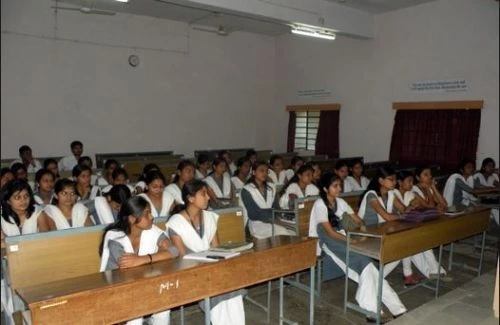
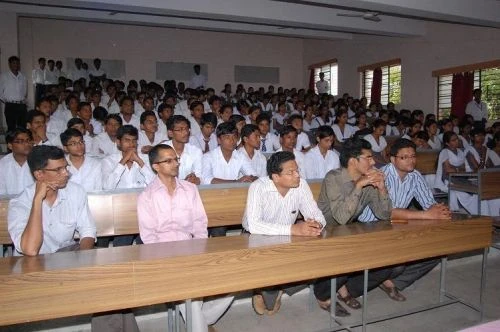
In this preview: 5 photos · 0 videos
Yes, BNCOE Pusad is considered good for Computer Science. The branch has the highest student intake (180 seats) and consistently achieves the best placement record among all engineering disciplines offered at the college.
The nearest major railway stations to Babasaheb Naik College of Engineering in Pusad are Nanded Junction and Akola Junction. Both stations are approximately 110 kilometers away from the campus, as there is no railway station within Pusad city itself.
Yes, the college facilitates various government scholarships for eligible students. All standard Maharashtra state scholarship schemes are applicable, including those for Economically Backward Class (EBC), SC, ST, OBC categories, and the Tuition Fee Waiver Scheme (TFWS).
Reviews from students indicate the hostel food at BNCOE Pusad is average, often rated around 3 out of 5. The food is generally reported to be hygienic, but the menu is noted to lack variety over time.
No, BNCOE Pusad is not an autonomous college. It is an affiliated institution, and its academic programs are governed by Sant Gadge Baba Amravati University.
Share what future students should know about BNCOE.
Student voices are not rewritten by colleges. We remove spam and abuse.
Wider admission question? Community PulseWhat should future students know?
Tell us which course you're considering. We'll help you work out the next step.
Get instant Partner access after mobile verification. Your public edits are reviewed before they go live.
Claim this college
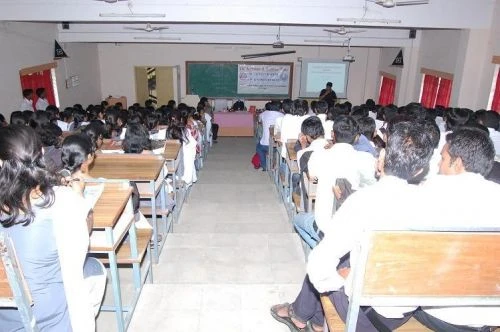
 Auditorium
 Cafeteria
 Computer Labs
 Gym
Gym Hostel
 Medical
 Science Labs
 Sports Complex
 Study Library