Loading Admission Guardian content
Loading Admission Guardian content

Find a program, read its fee details and explore the admission requirements.
Summary of the programs shown below. Fee periods can differ by program. Check the note beside each amount before comparing costs.
| Course | Stream | Fees |
|---|---|---|
| Ph.D. (Management Studies) | Management | 14571 |
| Master of Business Administration [MBA] | Management | 65000 |
| Bachelor of Business Administration [BBA] | Management | 70000 |
| Executive Master of Business Administration [EMBA] | Management | 76594 |
| Master of Business Administration [MBA] (Executive) [System] | Management | 76594 |
Specializations
Eligibility: Post Graduation
Specializations
All accepted exams
Eligibility: Graduation with 50% + CAT
Specializations
Eligibility: 10+2
Specializations
All accepted exams
Eligibility: Graduation
Specializations
All accepted exams
Eligibility: Graduation
4 exams with cutoff data available - showing recent entries
 Accenture
 Adventity BPO India Pvt. Ltd.
 Amul
Amul Angel Broking
 Aspire Systems
 Atos Origin
 Aviva
Aviva Axis Bank
 Bajaj Allianz
 Bajaj Auto
 Bajaj Finserv Ltd.
 Bank of Baroda
 BASIX
BASIX Bharat Forge Limited
 Big Bazaar
 Cadbury
 Calsoft
 Citi Bank
 Colgate Palmolive India Ltd.
 Crisil
 Cummins India Ltd
 E-Clerx
 Eaton
Eaton eClerx Services
 Emerson Design Engineering Centre
 Engineers (India) Ltd.
 Ernst & Young
 Fiserv
 fortis hospitals
 Future Group
 Geometric Ltd.
 Godrej & Boyce
 Grand View Research
 HCL Comnet
 HCL Info System
 HCL Technologies
 HDFC Bank
 Honeywell
 IBM
IBM ICICI Bank
 ICICI Prudential
 IDBI Bank
 India Bulls
 Indiabulls
 Infosys
 IQVIA
IQVIA Kirloskar Brothers
 Kotak Life Insurance
 Kotak Mahindra Bank
 Kotak Securities
 KPIT Cummins
 L&T Infotech
 Larsen & Toubro Ltd.
 LG Electronics
 Maersk Sealand
 Markets & Markets
 MetLife
 MTS Telecom
 Nestle India
 Nihilent Technologies
 Nomura Services India (P) Ltd.
 Novartis
 Oracle
 Pantaloons
 Parle Agro
If you're looking for a management degree that doesn't require a six-figure loan, the Department of Management Sciences at Savitribai Phule Pune University—universally known as PUMBA—is a name that comes up fast. Established in 1971, this university department has built a reputation as the ultimate high-ROI B-school in Western India. For a total MBA fee that can be under ₹1.5 lakhs for state students, the average placement package now hovers around ₹11 lakhs. That's a financial equation that's hard to beat, and it's the core of PUMBA's enduring appeal. You're not paying for marble lobbies or five-star hostels here. You're paying for a solid, no-frills education from a venerable public university, with the payoff coming swiftly at the end.
PUMBA's academic slate is pragmatic, built around its flagship MBA and a couple of niche programs that leverage its university setting. The two-year full-time MBA is the main event, with an intake of 180. They market it as "MBA++," which is essentially their branding for a standard MBA with specializations in Marketing, Finance, Systems, Operations, HR, and International Business. What's different is the academic calendar—PUMBA runs a trimester system, not semesters. That means more frequent exams and a faster pace, which some students appreciate and others find relentless.
The other standout is the MBA in Pharma-Biotech, a specialized track with 60 seats. It's one of the few of its kind in the country and has a stellar placement record in its niche. For undergraduates, there's a BBA in Hospitality and Facility Management. And for working professionals, PUMBA runs an Executive MBA program with evening batches.
Academically, it's a mixed bag. The faculty strength is modest, with about 20-25 core members, but over 90% hold PhDs—a decent ratio for a state institution. You'll find respected names like Dr. Prafulla Pawar (the Director) and Dr. B.V. Sangvikar. The grading follows SPPU's 10-point CGPA scale. The vibe in classrooms is functional. Don't expect the polished, corporate feel of a Symbiosis campus. You get whiteboards, projectors, and the sense that you're in a university department that prioritizes substance over style.
This is where PUMBA's story gets compelling. The numbers, frankly, are excellent for the price of entry. For the 2024-25 batch, the highest package offered so far is ₹19 LPA. The average is projected at ₹11.23 LPA, up from ₹9.40 LPA for the previous batch. The median package, which is often a more honest gauge, sits between ₹8.1 and ₹9 LPA according to student estimates.
But there's a crucial number that doesn't get highlighted in the brochures: the placement percentage. The official figure for 2024 was 80.7%. That's a decent outcome, but it means nearly one in five students from that batch did not secure a job through the campus process. It's a gap that prospective students should be aware of. The recruitment pool is solidly mid-tier. You'll see regular visits from Deloitte, PwC, Infosys, TCS, and Accenture for consulting and IT roles. The BFSI sector is strong with ICICI Bank, HDFC Bank, and Crisil. Core manufacturing companies like Tata Motors, MRF, and Whirlpool also recruit.
Internships see 100% assistance, with monthly stipends ranging from ₹15,000 to ₹25,000. The placement process is largely student-driven, which is a double-edged sword. It builds incredible leadership experience for the student coordinators, but it also means the process can feel less structured than at a corporate-run placement office.
The fee structure is PUMBA's biggest weapon. It's heavily subsidized for Maharashtra State (MS) candidates, creating that legendary ROI. For the general MBA, an MS candidate from the open category will pay roughly ₹1.3 to ₹1.5 lakhs for the entire two-year program. That's around ₹65k-75k per year. For Outside Maharashtra State (OMS) candidates, the fee jumps to ₹2.5-3 lakhs total. Reserved category students from Maharashtra pay even less, between ₹60,000 and ₹75,000 for the full course.
Hostel fees, if you can get a seat, are almost laughably low at ₹4,000 to ₹10,000 per year. But that's a big 'if'—we'll get to that. Government of Maharashtra scholarships for EBC, SC, ST, and OBC categories are applicable here. When you run the math, a state student paying ₹1.5 lakhs to land a ₹9-11 lakh job is an financial outcome that elite private B-schools charging ₹20 lakhs can't easily match on a pure return basis.
Admissions are strictly merit-based through the Maharashtra state's Centralized Admission Process (CAP). There is no management quota. For the general MBA, the primary entrance exam is the MAH MBA CET. The 2024 cutoffs for the open category were fiercely competitive, ranging from 99.11 to 99.85 percentile. PUMBA also accepts CAT, CMAT, MAT, ATMA, and XAT scores, primarily for filling the OMS seats. For CAT, you typically need a 75-80+ percentile to be in contention.
A key detail many miss: there is no Group Discussion or Personal Interview for the general MBA admission via CAP. Your seat is allocated based solely on your CET/CAT score and your academic profile. This is a major point of difference from private B-schools. The MBA Pharma-Biotech program prefers the ATMA score. For the BBA, you need to take SPPU's own Online Entrance Exam (OEE).
Here's where you trade luxury for legacy. PUMBA doesn't have a standalone campus; it's a department within the sprawling 414-acre Savitribai Phule Pune University. The setting is gorgeous—lush, green, and peaceful, a world away from Pune's traffic. Your library is the famed Jaykar Library, one of the largest in India. You'll have access to university sports grounds and a general atmosphere that's more collegiate than corporate.
The infrastructure specific to PUMBA is basic. Classrooms are adequate. Computer labs are modern and have 24/7 Wi-Fi. The biggest practical headache is accommodation. PUMBA has no dedicated hostel. It gets a minuscule allocation (maybe 10-20 seats per gender) in the vast SPPU university hostels. These hostels are cheap but extremely basic, with a 3/5 quality rating from students. The vast majority of PUMBA students live in private paying guest accommodations or hostels in nearby areas like Aundh, Model Colony, or Shivajinagar. Budget for this separately; it will be your biggest living expense.
The student sentiment is remarkably consistent across forums like CollegeDunia, Shiksha, and Reddit.
The praise is almost always about value. "You pay peanuts and get a gold mine" is a literal quote you'll see repeated. The SPPU brand carries significant weight in Maharashtra and the surrounding region. Students also love the responsibility they're given—managing placements, festivals, and committees themselves fosters a real sense of ownership and builds soft skills you won't get in a more controlled environment.
But the complaints are just as uniform. The administrative process is slow and bureaucratic, full of "typical government office vibes." The lack of proper hostel facilities is a constant gripe. Academically, some find the pressure less intense than at top-tier IIMs, which can be a pro or a con depending on your drive. The campus, while beautiful, means you're somewhat isolated from Pune's social hubs unless you venture out.
PUMBA is an exceptionally clear-cut choice for a specific type of student. If you are a Maharashtra state candidate with a high MAH CET percentile (99+), and your primary goal is to maximize the financial return on your management education, PUMBA is arguably the best option in India. The numbers don't lie. You'll graduate with minimal debt and a credible degree that opens doors to solid mid-tier companies.
However, if you're seeking a lavish campus life, cutting-edge infrastructure, or a brand name that resonates equally across India (versus strongly in the West), you might feel shortchanged. The experience is bare-bones and self-driven. OMS candidates paying the higher fee need to weigh whether the ROI still works for them compared to other options. And anyone who needs hand-holding through placements or academics should look elsewhere. PUMBA rewards the self-starter. It's a pragmatic, high-value launchpad for a business career, but you have to be the one to light the fuse.
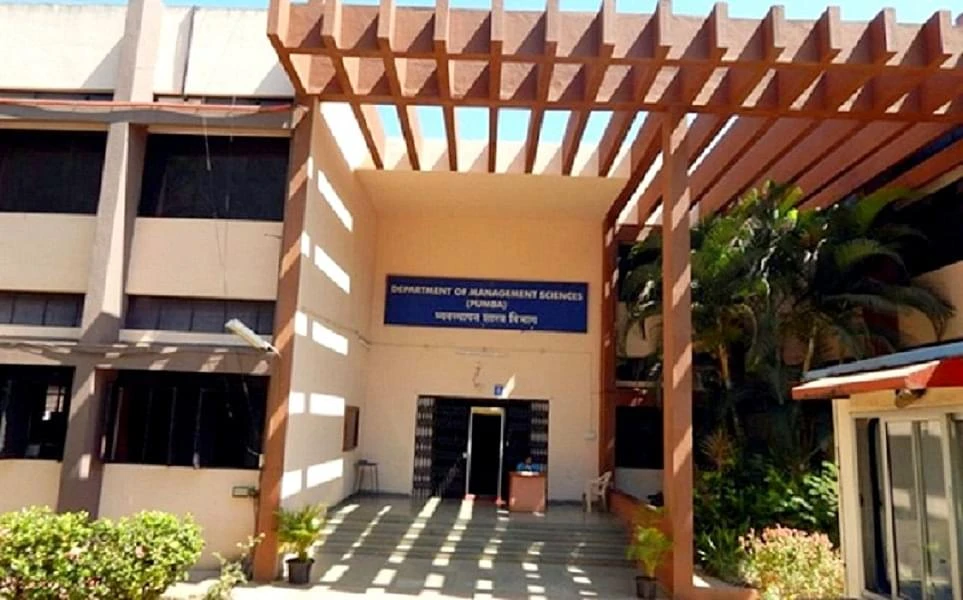
In this preview: 1 photo · 0 videos
Yes, PUMBA accepts CAT scores for the All India seats under the OMS (Outside Maharashtra State) category. However, the majority of its seats are filled through the state-level MAH MBA CET entrance exam.
In terms of Return on Investment (ROI), PUMBA is often considered better. Its fees are approximately one-fifth of those charged by comparable private colleges, while offering similar or better average placement packages.
No, there is no management quota at PUMBA. As a government department of Savitribai Phule Pune University, all admissions are conducted strictly on merit through the Centralized Admission Process (CAP) rounds.
PUMBA's MBA in Pharma-Biotech is a specialized program and one of the few of its kind in India. It has maintained a 100% placement record, with graduates placed in niche pharmaceutical companies and consulting firms.
The "MBA++" is the name PUMBA uses for its flagship two-year, full-time MBA program. The "++" signifies the program's additional functional specializations and its rigorous trimester academic structure.
Share what future students should know about PUMBA.
Student voices are not rewritten by colleges. We remove spam and abuse.
Wider admission question? Community PulseWhat should future students know?
Tell us which course you're considering. We'll help you work out the next step.
Get instant Partner access after mobile verification. Your public edits are reviewed before they go live.
Claim this college
 Pfizer
 Reliance communication Pvt Ltd
 Religare
 Royal Bank of Scotland
 S&P Capital IQ
 SBI Capital Markets Ltd
 SBI Life Insurance
 SG Analytics
 Spencers Retail
 Syntel
 Tata Consultancy Services
 TATA Technologies
 Union Bank of India
 Ventura Securities Ltd
 Videocon
 Vodafone
 Volkswagen
 Voltas
 Wipro
Wipro85 named recruiters in the recorded data. Company names are deduplicated.
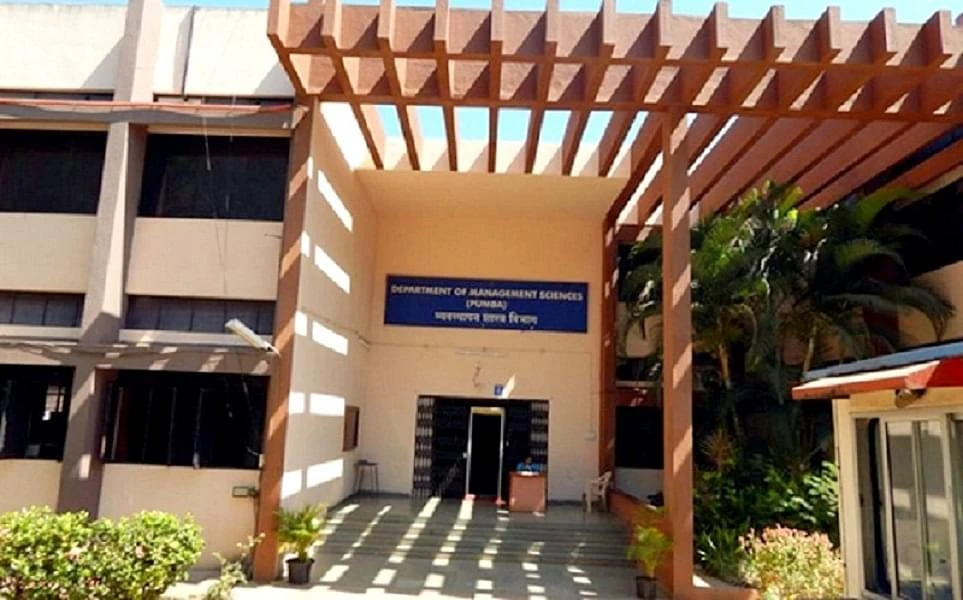
 Auditorium
 Cafeteria
 Campus Wi-Fi
 Computer Labs
 Hostel
 Medical
 Science Labs
 Sports Complex
 Study Library