Loading Admission Guardian content
Loading Admission Guardian content
Provisional score based on available data. It may change as more information is verified.
Find a program, read its fee details and explore the admission requirements.
Summary of the programs shown below. First-year fee. Check the note beside each amount for inclusions and exclusions.
| Course | Stream | Fees |
|---|---|---|
| Diploma in Engineering (Polytechnic) | Engineering | 25000 |
| Bachelor of Technology [B.Tech] | Engineering | 50000 |
| Master of Technology [M.Tech] | Engineering | 75000 |
Specializations
All accepted exams
Eligibility: 10th
Specializations
All accepted exams
Eligibility: 10+2 with 45% + TS EAMCET
Specializations
All accepted exams
Eligibility: Graduation with 50% + AP PGECET
2 exams with cutoff data available
 Accenture
 Adaequare Business Solutions
 ADP Private Limited
 Birlasoft
 Cognizant
 Cordys Software India Pvt. Ltd.
 CSC India
 Dell
Dell Deloitte
 Gemini Communication Ltd
 Genpact
 Google
 Hewlett-Packard (HP)
 Honeywell
 HSBC Bank
 IBM
IBM Infosys
 InfoTech
 JDA Software India Pvt. Ltd.
 Mahindra Satyam
 Microsoft
 Motorola India Limited
 Nokia
Nokia Oracle
 Polaris
 Qualcomm India Pvt. Ltd.
 Scope Services
 Synopsys
 Tata Power
 TCS
TCS Verizon
 Visual Soft
 Wipro
Wipro Xilinx
Dr. Paul Raj Engineering College sits on the banks of the Godavari River, a quiet, green campus in a rural part of Andhra Pradesh. Founded in 1997 and affiliated with JNTU Kakinada, it’s a private institution that serves a specific, local student population looking for an affordable engineering degree. The reality here is one of modest expectations. You won’t find national rankings or high-flying corporate recruiters making regular trips. What you will find is a functional, AICTE-approved college where placement numbers are driven more by student hustle at off-campus drives than by a powerhouse training and placement cell. It’s a college defined by its location—peaceful, isolated, and with infrastructure that students say needs serious attention, especially the hostels. For the right student, with the right expectations and a willingness to self-drive their career, DPREC can be a stepping stone. For others, the remoteness and reported maintenance issues might be a deal-breaker.
DPREC runs the standard JNTUK curriculum across its engineering programs. The B.Tech offerings are the main draw, with Computer Science and Engineering (CSE) being the most sought-after branch, followed by ECE, EEE, Mechanical, and Civil. Each department operates from its own block on the spacious campus. Postgraduate M.Tech programs are available in a few specializations like Embedded Systems, and there's also a three-year Diploma (Polytechnic) track.
The faculty, numbering around 80-100, are frequently described in student reviews as approachable and supportive. Many act as mentors. But there's a caveat. The majority are Assistant Professors with M.Tech qualifications; PhD holders are limited. This means while teaching for the university syllabus is covered, the depth of cutting-edge technical expertise or research guidance can be thin. The academic rhythm is entirely dictated by JNTUK's semester system. You'll follow their calendar, their exams, and their grading scale. It's a straightforward, no-frills academic experience that gets the job done for a degree, but students in branches like CSE consistently note that keeping up with industry trends requires significant self-initiative and online learning.
This is where the college's promotional material and ground reality often diverge. The official Training & Placement Cell aims for 100% placement. The consensus from student reviews across platforms like Shiksha suggests a more realistic on-campus placement rate is between 50% and 70%. The gap is filled by students securing jobs through off-campus drives, regional pool campus events, or on their own.
The reported highest package for the 2024-25 cycle was 12 LPA for a CSE student—an outlier. The median and average figures are far more telling, sitting in the range of ₹2.76 LPA to ₹4.5 LPA. That's a modest starting point, typical for many regional private colleges. Recruiters like Infosys, Wipro, TCS, and Tech Mahindra do appear on the college's list, but placements with these giants often happen through pooled drives where students from several local colleges compete together, not via exclusive on-campus visits. Other recruiters include IT services firms like Capgemini, Cognizant, and a handful of core engineering companies such as the Aditya Birla Group. About 70% of students manage to land an internship, frequently through self-sourcing on AICTE portals. The verdict? The placement cell provides a basic platform and access to some drives, but landing a good job is largely contingent on a student's individual skills and proactive effort.
Affordability is a key selling point for DPREC. The B.Tech tuition fee is notably low, estimated between ₹35,000 and ₹43,000 per year. That puts the total four-year degree cost roughly between ₹1.4 and ₹1.72 lakhs, excluding hostel and other charges. M.Tech and Diploma programs are similarly priced. The significant financial aid comes from the Andhra Pradesh state government schemes. Eligible local students can avail of the Jagananna Vidya Deevena (JVD) and Vasathi Deevena scholarships, which are designed to cover full tuition and hostel fees respectively for economically disadvantaged students. This makes DPREC a viable option for many in the region who benefit from these schemes. Hostel and mess fees are extra, estimated at around ₹40,000-₹50,000 per annum, though this is an unverified figure. The overall cost structure positions DPREC as a budget-conscious choice in engineering education.
Admission is entrance-exam driven. For B.Tech, you need to appear for the state-level AP EAPCET. M.Tech admissions require a score from AP PGECET or GATE, and Diploma admissions are through AP POLYCET. The college fills 70% of its seats through the state counseling process (Convener Quota) based on your EAPCET rank, and the remaining 30% are Management Quota seats, which are more expensive.
The cutoffs aren't high, reflecting the college's position in the market. For the 2024 general category in Round 1, the closing ranks for B.Tech branches were:
These ranks give you a clear idea: if your AP EAPCET rank is within the 1 to 1.8 lakh range, you have a solid chance at securing a seat here through counseling. The process is managed online through the official state counseling websites, not directly through the college.
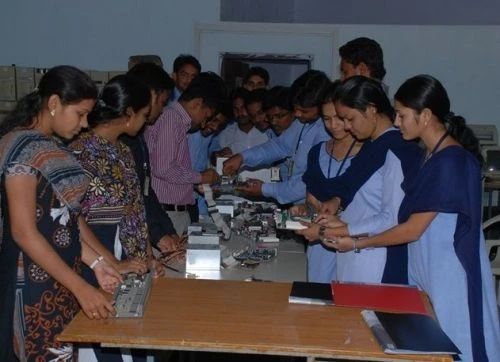
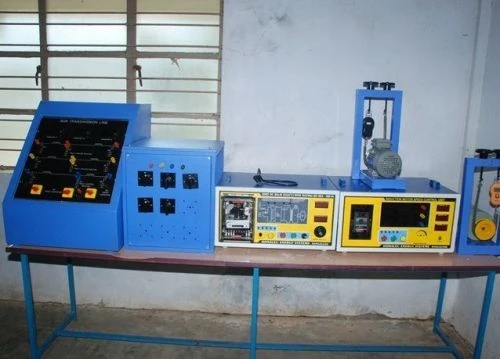
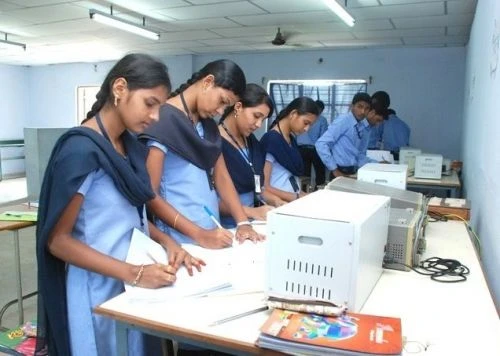
The campus is described as green and peaceful, leveraging its riverside location. Infrastructure is basic but covers the essentials: a central library with over 30,000 books, departmental labs, Wi-Fi (with average speeds, per students), and sports facilities for cricket and volleyball. College buses ferry day scholars from Bhadrachalam town and nearby areas.
The hostel experience, however, is the most consistent pain point in student feedback. While separate facilities for boys and girls exist, reviews are filled with complaints about water shortages and poorly maintained washrooms. The food in the mess gets average to below-average ratings, leading many students to opt for outside meals. It's a significant livability issue that the college management is repeatedly urged to address. Socially, life is quiet. The annual fest "Magnotssav" is the main event. The rural location means you're not in a hub of inter-college competitions or urban amenities. It’s a campus where you can focus on your studies without distraction, but you also have to make your own fun.
Synthesizing the chatter from review sites and forums, a clear picture emerges. The faculty gets good marks for being friendly and supportive—"like family," as one student put it. The natural campus environment is appreciated. But the praise often ends there.
The criticism is focused and repeated. Hostel infrastructure, specifically water supply and sanitation, is the biggest grievance. Placement promises are taken with a grain of salt; students understand that the onus is on them to build skills and hunt for opportunities beyond what the college directly provides. The administrative machinery is seen as slow. The location is a double-edged sword: serene but isolated, with "dusty" roads connecting it to the outside world. The consensus advice from alumni is pragmatic: "Don't expect high-end placements; you have to work hard on your own skills."
DPREC is a college of context. It's not a destination for someone aiming for top-tier NIRF rankings or dreaming of 20 LPA campus placements. Its value proposition is built on affordability, accessibility via state entrance exams, and a peaceful (if remote) study environment. It's best suited for students from the surrounding regions of Andhra Pradesh who secure admission through the AP EAPCET with ranks around 1-1.8 lakhs, especially those who qualify for the state's full-tuition scholarship schemes. For them, it provides a legitimate, accredited pathway to a B.Tech degree at minimal cost.
However, you should look elsewhere if hostel comfort and vibrant campus life are priorities, or if you expect a college to be the primary engine for your career launch. Success here requires a high degree of self-motivation—to compensate for academic limitations with online courses, to aggressively pursue off-campus placements, and to tolerate basic living conditions. In short, DPREC is a functional, budget option that can work, but it demands more from its students in return for its lower fees.
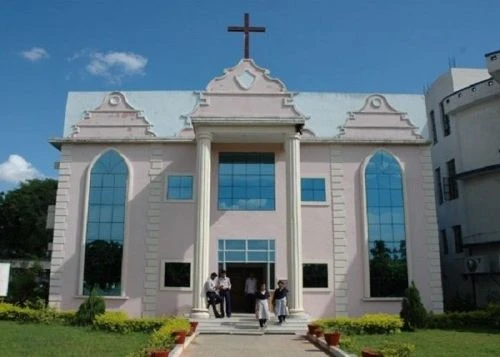
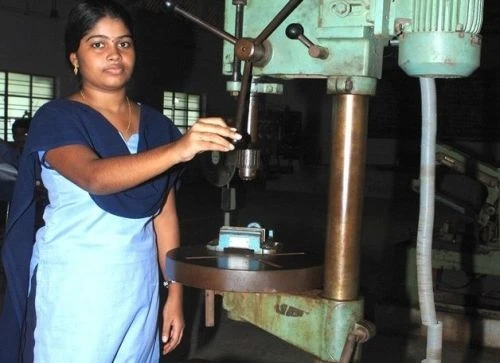
In this preview: 5 photos · 0 videos
Yes, DPREC is considered good for Computer Science as it is the most popular branch and has the highest placement rate, approximately 70%. However, students are advised that self-learning is important to master advanced technologies beyond the core curriculum.
The fee for B.Tech through the management quota at Dr. Paul Raj Engineering College typically ranges from ₹50,000 to ₹70,000 per year. The exact amount depends on the specific engineering branch and can be subject to negotiation.
Yes, Dr. Paul Raj Engineering College provides separate and secure hostel facilities for girls on its campus.
For the general category, the EAPCET cutoff for the Computer Science Engineering (CSE) branch at DPREC generally closes between 1.2 lakh to 1.7 lakh rank.
Dr. Paul Raj Engineering College is located in Andhra Pradesh, specifically in the ASR District. The campus is situated very close to the border of Telangana, near Bhadrachalam.
Share what future students should know about DPREC.
Student voices are not rewritten by colleges. We remove spam and abuse.
Wider admission question? Community PulseWhat should future students know?
Tell us which course you're considering. We'll help you work out the next step.
Get instant Partner access after mobile verification. Your public edits are reviewed before they go live.
Claim this college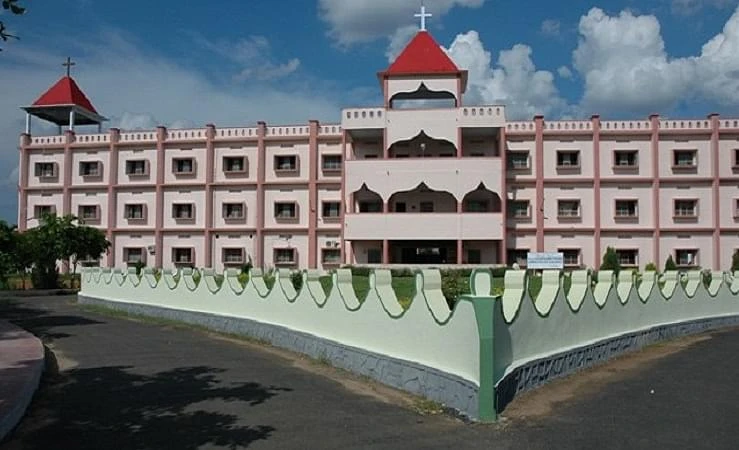
 Auditorium
 Cafeteria
 Campus Shuttle
 Computer Labs
 Gym
Gym Hostel
 Science Labs
 Sports Complex
 Study Library