Loading Admission Guardian content
Loading Admission Guardian content
Provisional score based on available data. It may change as more information is verified.
Find a program, read its fee details and explore the admission requirements.
Summary of the programs shown below. Total course fee. Check the note beside each amount for inclusions and exclusions.
| Course | Stream | Fees |
|---|---|---|
| Post Graduate Program in Management [PGPM] | Management | 909000 |
All accepted exams
Eligibility: Graduation with 50%
2 exams with cutoff data available
 99Acres
 Abbott Healthcare Pvt. Ltd.
 Aditya Birla Group
 Agilent Technologies
 Airtel
 American Express
 Amul
Amul Arcesium
 Archelons
 Arvind Lifestyles
 Asian Paints
 Avery Dennison
 Axience
 Bajaj Allianz
 Bajaj Auto
 Bank of America
 Bank of India
 Berger
 Bharti AXA Life Insurance
 Birla Sun Life Insurance
 Boston Analytics
 Bunge India
 CA Technologies
 Cafe Coffee Day
 Capital First Limited
 Capital Via
 CavinKare
 CBRE
CBRE Central Bank of India
 Citi Bank
 Citigroup
 Cognizant
 Colgate Palmolive India Ltd.
 CoreEL Technologies
 Crisil
 Croma Electronics
 Daimler
 DCB Bank
 Decathlon
 Deloitte
 DHL
DHL DLF
DLF East India Securities
 eClerx Services
 Edelweiss
 Endeavour – The Mobility Company
 Epic Research Pvt Ltd
 Ernst & Young
 Factset
 FinEdge
 Ford India Ltd
 GE Commercial Finance
 Genpact
 GIRNAR
 Goldman Sachs
 Google
 Greenply Industries Ltd.
 Grofers
 HDFC Bank
 HDFC Ergo
 HDFC Life
 Home First Finance Company India Private Limited (HFFC)
 Howden India
 ICICI Bank
 ICICI Prudential
ICFAI Business School (IBS) Ahmedabad is a prominent regional campus of the wider ICFAI network, located in the commercial heart of Gujarat. Established to provide management education that bridges the gap between academic theory and corporate practice, the Ahmedabad campus focuses exclusively on delivering the Post Graduate Program in Management (PGPM).
For MBA aspirants navigating the complex landscape of Indian business schools, IBS Ahmedabad represents a specific strategic option. It is not an elite, top-tier national institution that competes with the IIMs or XLRI, but rather a solid, middle-tier regional hub that offers accessible entry requirements, a proven case-based curriculum, and consistent mid-level corporate placements. This guide breaks down every material aspect of the institution -- from admission cutoffs and the true cost of attendance to placement realities and campus infrastructure -- to help applicants determine if IBS Ahmedabad is the right fit for their career trajectory.
Understanding the exact nature of the credential offered at IBS Ahmedabad is the first critical step for any applicant. While the flagship IBS Hyderabad campus awards a Master of Business Administration (MBA) degree due to its university status, IBS Ahmedabad offers a Post Graduate Program in Management (PGPM).
The PGPM is an autonomous certificate program. It is designed with the same academic rigor and pedagogical framework as the MBA programs across the IBS network, but applicants must be aware of the nomenclature difference. For the vast majority of private-sector employers in banking, financial services, IT, and consulting, the PGPM is treated with equal weight as an MBA during the recruitment process. The ICFAI brand name carries established equity in the corporate sector, and hiring managers focus primarily on the skills and competencies demonstrated by the graduates.
However, the PGPM nomenclature can be a limitation for candidates who plan to pursue higher education, such as a Ph.D., or those who wish to apply for specific public sector (government) jobs that strictly mandate a university-awarded Master's degree or an AICTE-approved PGDM. Applicants must weigh this distinction based on their long-term career aspirations.
The Ahmedabad location serves as a strategic advantage. Gujarat is a highly industrialized state with a robust entrepreneurial ecosystem and a strong presence of banking, manufacturing, and trading corporations. The campus leverages this local corporate ecosystem for guest lectures, industry visits, and local placement opportunities.
The defining characteristic of an IBS education, regardless of the campus, is its heavy reliance on the case-study methodology. IBS Ahmedabad mirrors this pedagogical approach, moving away from traditional rote learning and passive lectures toward interactive, problem-solving classrooms.
The curriculum is delivered almost entirely through business cases. Many of these cases are developed internally by the globally recognized IBS Case Research Center (CRC), which ranks among the top case contributors globally alongside institutions like Harvard and INSEAD. Students also study external cases from international publishers. This methodology forces students to step into the shoes of business managers, analyze incomplete data, identify core problems, propose actionable solutions, and defend their logic in front of their peers. It builds critical thinking, sharpens communication skills, and simulates the pressures of real corporate decision-making.
A major differentiator for IBS Ahmedabad is the duration and structure of its Summer Internship Program (SIP). While most Indian B-schools mandate an internship of 8 to 10 weeks, the IBS SIP spans a full 14 weeks.
This extended duration provides a significant advantage. It allows students to move beyond superficial observation and take ownership of substantive, end-to-end projects. Corporate mentors prefer the 14-week model because it gives interns enough time to understand the business context, execute a project, and deliver measurable results. For students, this prolonged corporate immersion acts as an extended interview, significantly increasing the probability of securing a Pre-Placement Offer (PPO). During the SIP, students are dual-mentored by a faculty guide from the campus and a company guide from the host organization, ensuring academic rigor is applied to practical tasks.
The academic environment is demanding, characterized by continuous evaluation rather than a single end-of-semester exam. Students are assessed heavily on class participation, group presentations, assignments, and case analyses. Furthermore, the institute places a strong emphasis on soft skills development, recognizing that communication, leadership, and adaptability are just as critical as technical business acumen in the modern workplace.
Admission to IBS Ahmedabad is conducted through a centralized process managed by the ICFAI Foundation for Higher Education. The unified application portal allows candidates to apply to all nine IBS campuses simultaneously.
IBS is highly accessible due to the wide range of entrance exams it accepts. Candidates can apply using scores from the institute's own exam (IBSAT) or national-level tests including CAT, NMAT by GMAC, XAT, and GMAT.
While IBS does not publish hard cutoff lists in the manner of public universities, historical data and admission trends establish clear qualifying thresholds:
Meeting these thresholds does not guarantee a seat; it merely acts as a qualifying filter for the next phase of the admission process.
Candidates who clear the exam cutoffs are invited to the selection process, which is traditionally held centrally (often in Hyderabad or other designated regional centers) between February and March, with occasional subsequent rounds extending into the summer depending on seat availability.
The selection process drops the traditional Group Discussion (GD) in favor of a Micro Presentation (MP). In the MP, a candidate is given a topic (ranging from current economic affairs to abstract concepts) and a few minutes to prepare, followed by a brief presentation to the panel. This format directly tests a candidate's ability to think on their feet, structure their thoughts logically, and communicate confidently under pressure.
The Micro Presentation is followed by a Personal Interview (PI). The PI panel probes the candidate's academic background, general awareness, career motivations, and behavioral traits.
The final admission decision is based on a composite score. This score heavily weighs the candidate's performance in the Micro Presentation and Personal Interview, alongside their entrance exam scores and past academic record (marks obtained in Class 10, Class 12, and Graduation). This holistic evaluation means that a stellar interview can often compensate for a borderline entrance exam score.
Financial planning is a critical component of the B-school decision process. IBS Ahmedabad is positioned as a moderately priced program, especially when compared to the flagship Hyderabad campus.
For the upcoming 2026-2028 academic batch, the official tuition fee for the two-year PGPM at IBS Ahmedabad is Rs. 9,09,000. This is significantly lower than the Rs. 17,01,000 fee charged for the MBA at IBS Hyderabad. The tuition is generally payable in installments spread across the academic semesters.
When evaluating the financial commitment, applicants must look beyond the tuition fee and calculate the true Cost of Attendance. The most significant additional expense at IBS Ahmedabad stems from the lack of on-campus housing.
Because the institute does not provide an on-campus hostel, all outstation students must secure independent accommodation in Ahmedabad or nearby Gandhinagar. The administration provides assistance and references for local Paying Guest (PG) facilities and rental apartments, but the financial burden falls entirely on the student.
Living expenses in a tier-1 city like Ahmedabad -- covering rent, food, commuting, internet, and personal expenses -- can easily average between Rs. 10,000 to Rs. 15,000 per month. Over a 24-month program, this adds roughly Rs. 2.5 Lakhs to Rs. 3.5 Lakhs to the total cost. When factoring in a laptop, books, and the initial application fees, the total outlay for a student at IBS Ahmedabad will realistically sit between Rs. 12 Lakhs and Rs. 13 Lakhs.
Educational loans are widely accessible, and ICFAI's established reputation ensures that most major banks recognize the PGPM program for loan approvals.
Placement data is the ultimate acid test for a business school. IBS Ahmedabad maintains a reliable, stable placement record, though it is essential to interpret the numbers with proper context.
The campus consistently achieves a high placement rate, generally reporting between 95 percent and 98 percent of the participating cohort securing offers. This high volume of placements is a testament to the strength of the centralized IBS Career Management Center (CMC) and the expansive alumni network.
For the 2024 graduating batch, the highest reported package stood at Rs. 12.00 Lakhs Per Annum (LPA), with the average package settling at Rs. 7.79 LPA. Early figures for the 2025 batch show a slight contraction at the top end, with the highest package reported at Rs. 10.34 LPA, while the average package remained steady, showing a marginal increase to Rs. 7.81 LPA. The placement rate for 2025 was robust at 95 percent.
The stabilization of the average package around the Rs. 7.8 LPA mark indicates a consistent pipeline of entry-to-mid-level corporate roles. The drop in the highest package from 2024 to 2025 reflects broader macroeconomic corrections and a tighter hiring environment in specific high-paying sectors, rather than a structural decline in the institute's quality.
The recruiting companies are predominantly drawn from the Banking, Financial Services, and Insurance (BFSI) sector, followed by IT/ITES, Consulting, FMCG, and EdTech. Common roles offered include Management Trainee, Business Analyst, Sales Manager, Relationship Manager, and Tax Associate.
With a realistic total cost of attendance hovering around Rs. 12.5 Lakhs and an average starting salary of Rs. 7.8 LPA, the immediate financial ROI is moderate. The payback period for an educational loan covering the full amount would typically range from 2.5 to 3.5 years, assuming disciplined financial management. While it does not offer the immediate wealth generation of top-tier IIMs, it provides a financially viable entry point into the organized corporate sector, particularly for students who might not have secured 95+ percentiles in national exams.
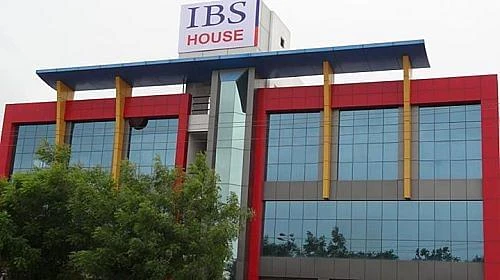
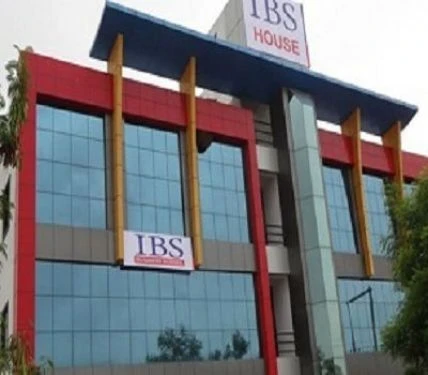
IBS Ahmedabad operates out of a compact, urban campus. Located opposite Annapurna Dham on the Adalaj Koba Road, the campus is spread across just 1.31 acres.
Despite its small physical footprint, the campus is equipped with modern academic infrastructure. The classrooms are air-conditioned and designed as "smart" learning spaces to facilitate interactive case discussions and presentations. A dedicated computer lab ensures students have the necessary IT resources for research and data analysis.
The academic heart of the campus is the NJ Yasaswy Library. It is well-stocked with over 27,000 physical volumes and provides digital access to extensive corporate databases, academic journals, and industry reports (such as EBSCO), which are vital for daily case preparation.
The most defining aspect of student life at IBS Ahmedabad is the lack of an on-campus hostel. The 1.31-acre campus is strictly an academic and administrative hub. Consequently, the institution operates on a day-school model.
This setup significantly alters the traditional MBA experience. Without residential facilities, peer-to-peer learning and networking often happen during formal campus hours or off-campus in student-rented apartments. While Ahmedabad is a safe and relatively affordable city that welcomes students, applicants must be prepared for the logistical realities of commuting and managing daily living chores alongside a demanding academic schedule. The campus does feature a cafeteria, basic sports facilities, and an amphitheater for events, but it does not offer the immersive, 24/7 campus life found at larger, residential universities.
Choosing IBS Ahmedabad requires a clear understanding of its market position. It is an institution that delivers solid foundational business education and reliable employment outcomes, provided the applicant has aligned expectations.
Ultimately, IBS Ahmedabad operates as a pragmatic, effective bridge into the corporate sector. It leverages a rigorous curriculum and a massive alumni network to offset its small physical footprint, offering a dependable outcome for students focused on career execution rather than academic prestige alone.
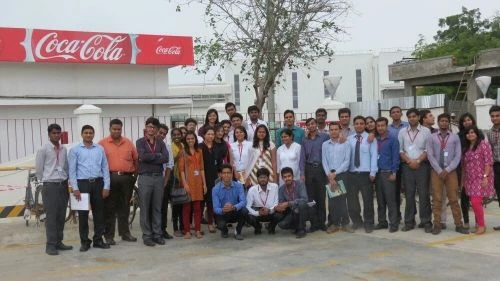
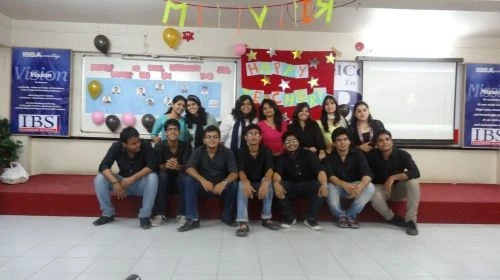
In this preview: 5 photos · 0 videos
Mumbai and Pune campuses generally have better placement packages due to their location advantages. However, IBS Ahmedabad is considered a strong "Value for Money" alternative with lower competition among students.
IBS Ahmedabad provides a PGPM (Post Graduate Program in Management). It is AICTE approved and industry-recognized as equivalent to an MBA, but it is technically a certificate program, not a degree.
No, the IBS Ahmedabad campus is non-residential. Students must arrange for private paying guest (PG) accommodations or other housing options nearby.
In the selection process, the Micro Presentation requires candidates to pick a random topic, prepare for 1 minute, and then speak for 3 minutes. This exercise has replaced the Group Discussion (GD) in recent admission cycles.
The IBSAT exam is generally considered easier than major MBA entrance exams like CAT or XAT. It focuses more on speed and basic aptitude rather than on complex, high-difficulty problem-solving.
Share what future students should know about IBS.
Student voices are not rewritten by colleges. We remove spam and abuse.
Wider admission question? Community PulseWhat should future students know?
Tell us which course you're considering. We'll help you work out the next step.
Get instant Partner access after mobile verification. Your public edits are reviewed before they go live.
Claim this college ICICI Securities
 ICRA
ICRA Idea Cellular
 IIFL
IIFL India Bulls
 Infraline
 Intellecap
 ITC Hotels
 Jaro Education
 Just Dial
 Khimji Ramdas
 Kotak Mahindra Bank
 Kotak Mahindra Old Mutual Life Insurance Limited
 Kotak Securities
 KPMG India
 L&T Ltd.
 Magma Design Automation India Pvt Ltd
 Naukri.com
 Oracle
 Orient Cements
 Pantaloons
 Pepsico Holdings (I) Pvt. Ltd.
 Pipal Research
 PWC
PWC Raheja Developers Ltd.
 Reliance
 Royal Sundaram
 SBI Life Insurance
 Sterling holidays
 Sundaram Fasteners
 TCS
TCS Thomson Reuters
 TNS India
 Tolaram Corporation Pte Ltd
 Trimex
 Vedanta
 Vodafone
 Wipro
Wipro Zinnov
 Zomato
105 named recruiters in the recorded data. Company names are deduplicated.
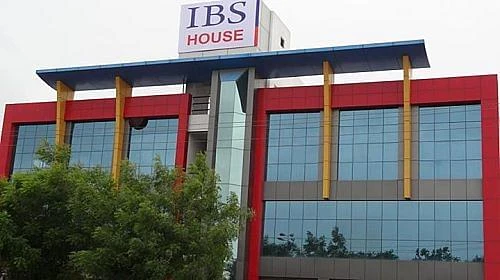

 Auditorium
 Cafeteria
 Campus Security
 Computer Labs
 Gym
Gym Medical
 Science Labs
 Sports Complex
 Study Library