
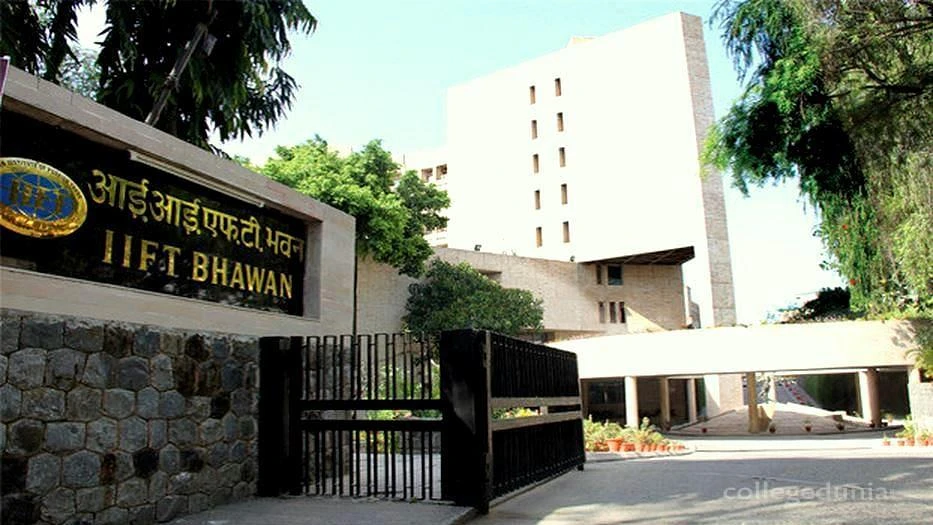



IIFT placements: MBA-IB and MBA-BA cohorts reported separately
IIFT’s available placement evidence describes different graduating cohorts for its full-time MBA programmes. The 2025 final-placement highlight covers MBA-International Business (MBA-IB) 2023-25. The 2024-25 annual report describes the inaugural MBA-Business Analytics (MBA-BA) graduating cohort, also 2023-25. Their figures should not be combined: each belongs to a named programme and graduating batch, and the source uses distinct placement publications. None of these results guarantees an individual offer or salary. Final Placement Highlights 2025 · Annual Report 2024-25
MBA-IB final placements, batch 2023-25
The institute’s 2025 final-placement highlight reports an average CTC of ₹31.3 lakh per annum and a median CTC of ₹26 lakh for MBA-IB 2023-25. It lists the highest domestic CTC as ₹72 lakh and highest international CTC as ₹1.23 crore. The average for the top quartile is reported at ₹49.6 lakh. The report also records 135 participating recruiters, including 45 new corporate associations, and states that more than 38% of the batch secured pre-placement offers.
These figures answer different questions. The average is the mean reported CTC for the cohort; the median is the midpoint of the distribution. The highest domestic and international offers are extremes, not typical outcomes. The top-quartile average describes a subset, not the cohort as a whole. Recruiter participation counts organisations and does not directly state how many students received offers. PPO share is reported as a share of the batch, but applicants should consult the complete report for its denominator and definition.
MBA-BA final placements, inaugural batch 2023-25
The 2024-25 annual report identifies MBA-BA 2023-25 as the programme’s inaugural final-placement cohort. It reports an average CTC of ₹25.3 lakh, median CTC of ₹20 lakh, highest domestic offer of ₹72 lakh and highest international offer of ₹60 lakh. The report says the cycle drew participation from 25+ new corporate associations and numerous recruiters; it does not specify a total recruiter count. This is a smaller, first graduating cohort, so it should not be treated as a trend line or directly compared with a more established programme without checking cohort size, eligible students and reporting definitions.
The same annual report gives separate summer-placement figures for MBA-BA 2024-26. It reports participation from 38 recruiters and lists the highest stipend as ₹4 lakh, average stipend as ₹1.41 lakh and median stipend as ₹1.10 lakh for a two-month internship. A summer stipend is not an annual salary or final-placement CTC. Keep the MBA-BA internship cohort distinct from its graduating batch.
How to compare CTC and offers
CTC is not necessarily the same as fixed take-home pay. It can include variable pay, benefits or other components; the cited headline figures do not provide a complete salary-component breakdown. Compare fixed compensation, variable share, role, location and benefit structure when evaluating an offer. A higher CTC can reflect a different mix of components rather than a proportionally higher monthly salary.
The MBA-IB and MBA-BA reports also differ in edition and presentation. The 2025 placement highlight is the direct source for MBA-IB 2023-25, while the institute’s annual report is the source for MBA-BA final and summer placements. Avoid reading the MBA-IB average as a guarantee for the next batch, transferring its recruiter count to MBA-BA, or treating the MBA-BA inaugural outcomes as representative of future years. The data establish what the sources report for those cohorts; they do not independently establish a placement rate, number of unique offers or outcomes for every eligible student.
What these summaries do not establish
The published highlights are outcome summaries, not a complete student-level distribution. The headline figures alone do not show how many students were eligible, whether all students seeking placement were included, how many offers were accepted, or how many students received more than one offer. A recruiter count is not a count of unique students hired. Nor does a maximum offer describe the typical role or compensation available to most candidates. The MBA-BA report’s inaugural label is a particular reason to wait for additional graduating cohorts before inferring a stable pattern.
For a closer comparison with another institute, request both institutions’ underlying reports for the same graduating year and programme type. Check whether one reports domestic CTC and another blends domestic and international offers; confirm whether averages exclude unplaced students or use only placed candidates; and inspect any variable-pay or joining-bonus treatment. If the college does not provide these definitions, retain that limitation rather than estimating a placement rate from the recruiter or offer figures.
Questions to ask before using the figures
Ask for the latest programme-specific placement report and whether it covers the same graduating batch as the headline summary. Confirm batch size, number eligible, number opting out, number placed, whether the measure counts students or offers, and how CTC is calculated. For MBA-BA, ask for additional cohorts as they become available; the 2023-25 final report is explicitly inaugural. For internships, confirm duration, stipend basis and whether the figure is per month or for the complete internship; the cited MBA-BA summer values are for two months.
The prudent reading is therefore cohort-specific: MBA-IB’s reported 2023-25 average and median come from the 2025 placement highlight; MBA-BA’s reported 2023-25 values come from its inaugural cohort in the annual report; and MBA-BA’s summer figures describe a separate 2024-26 internship cohort. Use these as historical evidence to frame questions, not as an individual earnings forecast or a direct comparison of programme quality.
Sources: IIFT Final Placement Highlights 2025 · IIFT Annual Report 2024-25