
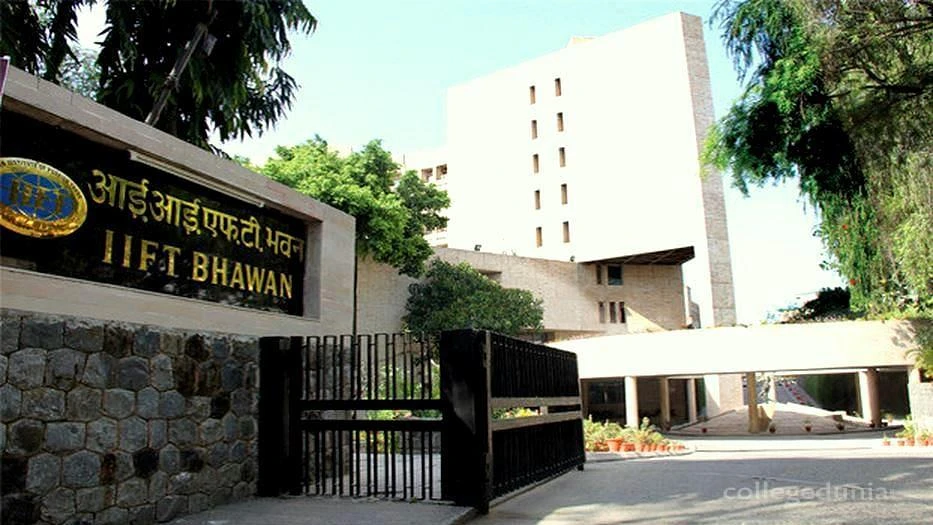

IIFT scholarships: 2027-29 support, eligibility and verification
IIFT’s 2027-29 prospectus describes a merit-cum-means scholarship for students in full-time or regular programmes, refers to central government schemes through the National Scholarship Portal, and names a separate Exim Bank scholarship for a reserved-category topper. These are distinct routes with separate conditions; the prospectus does not promise that every student meeting one condition will receive funding. Applicants should confirm the active rules, deadlines and documents before reducing a fee budget by any expected award. IIFT 2027-29 Prospectus · National Scholarship Portal
IIFT merit-cum-means scheme
The prospectus says IIFT’s New Scholarship Scheme disburses 20% of programme tuition to 10% of admitted students in full-time or regular programmes. It states that students with annual family income below ₹8 lakh may apply and that the income ceiling is subject to revision. The 20% figure describes the scholarship share of programme tuition, while 10% describes the stated share of admitted students who receive disbursement under the scheme. Neither number means that every applicant below the income threshold is awarded support.
The wording makes the scheme competitive and subject to selection. Applicants should ask IIFT how merit and financial need are assessed, which income evidence is accepted, whether household definitions or category rules apply, when awards are announced, and whether the award continues into the second year. The prospectus does not provide enough detail in this summary to assume an automatic renewal or to calculate an individual scholarship from the gross fee. Check the official notice and current institute instructions for the applicable batch.
Central scholarships through the National Scholarship Portal
The prospectus points full-time MBA-IB and MBA-BA students to central scholarship schemes on the National Scholarship Portal. It names schemes for students with disabilities, minority communities, Scheduled Caste students, OBC/EBC/DNT students and Scheduled Tribe students. The portal publishes the scheme-specific eligibility, application period, document checklist and renewal conditions. IIFT’s reference to those routes is not itself an award decision or proof that every student in a named category is eligible under every scheme.
Applicants should use the portal to identify the exact scheme that applies to their category and course. Check whether the programme and institution are included, whether family-income thresholds or domicile requirements apply, which certificate format is accepted, and whether support is paid to the student or institution. Do not assume that a prior-year application window remains open for the 2027-29 intake. Save the application acknowledgement and track any institute verification step separately from admission.
Exim Bank scholarship reference
The prospectus also describes an Exim Bank scholarship for a reserved-category topper. It states support up to first-year tuition, subject to a ceiling of ₹3.5 lakh. This is a separately named award and should not be combined with the merit-cum-means scheme or central portal schemes as though they form one guaranteed package. The available wording identifies a topper condition and a cap; applicants should verify the exact reserved categories, ranking method, award process, documents and any other eligibility conditions in the current official scholarship notice.
The ceiling is not a guaranteed amount for every recipient. Actual support cannot exceed the stated limit and may depend on tuition and the award rules. Ask whether the award applies to tuition alone, how the topper is determined, when payment or adjustment is made, and whether a student must first pay the fee. Keep the scholarship amount separate from hostel, mess, application charges and other costs unless the official award expressly covers them.
Budget before an award is confirmed
The 2027-29 prospectus does not publish the final MBA-IB programme fee total; it says the amount will be communicated with offer letters. Its ₹19.73 lakh total is for the previous 2026-28 batch. Delhi hostel and mess charges are listed separately. Scholarship availability therefore does not resolve the full cost of attendance, and the previous-batch fee should not be treated as the incoming cohort’s net cost.
Build a budget using the official programme fee in your offer, separate accommodation and mess charges, refundable deposits, application charges and personal living expenses. Record possible scholarships as pending until an award notice states the amount and payment timing. For MBA-IB, the prospectus gives a 50% tuition-fee concession for SC, ST and PwD students; verify its interaction with any scholarship before assuming that two forms of support stack. The prospectus describes MBA-BA as non-residential in the current FAQ, so accommodation costs may differ from the MBA-IB residential arrangement.
A student’s verification checklist
Before relying on support, confirm the current scheme edition and intake applicability; whether the programme and campus are covered; the family-income or category threshold; the accepted certificate and income-document format; application and renewal dates; selection criteria; award amount and whether it covers tuition only; payment timing; and what happens if another scholarship is received. For a government scheme, use the National Scholarship Portal’s current notice and check institute verification requirements. For IIFT’s own and Exim Bank awards, request the official notice from the institute.
The prospectus establishes that these support routes are referenced for 2027-29, but final eligibility and receipt depend on each scheme’s current rules and the candidate’s circumstances. Treat scholarship amounts as conditional until confirmed in writing. This keeps the admission decision grounded in the gross official fee and avoids counting a possible award as money already available.
Sources: IIFT 2027-29 Prospectus · National Scholarship Portal · IIFT admissions