
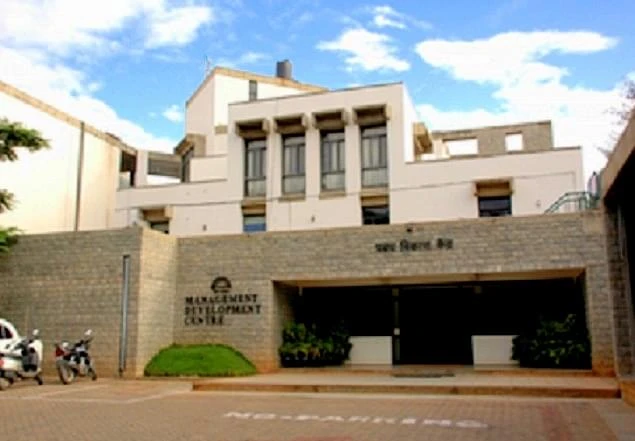

Start with need-based aid, then check each scholarship separately
IIM Bangalore’s captured financial-aid page describes several forms of support for students in its two-year Post Graduate Programme in Management (PGP). They are not one automatic fee waiver. The main financial-aid policy is need-based; other entries are merit-based, merit-cum-need, category-specific or tied to post-study work. The page does not establish that every award can be combined with every other award, so applicants should confirm scheme interaction with the institute before subtracting support from a personal budget.
The current captured page concerns PGP students and names a 2026–28 domestic PGP fee elsewhere on the same programme expenses page. Do not extend these eligibility rules or award amounts to PGPBA, EPGP, PGPEM, doctoral, certificate or the new undergraduate programmes unless that programme’s own notice confirms it.
Need-based financial aid
The policy says all PGP students with annual household income below ₹8 lakh are eligible to apply. It also allows consideration for other students whose severe financial difficulties arise from sudden unforeseen circumstances. “Eligible to apply” is not the same as guaranteed aid: IIMB describes a selection process to decide both how many students receive an award and the amount.
The first stage assigns a financial-status score using four factors: annual gross household income, household savings, real-estate assets and other assets. The income figure includes a student’s income from employment before joining and outstanding loans, except loans taken for conspicuous consumption. Some candidates then meet a faculty panel, which assesses financial need and the genuineness of the information submitted. A weighted average of the financial-status and financial-need scores determines the listed aid levels: 20%, 40%, 60%, 80% or 100%.
That process makes the application evidence consequential. An applicant should be ready to document household resources and explain sudden hardship if relying on that provision. The page does not provide a current application form, document checklist, submission date, decision calendar or award-renewal rule for this general aid policy. Confirm the cycle’s instructions with the Financial Aid and Scholarships office; do not assume a previous year’s deadline still applies.
PGP scholarships with published amounts or conditions
The Aditya Birla Scholarship is listed for first- and second-year PGP students at ₹1.75 lakh per student. A first-year recipient may apply for renewal in the second year if they are in the top 25% of the batch after year one. The source describes this as a merit award; it does not say that every eligible student receives it.
OPJEMS is listed for second-year PGP students. The first ten academic toppers from the first year may apply, then sit an online test run by the OP Jindal Group. The page says one student is awarded each academic year, with a listed amount of ₹1.50 lakh. This is a selective process with both academic and test stages, not a broad second-year entitlement.
The NTPC Scholarship Scheme lists ₹48,000 per year. It is for second-year management students in SC, ST or PwD categories who passed the first-year examination in one attempt. The page describes this eligibility but does not state an application deadline or detailed submission route.
The Employment in Social Sector Scholarship reimburses one-third of fees at the end of each year of work in the social sector, for the first three years. It is therefore tied to subsequent work, not simply to an applicant’s entry-year financial status. The source does not specify which employers qualify, how employment is verified or how long a reimbursement decision takes; ask the institute for the scheme’s current rules before treating it as guaranteed future cash flow.
Government and disability-related support
IIMB’s page lists the Ministry of Tribal Affairs National Scholarship for Higher Education for eligible first-year ST PGP students as a means scholarship covering tuition expenses in full. It also lists the Ministry of Social Justice and Empowerment scholarship for meritorious first-year SC PGP students as a means scholarship covering tuition in full. The wording points applicants to government-invited applications; the captured page does not state the current portal window or supporting document list.
For PwD support, the page specifies a person with at least 40% disability and a disability certificate issued by a competent medical authority. It lists a means scholarship of ₹2,55,000 per year under the Ministry of Social Justice and Empowerment Department of Persons with Disabilities. The applicant should verify the present government scheme rules and IIMB’s forwarding process, including whether the current cycle uses the same amount and certificate criteria.
The institute also says students may apply for other State Government scholarships routed through its financial-aid and scholarship office. That is an avenue to check, not confirmation that a particular state scheme applies to every student or can be combined with an IIMB award.
A practical way to budget
For the domestic PGP 2026–28 batch, IIMB lists a two-year fee of ₹26 lakh. Scholarship support should be budgeted only after the student confirms eligibility, selection, award timing and combination rules. The published page’s named amounts are scheme-specific; the full-fee coverage described for the central SC/ST scholarships is also tied to the specified categories and first-year PGP scope. Neither should be treated as an across-the-board reduction for all PGP entrants.
Before accepting an offer, ask the office which applications open after admission, what records are required, whether an award is renewed annually, how funding is disbursed against fee instalments and whether another scholarship changes the award. Keep the fee, one-time deposit and term-wise mess advance separate in the budget, because the fee page lists the latter charges separately. The official Financial Aid and Scholarships page is the controlling starting point; recheck it and any government scheme notice for the applicant’s actual academic year.