
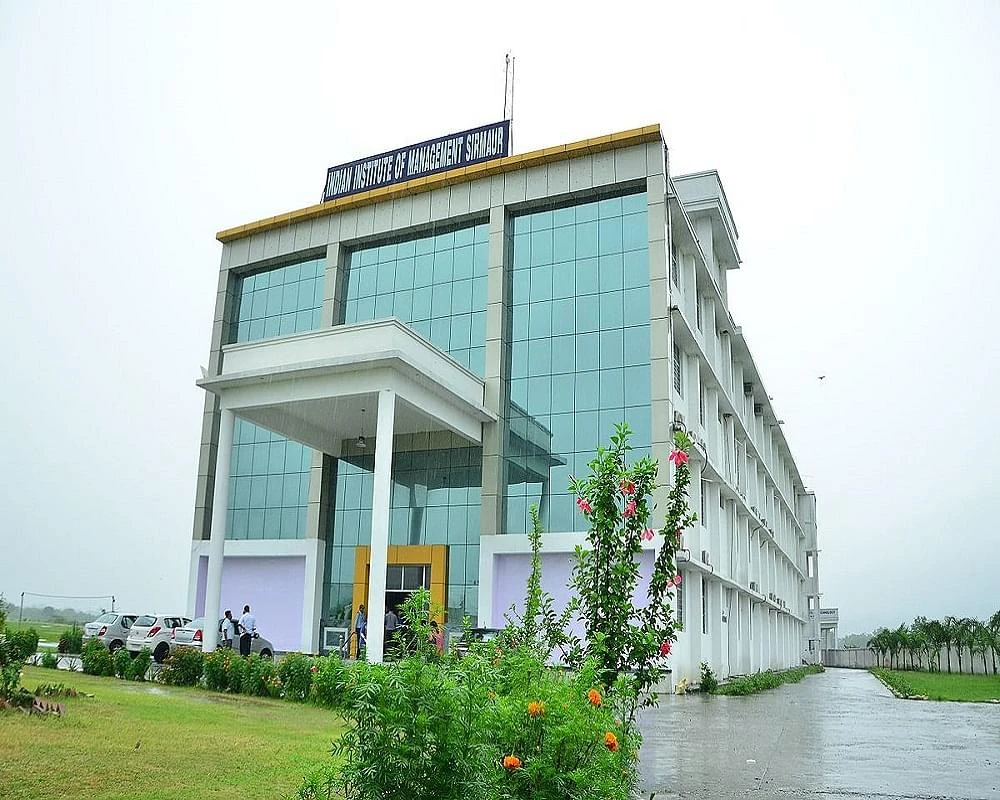

IIM Sirmaur NIRF Ranking 2027-28: Management Results
The latest NIRF Management result directly verified for this guide is the 2025 edition. In the official India Rankings 2025 report, Indian Institute of Management Sirmaur is listed at rank 51 for Sirmaur, Himachal Pradesh. The corresponding official 2024 Management report lists the same institute and location at rank 57. On those two editions, its position moved up six places.
These are national Management-category ranks for the institution. They are not separate NIRF ranks for the General MBA, MBA Tourism, BMS or an individual student. Keep the edition attached to the number: “rank 51” without “NIRF Management 2025” can become misleading when a later result appears. The rankbook row identifies the institute, city, state and result together; this identity check matters when nearby institutions have similar names or share a region.
What the 2025 Management ranking includes
NIRF’s 2025 Management methodology assigns 30% weight each to Teaching, Learning and Resources and Research and Professional Practice; 20% to Graduation Outcomes; and 10% each to Outreach and Inclusivity and Perception. Graduation Outcomes itself includes placement and higher studies, university examination results and median salary. The framework therefore combines student, faculty, research, outcome and perception measures rather than ranking a school only on its placement average.
The weights above describe the 2025 edition. Do not assume they apply unchanged to a different year: consult the methodology published for the result you are comparing. Likewise, a component label such as Graduation Outcomes is broader than one placement statistic. The official 2025 framework places placement and higher studies together within that component, includes university examinations, and separately assigns weight to median salary. A school’s rank cannot be reverse-engineered from one public average package or from a student’s personal experience.
A rank is also an ordering, not a distance scale. The number 51 does not say how far the institute sits from the next row, and a six-place change does not quantify a matching gain in resources or outcomes. The 2025 methodology gives each parameter group a weight in the overall assessment, so one metric should not be treated as a proxy for the complete result. For example, a strong placement report may inform Graduation Outcomes, but it cannot by itself establish the institution’s research, faculty-resource, inclusivity or perception results. The edition’s official methodology and the row’s category are essential context for any comparison.
The overall rank also reflects evidence that may be far from a candidate’s immediate priorities, including research practice, resources, outreach and peer perception. That can make the ranking useful as a broad institutional comparison while leaving practical questions about a particular programme unanswered. Check the official methodology and the institute-specific row before reading more into a rank than the framework supports.
How to use the six-place change
A six-place move between the published 2024 and 2025 lists is a comparison of ordinal positions in two editions. It does not mean that the learning experience improved by six units, that every parameter improved, or that a future entrant will receive a better job. The rank by itself does not show which component drove the change, what an individual programme’s outcomes were, or how close adjacent institutions’ scores were. Where a later official table supplies scores or parameter breakdowns, read those edition-specific values alongside the rank rather than treating the ordinal number as a full explanation.
For a prospective student, use NIRF as one reference point. Compare the programme you plan to join, its current curriculum and admission policy, fee schedule, campus arrangements, and the placement report for the matching cohort. For instance, a Management-category institutional ranking does not distinguish MBA specialisations, MBA Tourism or the four-year BMS pathway. Their eligibility, test route, duration and outcomes can differ even within one institute. An institute-level ranking cannot substitute for those programme-level checks.
Also distinguish the latest result you have verified from a claim that no newer result exists. This page records the 2025 and 2024 rankbook rows and keeps those years visible. Before relying on the rank for a new application cycle, check NIRF’s official Management results for the newest published edition and confirm that the institute name and state still match. If no new result is available, use the dated 2025 value as historical context rather than converting it into a 2027-28 ranking.
A practical comparison checklist
- Match the category and year. IIM Sirmaur’s verified values here are Management-category ranks: 51 in 2025 and 57 in 2024. Do not mix them with Overall, University or another category’s result.
- Check the institute row. Confirm the name, Sirmaur location, Himachal Pradesh and edition on the official table before copying a value.
- Read the method for that edition. NIRF’s 2025 Management framework gives five parameter groups and their weights. Read the right year’s methodology rather than assuming a criterion stayed constant.
- Bring programme evidence into the decision. Review the current admission notice, exact course fee schedule, curriculum and cohort-scoped outcomes for the course you would study.
- Treat rank as one input. Visit the campus or speak to current students where possible, and compare the evidence with your career goals, costs and location needs.
As of this guide’s research date, the official result rows captured here support the 2025 and 2024 values only. They do not establish a newer rank, a programme-specific rank or a promised placement result. Recheck the official ranking source when you apply.