Loading Admission Guardian content
Loading Admission Guardian content

1 programme · 1 institution. Check the admission year and requirements.
1 programme · 1 institution. Check the admission year and requirements.
IIM Kozhikode (IIMK) is an autonomous management institute in Kunnamangalam, Kozhikode, Kerala. Its portfolio includes a two-year flagship Post Graduate Programme (PGP), specialized programmes in Finance and Liberal Studies & Management, Business Leadership, and executive programmes. The institute placed third in the NIRF Management category in 2025. These facts provide a useful starting point, but the programme, admission cycle and evidence year matter: the 2025 ranking is an institutional result, while the 2026 QS rows are programme-specific, and placement figures in the 2025 report refer to students graduating in 2023-25.
For an applicant comparing IIMK with another school, four checks usually change the decision: which curriculum and campus match your plans, whether you can meet the admission rules for the correct intake, what the dated fee schedule actually includes, and how a placement statistic is defined. IIMK’s official sources answer each of those questions for specific programmes and batches. They do not make a future admission score, fee, scholarship or salary outcome certain.
This overview uses the official programme, admission, fee, placement, ranking, scholarship and campus material captured for this review. It keeps published historical results visible and identifies where the next domestic intake’s values are not stated in those sources.
The flagship PGP is a two-year, six-term programme. IIMK describes its first year as a common foundation, with a compulsory core before students move into electives. The published core spans subjects such as economics, organisational behaviour, accounting, data analysis, communication, marketing, financial markets, information systems, corporate finance, law and ethics, strategy, operations, leadership and sustainability. Electives are grouped across areas including finance and accounting, marketing, information systems, quantitative methods and operations, organisational behaviour, economics, humanities and strategic management. Course titles and availability can change with curriculum and scheduling, so the catalogue is a guide to the academic range rather than a guarantee that any one elective will run in a particular term.
IIMK also lists the PGP-Finance and PGP-Liberal Studies & Management (PGP-LSM) as full-time postgraduate programmes. The institute describes its PGP-Business Leadership as a one-year programme and offers executive postgraduate routes, including an Executive Post Graduate Programme based at its Kochi satellite campus. Those names do not make the programmes interchangeable: the duration, audience, curriculum and delivery location differ. In particular, a prospective student should confirm the campus for the exact programme rather than assuming every IIMK course uses the Kunnamangalam residential campus.
A useful way to compare the options is to begin with the course itself. The PGP offers a broad management foundation followed by electives; PGP-Finance and PGP-LSM have specialized academic identities; PGP-BL is a separate one-year business-leadership route; and executive programmes serve different participant groups. Read the current programme page and curriculum for the intake you are considering, then compare the academic design to your prior study and intended learning goals. Do not infer that a shared institute brand means the programmes have the same admissions route, fee basis or placement cohort.
The domestic PGP policy captured here is for the 2026-28 batch and specifies CAT 2025. It is evidence about that intake, not a threshold sheet for the next domestic batch. The policy required a recognized bachelor’s degree with at least 60% aggregate and at least three years of education after 10+2, or the listed completed CA, CMA (ICWA) or CS route with at least 50% aggregate. It also set CAT overall and sectional percentile minimums, Class X and Class XII thresholds, and a positive scaled score in every CAT section. The minimums were eligibility screens. They did not state a guaranteed interview call, last-admitted score or future-batch cutoff.
For 2026-28, IIMK described a three-stage process: candidates who met the first-stage conditions registered separately, an Aggregate Index Score (AIS) was used for the shortlist, and shortlisted candidates went through the written ability test and personal interview stage. The Stage 2 weights combined CAT, school marks, diversity and work experience. The final score used CAT, the interview, the written test and resume. These details show why a minimum CAT percentile should not be treated as the complete selection formula. They remain specific to the policy edition named above.
Applicants to a later domestic batch should open the current PGP admissions and selection pages and use the policy attached to that batch. The official sources reviewed for this overview do not establish a 2027-29 domestic deadline or replace a new domestic selection notice. International applicants have separate eligibility, application rounds and documentation. Likewise, executive programmes use their own admissions information. Avoid carrying a domestic CAT threshold into another applicant group or carrying an international deadline into the domestic PGP calendar.
IIMK’s domestic fee schedule for the 2026-28 batch lists ₹11.75 lakh for each of the two years for the PGP, PGP-Finance and PGP-LSM, or ₹23.5 lakh across those two years. In that schedule, the annual total includes tuition and other listed components such as hostel, library, IT and infrastructure, study materials, student activities and programme services. Tuition itself is listed as ₹7 lakh per year. This distinction matters: the annual programme total and the tuition line are not the same figure.
The notice also lists amounts separately from the annual total. These include a ₹25,000 caution deposit, a ₹2,000 Students’ Welfare Fund amount and a ₹40,000 mess and student-activities deposit at the start of each term. The notice describes the term deposit as refundable after each term based on actual consumption. Applicants should read the fee document for payment timing and refund terms rather than treating every amount as a non-refundable tuition charge.
The fee PDF is explicitly for 2026-28. It is historical evidence for that cohort and does not quote the domestic fee for a later intake. No exact domestic 2027-29 total is asserted here. Before budgeting for a new offer, check the current programme fee notice, separate deposits, immersion costs where applicable, and what is refundable. If you are comparing programmes, match the same batch and distinguish tuition from total scheduled charges and term-based deposits.
Scholarships and loans are separate from the published fee. An applicant should not subtract a possible award from the fee total before the institute or sponsor confirms an award. The eligibility and past distribution of scholarships can help identify application routes, but neither is a promise that a particular applicant will receive funding.
IIMK’s Final Placements Report 2025 covers the 29th PGP batch and the sixth batches of PGP-Finance and PGP-LSM, graduating in 2023-25. The report lists 561 students participating and 169 recruiters across the combined group. It reports a mean CTC of ₹28.18 lakh, a median CTC of ₹27.50 lakh and a highest CTC of ₹81 lakh. These are three different summary measures: the mean is an average, the median is the middle observation, and the highest is one upper-end result. None should be substituted for another when estimating a typical outcome.
The report’s combined figures should not be assigned to one programme alone. It does not present these headline mean and median figures as separate PGP, PGP-Finance and PGP-LSM medians. The ₹81 lakh maximum is not a typical salary or a promise of a similar offer. CTC is also not identical to fixed monthly take-home pay; offer components and timing can differ. A candidate should compare the report’s defined cohort and metrics with another institute’s report only after checking that the programme groups and reporting periods are comparable.
IIMK’s report also separates offers by domain. It assigns the largest share to Consulting, followed by Finance, General Management, Sales & Marketing, IT & Analytics, and Operations. These percentages describe the offer mix for the reported cohort. They do not say that the same share of students preferred a domain, that every programme had the same outcomes, or that an incoming student has a given probability of receiving a role in that area. The domain mix can help a student frame questions about roles and recruiting, but it should be read alongside role descriptions and the next report rather than used as an individual forecast.
The report is useful as a dated account of completed outcomes. It cannot guarantee a future placement, an offer from a named recruiter, a specific role or a salary for a student entering in 2027-29. Check the institute’s next final-placement report when it is published, and ask whether its programme scope, student denominator and compensation definitions have changed.
IIMK’s official page lists rank three in NIRF Management 2025 and says this was its third consecutive top-three result across 2023, 2024 and 2025. This is an institute-level position in the NIRF Management category. The same official material reports the PGP in the QS Masters in Management 2026 global 141-150 band and at number 12 in Asia. The NIRF position and QS programme band come from different ranking bodies, editions and comparison pools; they cannot be combined into a single overall score.
A band is not an exact rank within that band. The PGP’s QS result is about Masters in Management, while other IIMK programmes appear in other QS categories. For a school comparison, match the same ranking body, edition, programme or category and geography. A ranking can help describe an external comparison, but it does not answer whether a particular curriculum fits you, what the next placement report will show, or what an individual student will earn.
Accreditations are another kind of information. IIMK’s official ranking and accreditation pages describe AMBA and EQUIS accreditations. Accreditation status and ranking positions should be kept distinct: one is a quality-assurance recognition, while the other is a result in a named ranking edition. Verify the current status and scope on the institute’s pages if either matters to your decision.
IIMK lists an institute merit scholarship for first- and second-year students in PGP, PGP-LSM and PGP-Finance. The posted page ties eligibility to CGPA performance during an academic year and gives a ratio of one scholarship for every 20 students in each year. The posted terms do not establish that a particular student will be selected or guarantee a fixed award amount.
The institute’s Need Based Financial Assistance (NBFA) is a separate application route. IIMK’s posted criteria include gross annual family income of no more than ₹8 lakh for the previous financial year and an education loan from a scheduled commercial bank to fund study at IIMK. Second-year applicants must produce the loan-disbursement details in the prescribed bank format. The Financial Aid Committee evaluates financial score, prepares a rank list and finalizes the amount. Meeting the listed criteria allows a student to apply; it does not guarantee full tuition assistance.
IIMK’s 2024-25 Annual Report provides historical context for awards actually made. It reports 86 NBFA recipients and a total allocation of ₹4.62 crore, with 73 full-tuition and 13 partial-tuition recipients. It also reports 58 IIMK Merit Scholarship awards of ₹25,000 each across PGP, PGP-Finance and PGP-LSM. These counts and amounts describe that completed year, not a forecast of awards or budget for the next intake.
The institute page also lists government and sponsor scholarships. Their income tests, category requirements, deadlines and selection processes can differ, and sponsors can update their terms. Check the current government or sponsor notice and ask IIMK how any external award interacts with institute assistance before accepting more than one source of aid.
IIMK describes its main campus as roughly 112.5 acres across two hillocks in Kunnamangalam, Kozhikode. Its official hostel page lists 20 hostels with capacity for about 1,400 students, rooms on single or sharing basis, and classrooms, a computer centre and the student canteen within walking distance. It says all hostel rooms have LAN and Wi-Fi, washing machines, water dispensers and geysers are provided in every hostel, and most hostels have air conditioning.
The hostel page also lists common rooms, a music room, sports facilities, three canteens including a night canteen, and other campus restaurants and kiosks. The campus IT page says the campus is Wi-Fi enabled and identifies indoor wireless access in classrooms, the library, computer centre and seminar hall. These official descriptions provide a concrete picture of student services, but room allocation, operating hours and access rules can vary. Confirm current arrangements with the hostel or programme office if a specific accommodation or facility is important.
Some executive programmes are based at IIMK’s Kochi satellite campus. The main-campus hostel description should not be assumed to apply to every programme. Check the teaching location, residential requirement and support arrangements for the exact programme you are considering.
Start with the programme, not the institute name alone. Compare curriculum, duration, admission route and campus for the degree you would actually join. For domestic PGP admission, use the policy for the correct batch; the 2026-28 thresholds and weights above are historical examples tied to CAT 2025. Do not use them to judge a later application unless IIMK publishes the same rules for that batch.
Next, build a cost view from the exact fee notice. Separate tuition, other annual charges, refundable deposits and any additional programme expenses. Add scholarship support only after it is offered to you. Then read placement reports by programme cohort and period, and distinguish mean, median and maximum CTC. A combined report is useful context but not a personal salary prediction.
Finally, compare rankings on matching scope and editions. An institution-level NIRF rank and a programme-level QS band answer different questions. Check location and hostel terms if residential life matters, and verify the next domestic deadline and fee amount when the official notice is available. The better fit is the option whose programme, funding plan, location and evidence match your needs, not the one with a single headline number.
Loading programmes and admission routes.
Selected ranking categories, with the recorded year beside each result. Open all records for the complete history.
44 published records · Lower numeric ranks are stronger
Find a program, read its fee details and explore the admission requirements.
Summary of the programs shown below. Total course fee
Specializations
Listed entrance exams
Eligibility: Graduation with 50% + CAT
Listed entrance exams
Eligibility: Graduation with 50%
Specializations
Listed entrance exams
Eligibility: Graduation with 50%
Specializations
Listed entrance exams
Eligibility: Graduation with 50% or CA+CAT
Specializations
Listed entrance exams
Eligibility: Graduation with 60%
1 exam with cutoff data available
 Accenture Strategy
 ACT Fibernet
 Amazon
 American Express
 Asian Paints
 Axis Bank
 Bain & Company India Private Limited
 Bajaj Capital
 Bajaj Finserv Ltd.
 Bank of America
 Blackbuck
 Capgemini
 Casio
 Citi Bank
 Cognizant
 Credit Suisse Singapore
 Crisil
 Deloitte
 Dr. Reddy's Laboratories
 Enphase Energy
 Equirus Capital
 EXL Service
 Feedback Company
 Fidelity
 Flipkart
 Franklin Templeton Investment
 Glaxo Smithkline Consumer Ltd (GSK)
 Goldman Sachs
 Google
 HDFC Bank
 Hero Group
 Hexaware Technologies
 Hindustan Unilever Limited
 IBM
 ICICI Bank
 IDFC First Bank
 Indegene
 Indigo
 Infosys
 IQVIA
 JP Morgan
 JSW Steel Ltd
 Jubilant Foodworks
 KPMG
 Larsen & Toubro Limited
 Lenovo
 Loreal
 Mahindra Comviva
 Mahindra Electric
 Marsh India Insurance Brokers Pvt. Ltd.
 Michael Page
 Microsoft
 Mondelez International
 Mphasis
 Myntra
 Nestle India
 Ninjacart
 Nomura Research Institute Ltd.
 Optum
 PAYPAL
 Paytm
 PhonePe
 Pidilite Industries
 Porter
 Publicis Media


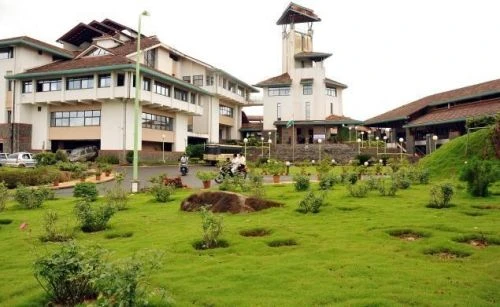
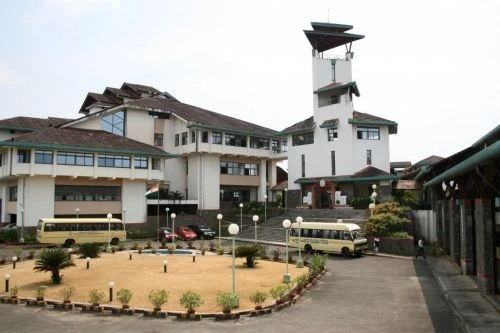


In this preview: 5 photos · 0 videos
While the official qualifying cutoff for the CAT exam is 85 percentile, the actual call cutoff for General category candidates is typically much higher, usually around 97.5+ percentile, and requires a strong academic profile.
The institutes have different strengths. Currently, IIM Kozhikode is ranked higher in the NIRF rankings (#3 vs #8) and is generally preferred for its diversity and strong consulting placements. IIM Indore is often favored by students targeting careers in Finance.
Yes, the PGP in Liberal Studies & Management (PGP-LSM) is considered worthwhile for candidates specifically interested in careers in HR, Marketing, and Public Policy. A key advantage is that the program shares the same final placement pool as the flagship PGP program.
Hostel life at IIMK is highly rated for its modern infrastructure and scenic views. However, it receives criticism from students for strict attendance policies and an administrative environment sometimes perceived as "anti-student."
Yes, IIM Kozhikode has a strong finance culture, particularly bolstered by its dedicated PGP-Finance program. However, for front-end investment banking roles, it is generally considered to trail behind older IIMs like Bangalore and Calcutta.
About IIM Kozhikode.
Colleges cannot rewrite published reviews. We remove spam and abuse.
Ask the communityWhat should future students know?
Tell us which course you're considering. We'll help you work out the next step.
Get instant Partner access after mobile verification. Your public edits are reviewed before they go live.
Claim this collegeProgramme information: Official source · Source as of: 2026-11-04
Each route applies only to this named programme and the stated year.
CAT: Common Admission Test · 2026-27
Admission-route evidence: Official source · Source as of: 2026-11-04
1 recorded programme · 1 institution. Admission years and conditions apply to the named programme.
 PWC
 Ramco Cements
 Rebel Foods
 Redington
 Reliance
 RPG Enterprises
 Sales Force
 Samsung
 SBI General Insurance
 Standard Chartered
 State Street
 TATA ELXSI
 Tata Sky
 Tata Steel
 TCS
 Uber
 Udaan
 Unacademy
 Wipro
 Yes Bank
 Zinnov
87 named recruiters in the recorded data. Company names are deduplicated.

 Auditorium
 Cafeteria
 Campus Security
 Computer Labs
 Gym
 Hostel
 Medical
 Sports Complex
 Study Library